Jens Juel (1745–1802)
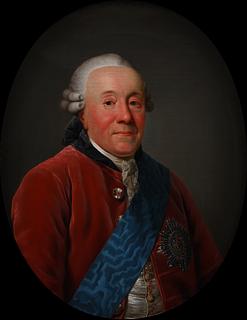
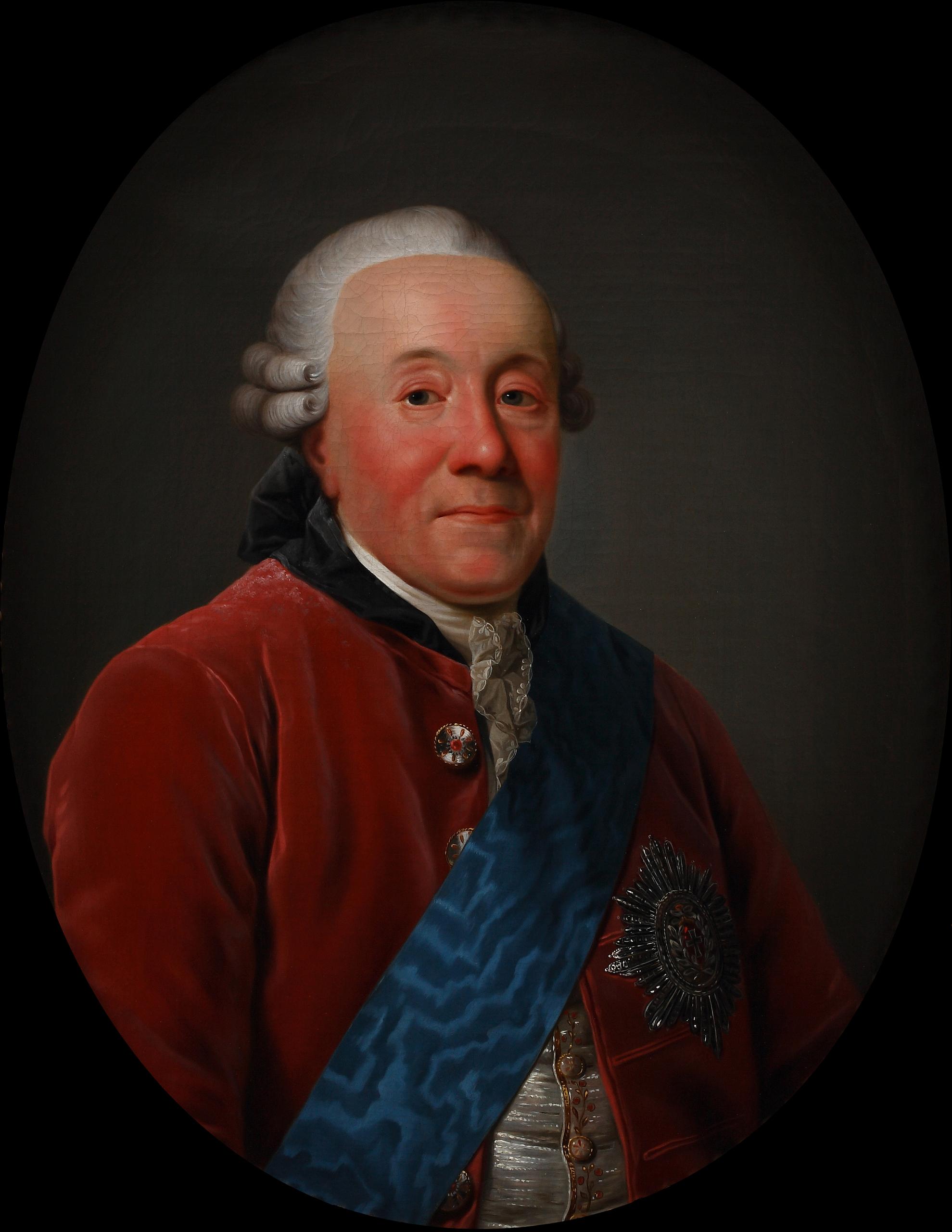
Count Jørgen Scheel, 1781
Oil on canvas
Jørgen Scheel had forty-one years of married life with his wife Charlotte Louise, who was also portrayed by Jens Juel in 1781 (B 345). This was by no means the first time that the couple had their portraits painted: throughout their lives, they were portrayed on several occasions by Denmark’s foremost painters, and each time they wore extremely elegant clothes.2 This portrait shows Jørgen Scheel at the age of approximately 63, wearing the red uniform jacket of a chamberlain and a brocade waistcoat underneath. He wears the Order of the Elephant, which emphasises his position among the contemporary elite.
The portrait was executed the year after Juel had returned to Copenhagen from an eight-year trip abroad. By this time he was ranked among the best portrait painters, and his work was in great demand, especially among the nobility. The fact that Juel had been appointed court painter in 1780 also caused his popularity to increase, and this was probably the reason why he was commissioned to paint the portraits of the count and countess Scheel in 1781.
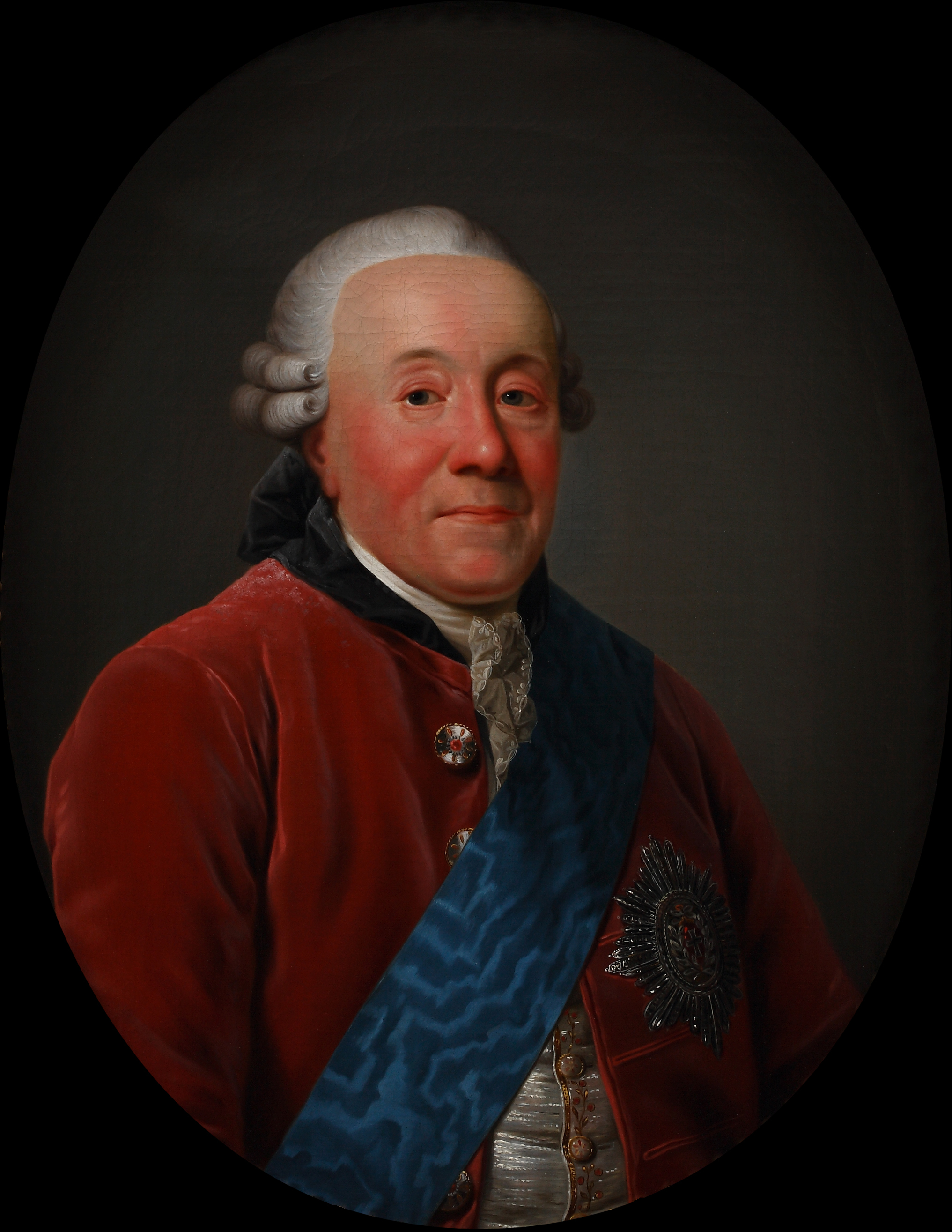
Jørgen Scheel owned the Gammel Estrup manor from 1731 to 1786. It primarily functioned as a summer residence for the couple, who otherwise spent much of their time at the court in Copenhagen. But in 1782 Jørgen Scheel retired, and he spent his last years at Gammel Estrup. Hence, another version of the portrait and its pendant can be seen at the manor. In the eighteenth century, it was not unusual to see several versions of the portraits of royals and the nobility. To meet such demand, Juel – who was one of the most productive portrait painters of the time and had a workshop known as a ‘portrait factory’ – had assistants to help him.3
Publiceret i
Publiceret i
Erik Zahle: ”Billedkunst” in C.L. Davids Samling. Nogle Studier, [1], København 1948, pp. 200-201, 228, 230;
Dansk kunst og kunsthåndværk, Davids Samling, København 1972, p. 9;
Vagn Poulsen, Erik Lassen and Jan Danielsen (eds.): Dansk kunsthistorie. Billedkunst og Skulptur. Vol. 3, Akademiet og guldalderen, 1750-1850, København 1972, p. 176 and fig. 145, p. 172;
Ellen Poulsen: Jens Juel. Malerier i privat eje, Kunstforeningen, København 1982, cat. 33;
Verner Jul Andersen: Dansk kunst og kunsthåndværk, Davids Samling, 2. ed., København 1983, cat. 398;
Ellen Poulsen: Jens Juel. Vol. 1, Katalog, København 1991, cat. 214, s. 82;
Ellen Poulsen: Jens Juel. Vol. 2, Malerier og pasteller, København 1991, cat. 214, p. 136;
Povl A. Hansen: Da verdenskunsten kom til Nordjylland. Herregårdene og de ukendte malere i 1700-tallet, Odense 2021, fig. 103, p. 190;
Thyge Fønss-Lundberg og Anna Schram Vejlby: Jens Juel. En europæisk mester, København 2021, p. 339;
Fodnoter
Fodnoter
Ellen Poulsen and Kasper Monrad: Jens Juel. Malerier i privat eje, Kunstforeningen, Copenhagen 1982, p. 12.
Amongst others the portraits by Andreas Brünniche in 1753, The Museum of National History, Frederiksborg.
For more information on Jørgen Scheel, see for example Kristine Dyrmann: ‘Mellem hovedstad og herregård: Greveparret Jørgen Scheel og Charlotte Louise Scheels forbrug på herregården Gammel Estrup og i København i midten af 1700-tallet’, Herregårdshistorie, 2022, pp. 34–55.