Chandelier; gilt bronze and glass
Mirror Factory of the Electorate of Saxony, late eighteenth century
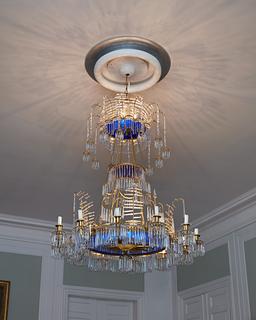
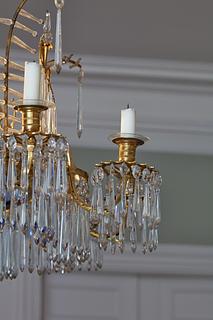
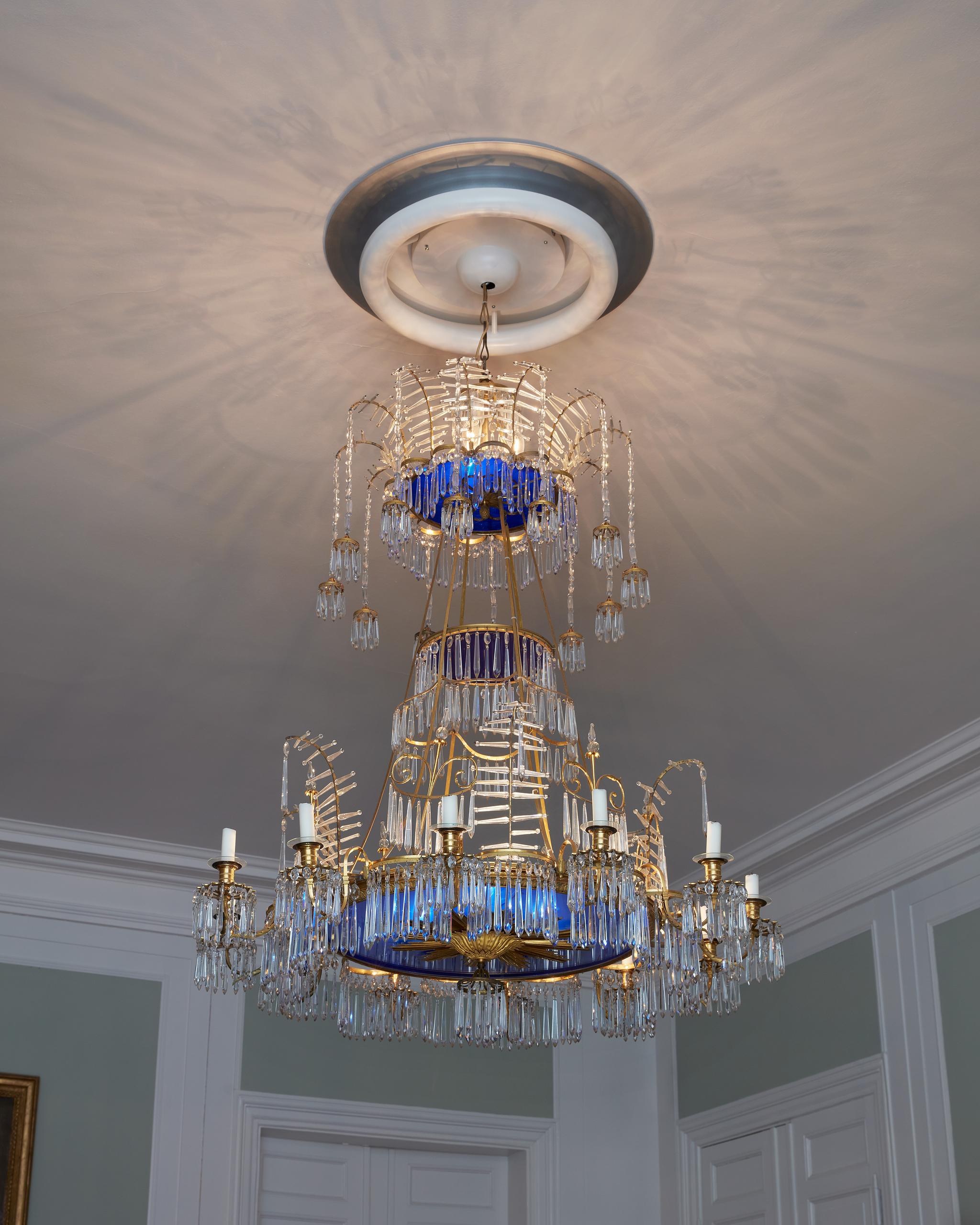
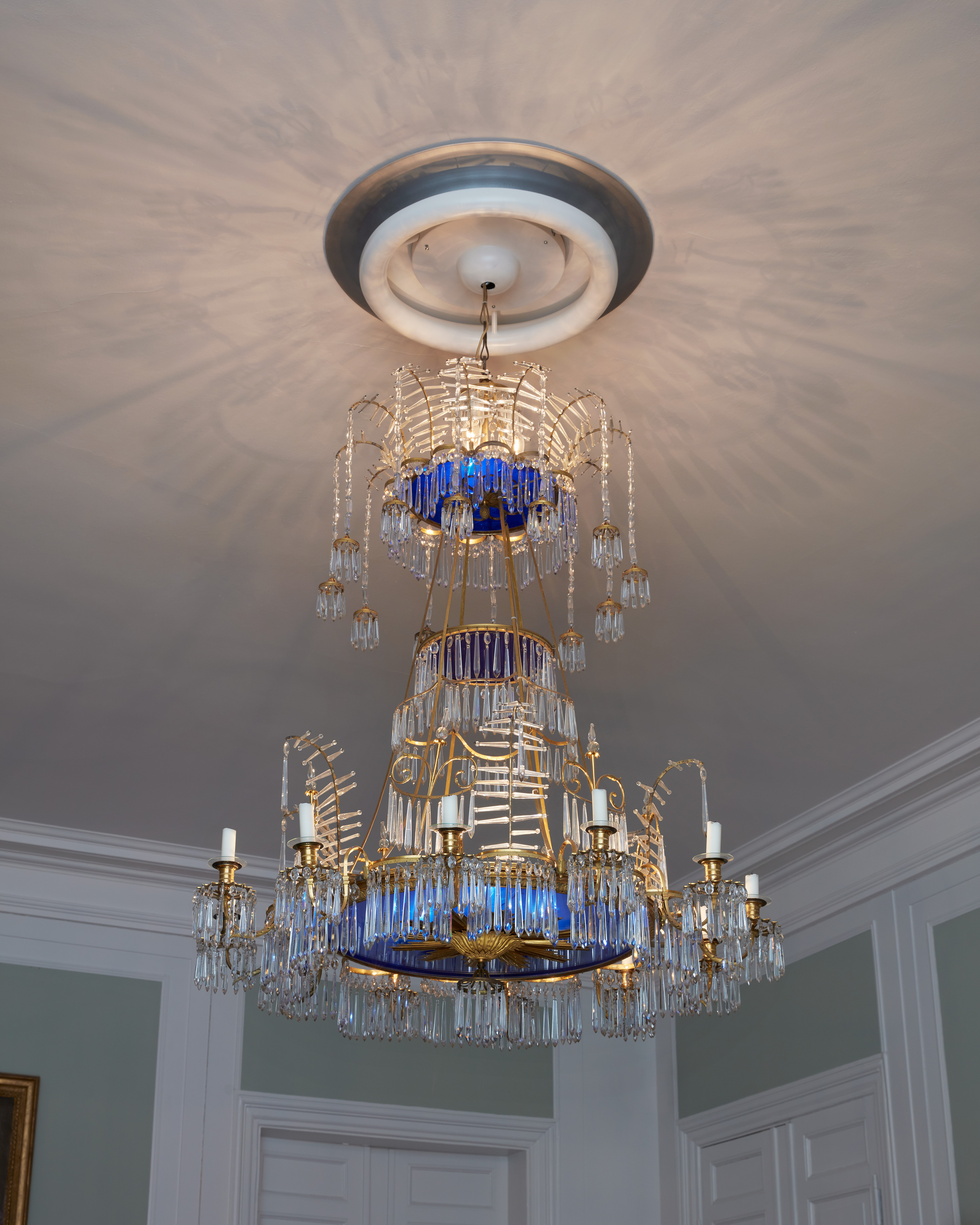
This large chandelier with twelve arms is crafted of gilt bronze and lavishly adorned with glass drops of various shapes and sizes. Dark blue glass plaques are fitted in its upper, central and lower sections. It was made at the Mirror Factory of the Electorate of Saxony in the late eighteenth century.1
As its name suggests, the factory initially produced plate glass for mirrors and windows, supplying the Saxon palaces and the surrounding region. Its early years were turbulent, marked by financial difficulties and considerable fluctuations in quality. From the 1780s, the company’s fortunes changed dramatically. Production expanded to include glass objects with bronze mounts, such as candelabra, bowls, vases and chandeliers, and the factory substantially improved its standards of craftsmanship and manufacturing processes. Responding to new trends in interior decoration, design and the decorative arts, the factory flourished. Its exquisite wares, unrivalled in Central Europe at the time, enjoyed great success not only in Saxony and neighbouring regions, but also in countries such as Denmark, Russia, Sweden and France.2
C. L. David acquired this chandelier himself, probably in the 1920s or 1930s. It is not the only piece in the collection made by the factory. Another is an eight-light chandelier with arms shaped like upward-curving leaves, each supporting a candle at its tip. In addition to glass drops of various shapes and sizes, this chandelier features circular blue glass plaques around its centre.
Publiceret i
Publiceret i
Frank C. Möller: “The Chursächsische Spiegelfabrik at Friedrichsthal in the Electorate of Saxony. Rediscovery of a Forgotten Glass Factory and its Products,” Además de, 8, 2022, pp. 188-189;
Fodnoter
Fodnoter
The Mirror Factory of the Electorate of Saxony (Chursächsische Spiegelfabrik) was founded in 1709 by Elector Frederick Augustus I (also known as Augustus the Strong), who sought to establish facilities for the production of decorative arts and luxury goods in Saxony. The factory was situated some 60 kilometres north of Dresden. Its existence remained largely unknown for many years, and only relatively recently was it identified as the maker of a number of objects previously described simply as ‘possibly Russian’ or of ‘unknown origin’. See Frank C. Möller: ‘The Chursächsische Spiegelfabrik at Friedrichsthal in the Electorate of Saxony. Rediscovery of a Forgotten Glass Factory and its Products’, Además de, 8, 2022, p. 178.
Frank C. Möller: ‘The Chursächsische Spiegelfabrik at Friedrichsthal in the Electorate of Saxony. Rediscovery of a Forgotten Glass Factory and its Products,’ Además de, 8, 2022, pp. 175–199.