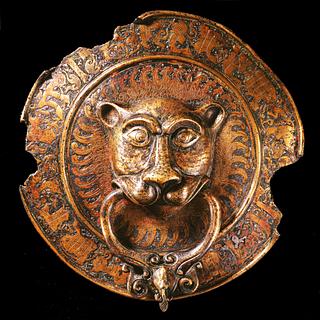
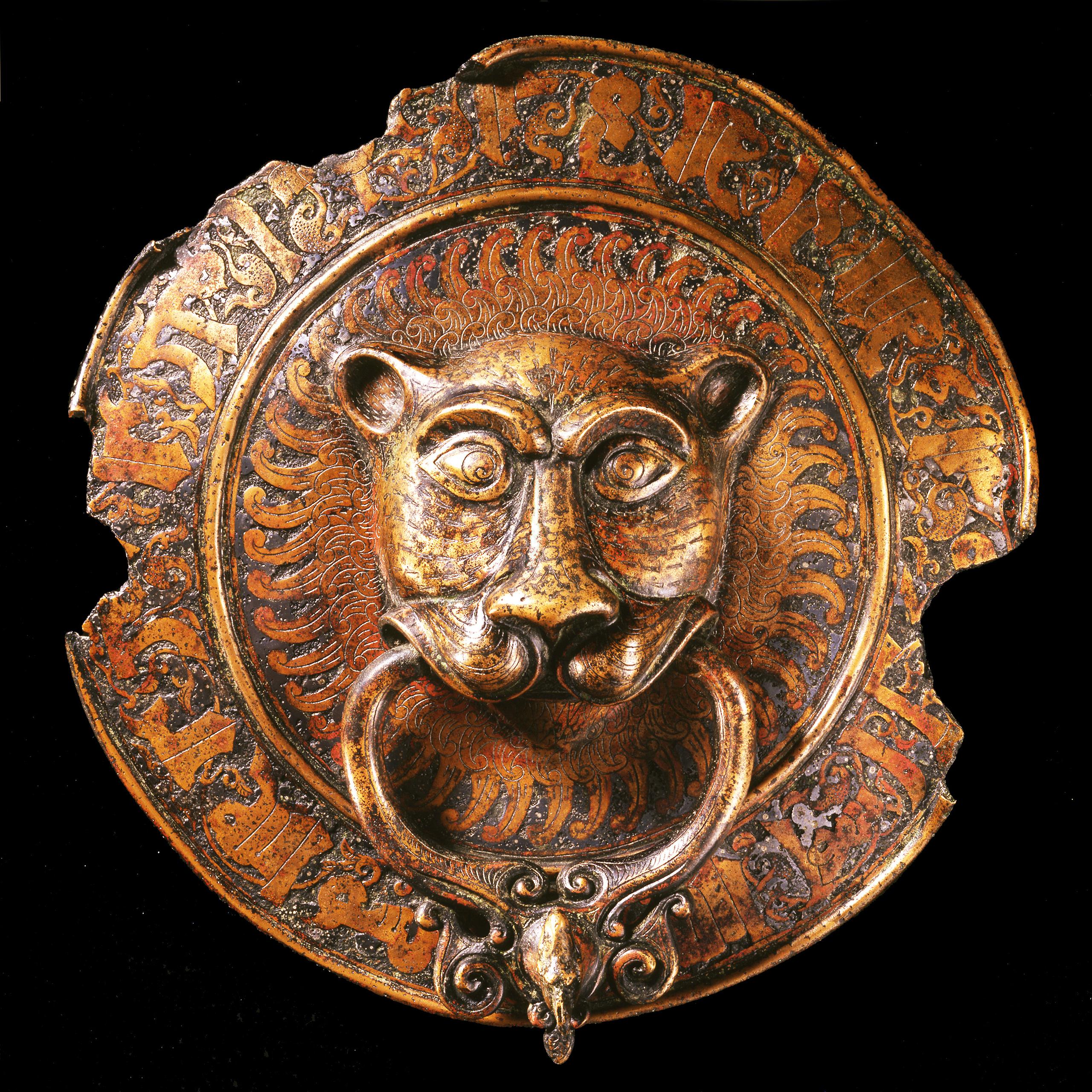
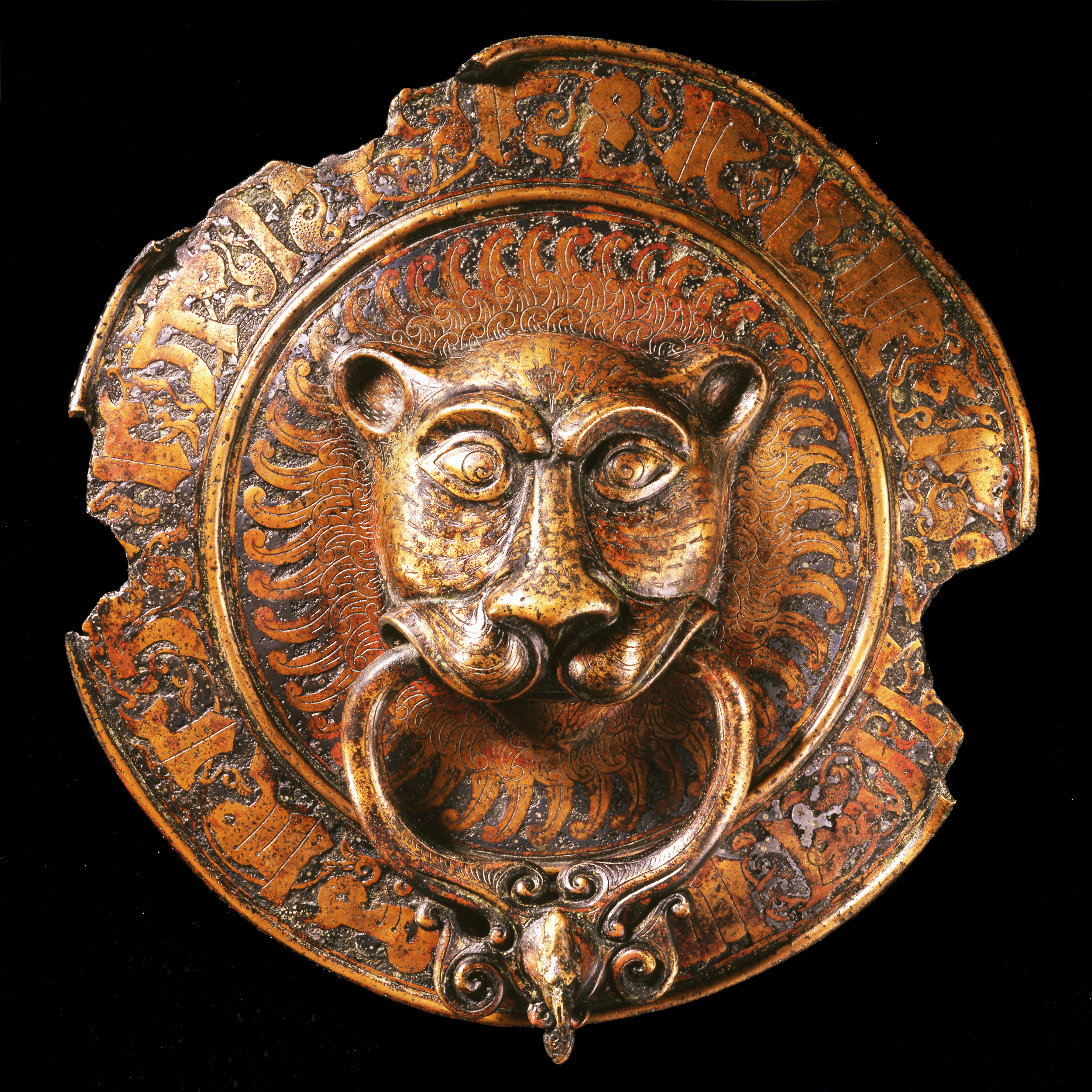
Dørhammer af støbt og graveret bronze indlagt med niello
Sicilien(?); 11. århundrede
Diam: 44,3 cm
Inventarnummer 50/2000
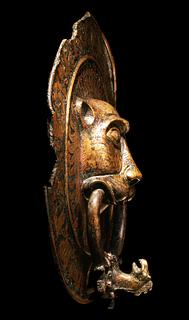
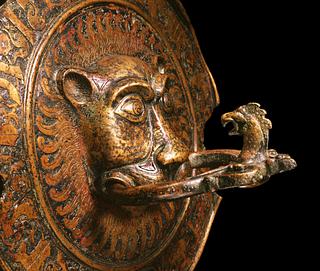
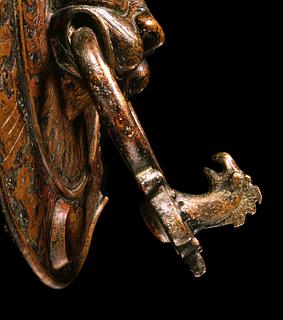
Dette skulpturelle mesterværk af en dørhammer domineres af en løves hoved, i hvis flab hænger en kombination af et håndtag og en hammer udformet som en ring med en hane. Omkring den flot stiliserede manke ses en kufi-indskrift mod en sort niellobaggrund. Niello er en legering af sølv-, bly-, kobber-eller vismut-sulfider, der stødes til pulver og derefter nedsmeltes i fordybninger i genstanden. Indskriften udråber den islamiske trosbekendelse: ”I Guds, Forbarmerens, den Barmhjertiges navn! Jeg bevidner, at der er ingen gud uden Gud og at Muhammad er Hans sendebud”.
Beslægtede dørhamre, men med pseudo-arabiske indskrifter findes på kristne kirker i Syditalien fra begyndelsen af det 12. århundrede, hvor man utvivlsomt har kopieret ældre eller samtidige islamiske forbilleder som denne.
Beslægtede dørhamre, men med pseudo-arabiske indskrifter findes på kristne kirker i Syditalien fra begyndelsen af det 12. århundrede, hvor man utvivlsomt har kopieret ældre eller samtidige islamiske forbilleder som denne.
Publiceret i
Publiceret i
Christie's, London, 10/10-2000, lot 276;
Kjeld von Folsach: Kunst fra islams verden i Davids Samling, København 2001, kat.nr. 458;
Joachim Meyer og Peter Northover: “A newly acquired Islamic lion door knocker in the David Collection” i Journal of the David Collection, 1, 2003, s. 48-71;
Wilfried Seipel (red.): Nobiles officinaedie könglichen Hofwerkstätten zu Palermo zur Zeit der Normannen und Staufer im 12. und 13. Jahrhundert, Milano 2004, kat.nr. 19;
Sheila S. Blair og Jonathan M. Bloom (red.): Cosmophilia. Islamic Art from the David Collection, Copenhagen, McMullen Museum of Art, Boston College, Boston 2006, kat.nr. 103, og s. 42-43;
Joachim Meyer: “The body language of a parrot: an incense burner from the Western Mediterranean” i Journal of the David Collection, 4, 2014, s. 29, fig. 4;
Persis Berlekamp: “Symmetry, sympathy, and sensation: talismanic efficacy and slippery iconographies in early thirteenth-century Iraq, Syria, and Anatolia” i Representations, 2016, 133, figs. 27-29, s. 94;
Julian Raby: “The inscriptions on the Pisa Griffin and the Mari-Cha Lion : from banal blessings to indices of origin” i Anna Contadini (red.): The Pisa griffin and the Mari-Cha lion : metalwork, art and technology in the medieval islamicate Mediterranean, Pisa 2018, s. 305-360;
Kjeld von Folsach: Kunst fra islams verden i Davids Samling, København 2001, kat.nr. 458;
Joachim Meyer og Peter Northover: “A newly acquired Islamic lion door knocker in the David Collection” i Journal of the David Collection, 1, 2003, s. 48-71;
Wilfried Seipel (red.): Nobiles officinaedie könglichen Hofwerkstätten zu Palermo zur Zeit der Normannen und Staufer im 12. und 13. Jahrhundert, Milano 2004, kat.nr. 19;
Sheila S. Blair og Jonathan M. Bloom (red.): Cosmophilia. Islamic Art from the David Collection, Copenhagen, McMullen Museum of Art, Boston College, Boston 2006, kat.nr. 103, og s. 42-43;
Joachim Meyer: “The body language of a parrot: an incense burner from the Western Mediterranean” i Journal of the David Collection, 4, 2014, s. 29, fig. 4;
Persis Berlekamp: “Symmetry, sympathy, and sensation: talismanic efficacy and slippery iconographies in early thirteenth-century Iraq, Syria, and Anatolia” i Representations, 2016, 133, figs. 27-29, s. 94;
Julian Raby: “The inscriptions on the Pisa Griffin and the Mari-Cha Lion : from banal blessings to indices of origin” i Anna Contadini (red.): The Pisa griffin and the Mari-Cha lion : metalwork, art and technology in the medieval islamicate Mediterranean, Pisa 2018, s. 305-360;