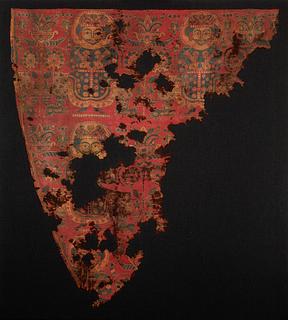
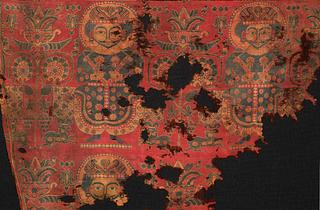
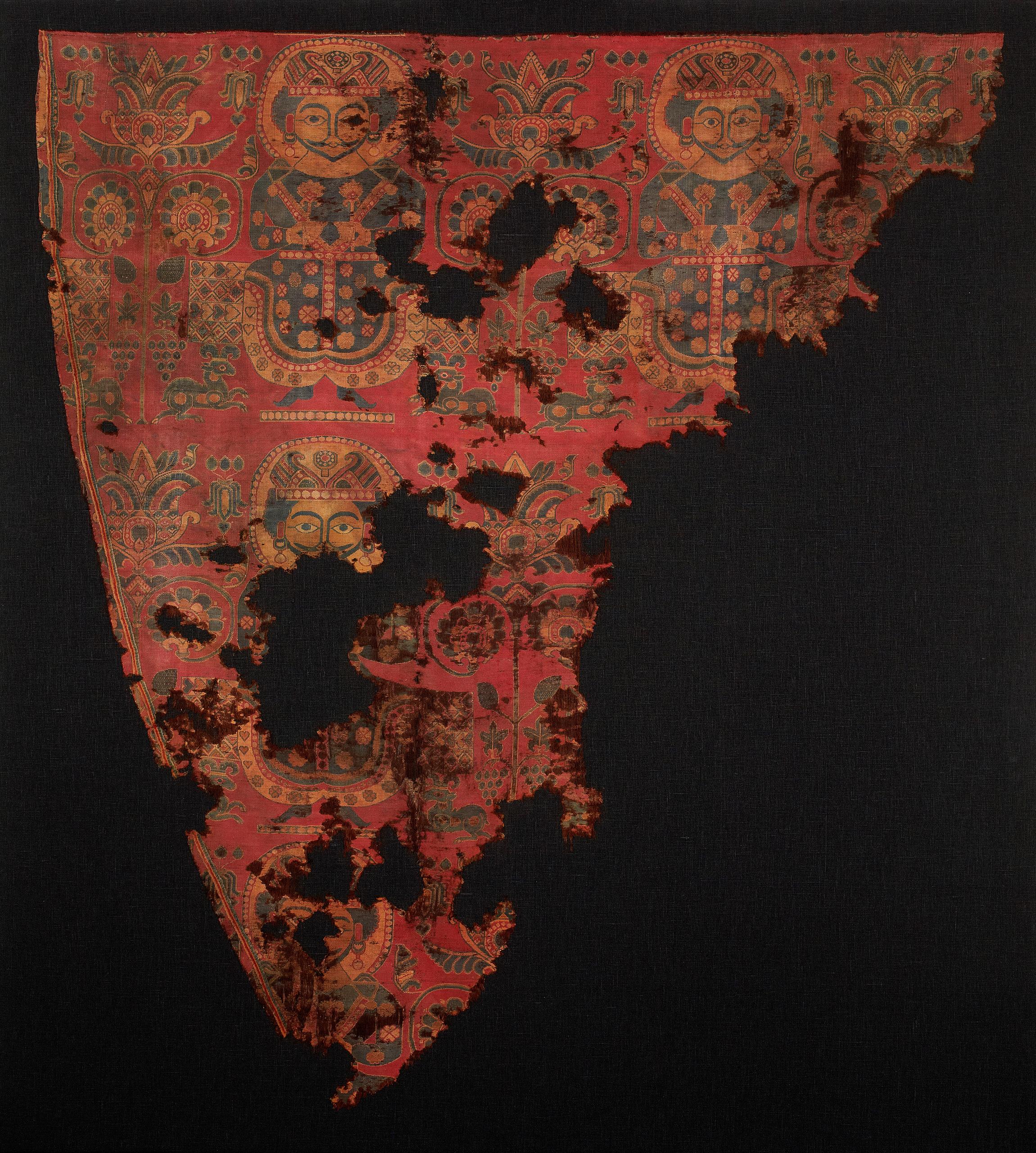
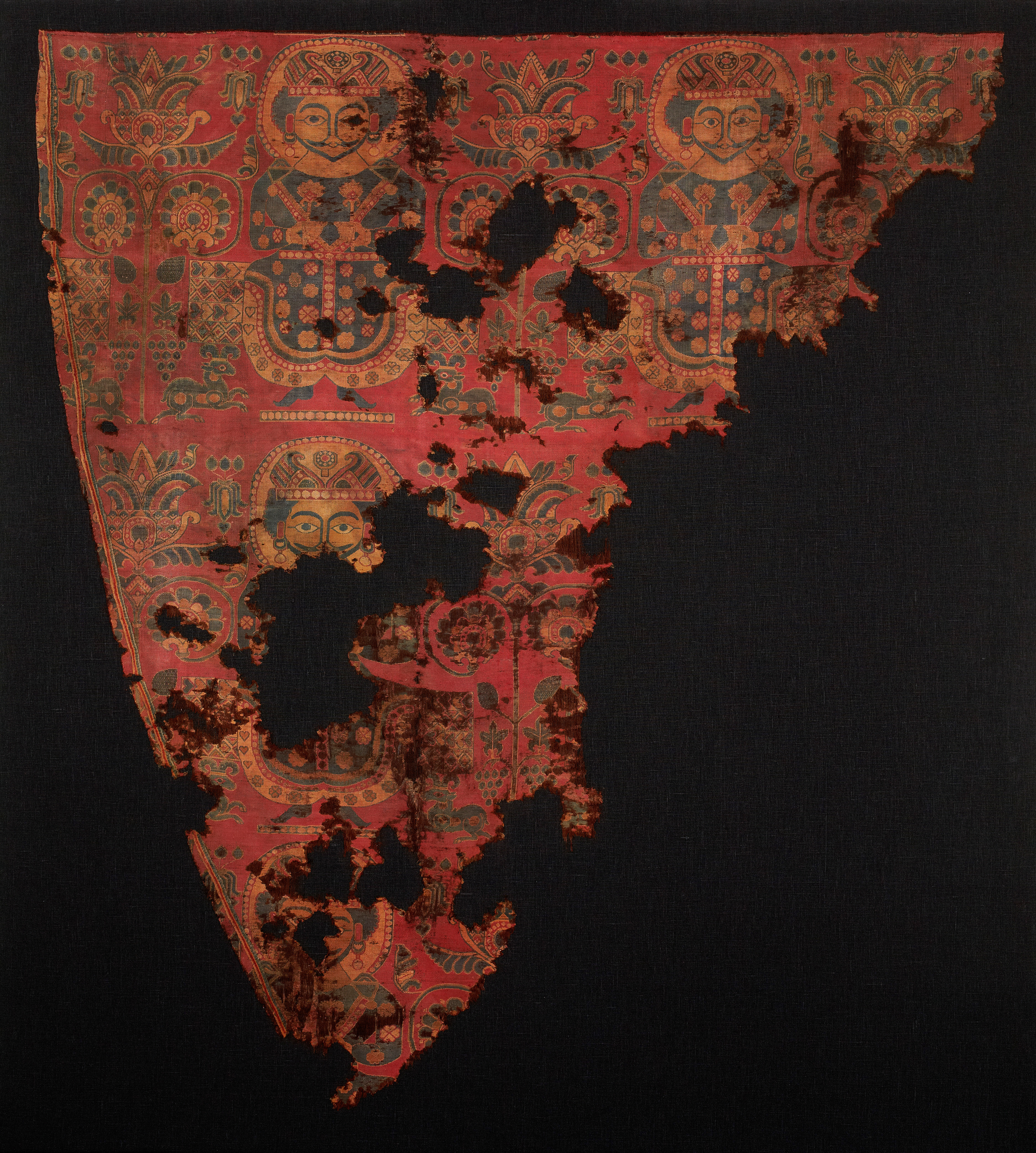
Samitum-woven silk textile with an enthroned Sasanian king
In the 1370s, the North African historian Ibn Khaldun wrote about Muslim tiraz textiles, which bear the names and titles of ruling princes. He believed that the phenomenon succeeded the pre-Islamic royal custom of using true portraits of these rulers or other figures that were to symbolize them.
This textile, woven shortly after the Muslim takeover in Iran and Central Asia, supports Ibn Khaldun’s interesting statement.
Publiceret i
Publiceret i
Kjeld von Folsach: “A Set of Silk Panels from the Mongol Period,” in Sheila Blair and Jonathan Bloom (eds.): God Is Beautiful and Loves Beauty. The Object in Islamic Art and Culture, New Haven 2013, fig. 224, s. 233;
Kjeld von Folsach and Joachim Meyer: The Human Figure in Islamic Art. Holy Men, Princes and Commoners, The David Collection, Copenhagen 2017, fig. 37, p. 149;
Mariachiara Gasparini: Transcending Patterns. Silk Road Cultural and Artistic Interactions Through Central Asian Textile Images, Honolulu 2020, s. 63-65, pl. 8 (incorrect acc.no. given);
“Silk with Sasanian shahanshah,” [online] in Jill Caskey et al.: Art and Architecture of the Middle Ages. Exploring a Connected World, artofthemiddleages.com;
Touraj Daryaee: “A Fragrance for Every Woman, Man, and Child. The Smell of the Sasanian Empire,” in Antonietta Catanzariti and Touraj Daryaee (eds.): The Sasanians in Context. Art, History, and Archaeology, Washington, DC 2026, fig. 3, p. 114;
Ani Honarchian: “There is Blood on the Zarbāft Silk. To Belong to Ērānšahr According to Syriac and Armenian Sources,” in Antonietta Catanzariti and Touraj Daryaee (eds.): The Sasanians in Context. Art, History, and Archaeology, Washington, DC 2026, fig. 1, p. 136;