C.W. Eckersberg (1783–1853)
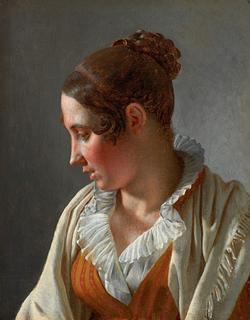
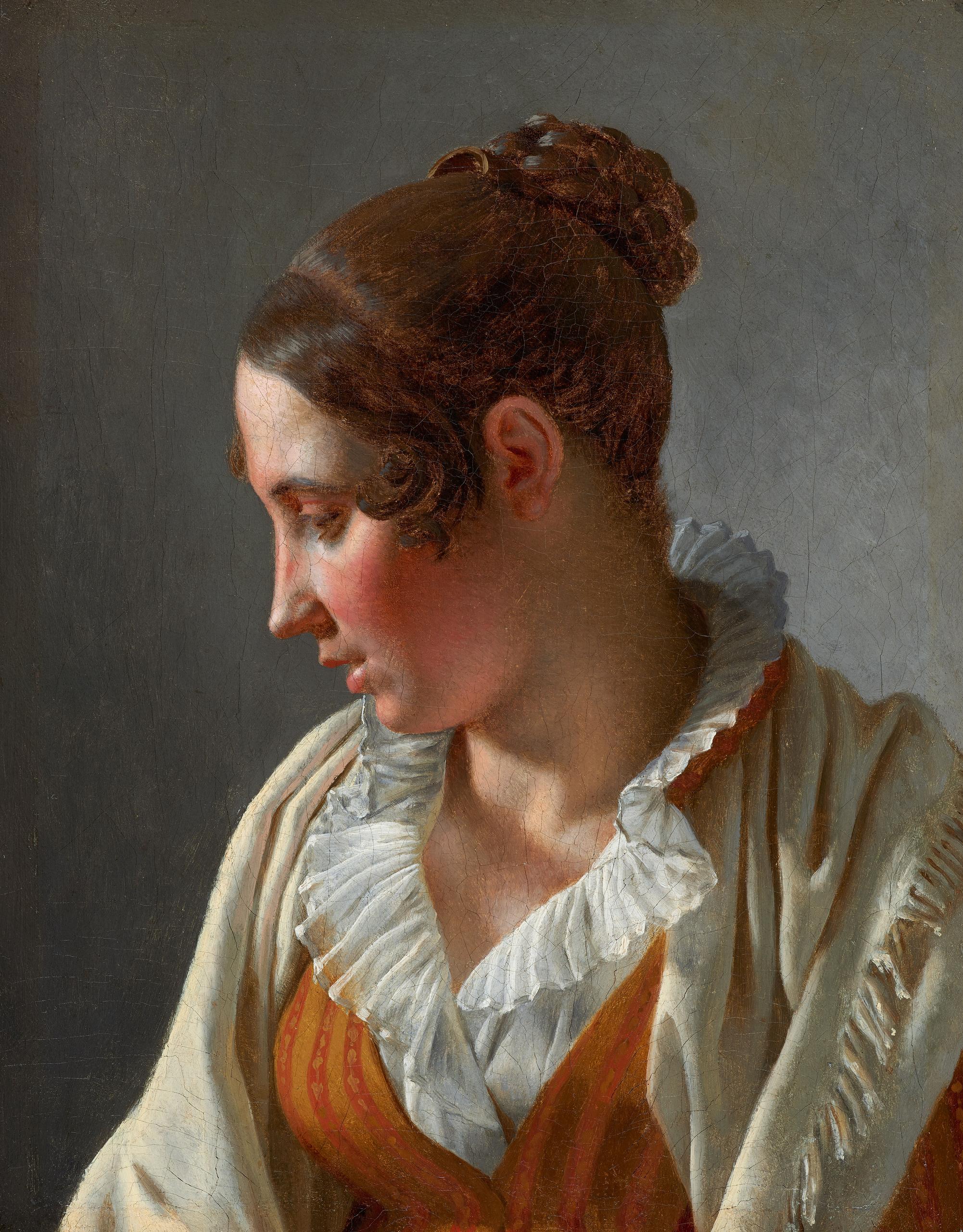
The model Emilie, 1813
Oil on canvas
26.7 x 21.2 cm
Inventory number 30/2014
During his time in Paris in 1810–1813, C.W. Eckersberg received a year of teaching at the famous French painter Jacques-Louis David’s (1748–1825) studio. Here, Eckersberg spent a year improving his skills within history painting. In David’s studio, he painted from live models and in daylight for the first time, an experience that would greatly influence his later work with figure compositions. David’s approach to portraiture also became a major source of inspiration for Eckersberg, who particularly noted his teacher’s direct, straightforward approach to his models and the way in which he built up a portrait by means of diffuse brushstrokes, without any distinct divisions of colours and surfaces, while paying great attention to the effect of light on skin and clothes.1
The inspiration from David is clearly felt in this small painting, one of the few portraits that Eckersberg made while in Paris. The young woman, Emilie, is seen in profile, wearing a low-cut dress with a pattern striped in red and gold. The ensemble includes a white blouse trimmed with white lace, and she also wears a shawl over her shoulders. The brushwork and the diffuse play of light and shadow with no sharp demarcations between the two imbue the picture with a gentle sensibility. It is also linked to the young woman’s elegant profile, downcast gaze and flushed cheeks. This has prompted some scholars to conclude that the painting is not a portrait in the conventional sense but rather a study for a larger painting.2 Others have pointed out that the sensitivity and intimacy found in the portrait is due to Eckersberg having had a special connection with Emilie, because she was probably his girlfriend for some time.3
The portrait of Emilie is also remarkable because of the change seen in Eckersberg’s technique and brushwork in the years after his studies in in Paris. The artist soon abandoned the diffuse manner of painting, instead introducing a practice using predominantly clear lines and sharply delineated fields, as can already be seen in portraits from the following years (6a/1985 and 6b/1985).
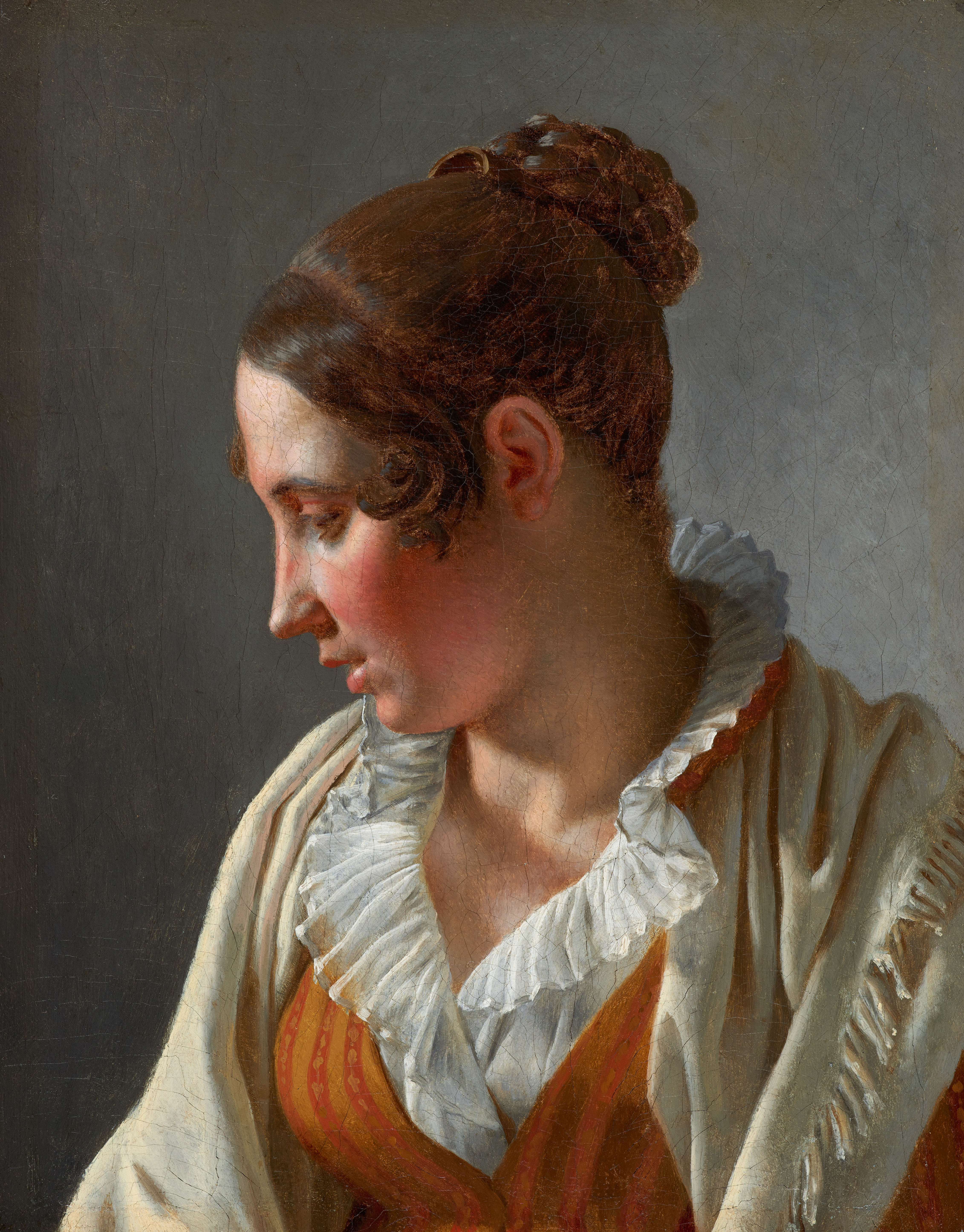
The inspiration from David is clearly felt in this small painting, one of the few portraits that Eckersberg made while in Paris. The young woman, Emilie, is seen in profile, wearing a low-cut dress with a pattern striped in red and gold. The ensemble includes a white blouse trimmed with white lace, and she also wears a shawl over her shoulders. The brushwork and the diffuse play of light and shadow with no sharp demarcations between the two imbue the picture with a gentle sensibility. It is also linked to the young woman’s elegant profile, downcast gaze and flushed cheeks. This has prompted some scholars to conclude that the painting is not a portrait in the conventional sense but rather a study for a larger painting.2 Others have pointed out that the sensitivity and intimacy found in the portrait is due to Eckersberg having had a special connection with Emilie, because she was probably his girlfriend for some time.3
The portrait of Emilie is also remarkable because of the change seen in Eckersberg’s technique and brushwork in the years after his studies in in Paris. The artist soon abandoned the diffuse manner of painting, instead introducing a practice using predominantly clear lines and sharply delineated fields, as can already be seen in portraits from the following years (6a/1985 and 6b/1985).
Published in
Published in
Philip Weilbach: Maleren Eckersbergs Levned og Værker, København 1872, p. 216;
Udstillingen af C.W. Eckersberg’s Malerier i Kunstforeningen, Oktober-November 1895, København 1895, cat. 75;
Emil Hannover: Maleren C.W. Eckersberg: En Studie i dansk Kunsthistorie, Kunstforeningen, København 1898, pp. 76-78 and cat. 126;
Raadhus Udstillingen af Dansk Kunst 1901, fortegnelse over de udstillede arbejder, København 1901, cat. 368, p. 25;
Mit bedste kunstværk, udstilling i Statens Museum for Kunst, oktober 1941, København 1941, cat. 37, p. 24;
Et Hundrede Billeder fra Mit bedste Kunstværk. Kronprinssesens Udstilling, Indledning og udvalg ved Kai Flor, København 1941, cat. 50;
Erik Zahle: C.W. Eckersberg, København 1945;
V. Winkel & Magnussen (ed.): Kunst i privat eje. Vol. 3, Provinsen, København 1945, fig. 1, pp. 200-201;
Henrik Bramsen: “Damen med stråhatten”, Meddelelser fra Thorvaldsens Museum, København 1970, pp. 42-45;
Vagn Poulsen, Erik Lassen and Jan Danielsen (eds.): Dansk kunsthistorie. Billedkunst og Skulptur. Vol. 3: Akademiet og guldalderen, 1750-1850, København 1972, fig. 230 pp. 287-288;
Lise Funder and Claus Hagedorn-Olsen (eds.): C.W. Eckersberg: Aarhus Kunstmuseum 3.9.-9.10.1983, Århus 1983, p. 8 and cat. 28;
Kasper Monrad in L’âge d’or de la peinture danoise 1800-1850, Grand Palais, Paris 1984, cat. 32, p. 128;
Peter Michael Hornung and Kasper Monrad: C.W. Eckersberg – dansk malerkunsts fader, København 2005, pp. 102, 112;
C.W. Eckersbergs dagbøger, udgivet og kommenteret af Villads Villadsen, København 2009. Vol. 1, 1810-1836, p. 75, note 12;
Footnotes
Footnotes
1.
Kasper Monrad et al.: Eckersberg, SMK – The National Gallery of Denmark, Copenhagen 2015, p. 85.
2.
Emilie is mentioned several times in C.W. Eckersberg’s diary, from which it can be concluded that she made a living as a model and regularly sat for him. Emilie’s distinctive features can, for example, be observed in a painting, Hagar and Ishmael in the Wilderness (The Nivaagaard Collection), on which he worked concurrently with the portrait. In addition, she was the model for the female figures in the large Horne altarpiece. See Henrik Bramsen: ‘Damen med stråhatten’ in Meddelelser fra Thorvaldsens Museum, 1970, pp. 42–45.
3.
Kasper Monrad et al.: Eckersberg, SMK – The National Gallery of Denmark, Copenhagen 2015, pp. 85–86.
Danish Paintings and Drawings
C.W. Eckersberg (1783–1853)
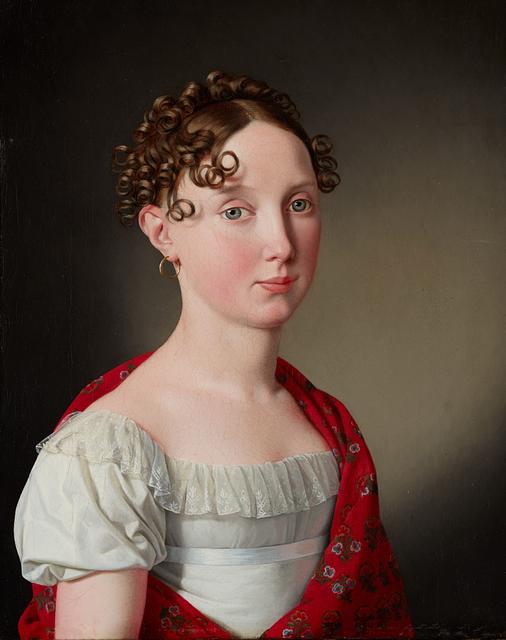
Elisabeth Ida Mariane Brockenhuus, 1817
Oil on canvas
Elisabeth Ida Mariane Brockenhuus, 1817
Oil on canvas
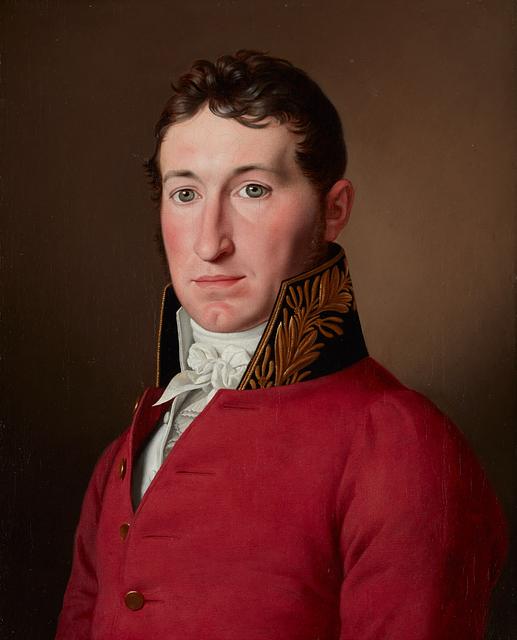
C.W. Eckersberg (1783–1853)
Frederik von Lowzow, 1817
Oil on canvas
Frederik von Lowzow, 1817
Oil on canvas
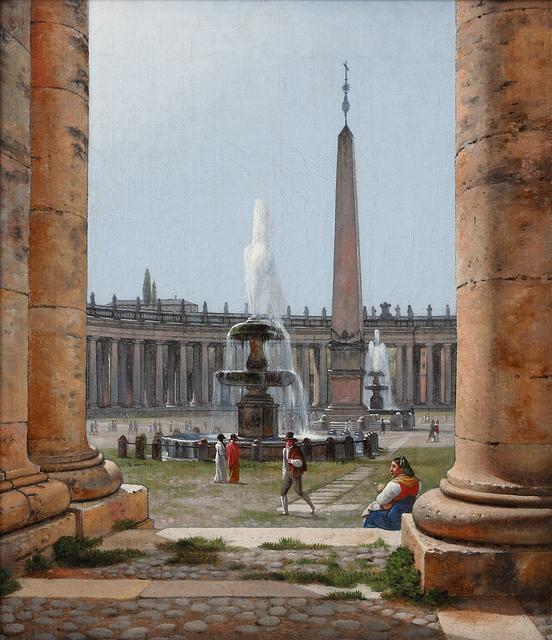
C.W. Eckersberg (1783–1853)
View of the Colonnade, St. Peter’s Square, 1814–1816
Oil on canvas
View of the Colonnade, St. Peter’s Square, 1814–1816
Oil on canvas
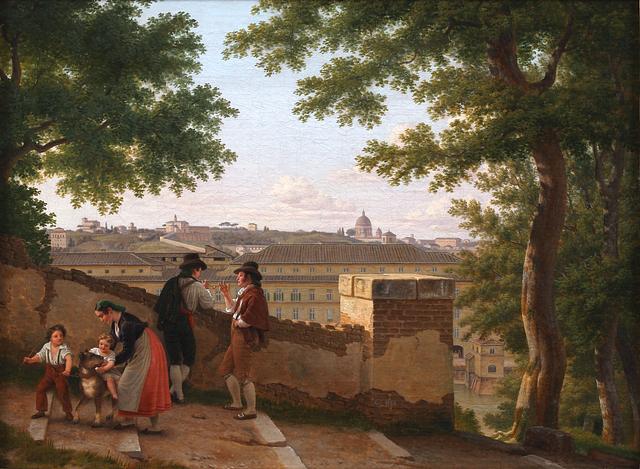
C.W. Eckersberg (1783–1853)
Prospect from Monte Aventino, 1824
Oil on canvas
Prospect from Monte Aventino, 1824
Oil on canvas