Jan Weenix (1642–1719)
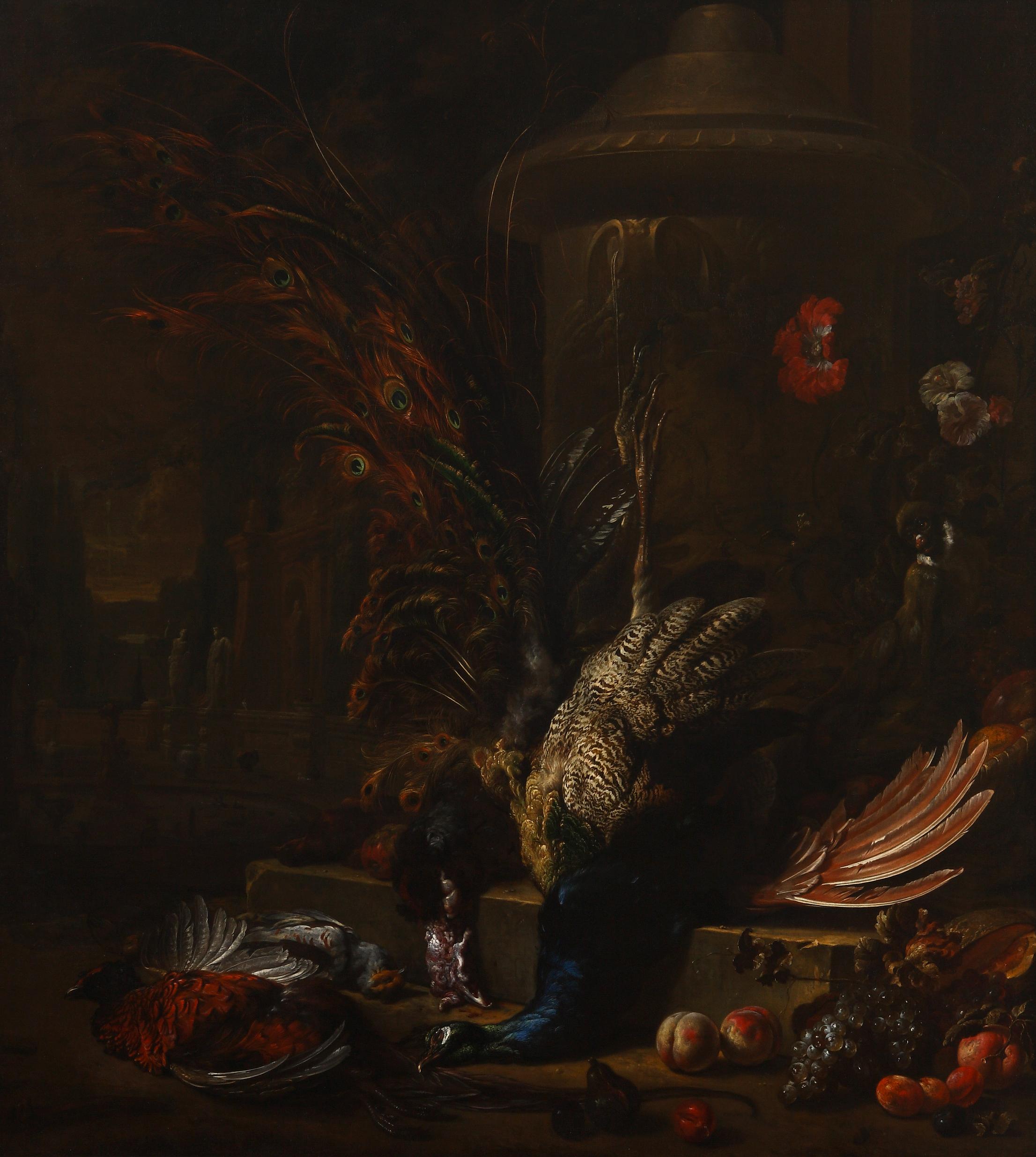
Still Life of Dead Game, 1698
Oil on canvas
170 × 154 cm
Inventory number B 447
The Dutch painter Jan Weenix (1642–1719) was highly esteemed by the aristocracy and the wealthy bourgeoisie in the Netherlands, Germany, Britain and elsewhere. He painted portraits, landscapes and genre scenes, but is best known for his still-life compositions featuring game animals and wildfowl, works that still testify to his technical brilliance and his flair for dramatic staging.
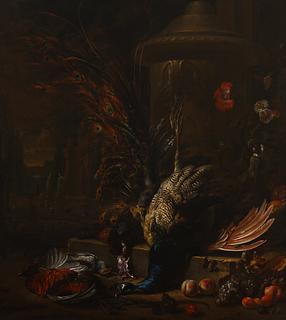
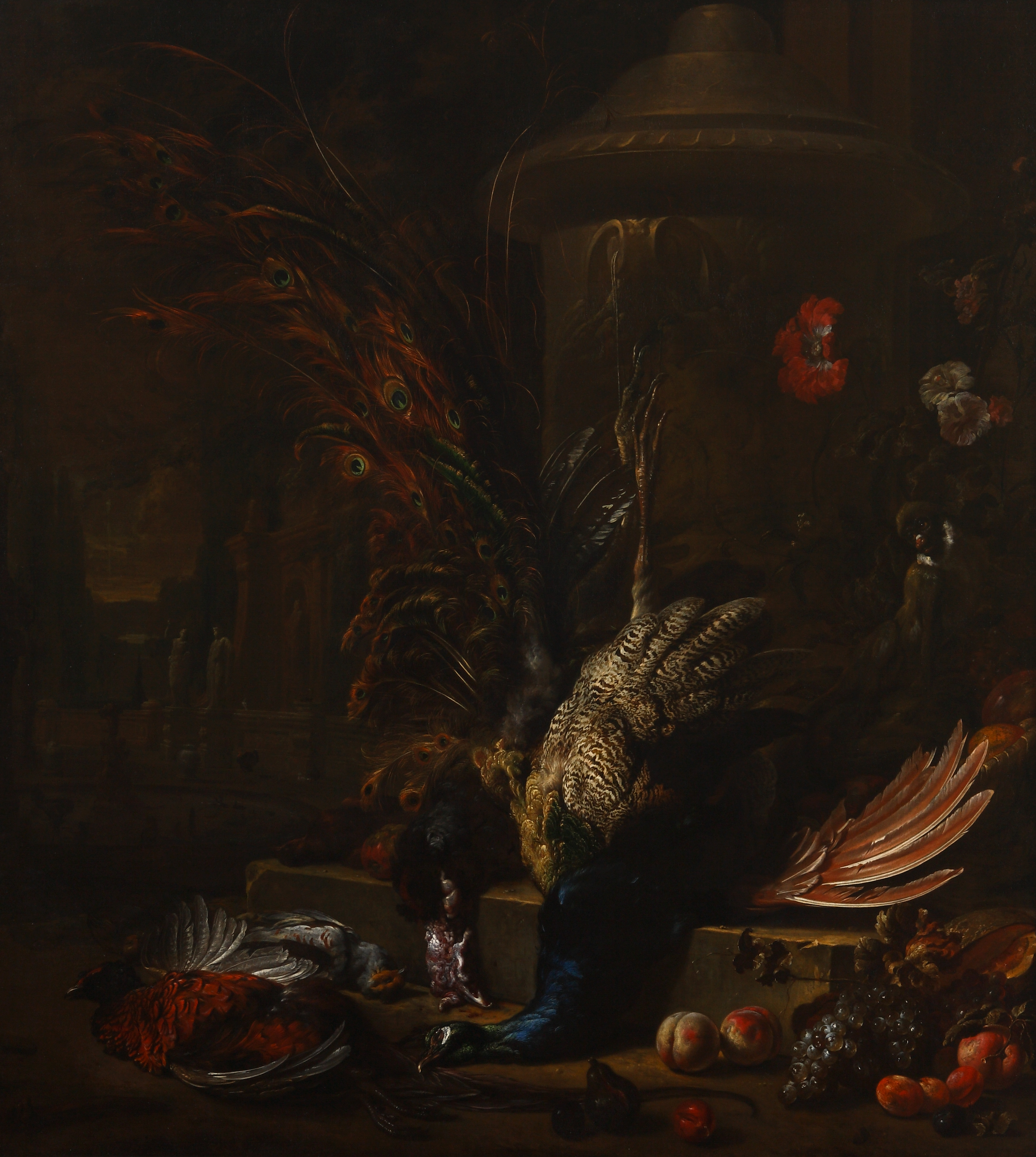
This large painting in The David Collection depicts a dead peacock hanging by its legs, tied to a large, lidded vase that appears to form part of a terrace layout. The peacock’s body rests against the base of the vase, while its limp neck and heavy head lie flat on the ground, surrounded by other dead birds and fruit. At the right-hand side of the picture, we find the only living creature in the composition: a small monkey, surrounded by flowers and gazing towards the left, where we can just discern a round, half-open terrace with a central fountain. Beyond it, a park-like landscape with large trees extends into the background.
In the 1670s, Weenix began to devote himself seriously to still-life painting, and over the following decades he developed a distinctive compositional structure. As in this painting, he often arranged game and fowl – both dead and alive – so that a vase and animals occupy one side of the composition, while a luxuriant garden landscape with statues, buildings or a gateway fills the other.1
Here Weenix demonstrates his assured command of the subject. His precise rendering of plumage, flowers and fruit reveals great technical skill as well as a keen sensitivity to tactile qualities and dramatic effect. The composition is structured around a clear centre of gravity on the right-hand side, where the dead game and the fruit create a strong visual focus. The colourful feathers and the soft forms of the fruit contrast with the golden and red tones of the sunset and with the deep darkness that envelops much of the scene, making it difficult to distinguish the various spatial planes. Another striking feature of the painting is the light, which not only creates a sense of realism and depth, but also heightens the overall drama.
Other still-life paintings in The David Collection include B 286 and B 337.
This large painting in The David Collection depicts a dead peacock hanging by its legs, tied to a large, lidded vase that appears to form part of a terrace layout. The peacock’s body rests against the base of the vase, while its limp neck and heavy head lie flat on the ground, surrounded by other dead birds and fruit. At the right-hand side of the picture, we find the only living creature in the composition: a small monkey, surrounded by flowers and gazing towards the left, where we can just discern a round, half-open terrace with a central fountain. Beyond it, a park-like landscape with large trees extends into the background.
In the 1670s, Weenix began to devote himself seriously to still-life painting, and over the following decades he developed a distinctive compositional structure. As in this painting, he often arranged game and fowl – both dead and alive – so that a vase and animals occupy one side of the composition, while a luxuriant garden landscape with statues, buildings or a gateway fills the other.1
Here Weenix demonstrates his assured command of the subject. His precise rendering of plumage, flowers and fruit reveals great technical skill as well as a keen sensitivity to tactile qualities and dramatic effect. The composition is structured around a clear centre of gravity on the right-hand side, where the dead game and the fruit create a strong visual focus. The colourful feathers and the soft forms of the fruit contrast with the golden and red tones of the sunset and with the deep darkness that envelops much of the scene, making it difficult to distinguish the various spatial planes. Another striking feature of the painting is the light, which not only creates a sense of realism and depth, but also heightens the overall drama.
Other still-life paintings in The David Collection include B 286 and B 337.
Published in
Published in
Katalog over ældre udenlandske Malerier fra Privateje udstillede i Statens Museum for Kunst, October 1946, Copenhagen 1946, cat. 111 (title: Dødt Fuglevildt og Frugter [=Dead Game Birds and Fruit]);
Ingvar Bergström: Studier i holländskt stillebenmåleri under 1600-tallet, Gothenburg 1947, pp. 256-258 and 260-262;
Ingvar Bergström: Studier i holländskt stillebenmåleri under 1600-tallet, Gothenburg 1947, pp. 256-258 and 260-262;
Erik Zahle: “Malerisamlingens vækst,” in C.L. Davids Samling, Third part, Copenhagen 1958, pp. 118 and 137;
Poul Gammelbo: Dutch Still-Life Painting from the 16th to the 18th Centuries in Danish Collections, Copenhagen 1960, pp. 154-155, cat. 234;
Anke A. van Wagenberg-Ter Hoeven: Jan Weenix. The Paintings. Master of the Dutch Hunting Still Life, Zwolle 2018, pp. 329-330, cat. 211;
Footnotes
Footnotes
1.
See, e.g., Anke A. van Wagenberg‑Ter Hoeven: Jan Weenix. The Paintings, Master of the Dutch Hunting Still Life, Zwolle 2018 for a detailed discussion of Weenix’s still-lifes.
Dutch and French Paintings
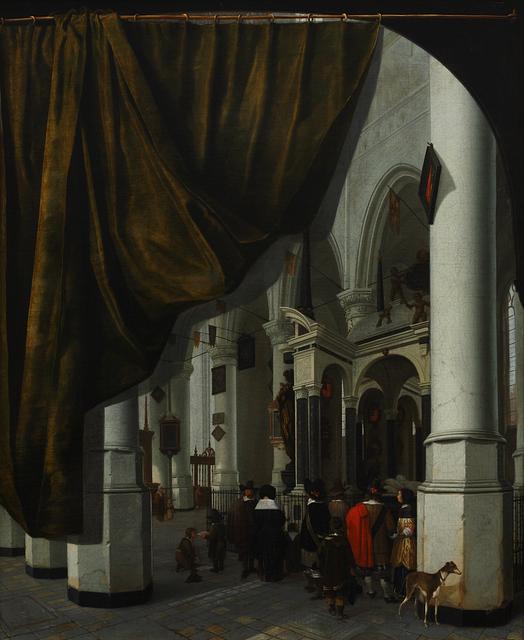
Hendrick Cornelisz van Vliet (1611-1675)
Interior of the New Church in Delft, 1659
Oil on canvas
Interior of the New Church in Delft, 1659
Oil on canvas
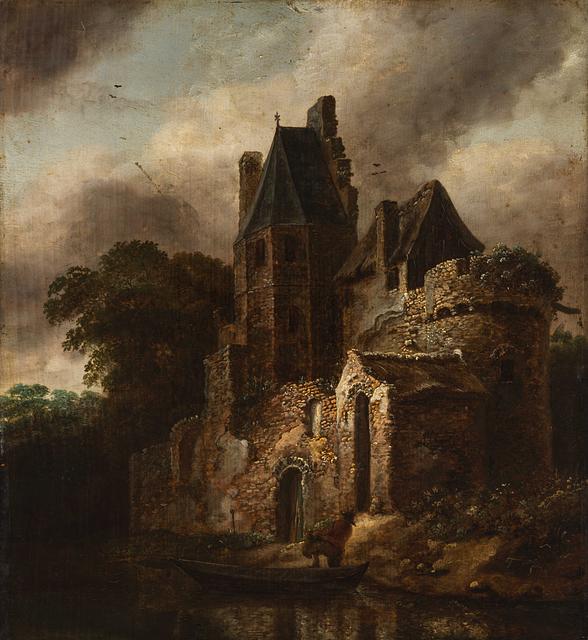
Cornelis Gerritsz Decker(?) (c. 1610-1678)
Ruined castle by a river, n.d.
Oil on canvas
Ruined castle by a river, n.d.
Oil on canvas
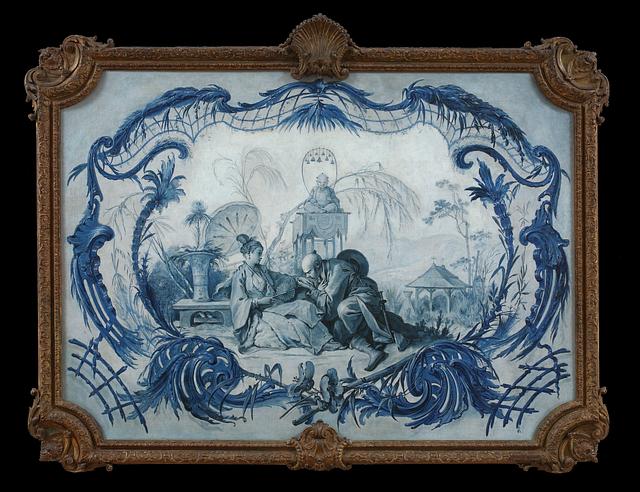
François Boucher (1703-1770)
The Gallant Chinese, 1742
Oil on canvas
The Gallant Chinese, 1742
Oil on canvas
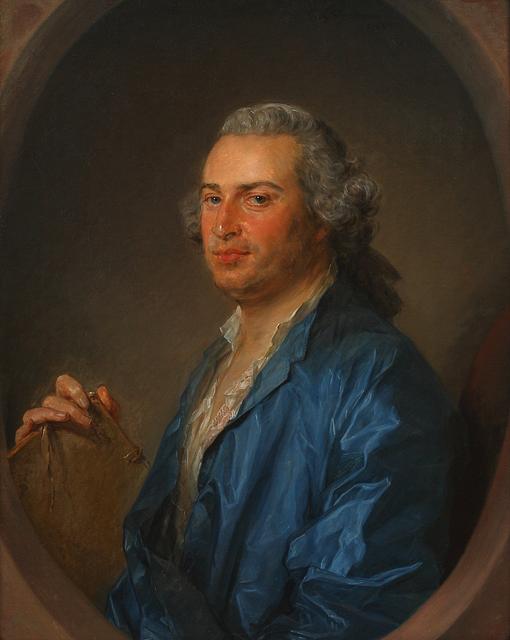
Jean-Baptiste Perronneau (ca. 1715/1716-1783)
Monsieur Darcy, 1767
Oil on canvas
Monsieur Darcy, 1767
Oil on canvas