Vilhelm Hammershøi (1864–1916)
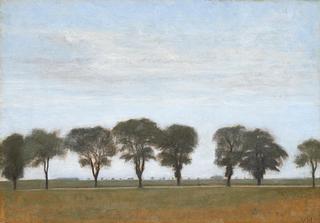
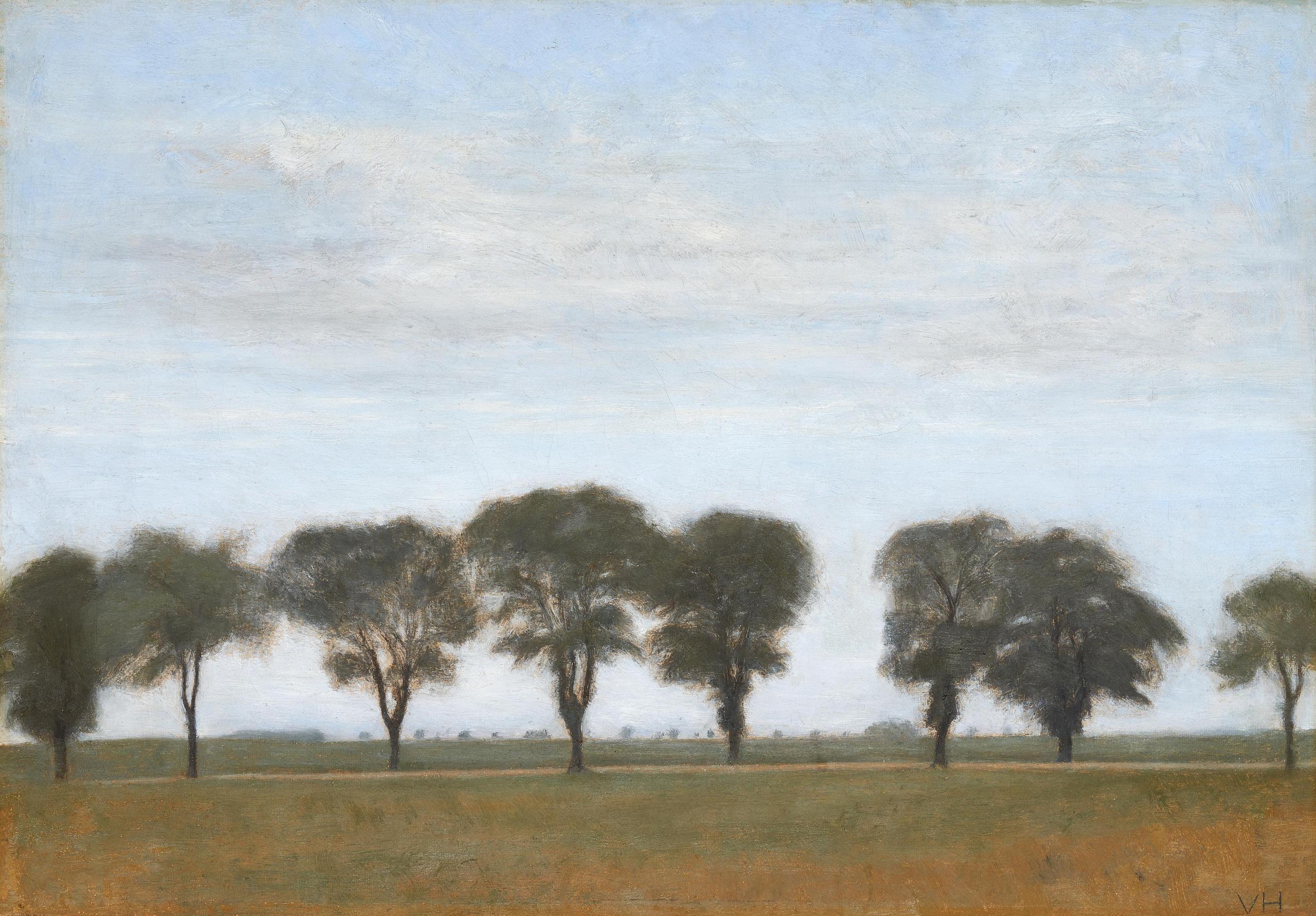
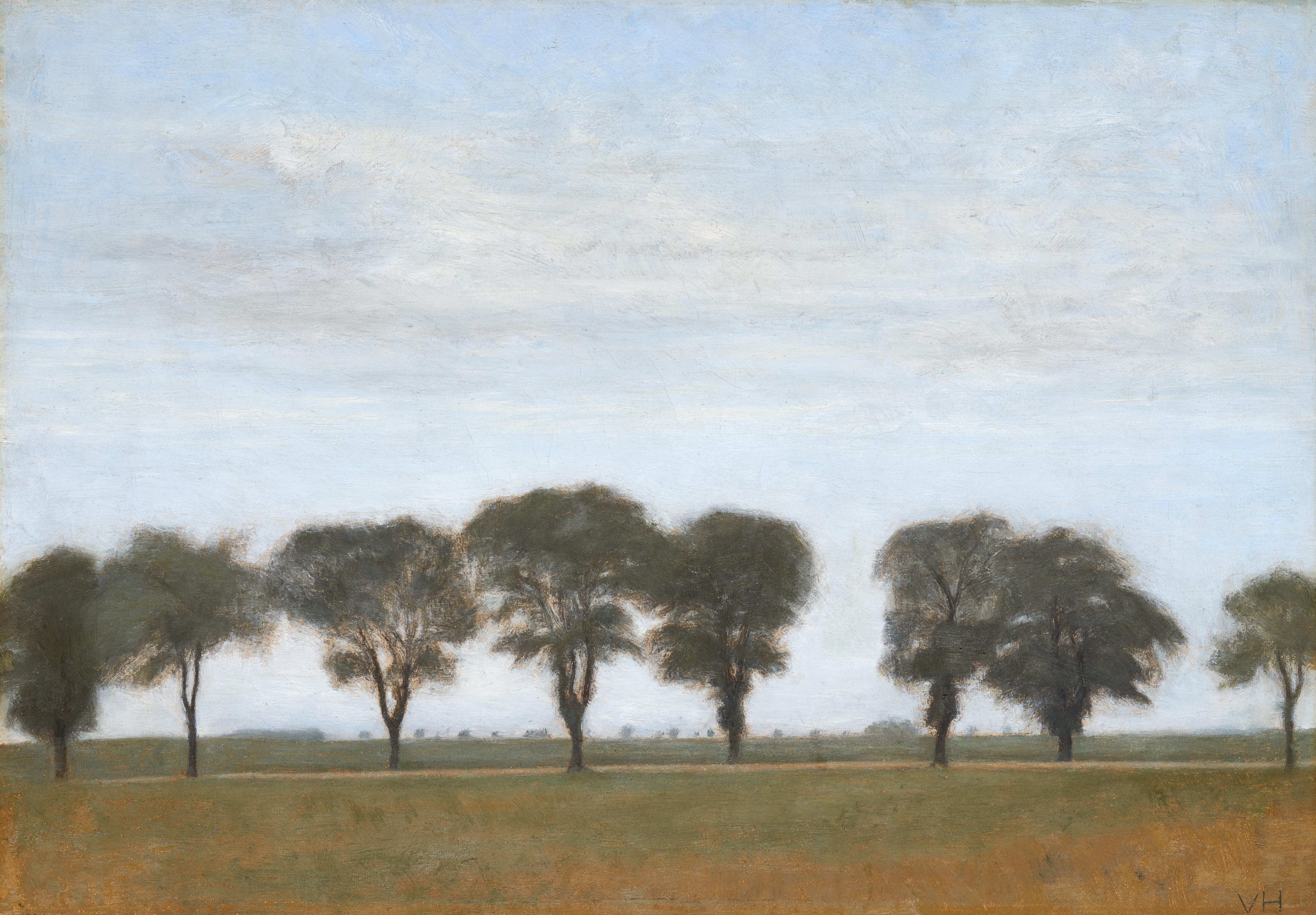
Kongevejen at Gentofte. Study, 1892
Oil on canvas
32 x 46 cm
Inventory number 7/2016
Unlike many other painters, Vilhelm Hammershøi did not seek out distant, remote areas to paint landscapes. Instead, he found his motifs near Copenhagen, in North and West Zealand and on the island of Falster, where his wife Ida Hammershøi (1869–1949) was born and raised.
A substantial portion of Hammershøi’s landscape paintings were created in connection with summer sojourns. In 1892, Ida and Vilhelm Hammershøi spent the summer in Gentofte north of Copenhagen, where he created a series of pictures showing scenes from the Lake Gentofte and Kongevejen. The works share certain traits: the artist depicts an open, cultivated nature in which the country road, flanked by trees, runs across the image surface. Such compositions constituted a new and different way of painting landscape around the turn of the century, at which point most artists still adhered to the tradition of using roads as a compositional device which created a point of entry into the landscape.
Engaging in further experimentation with the visual mode of expression, Hammershøi has arranged his scene so that any differences in level have been evened out in the otherwise slightly hilly landscape, making it appear flat, clear-cut and calm. He has omitted any hint of the fact that at the time, Kongevejen was one of the most important routes leading out from Copenhagen as the landscape is entirely empty of traffic and people.1
Lent to the exhibition
A substantial portion of Hammershøi’s landscape paintings were created in connection with summer sojourns. In 1892, Ida and Vilhelm Hammershøi spent the summer in Gentofte north of Copenhagen, where he created a series of pictures showing scenes from the Lake Gentofte and Kongevejen. The works share certain traits: the artist depicts an open, cultivated nature in which the country road, flanked by trees, runs across the image surface. Such compositions constituted a new and different way of painting landscape around the turn of the century, at which point most artists still adhered to the tradition of using roads as a compositional device which created a point of entry into the landscape.
Engaging in further experimentation with the visual mode of expression, Hammershøi has arranged his scene so that any differences in level have been evened out in the otherwise slightly hilly landscape, making it appear flat, clear-cut and calm. He has omitted any hint of the fact that at the time, Kongevejen was one of the most important routes leading out from Copenhagen as the landscape is entirely empty of traffic and people.1
Lent to the exhibition
Descendant. Curated by Lars von Trier
June 6 – September 20, 2026
Descendant. Curated by Lars von Trier
10. oktober, 2026 – 24. januar, 2027
Published in
Published in
Alfred Bramsen: Vilhelm Hammershøis Arbejder. Fortegnelse, Copenhagen 1900, cat. 53;
Fortegnelse over arbejder af Vilhelm Hammershøi, booklet 1, Kunstforeningen, Copenhagen 1916, p. 11, cat. 97;
Sophus Michaëlis and Alfred Bramsen: Vilhelm Hammershøi. Kunstneren og hans værk, Copenhagen 1918, p. 90, cat. 118;
Alfred Bramsen: Udvalg af Vilh. Hammershøis arbejder, Copenhagen 1930, p. 7, cat. 4;
Poul Vad: Hammershøi. Værk og liv, Copenhagen 2003, 5. ed., p. 180;
Henrik Wivel: Hammershøi in The David Collection, Copenhagen 2017, pp. 62-63;
Annette Rosenvold Hvidt and Gertrud Oelsner: Vilhelm Hammershøi. På sporet af det åbne billede, Copenhagen 2018, pp. 12, 194-195, 345;
Eva Pohl: “Se Hammershøi over skulderen,” Nordisk Tidsskrift, 1, 2018, pp. 15-16;
Annette Rosenvold Hvidt and Gertrud Oelsner (ed.): Fremkaldelser. Vilhelm Hammershøi, Valdemar Schønheyder Møller og fotografiet, Den Hirschsprungske Samling, Copenhagen 2021, fig. 56, p. 56-57;
Kirsten Appleyard: “Vilhelm Hammershøi,” i Sonia Del Re: Gathered Leaves. Discoveries from the Drawings Vault, Ottawa National Gallery, Ottawa 2024, fig. 114, p. 154;
Henrik Wivel: Vilhelm Hammershøi. maleri som poesi, Copenhagen 2026, fig. 106, p. 251 og pp. 248-249;
Fortegnelse over arbejder af Vilhelm Hammershøi, booklet 1, Kunstforeningen, Copenhagen 1916, p. 11, cat. 97;
Sophus Michaëlis and Alfred Bramsen: Vilhelm Hammershøi. Kunstneren og hans værk, Copenhagen 1918, p. 90, cat. 118;
Alfred Bramsen: Udvalg af Vilh. Hammershøis arbejder, Copenhagen 1930, p. 7, cat. 4;
Poul Vad: Hammershøi. Værk og liv, Copenhagen 2003, 5. ed., p. 180;
Henrik Wivel: Hammershøi in The David Collection, Copenhagen 2017, pp. 62-63;
Annette Rosenvold Hvidt and Gertrud Oelsner: Vilhelm Hammershøi. På sporet af det åbne billede, Copenhagen 2018, pp. 12, 194-195, 345;
Eva Pohl: “Se Hammershøi over skulderen,” Nordisk Tidsskrift, 1, 2018, pp. 15-16;
Annette Rosenvold Hvidt and Gertrud Oelsner (ed.): Fremkaldelser. Vilhelm Hammershøi, Valdemar Schønheyder Møller og fotografiet, Den Hirschsprungske Samling, Copenhagen 2021, fig. 56, p. 56-57;
Kirsten Appleyard: “Vilhelm Hammershøi,” i Sonia Del Re: Gathered Leaves. Discoveries from the Drawings Vault, Ottawa National Gallery, Ottawa 2024, fig. 114, p. 154;
Henrik Wivel: Vilhelm Hammershøi. maleri som poesi, Copenhagen 2026, fig. 106, p. 251 og pp. 248-249;
Footnotes
Footnotes
1.
Kasper Monrad et al.: Hammershøi og Europa, The National Gallery of Denmark, Copenhagen 2012, p. 123.