The Rum Saljuq Rulers of Central Anatolia, 470-708 H/1077-1308 AD
Legend & Design
Legend & Design
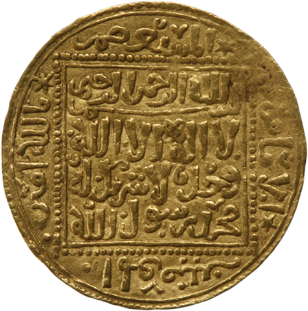
Obverse
In central square
bism allah al-rahman al-rahim / la ilah illa allah / wahdahu la sharik lahu / muhammad rasul allah
“in the name of God the Merciful, the Compassionate, no god but God, unique, He has no associate, Muhammad is the messenger of God”
In marginal segments
at 3:00 al-imam, at 12:00 al-musta’sim, at 9:00 billah amir, at 6:00 al-mu’minin
“the Imam al-Musta‘sim billah, Commander of the Faithful”
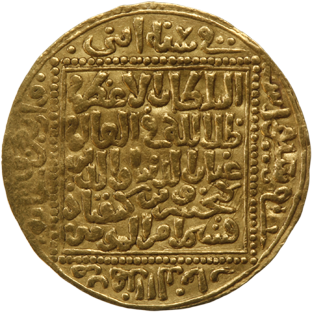
Reverse
In central square
al-sultan al-a’zam / zill allah fi’l-‘alam / ghiyath al-dunya wa’l-din / kaykhusraw ibn kayqubad / qasim amir al-mu’minin
“The Supreme Sultan, Shadow of God on Earth, Defender of the World and Faith, Kakhusraw son of Kayqubad, Partner of the Commander of the Faithful”
Marginal segments
at 6:00 duriba hadha’l-dinar, at 3:00 bi-siwas, at 12:00 fi sana ithna, at 9:00 wa arb‘in wa sittmi’a
“this dinar was struck in Siwas in the year two and forty and six hundred”
Historical Note
Historical Note
As the reign of Ghiyath al-Din Kaykhusraw II progressed the Rum Saljuq empire was increasingly threatened by the relentless advance of the Mongols, which drove terrified refugees westward into Anatolia. Among their number were the Kayi tribe, who, led by their chief Sulayman, eventually settled in north-western Anatolia where they later founded the Ottoman state.
Many of the refugees were harmless peasants, but they were joined by troublemakers and dervishes who incited both the refugees and the local population to rebellion. They accused Kaykhusraw, who had granted trading concessions to foreigners, of favouring the Christians, and unrest became so widespread that Kaykhusraw was forced to enlist Christian mercenaries in his army. Kaykhusraw’s forces met the Mongols, led by their general Bayju, at the Battle of Köse Dagh, between Sivas and Erzincan in Muharram 641 H (June 1243).
The Rum Saljuqs were soundly defeated, and Kaykhusraw deserted the field leaving his vizier to conclude a humiliating peace treaty which effectively brought an end to Rum Saljuq independence. Panic spread throughout Anatolia at the news of the Mongols’ victory. As the enemy advanced fields went untilled, and when famine broke out rich Saljuqs tried to exchange their magnificent jewels for any morsel of food they could lay hands on. So great did the chaos become that in 643 (1245) members of the court rose up in revolt and murdered their defenceless sovereign. The sixty years of nominal rule that followed did not even allow for conflicts in the Rum Saljuq family to disturb the Pax Mongolica.
Kaykhusraw’s response to the disaster at Köse Dagh was to pay the tribute demanded by the Mongols in a new coinage which attempted to make up for his failures by clinging to the strength of Islam in the face of infidel forces.