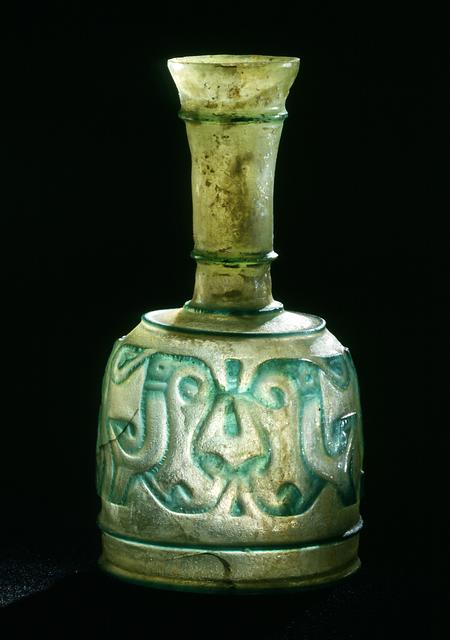
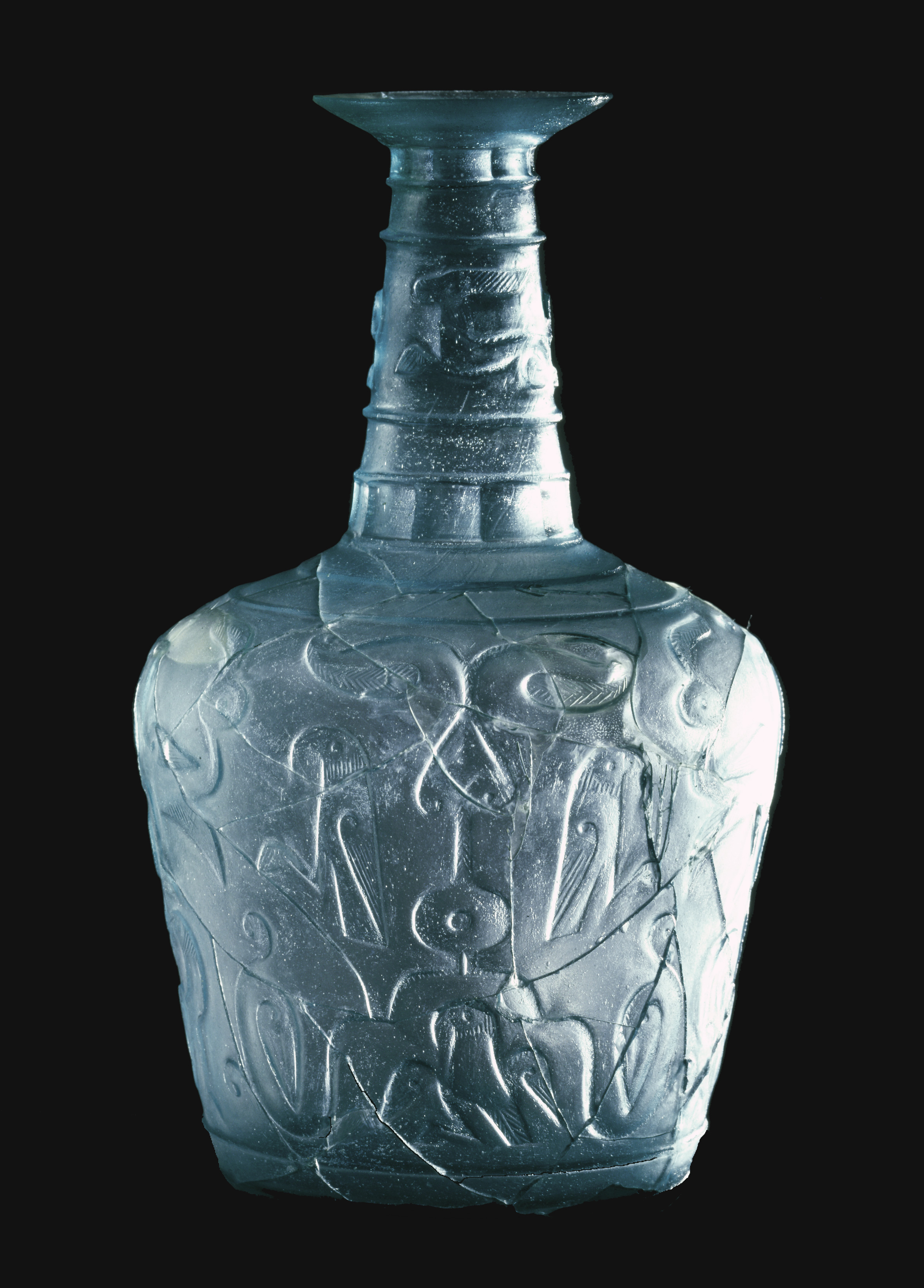
Bottle, greenish glass, with relief-cut decoration
Iraq or Iran; 9th-10th century
H: 21.5 cm
Inventory number 10/1963
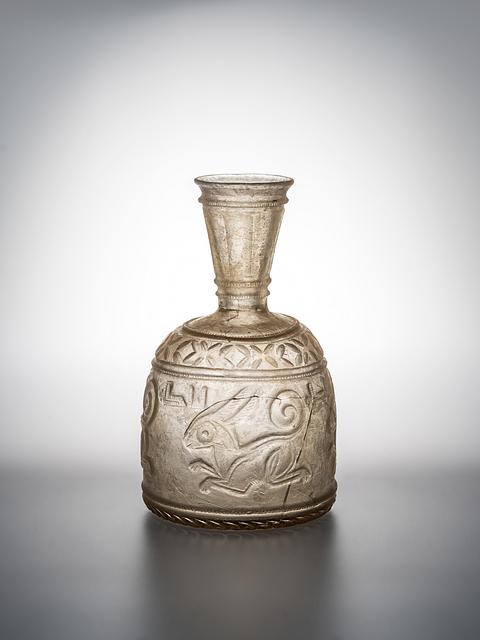
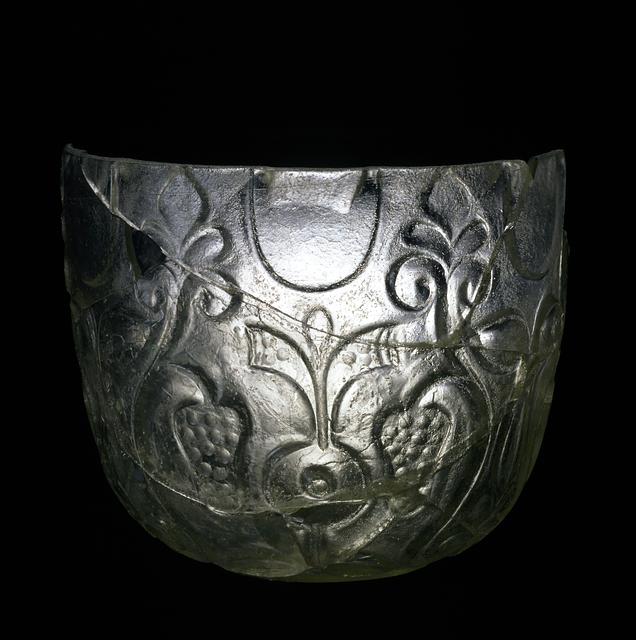
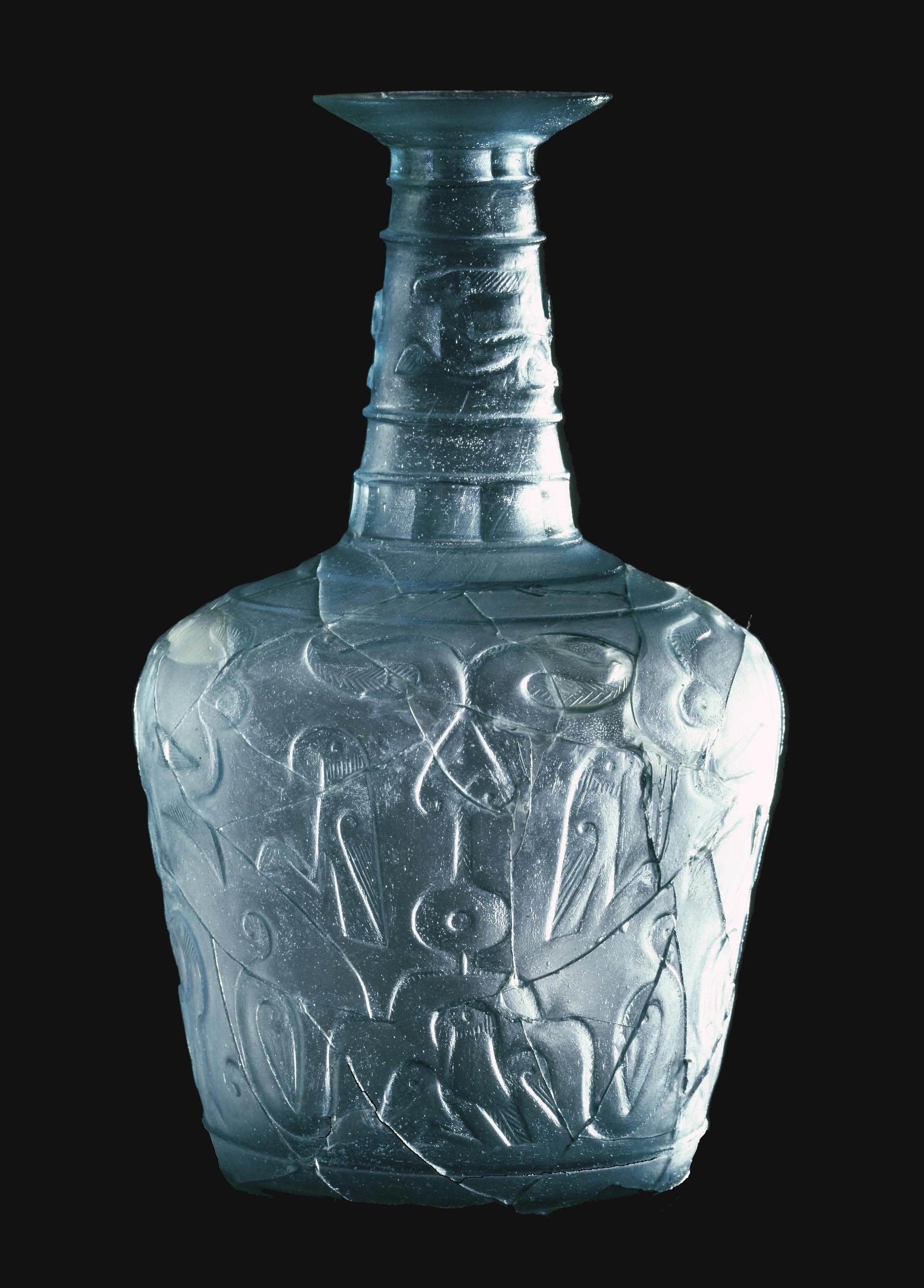
This fairly large bottle features a relief decoration that was produced on a grinding wheel, leaving the glass only a few millimeters thick in some areas. The highly stylized birds and running, four-legged animals are often found in Abbasid art. The same is true of the vegetal ornamentation, which seems abstract. The circular shape with a central raised section, in contrast, is a motif that survived from the Sasanian period. A bottle with such complex and painstakingly executed decoration was made for a wealthy clientele. The same glassmakers created even more costly versions in rock crystal for society’s absolute elite.
Published in
Published in
Journal of Glass Studies, 6, 1964, fig. 16, p. 159;
C .L. Davids Samling. Fjerde Del : Jubilæumsskrift 1945-70, København 1970, cat.no. 15, p. 134-135 og 140;
André Leth: Davids Samling. Islamisk kunst = The David Collection. Islamic Art, København 1975, p. 15;
Art from the World of Islam. 8th-18th century, Louisiana, Humlebæk 1987, cat.no. 18;
Kjeld von Folsach: Islamic art. The David Collection, Copenhagen 1990, cat.no. 221;
Kjeld von Folsach, Torben Lundbæk and Peder Mortensen (eds.): Sultan, Shah and Great Mughal: the history and culture of the Islamic world, The National Museum, Copenhagen 1996, cat.no. 141;
Jens Kröger: “Vom Flügelpaar zur Flügelpalmette Sasanidische Motive in der islamischen Kunst” in Barbara Finster, Christa Fragner, Herta Hafenrichter (eds.): Bamberger Symposium: Rezeption in der islamischen Kunst vom 26.6.-28.6.1992, Stuttgart 1999, pl. XXVII:5;
Stefano Carboni and David Whitehouse: Glass of the Sultans, Corning Museum of Glass, New York 2001, cat.no. 96;
Kjeld von Folsach: Art from the World of Islam in The David Collection, Copenhagen 2001, cat.no. 313;
Jacqueline du Pasquier: Histoire du verre: les chefs-d'oeuvre de l'islam, Paris 2007, p. 92;
Marcus Pilz: Transparente Schätze : Der abbasidische und fatimidische Bergkristallschnitt und seine Werke, Darmstadt 2021, p. 91, note 18 and p. 93, Abb. 46;
C .L. Davids Samling. Fjerde Del : Jubilæumsskrift 1945-70, København 1970, cat.no. 15, p. 134-135 og 140;
André Leth: Davids Samling. Islamisk kunst = The David Collection. Islamic Art, København 1975, p. 15;
Art from the World of Islam. 8th-18th century, Louisiana, Humlebæk 1987, cat.no. 18;
Kjeld von Folsach: Islamic art. The David Collection, Copenhagen 1990, cat.no. 221;
Kjeld von Folsach, Torben Lundbæk and Peder Mortensen (eds.): Sultan, Shah and Great Mughal: the history and culture of the Islamic world, The National Museum, Copenhagen 1996, cat.no. 141;
Jens Kröger: “Vom Flügelpaar zur Flügelpalmette Sasanidische Motive in der islamischen Kunst” in Barbara Finster, Christa Fragner, Herta Hafenrichter (eds.): Bamberger Symposium: Rezeption in der islamischen Kunst vom 26.6.-28.6.1992, Stuttgart 1999, pl. XXVII:5;
Stefano Carboni and David Whitehouse: Glass of the Sultans, Corning Museum of Glass, New York 2001, cat.no. 96;
Kjeld von Folsach: Art from the World of Islam in The David Collection, Copenhagen 2001, cat.no. 313;
Jacqueline du Pasquier: Histoire du verre: les chefs-d'oeuvre de l'islam, Paris 2007, p. 92;
Marcus Pilz: Transparente Schätze : Der abbasidische und fatimidische Bergkristallschnitt und seine Werke, Darmstadt 2021, p. 91, note 18 and p. 93, Abb. 46;
Iraq under the Abbasids