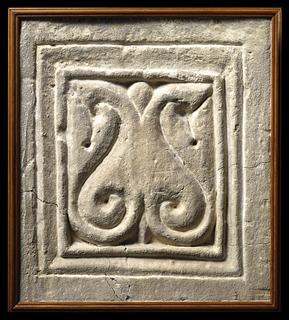
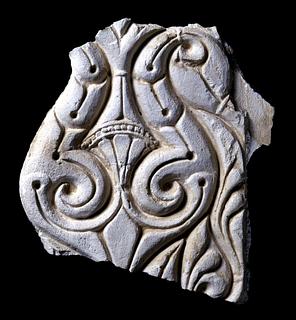
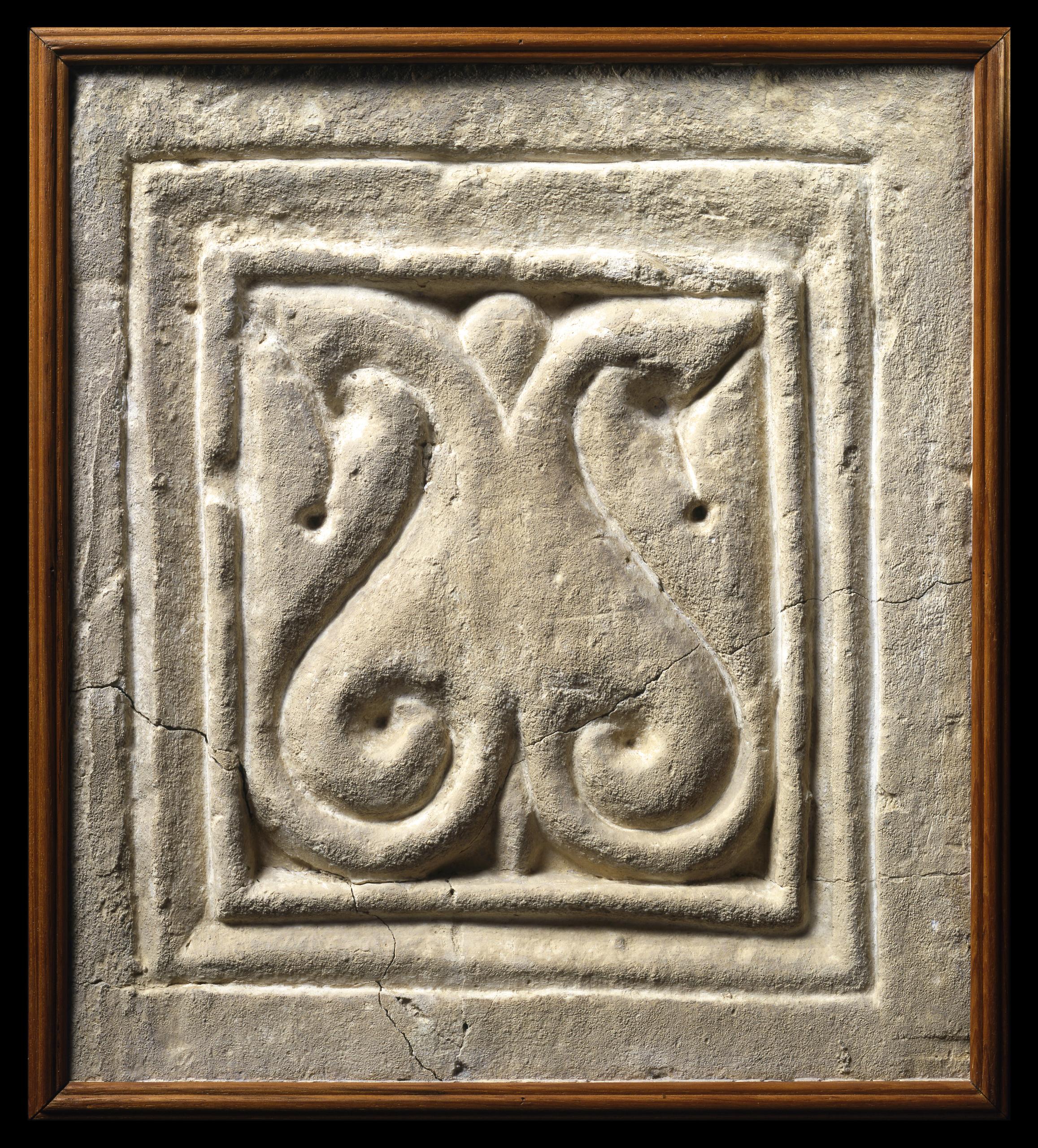
Two stucco reliefs
Iraq; 9th century
H: 45.5; B: 40.5 cm (42/1992)
H: 45.5; B: 40.5 cm (42/1992)
H: 34.5; B: 29 cm (43/1992)
Inventory number 42/1992 & 43/1992
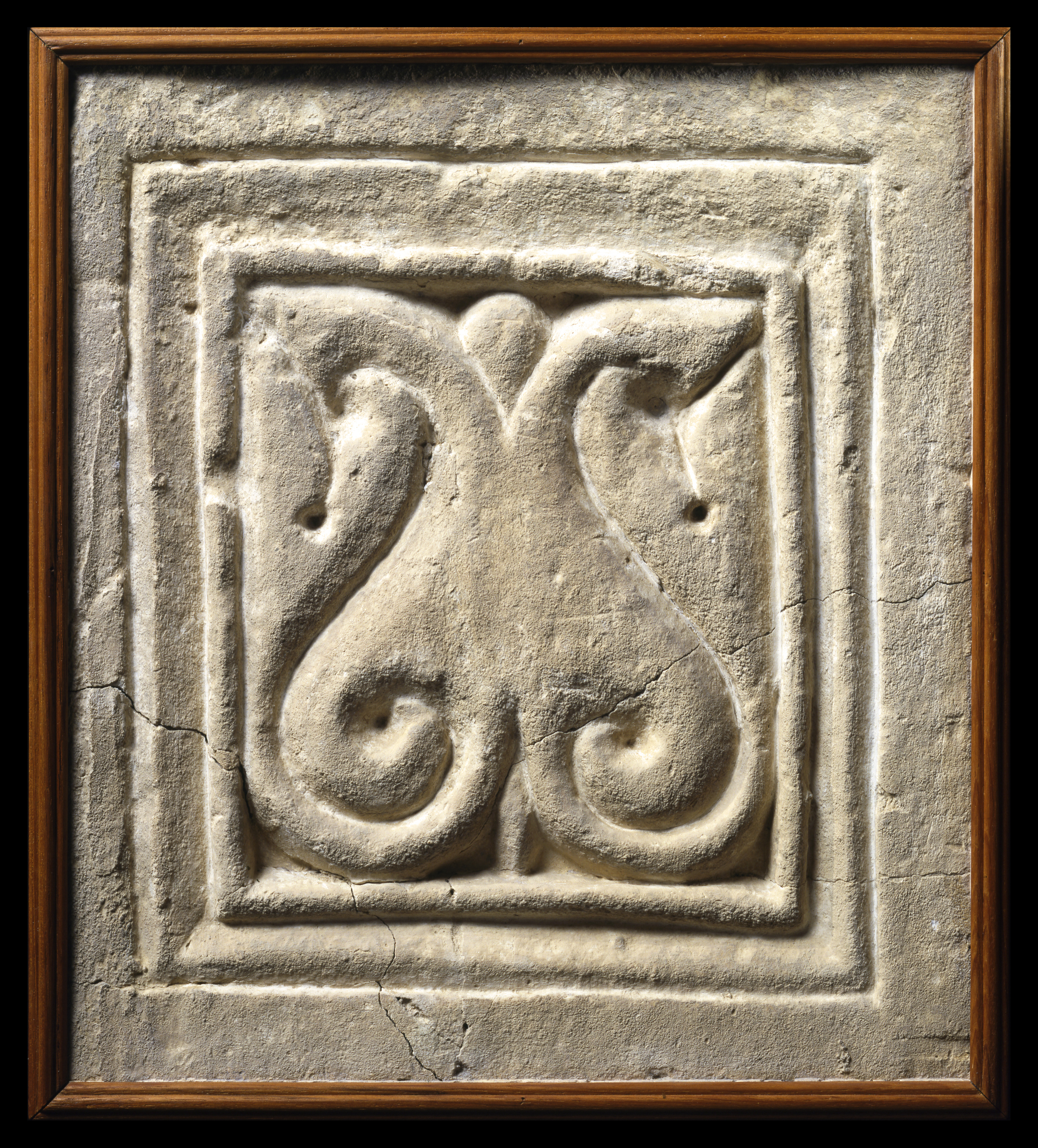
The Samarra style, also called the beveled style, takes its name from the decoration on the many cast stucco reliefs that covered the buildings in Samarra, founded in 836 as the Abbasids’ new capital outside Baghdad.
The stucco reliefs from Samarra can be divided into groups. This relief belongs to the abstract group, where it is no longer possible to see that the contorted forms were derived from vegetal elements.
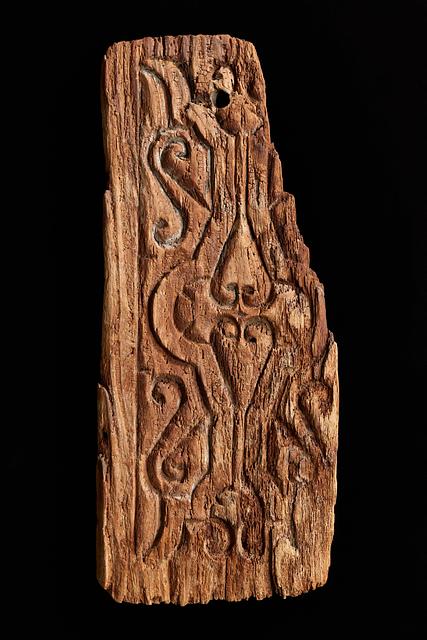
In the course of the 9th and 10th century, the Samarra style spread throughout the Abbasid Empire, all the way from Egypt to Nishapur in Iran. Its scrolling shapes were also transferred to two-dimensional decorations on ceramics and glass.
The stucco reliefs from Samarra can be divided into groups. This relief belongs to the abstract group, where it is no longer possible to see that the contorted forms were derived from vegetal elements.
In the course of the 9th and 10th century, the Samarra style spread throughout the Abbasid Empire, all the way from Egypt to Nishapur in Iran. Its scrolling shapes were also transferred to two-dimensional decorations on ceramics and glass.
Published in
Published in
42/1992
Kjeld von Folsach, Torben Lundbæk and Peder Mortensen (eds.): Sultan, Shah and Great Mughal: the history and culture of the Islamic world, The National Museum, Copenhagen 1996, cat.no. 53;
Kjeld von Folsach: Art from the World of Islam in The David Collection, Copenhagen 2001, cat.no. 389;
Kjeld von Folsach: Flora islamica: plantemotiver i islamisk kunst, Davids Samling, København 2013, cat.no. 19;
43/1992
Christie's, London, 20/10-1992, lot. 84;
Kjeld von Folsach, Torben Lundbæk and Peder Mortensen (eds.): Sultan, Shah and Great Mughal: the history and culture of the Islamic world, The National Museum, Copenhagen 1996, cat.no. 62;
Kjeld von Folsach: Art from the World of Islam in The David Collection, Copenhagen 2001, cat.no. 390;
Sheila S. Blair and Jonathan M. Bloom (eds.): Cosmophilia. Islamic Art from the David Collection, Copenhagen, McMullen Museum of Art, Boston College, Boston 2006, cat.no. 74;
Sheila Blair and Jonathan Bloom (eds.): God is beautiful and loves beauty: the object in Islamic art and culture, New Haven 2013, fig. 82, p. 90;
Kjeld von Folsach, Torben Lundbæk and Peder Mortensen (eds.): Sultan, Shah and Great Mughal: the history and culture of the Islamic world, The National Museum, Copenhagen 1996, cat.no. 53;
Kjeld von Folsach: Art from the World of Islam in The David Collection, Copenhagen 2001, cat.no. 389;
Kjeld von Folsach: Flora islamica: plantemotiver i islamisk kunst, Davids Samling, København 2013, cat.no. 19;
43/1992
Christie's, London, 20/10-1992, lot. 84;
Kjeld von Folsach, Torben Lundbæk and Peder Mortensen (eds.): Sultan, Shah and Great Mughal: the history and culture of the Islamic world, The National Museum, Copenhagen 1996, cat.no. 62;
Kjeld von Folsach: Art from the World of Islam in The David Collection, Copenhagen 2001, cat.no. 390;
Sheila S. Blair and Jonathan M. Bloom (eds.): Cosmophilia. Islamic Art from the David Collection, Copenhagen, McMullen Museum of Art, Boston College, Boston 2006, cat.no. 74;
Sheila Blair and Jonathan Bloom (eds.): God is beautiful and loves beauty: the object in Islamic art and culture, New Haven 2013, fig. 82, p. 90;