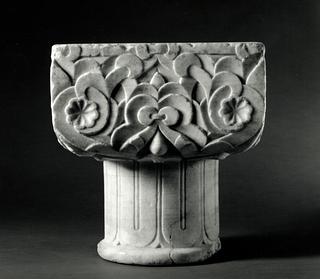
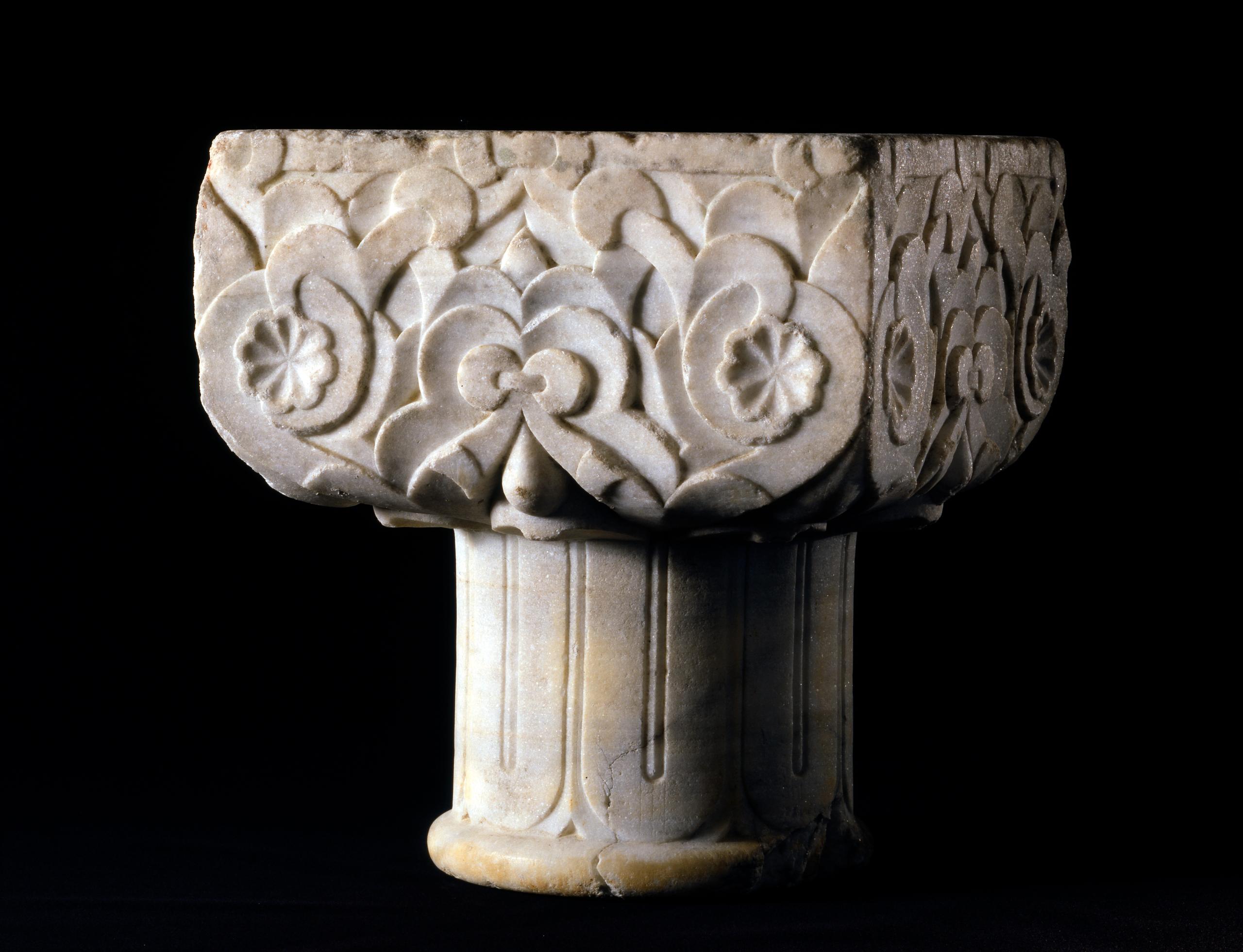
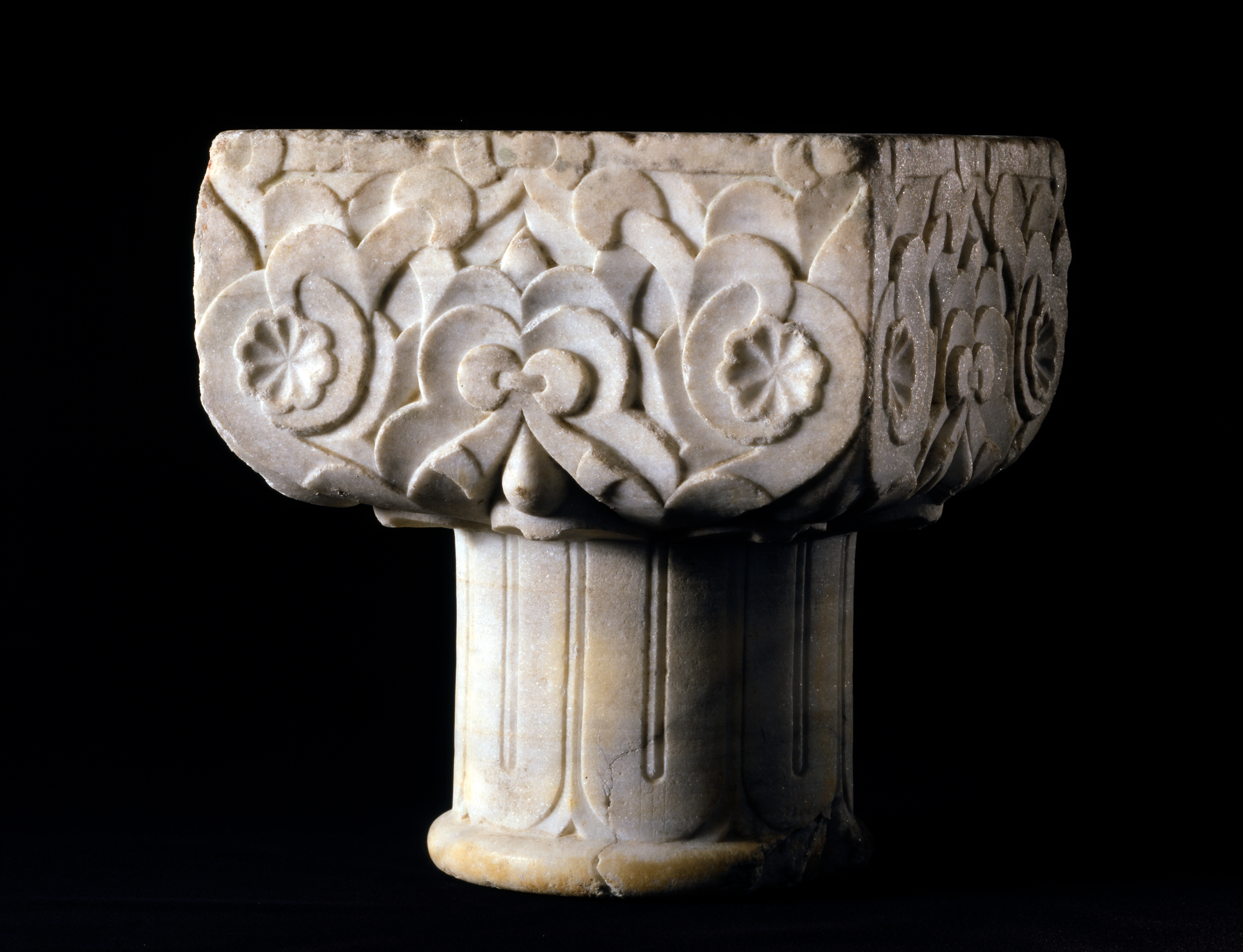
Capital, carved marble
Spain, Granada; c. 1320-1350
H: 32.5; W: 30; D: 30 cm
Inventory number 10/2001
The Alhambra in Granada comprised numerous palaces, which in the centuries after the Christian conquest in 1492 were demolished until only a few buildings of the original complex remained. Many building parts were, however, given a new life in other structures in the Christian city.
The style of the capital indicates that it was made for the Alhambra under Yusuf I (1333-1354). The upper cubic shape, with its complex decoration of intertwined bands, is typical of Nasrid capitals. The decoration’s many levels were probably originally further highlighted through the use of color.
The style of the capital indicates that it was made for the Alhambra under Yusuf I (1333-1354). The upper cubic shape, with its complex decoration of intertwined bands, is typical of Nasrid capitals. The decoration’s many levels were probably originally further highlighted through the use of color.
Published in
Published in
Sheila S. Blair and Jonathan M. Bloom (eds.): Cosmophilia. Islamic Art from the David Collection, Copenhagen, McMullen Museum of Art, Boston College, Boston 2006, cat.no. 85;
.jpg)