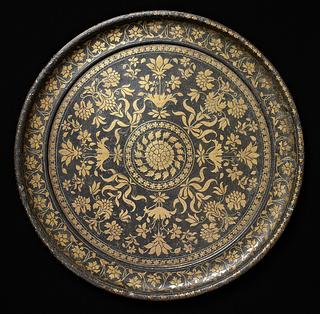
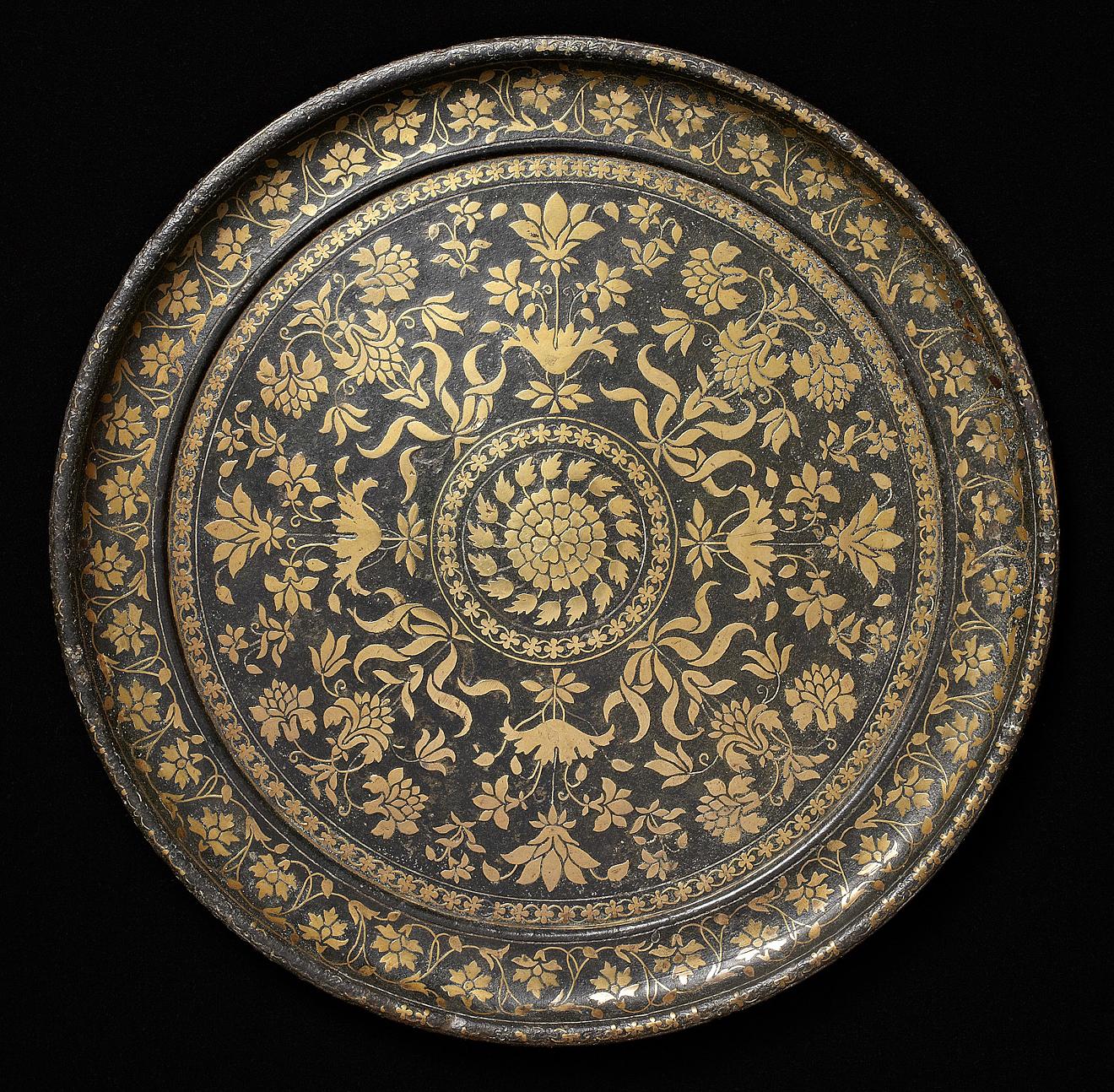
Dish of bidri metal, inlaid with brass
India, Deccan; 2nd half of 17th century
Diam: 32.2 cm
Inventory number 16/2011
The bidri technique was developed in the 1st half of the 17th century in the Deccan. Soon it was used to create magnificent patterns in one or more shiny metals inlaid in the dark, matte surface. Plant motifs were a favorite point of departure.
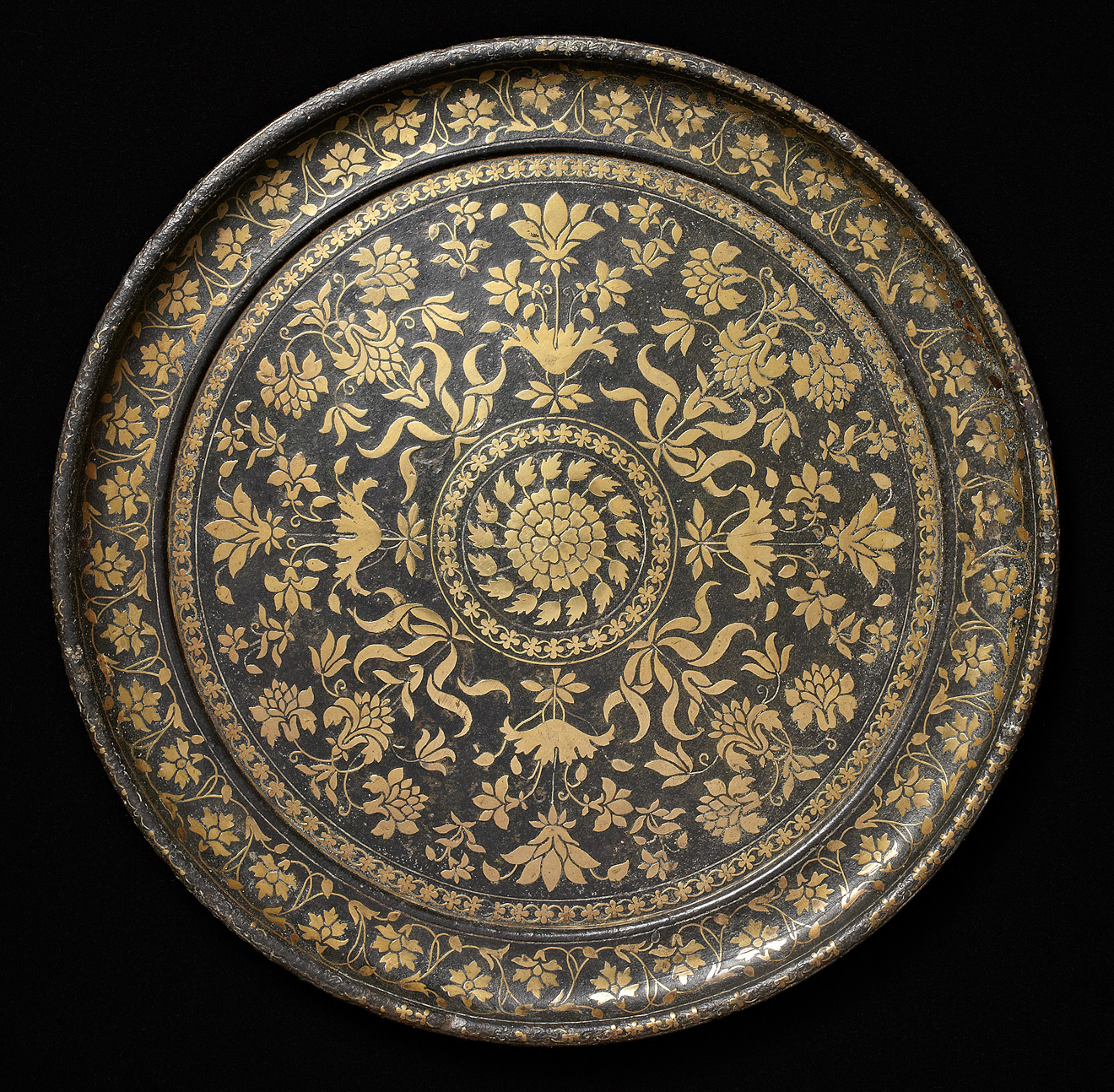
This dish is decorated with a mixture of highly stylized and more realistic plants. In the center is a peony-like flower, surrounded by repeats of two types of large, symmetrical, flowering plants. Their quite complicated structure, with curved flowers and leaves, keeps the decoration from looking lifeless, despite the repetition.
A love of expressive and dramatic color combinations and compositions characterized much of the art from the Deccan.
This dish is decorated with a mixture of highly stylized and more realistic plants. In the center is a peony-like flower, surrounded by repeats of two types of large, symmetrical, flowering plants. Their quite complicated structure, with curved flowers and leaves, keeps the decoration from looking lifeless, despite the repetition.
A love of expressive and dramatic color combinations and compositions characterized much of the art from the Deccan.
Published in
Published in
Robert Skelton (ed.): The Indian heritage: court life and arts under Mughal rule, Victoria and Albert Museum, London 1982, p. 142, cat.no. 482;
Mark Zebrowski: Gold, silver and bronze from Mughal India, London 1997, fig. 423, p. 249;
Joseph M. Dye: The arts of India: Virginia Museum of Fine Arts, Richmond 2001, p. 404;
Christie's, London, 7/4-2011, lot 240;
Kjeld von Folsach: Flora islamica: plantemotiver i islamisk kunst, Davids Samling, København 2013, cat.no. 63;
Mark Zebrowski: Gold, silver and bronze from Mughal India, London 1997, fig. 423, p. 249;
Joseph M. Dye: The arts of India: Virginia Museum of Fine Arts, Richmond 2001, p. 404;
Christie's, London, 7/4-2011, lot 240;
Kjeld von Folsach: Flora islamica: plantemotiver i islamisk kunst, Davids Samling, København 2013, cat.no. 63;
The Indian Sultanates
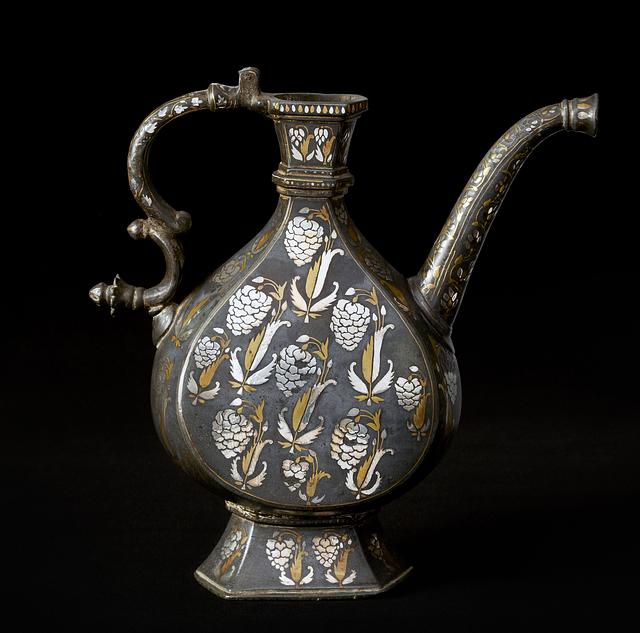
Ewer of bidri metal, inlaid with silver and brass
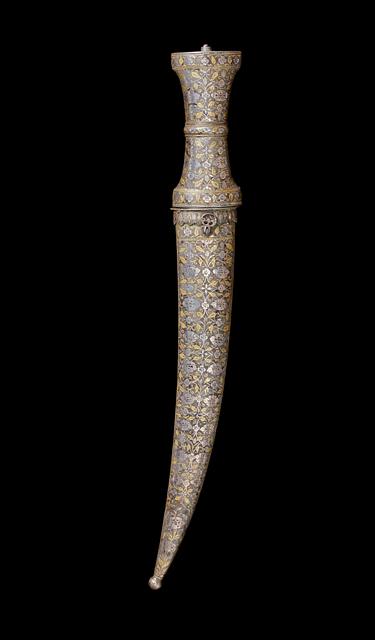
Dagger (khanjar) with hilt and scabbard of steel inlaid with brass and silver
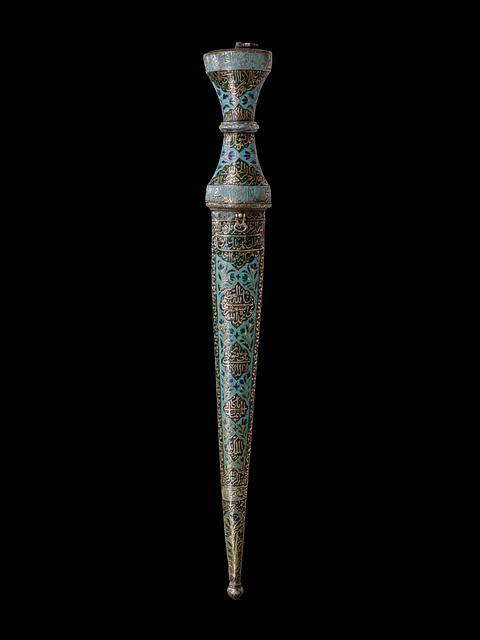.-The-David-Collection_Copenhagen_photo-Pernille-Klemp.jpg)
Dagger with blade of wootz steel and hilt and scabbard of gilt silver inlaid with opaque and transparent enamel
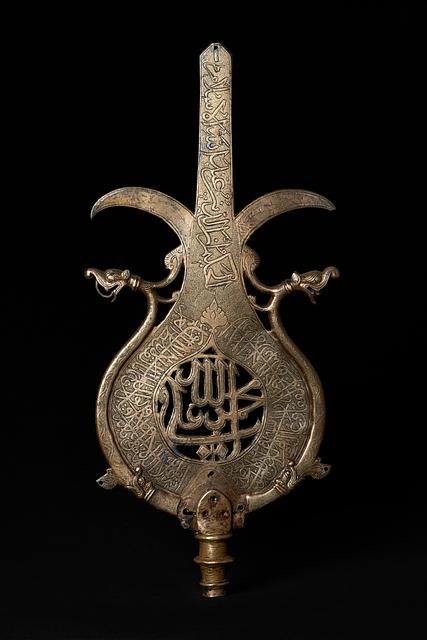
Bronze standard with openwork decoration, engraved, chased, and inlaid with gold and silver