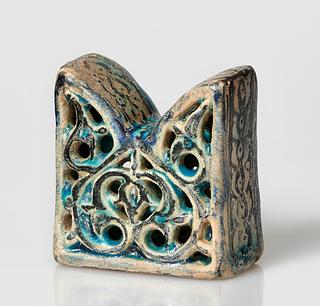
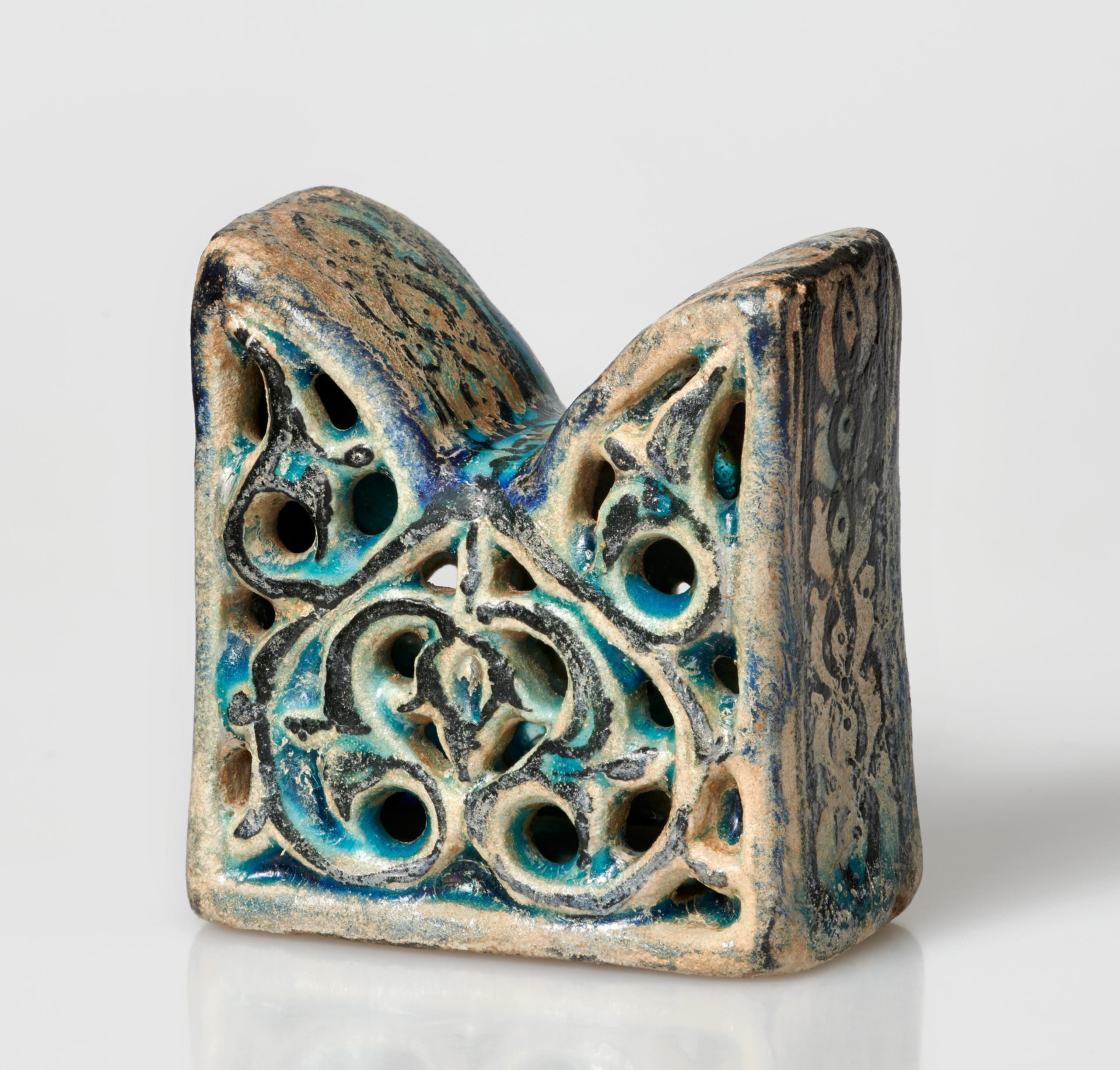
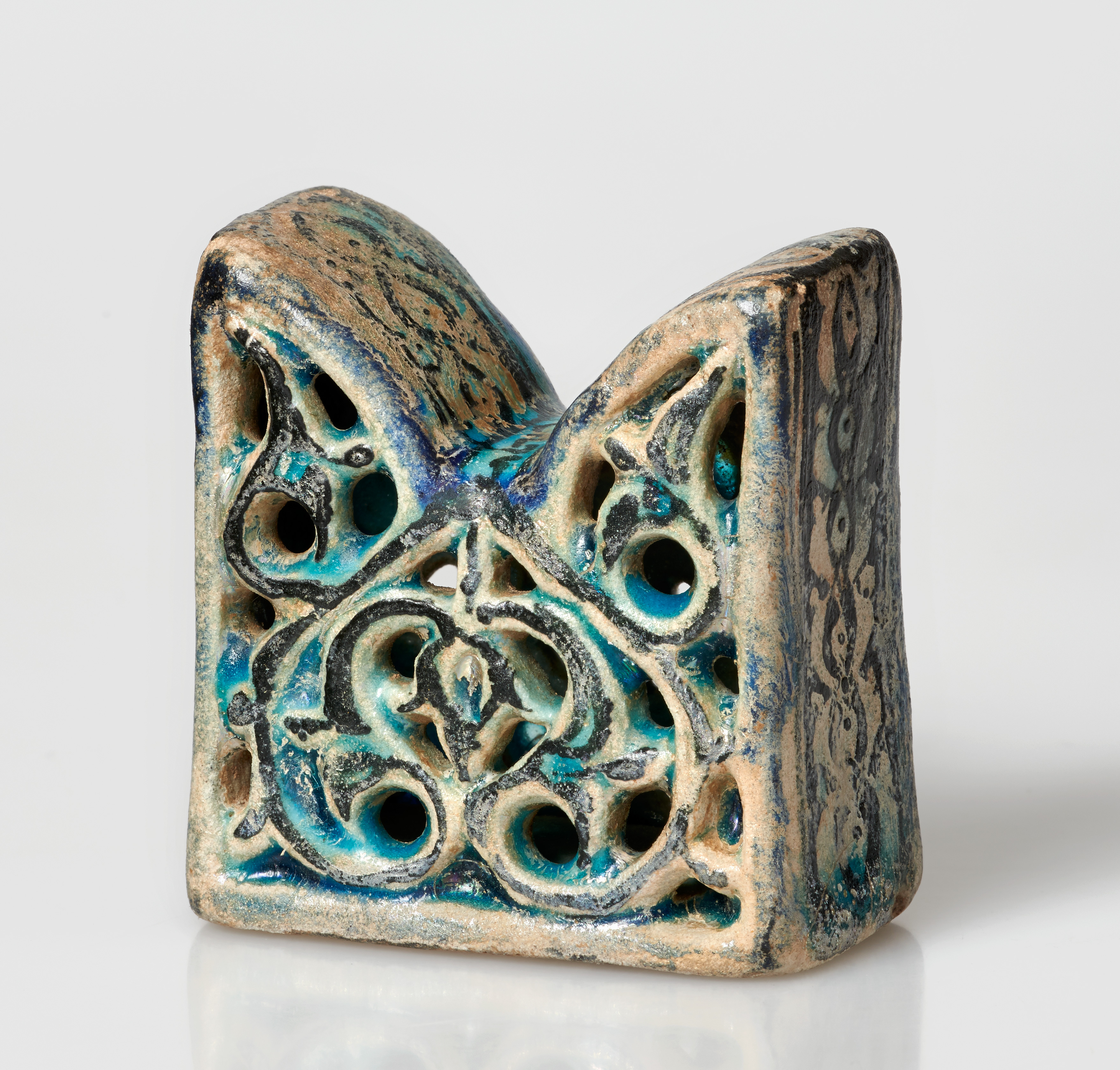
Fritware chessman with openwork decoration, painted in blue and black under a transparent, turquoise glaze
Syria, Raqqa; beginning of 13th century
H: 5.2; W; 5; D: 2.6 cm
Inventory number 19/1979
The gaming piece was very finely conceived in fritware with an openwork decoration. Its shape is reminiscent of crenellations, making it identifiable as a rook for a chess set.
Chess was played from the earliest Islamic period, and numerous medieval chessmen have also survived in other materials such as ivory, wood, glass, and rock crystal.
Islamic chessmen have abstract forms, making it often difficult to identify their precise role in the game. The simplest pieces can also easily be mistaken for those from other popular games, such as backgammon.
Chess was played from the earliest Islamic period, and numerous medieval chessmen have also survived in other materials such as ivory, wood, glass, and rock crystal.
Islamic chessmen have abstract forms, making it often difficult to identify their precise role in the game. The simplest pieces can also easily be mistaken for those from other popular games, such as backgammon.
Published in
Published in
Kjeld von Folsach: Islamic art. The David Collection, Copenhagen 1990, cat.no. 139;
Kjeld von Folsach: Art from the World of Islam in The David Collection, Copenhagen 2001, cat.no. 200;
Kjeld von Folsach: Art from the World of Islam in The David Collection, Copenhagen 2001, cat.no. 200;
The Late Abbasids, Atabegs, and Ayyubids
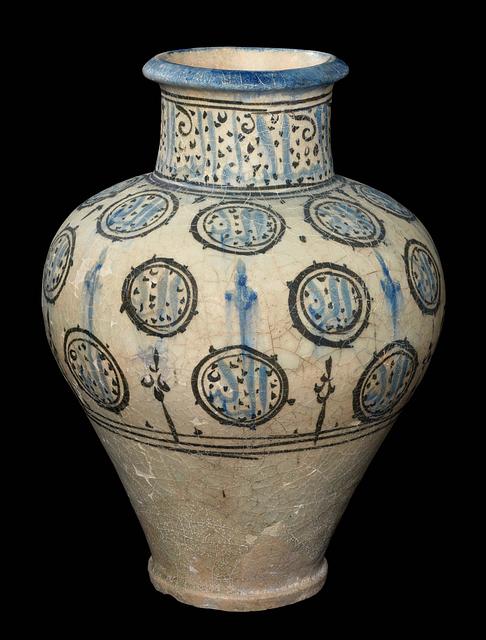
Fritware jar painted in black and blue under a transparent glaze
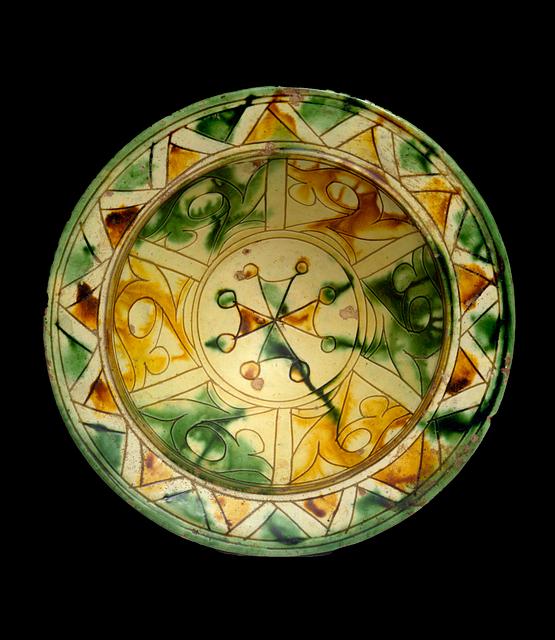
Earthenware bowl, covered with a white slip, incised, and painted in yellowish brown and green in a transparent glaze. Sgraffito type
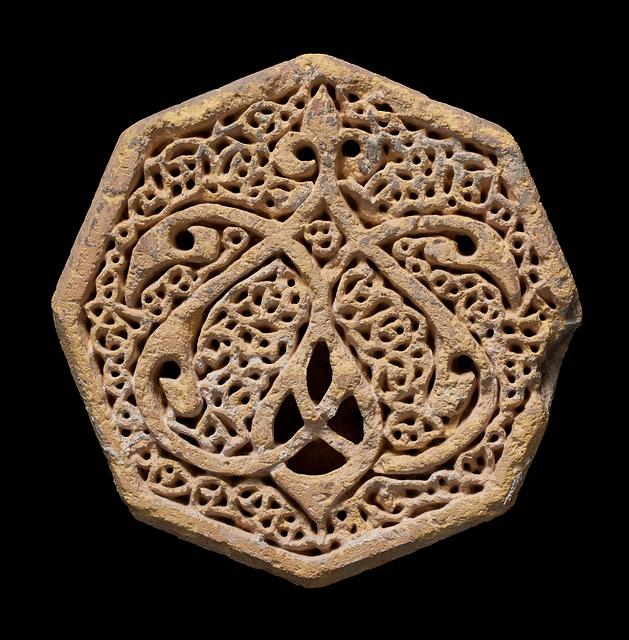
Earthenware tile, carved and unglazed
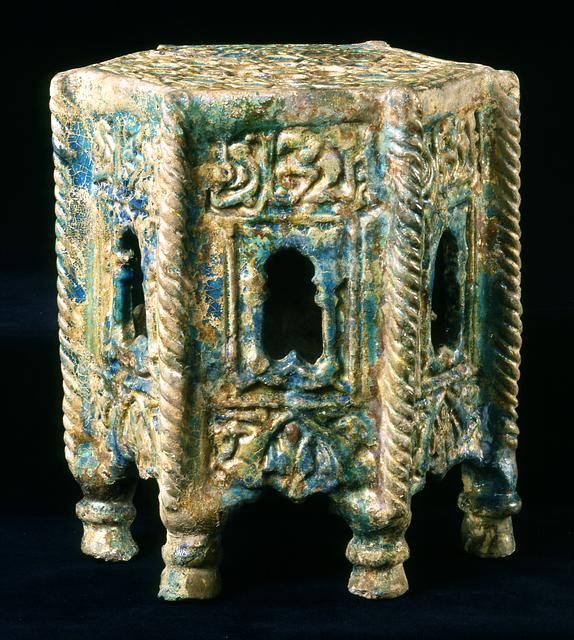
Fritware table, molded and covered with an opaque, turquoise glaze