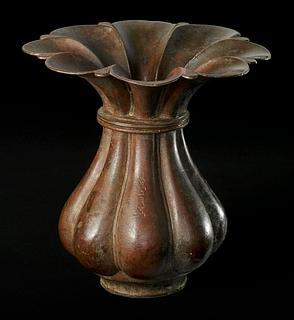
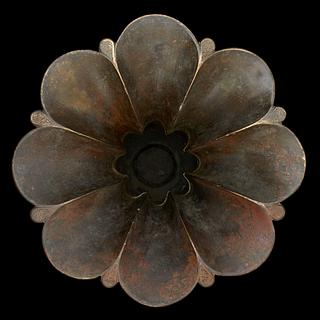
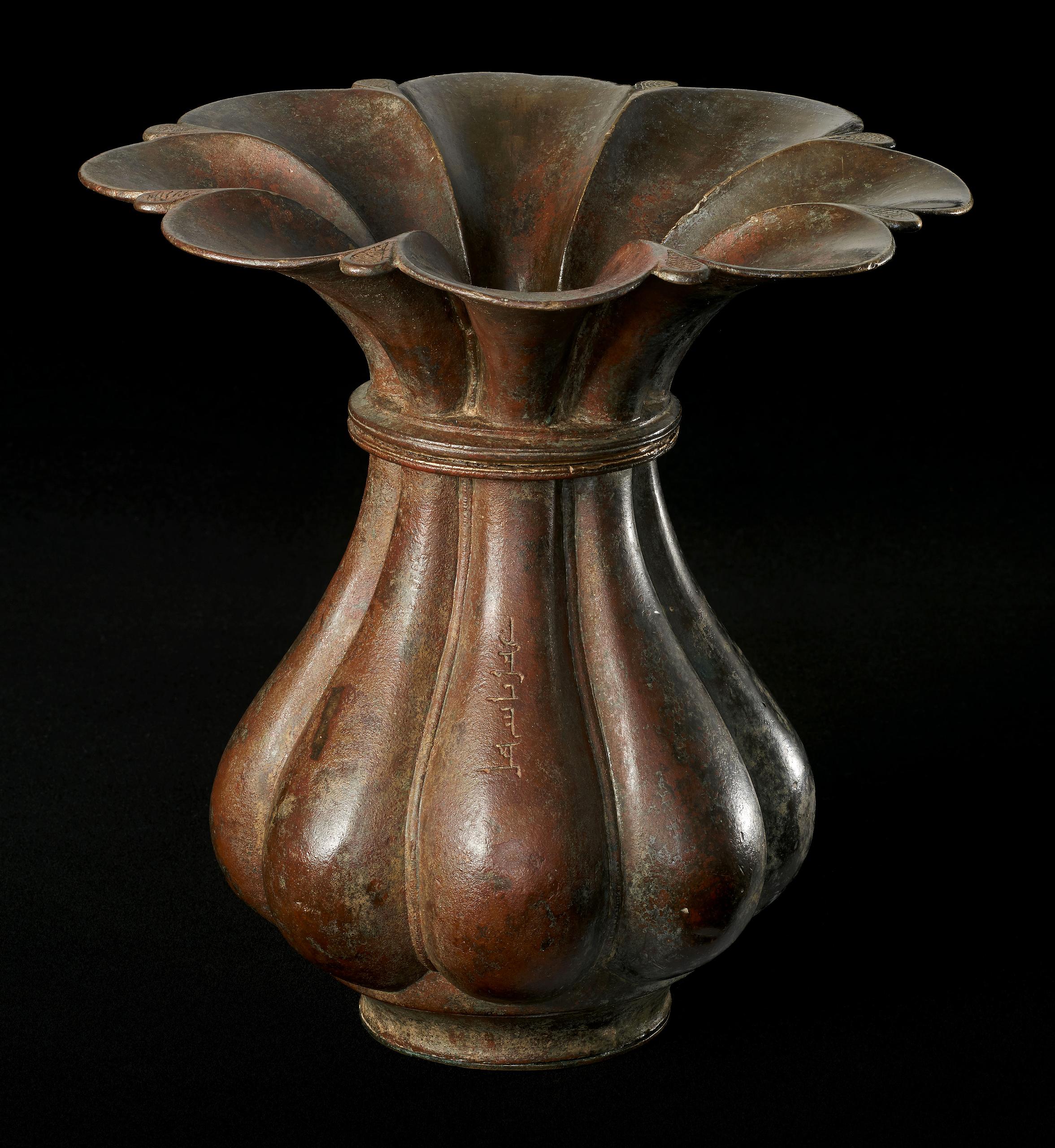
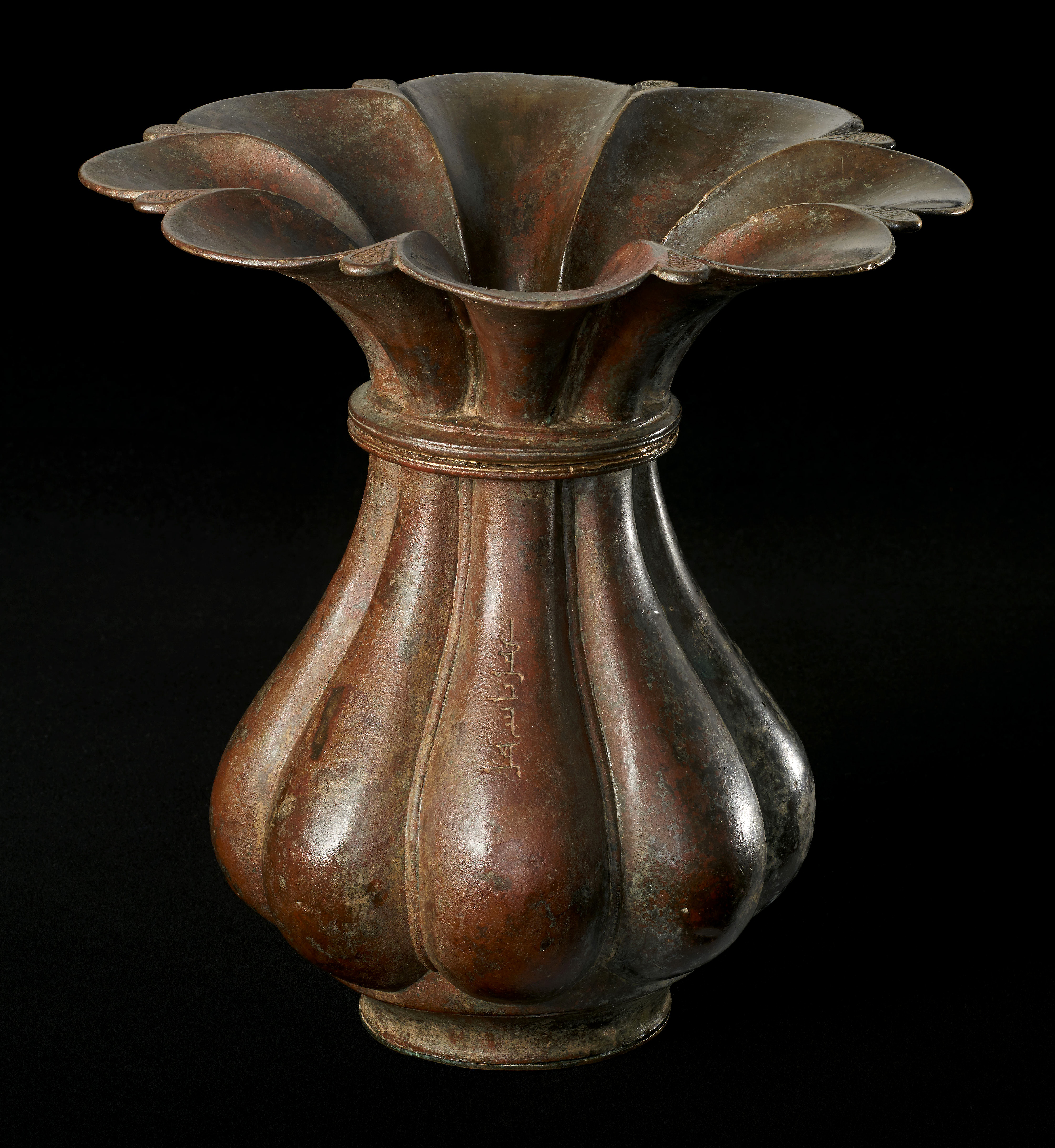
Vase, cast bronze
Eastern Iran or Afghanistan; 10th-11th century
H: 21; Diam. at top: 20.4 cm
Inventory number 40/1981
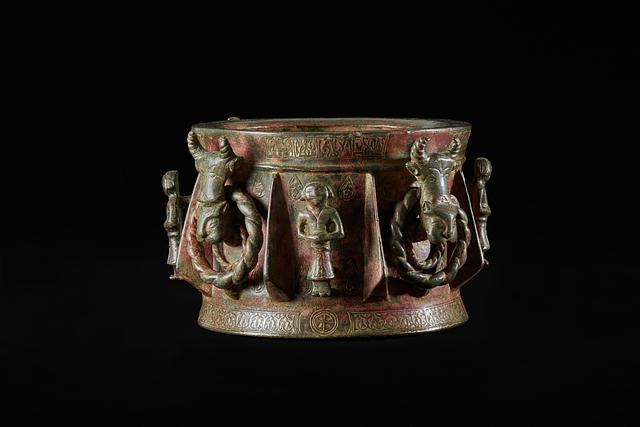
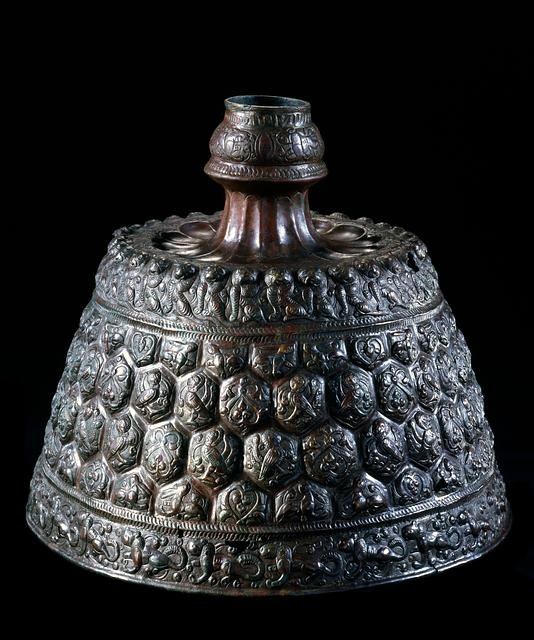
The vase carries an engraved Arabic inscription, “made by Basahal,” written in a type of Kufi that can be dated to the 10th-11th century. The museum also has a “bowl” (inv.no. 12/1982) that might have served as the base of a similar vase when turned upside down. The two do not belong together, however.
The vase and “bowl” have closely related, organic shapes that seem to have been inspired by exotic flowers or similar organic forms. The feature points to the influence of Indian art, where nature’s forms have always played an important role. This makes it probable that the pieces, which are said to come from Afghanistan, were created in a Ghaznavid context.
The vase and “bowl” have closely related, organic shapes that seem to have been inspired by exotic flowers or similar organic forms. The feature points to the influence of Indian art, where nature’s forms have always played an important role. This makes it probable that the pieces, which are said to come from Afghanistan, were created in a Ghaznavid context.
Published in
Published in
Art from the World of Islam. 8th-18th century, Louisiana, Humlebæk 1987, cat.no. 42;
Kjeld von Folsach: Islamic art. The David Collection, Copenhagen 1990, cat.no. 304;
Kjeld von Folsach, Torben Lundbæk and Peder Mortensen (eds.): Sultan, Shah and Great Mughal: the history and culture of the Islamic world, The National Museum, Copenhagen 1996, cat.no. 249;
Kjeld von Folsach: Art from the World of Islam in The David Collection, Copenhagen 2001, cat.no. 467;
Kjeld von Folsach: Islamic art. The David Collection, Copenhagen 1990, cat.no. 304;
Kjeld von Folsach, Torben Lundbæk and Peder Mortensen (eds.): Sultan, Shah and Great Mughal: the history and culture of the Islamic world, The National Museum, Copenhagen 1996, cat.no. 249;
Kjeld von Folsach: Art from the World of Islam in The David Collection, Copenhagen 2001, cat.no. 467;