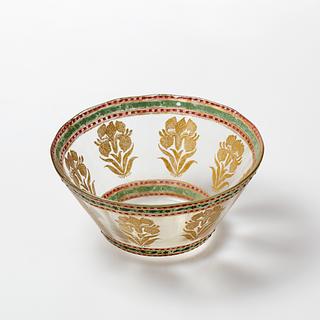
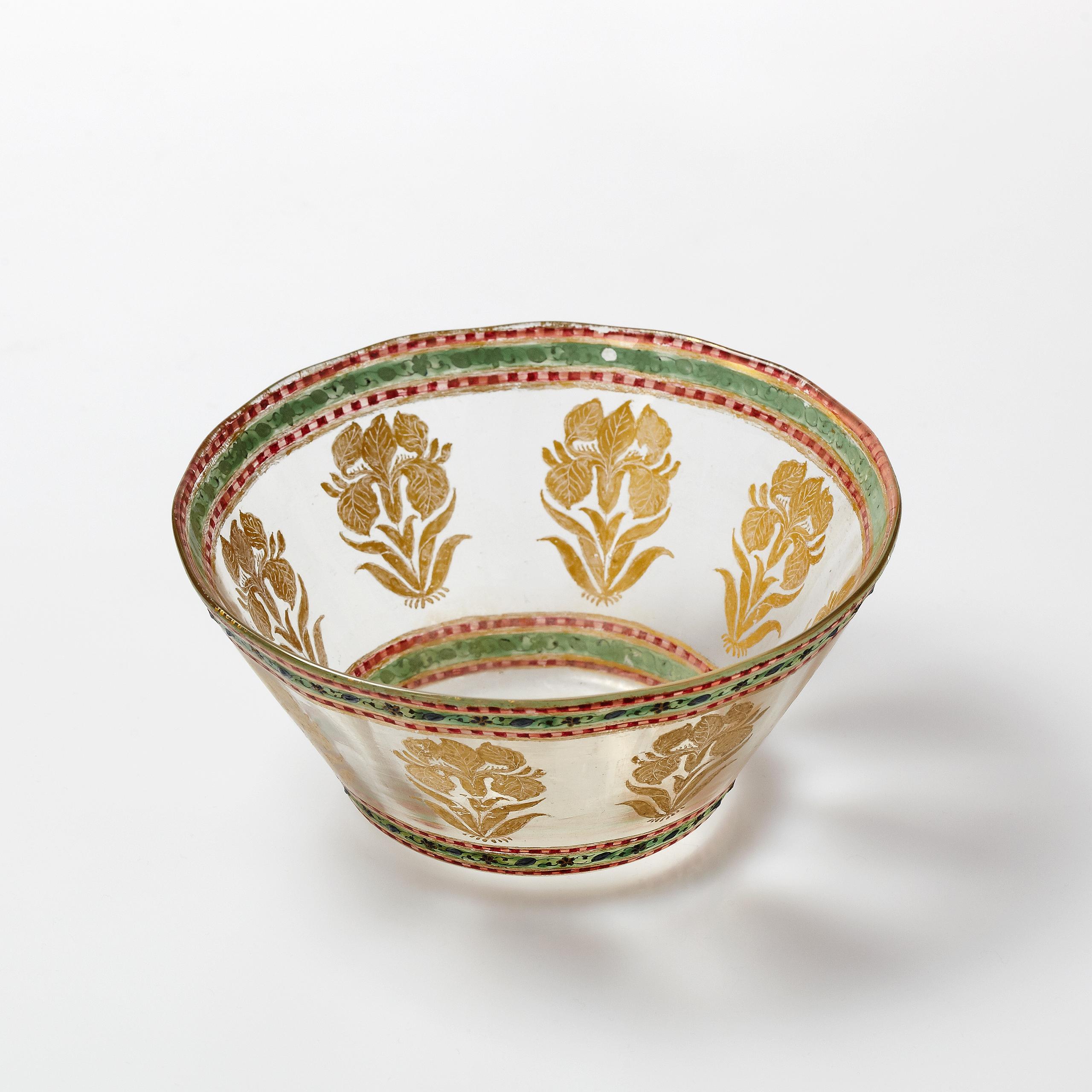
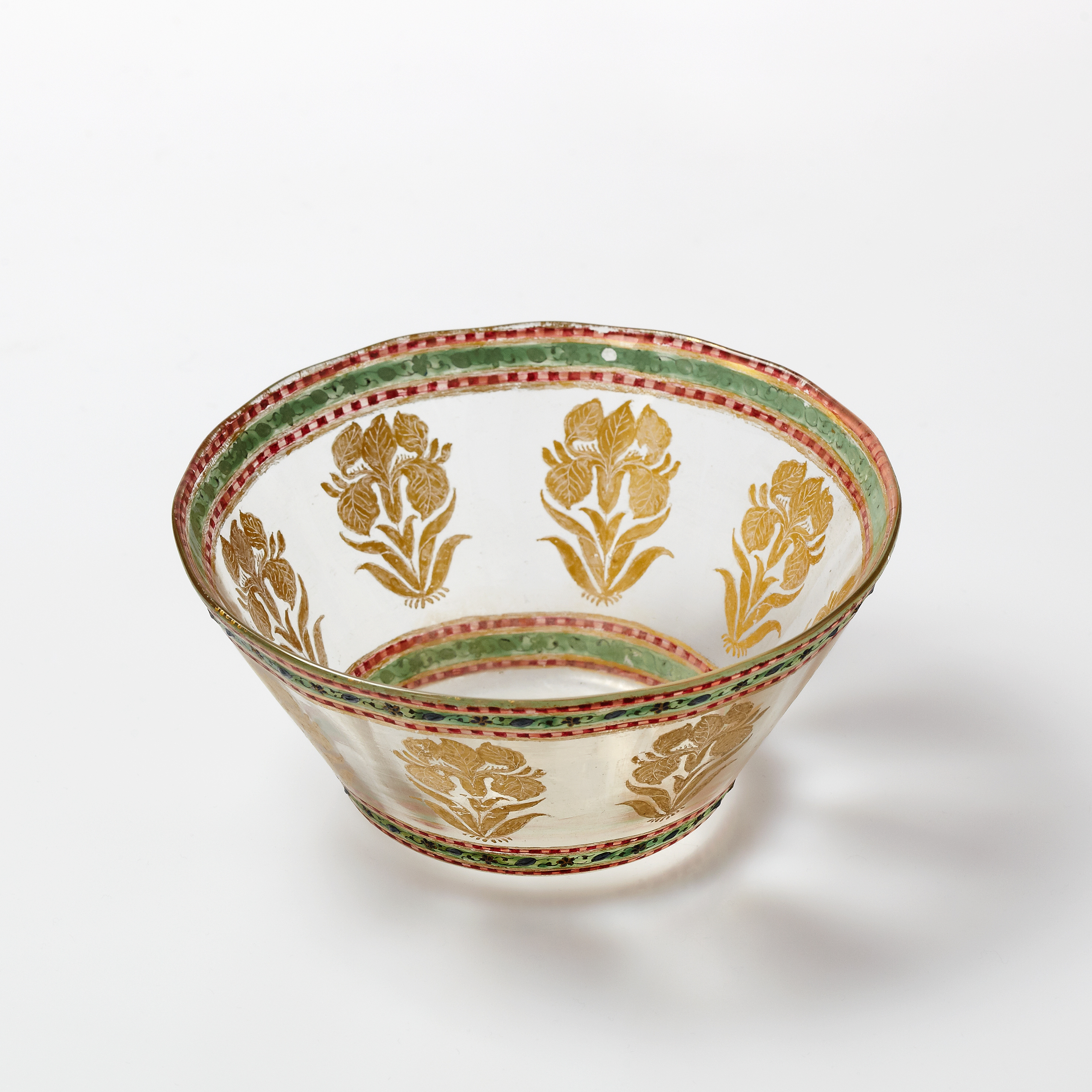
Bowl, colorless glass decorated with green, red, blue, and black enamel and gilded
Northern India; first half of 18th century
H: 5.5; Diam: 11.7 cm
Inventory number 216/2006
In contrast to large parts of the rest of the Muslim world, glass production emerged in India at a fairly late stage. The earliest glass objects date to the Mughal period, when production probably emerged as a reaction to imported glass from Europe.
The Indian glass that has been preserved in larger numbers especially from the 18th and 19th century has the same forms and decorations that were otherwise typical of Mughal art.
This little bowl was decorated in gold with one of the period’s most popular floral motifs: irises. They are framed by delicate, patterned bands in red and green.
The Indian glass that has been preserved in larger numbers especially from the 18th and 19th century has the same forms and decorations that were otherwise typical of Mughal art.
This little bowl was decorated in gold with one of the period’s most popular floral motifs: irises. They are framed by delicate, patterned bands in red and green.
Published in
Published in
Francesca Galloway and Will Kwiatkowski (eds.): Treasures from India, Galloway, London 2006, cat. 15;
Tara Desjardins: Mughal glass: a history of glassmaking in India, New Delhi 2024, cat. 114, p. 202;
Tara Desjardins: Mughal glass: a history of glassmaking in India, New Delhi 2024, cat. 114, p. 202;
Glass
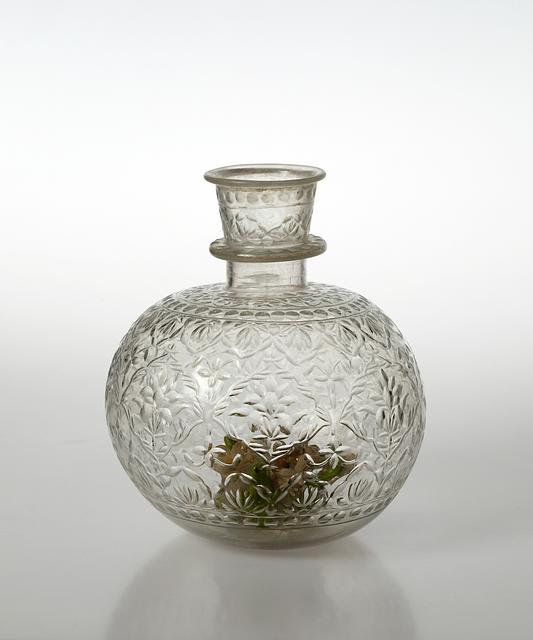
Glass huqqa with cut decoration and polychrome floral decoration inside
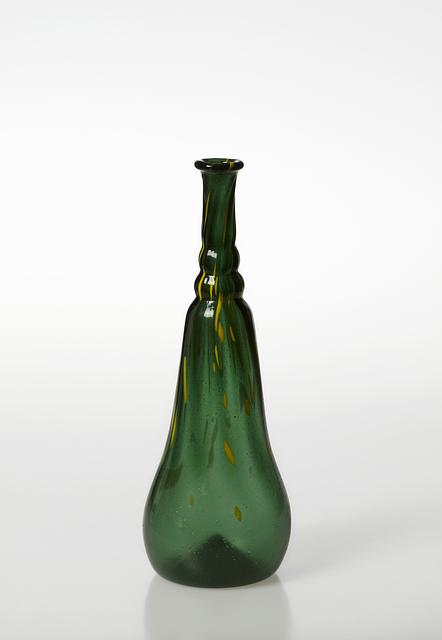
Bottle of green glass, partially mould-blown with marvered pieces of yellow glass
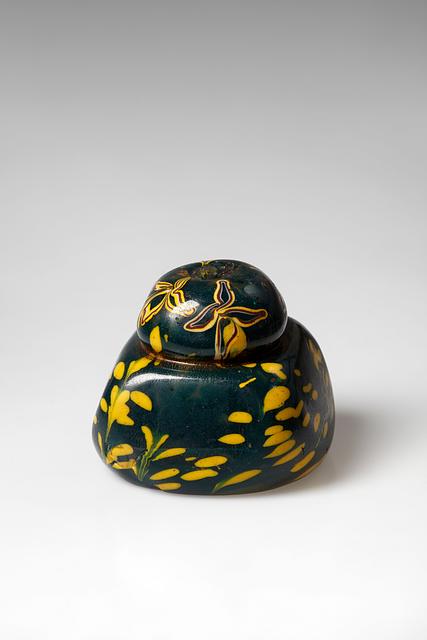
Carpet weight (mir-i farsh) of blue-green glass with marvered decorations in coloured glass and traces of gilt
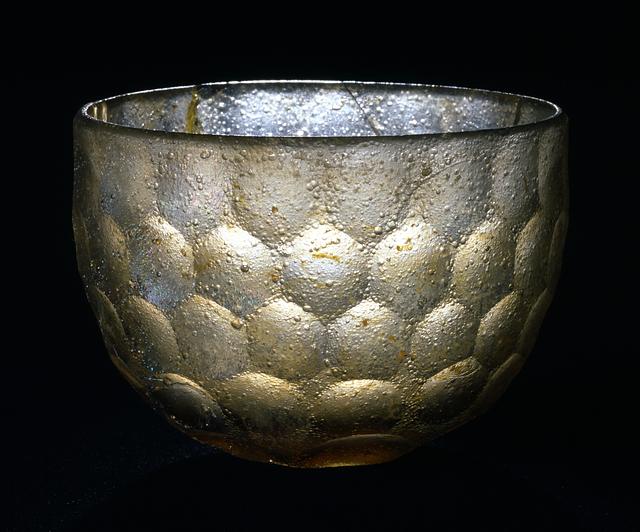
Bowl, thick, colorless glass, facet-cut