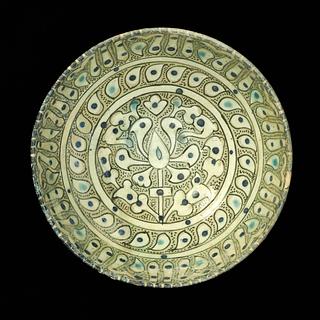
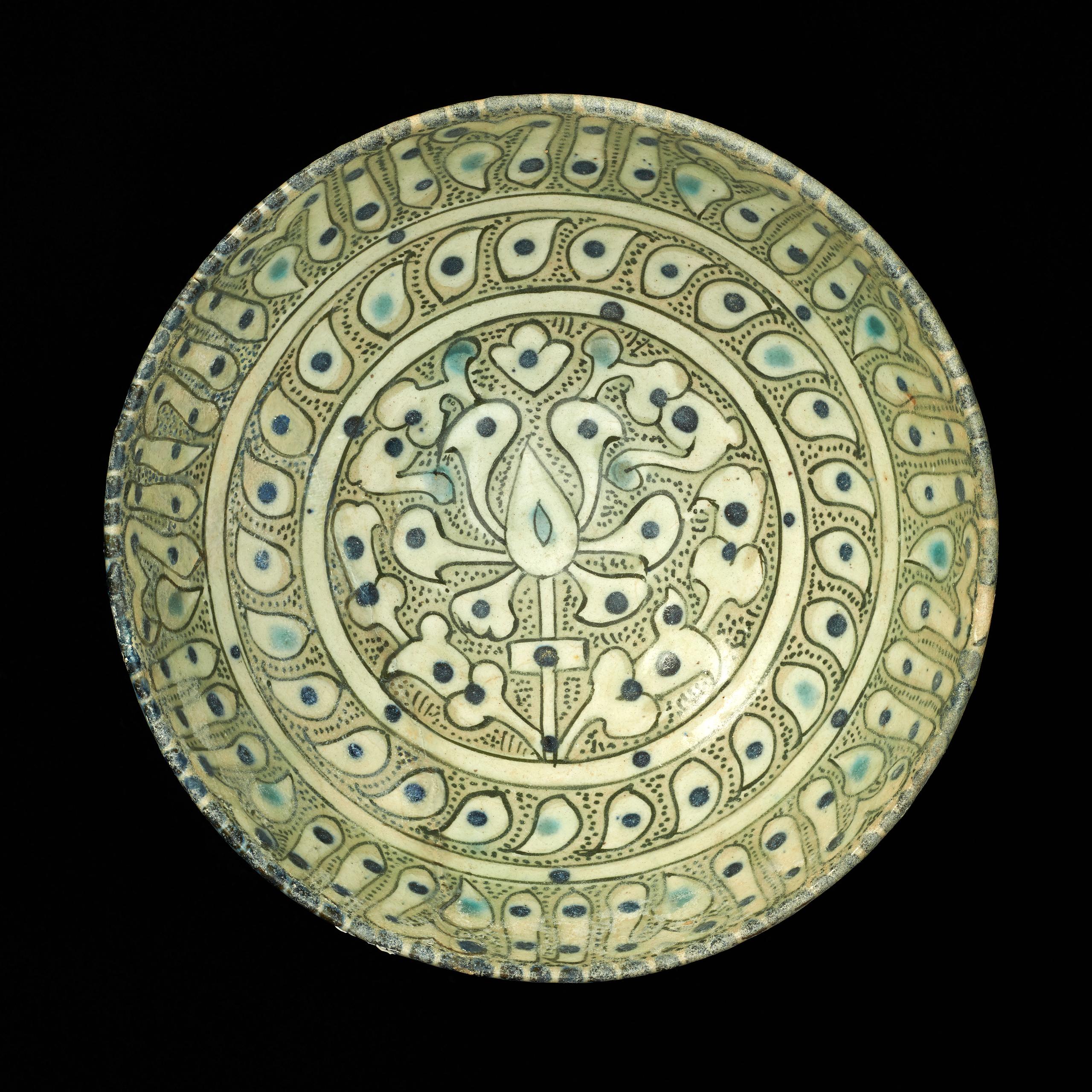
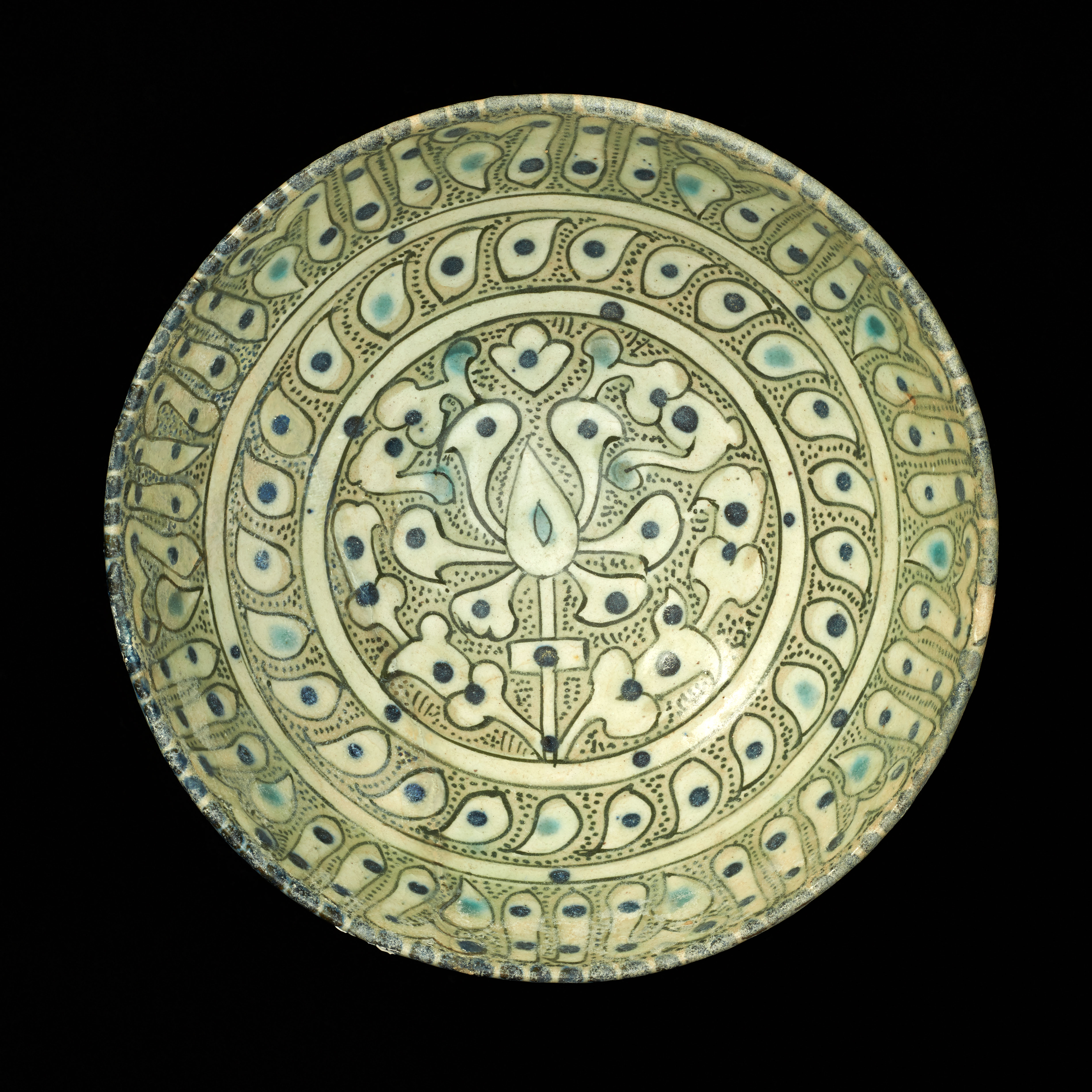
Fritware bowl, painted with a gray and white slip and in black, blue, and turquoise under a transparent glaze
Southern Russia or Kazakhstan; 14th century
H: 8.9; Diam: 19.1 cm
Inventory number 54/2000
Because of the motif and technique, this bowls is a “coarser” versions of the Sultanabad ware made in the Kashan region and must be considered provincial copies. Similar bowls have been excavated in Sarai, on the Volga River, one of the capitals of the Golden Horde. They should be dated to before 1395, when Timur’s troops destroyed the city, but there is still uncertainty about the site or sites where they were produced.
The bowl is decorated with a Chinese motif, a stylized lotus.
The bowl is decorated with a Chinese motif, a stylized lotus.
Published in
Published in
Christie’s, London, 10/10-2000, lot 269;
Kjeld von Folsach: Art from the World of Islam in The David Collection, Copenhagen 2001, cat.no. 223;
Rosalind A. Wade Haddon: “What is Mamluk imitation Sultanabad?” in Al-Râfidân, 2011, 32, pl. 12, p. 292;
Kjeld von Folsach: Art from the World of Islam in The David Collection, Copenhagen 2001, cat.no. 223;
Rosalind A. Wade Haddon: “What is Mamluk imitation Sultanabad?” in Al-Râfidân, 2011, 32, pl. 12, p. 292;
The Il-Khanids and the Golden Horde
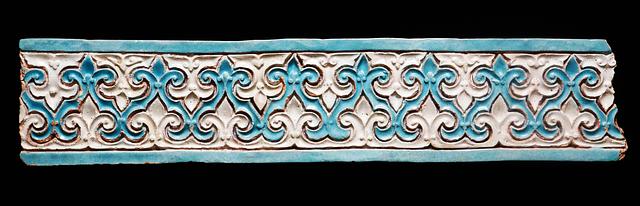
Earthenware frieze, with carved ornamentation painted in white, turquoise, and a manganese glaze
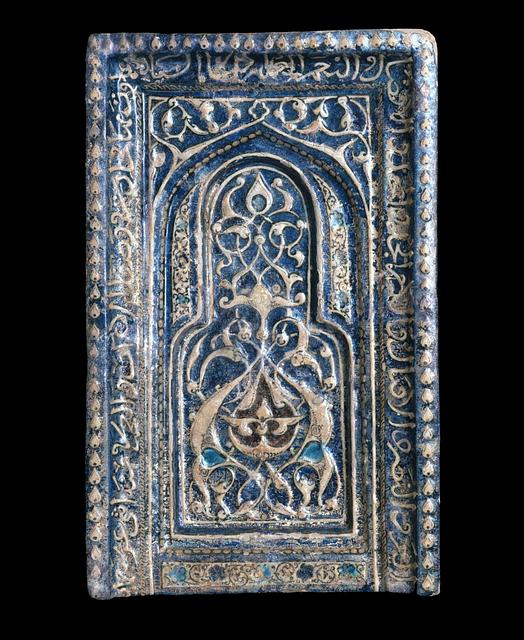
Fritware mihrab tile, molded and painted in a white slip and in blue, black, turquoise, and manganese under a transparent glaze
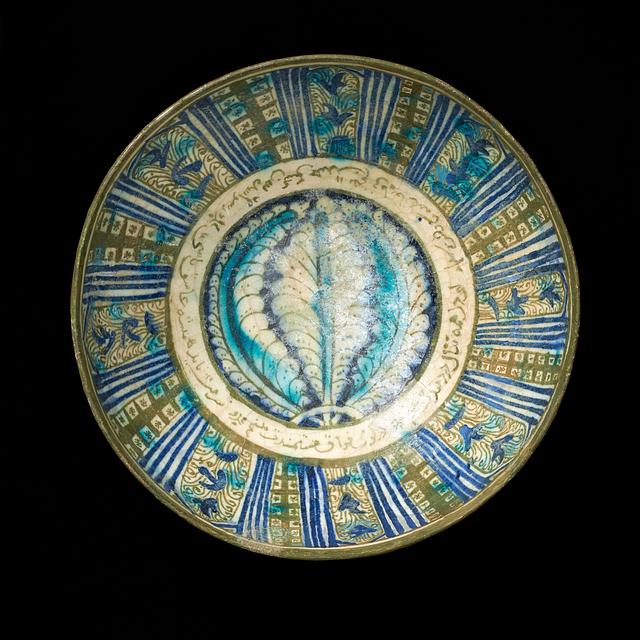
Bowl, reddish fritware painted in blue, turquoise, and olive under a greenish, transparent glaze
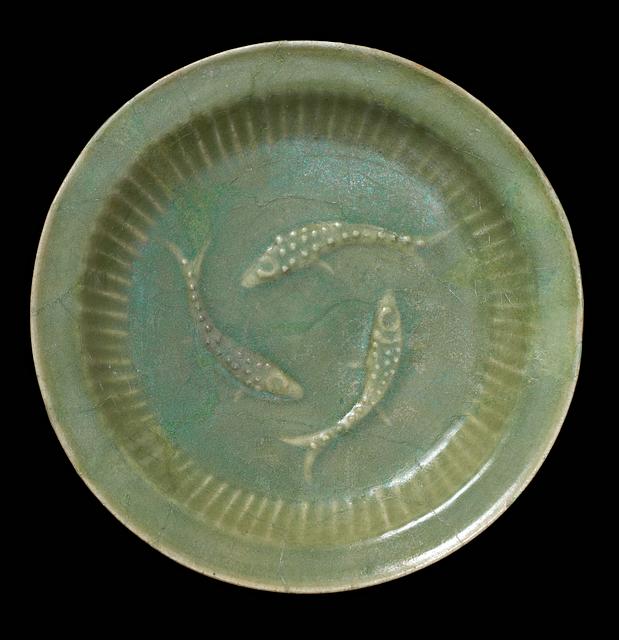
Fritware dish, molded and covered with green glaze. Celadon imitation