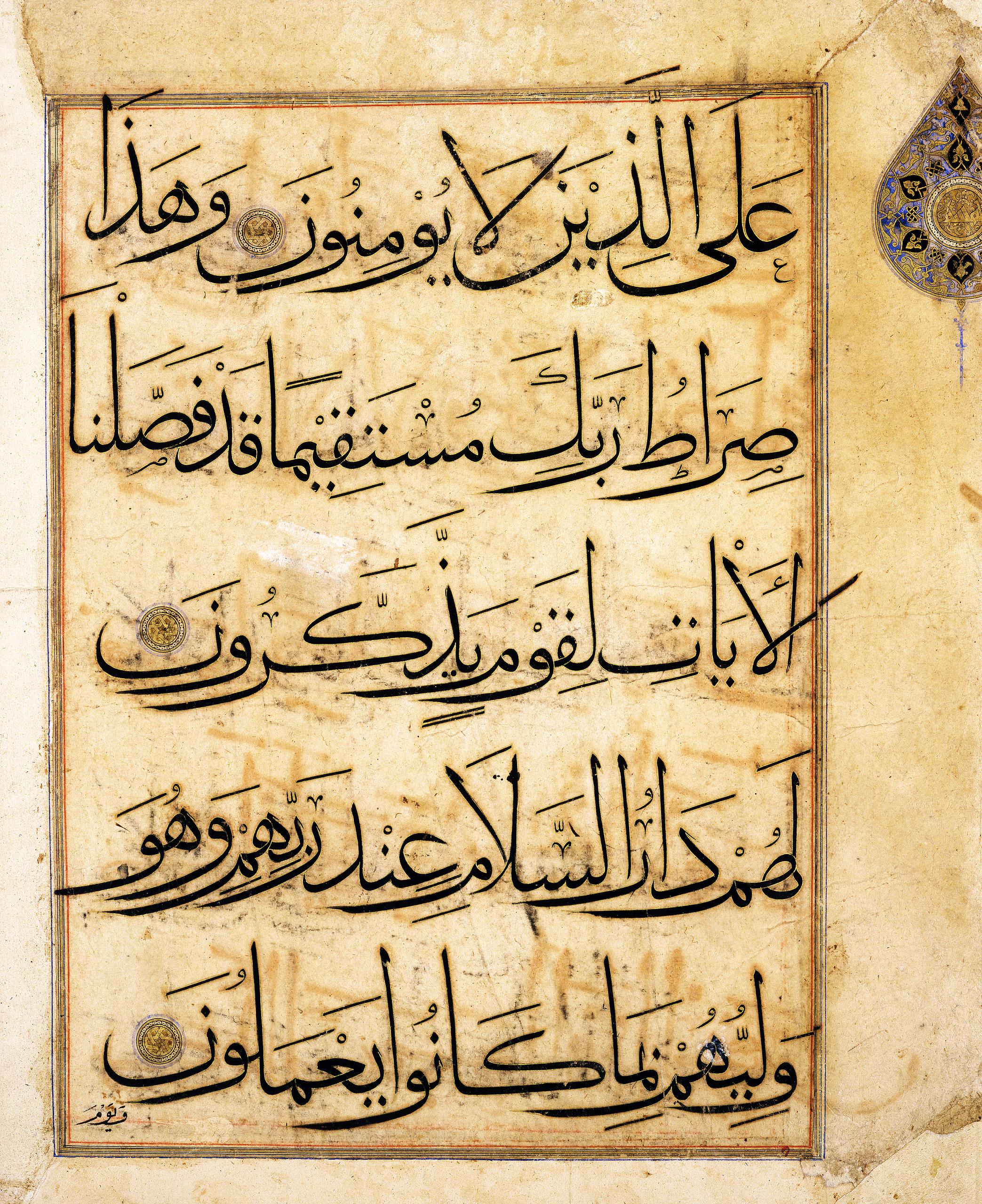
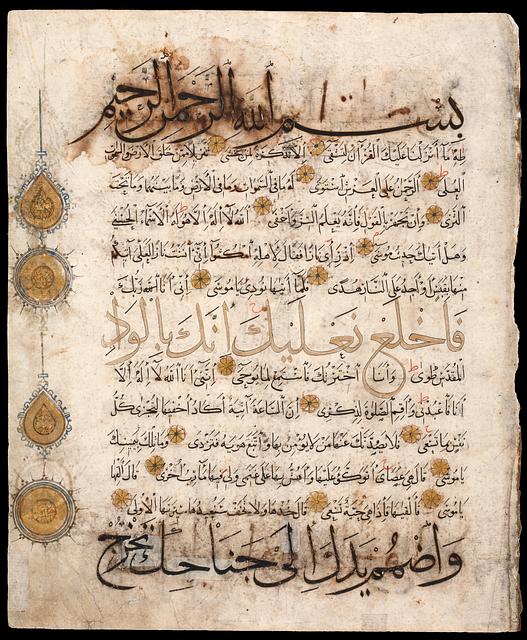
Leaf from an album with selected chapters from the Koran
Iraq or western Iran; between 1350 and 1420
42.5 × 35 cm
Inventory number 29/1987
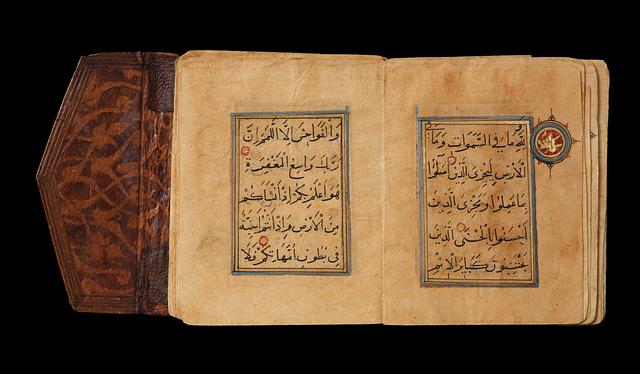
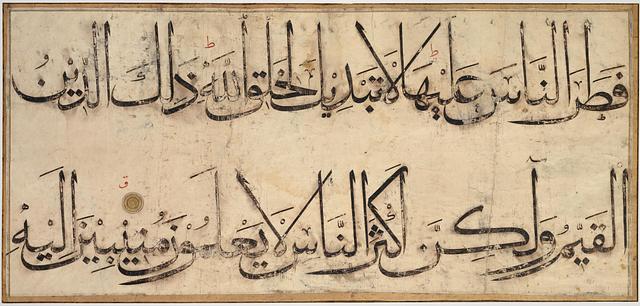
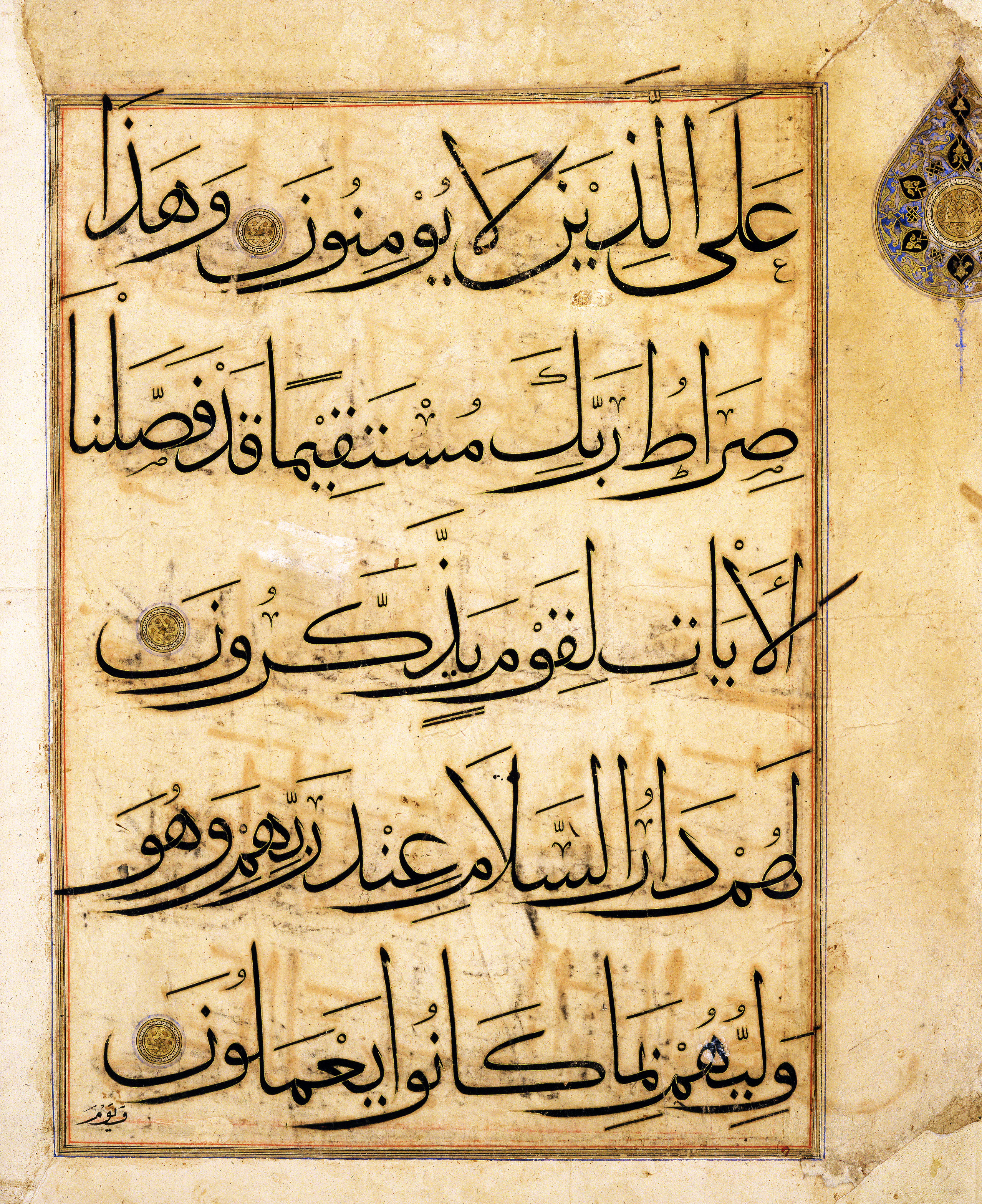
At an early date, there were a great many more rounded cursive scripts that were used for secular purposes, in contrast to the Kufi script used for the Koran. At the beginning of the 10th century, the vizier and calligrapher Muhammad ibn Muqla devised rules for how six of these scripts were to be written. This imbued the cursive scripts with such prestige that they were used for Korans from the beginning of the 11th century.
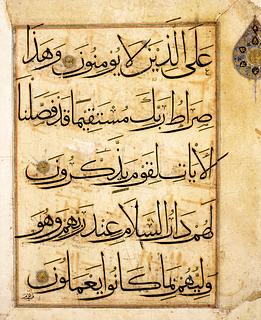
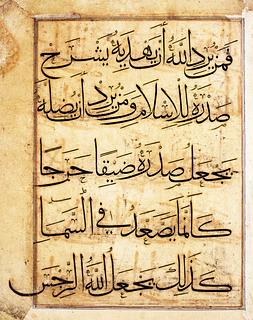
This leaf was written in an elegant, majestic Muhaqqaq, whose black letters are contoured in gold. The calligraphy resembles that of magnificent Il-Khanid Korans, but the splendidly executed verse markers indicate a slightly later dating, under the Jalayirids.
This leaf was written in an elegant, majestic Muhaqqaq, whose black letters are contoured in gold. The calligraphy resembles that of magnificent Il-Khanid Korans, but the splendidly executed verse markers indicate a slightly later dating, under the Jalayirids.
Published in
Published in
Kjeld von Folsach: Islamic art. The David Collection, Copenhagen 1990, cat.no. 6;
Kjeld von Folsach, Torben Lundbæk and Peder Mortensen (eds.): Sultan, Shah and Great Mughal: the history and culture of the Islamic world, The National Museum, Copenhagen 1996, cat.no. 101;
Kjeld von Folsach: Art from the World of Islam in The David Collection, Copenhagen 2001, cat.no. 8;
Kjeld von Folsach, Torben Lundbæk and Peder Mortensen (eds.): Sultan, Shah and Great Mughal: the history and culture of the Islamic world, The National Museum, Copenhagen 1996, cat.no. 101;
Kjeld von Folsach: Art from the World of Islam in The David Collection, Copenhagen 2001, cat.no. 8;