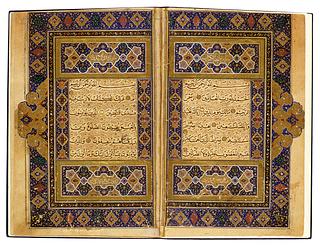
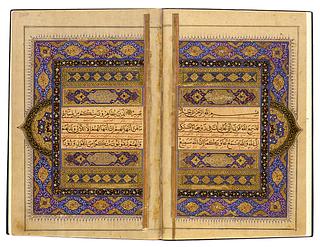
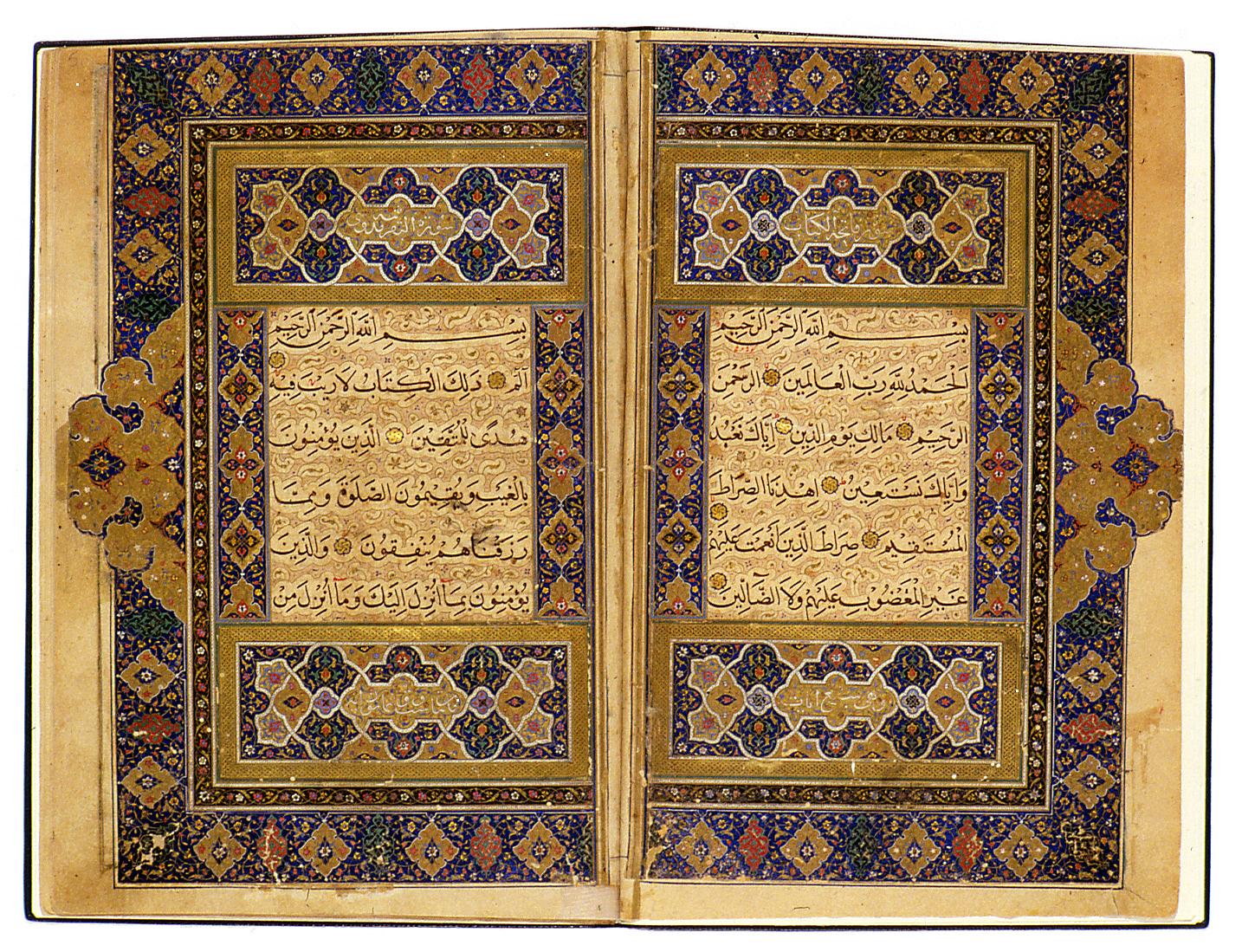
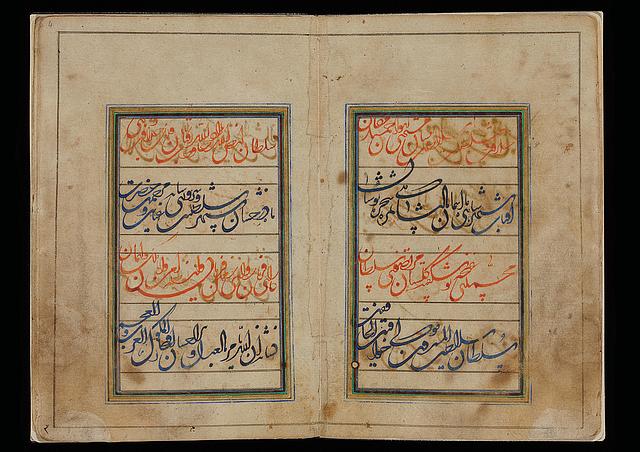
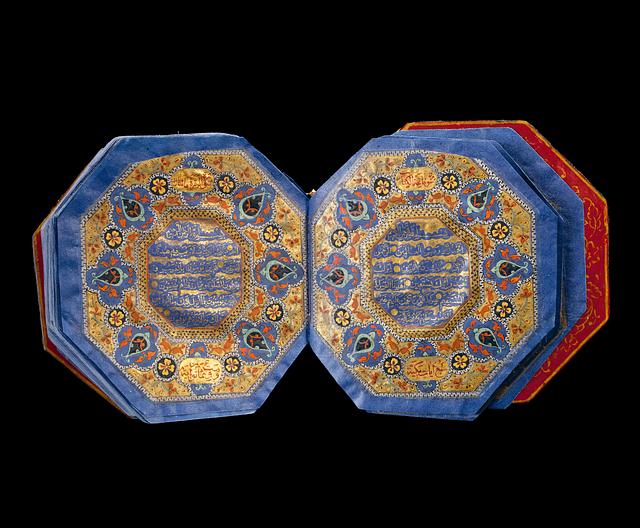
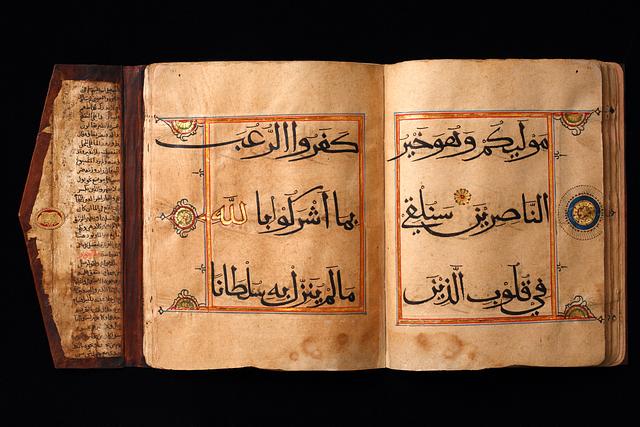
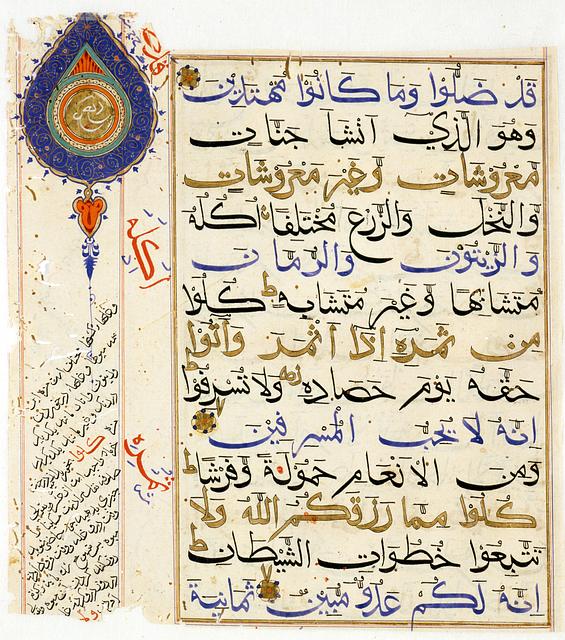
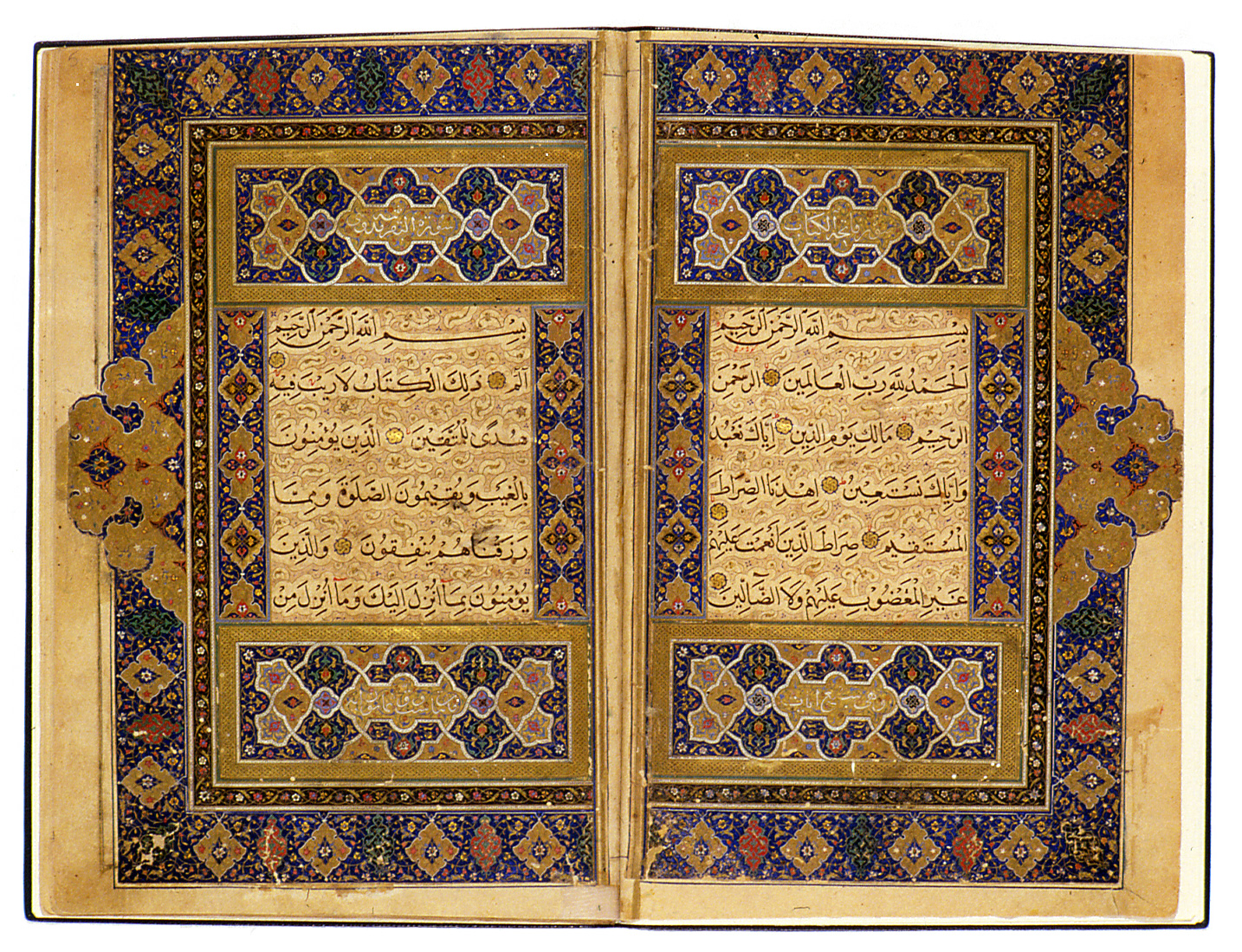
A copy of a Koran in 30 parts, written in Naskh
Iran, Herat?; 925 H = 1519
Each leaf: 23.8 × 15.8 cm
Inventory number 9/2002
This Koran has had a turbulent life. It was originally divided into 30 parts (juz, pl. ajza), was later bound into a single volume, and was then split up again. Today the Koran has a modern leather binding. At some point in around 1600, the Koran was given a number of new illuminations, probably in Golconda, in central India, though many of the original ones were retained.
The Koran’s oldest illuminations were made by the famed illuminator Yari Mudhahhib, who was active under the late Timurids and early Safavids. The text was written in Naskh by the calligrapher Qasim Ali al-Harawi in 1519. A Persian translation of the Koran’s Arabic text was added in red Nastaliq.
The manuscript was once in the Qutb Shahis’ library in Golconda, but fell into the hands of the Great Mughals when Aurangzeb conquered Golconda in 1687.
The Koran’s oldest illuminations were made by the famed illuminator Yari Mudhahhib, who was active under the late Timurids and early Safavids. The text was written in Naskh by the calligrapher Qasim Ali al-Harawi in 1519. A Persian translation of the Koran’s Arabic text was added in red Nastaliq.
The manuscript was once in the Qutb Shahis’ library in Golconda, but fell into the hands of the Great Mughals when Aurangzeb conquered Golconda in 1687.
Published in
Published in
Marie Rehakova: Koran: vyvoj umelecke tradice, Plzen 2013, fig. 32, p. 60;
Joachim Meyer, Rasmus Bech Olsen and Peter Wandel: Beyond words: calligraphy from the World of Islam, The David Collection, Copenhagen 2024, cat. 47, p. 184;
Rasmus Bech Olsen: “Beyond words: calligraphy from the World of Islam”, Orientations, 55:4, 2024, fig. 10, p. 40;
Joachim Meyer, Rasmus Bech Olsen and Peter Wandel: Beyond words: calligraphy from the World of Islam, The David Collection, Copenhagen 2024, cat. 47, p. 184;
Rasmus Bech Olsen: “Beyond words: calligraphy from the World of Islam”, Orientations, 55:4, 2024, fig. 10, p. 40;