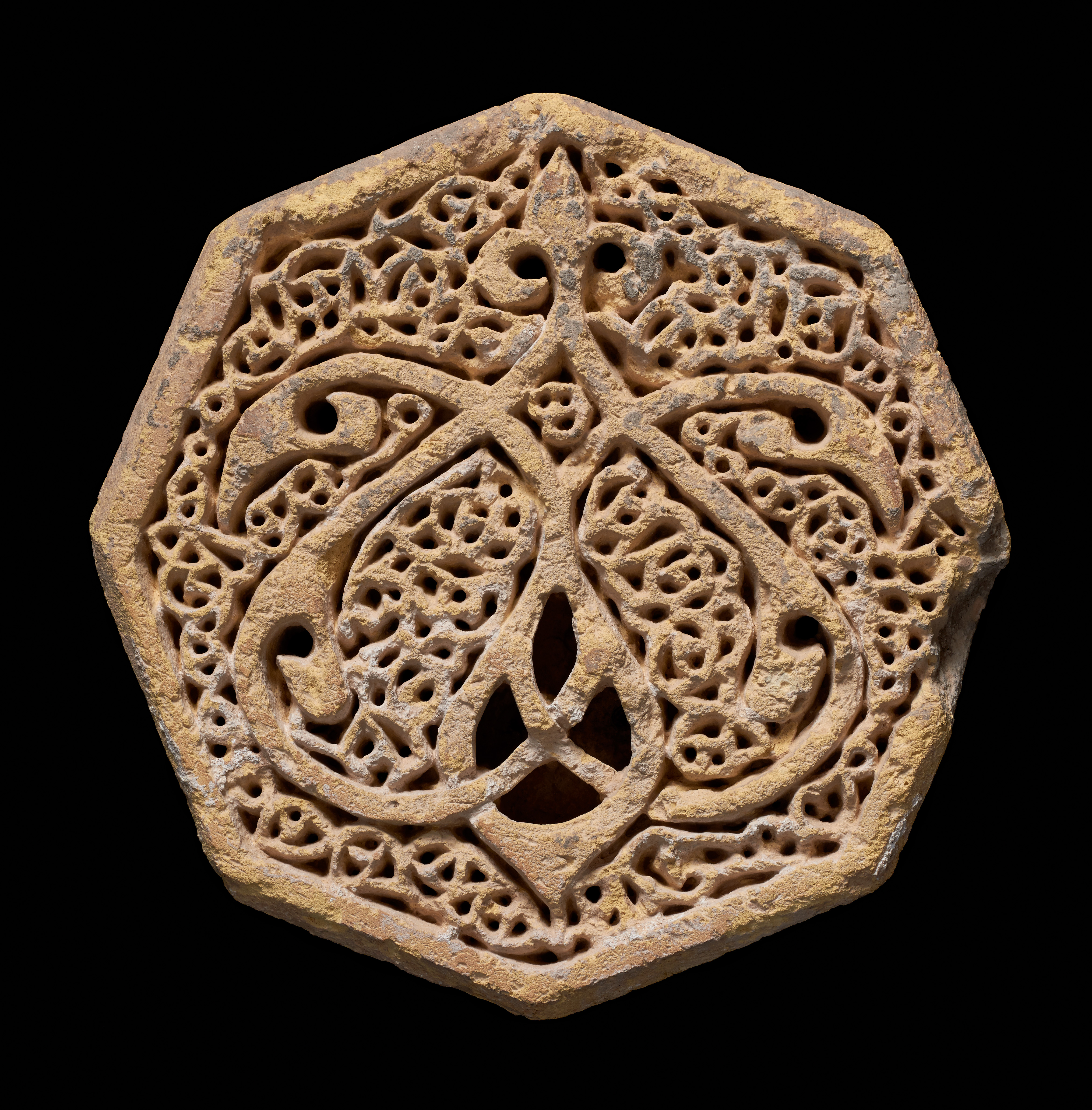
Earthenware tile, carved and unglazed
Iraq; 1st half of 13th century
D: 6.2; Diam: 18.3 cm
Inventory number 19/1993
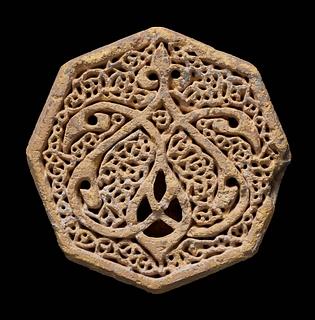
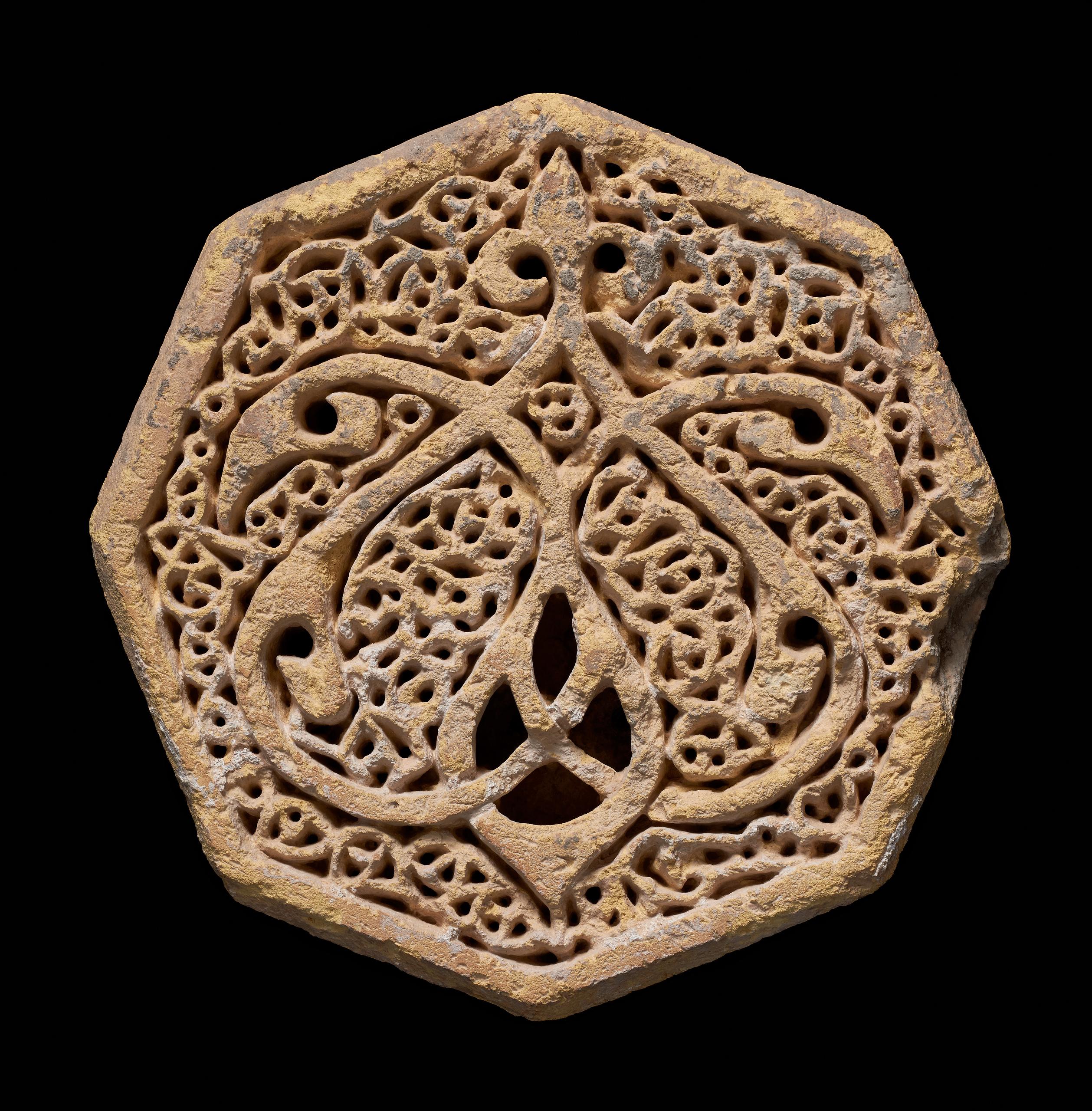
The tile was carved very deeply with a large palmette pattern surrounded by a filigree-like arabesque. The tile is octagonal, and was part of a large wall decoration together with other geometrical shapes.
Unglazed tiles like this were used both in the interiors and on the facades of 13th-century buildings in Iraq. They are known from what is called the Abbasids’ Palace in Baghdad and the city’s Mustansiriya Madrasa.
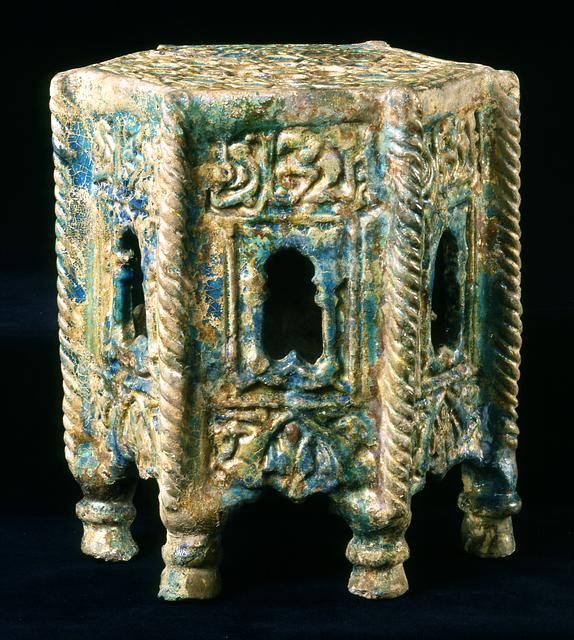
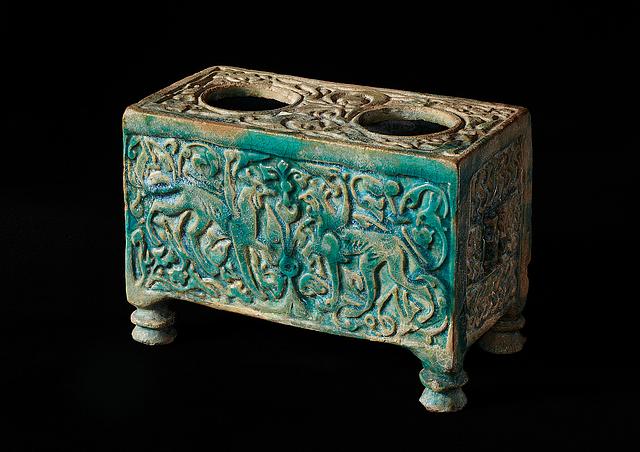
Decorative elements like this were also made of wood, ivory, and metal and used in the geometrical panels with arabesques that embellished flat surfaces on furniture and_ minibars_.
Unglazed tiles like this were used both in the interiors and on the facades of 13th-century buildings in Iraq. They are known from what is called the Abbasids’ Palace in Baghdad and the city’s Mustansiriya Madrasa.
Decorative elements like this were also made of wood, ivory, and metal and used in the geometrical panels with arabesques that embellished flat surfaces on furniture and_ minibars_.
Published in
Published in
Kjeld von Folsach, Torben Lundbæk and Peder Mortensen (eds.): Sultan, Shah and Great Mughal: the history and culture of the Islamic world, The National Museum, Copenhagen 1996, cat.no. 70;
Kjeld von Folsach: Art from the World of Islam in The David Collection, Copenhagen 2001, cat.no. 179;
Kjeld von Folsach: Art from the World of Islam in The David Collection, Copenhagen 2001, cat.no. 179;