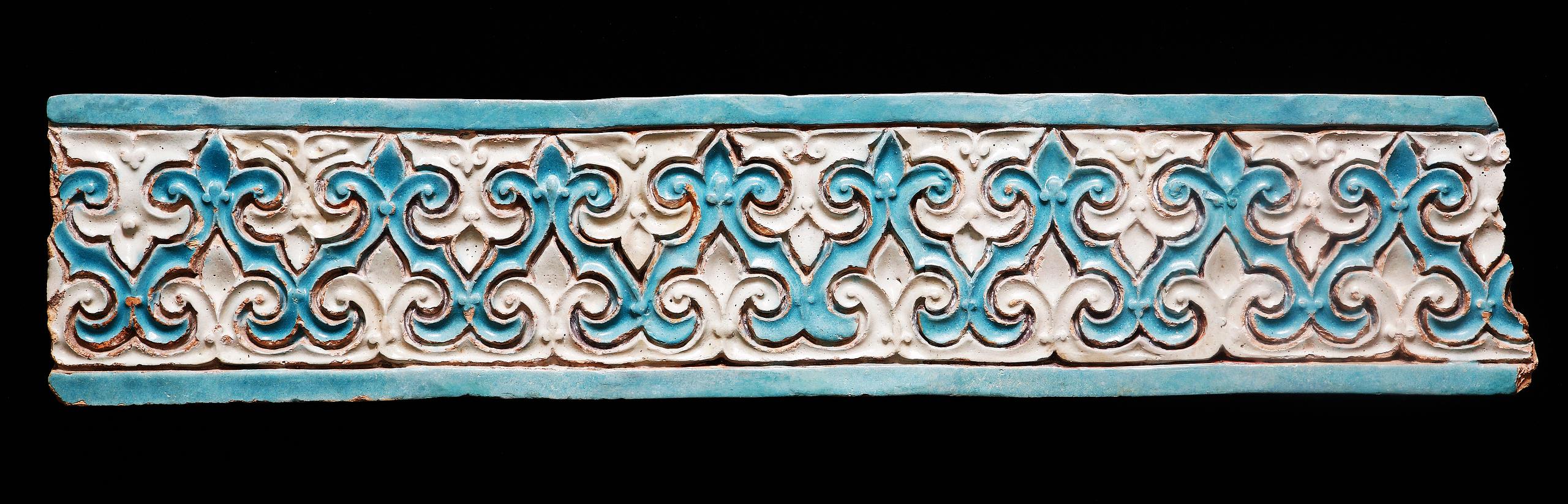
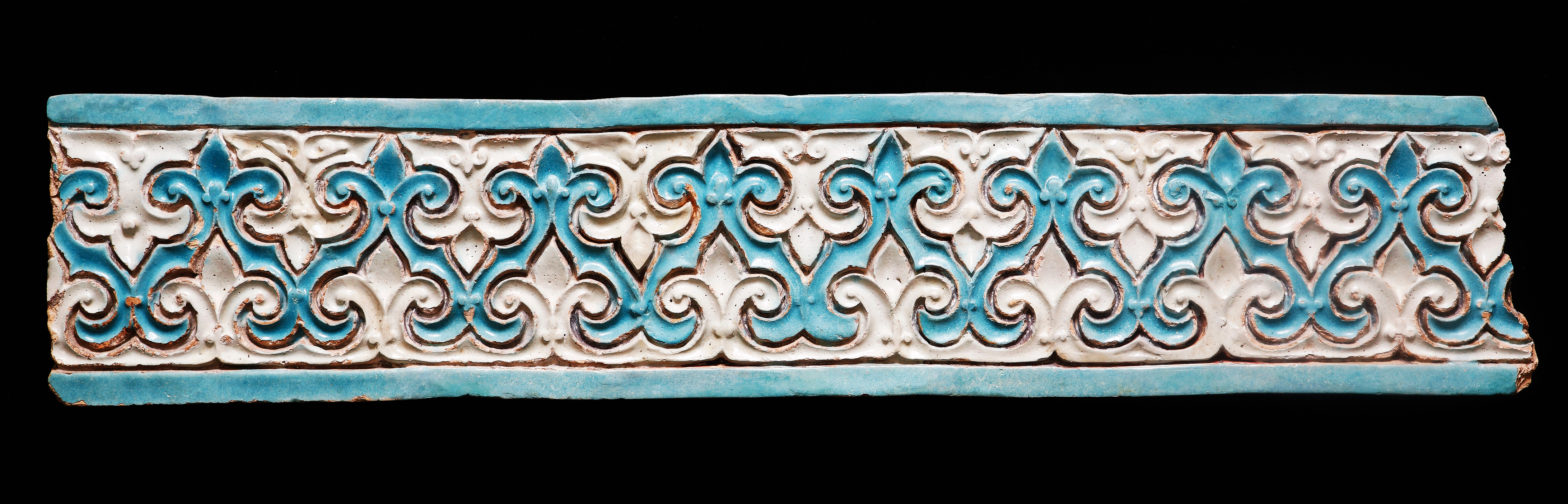
Earthenware frieze, with carved ornamentation painted in white, turquoise, and a manganese glaze
Central Asia, perhaps Iran; 14th century
H: 17.5; L: 85; D: 4.5 cm
Inventory number 27/2001
This frieze dates to a period when colorful, glazed pottery began to play an increasingly prominent role in decorations on Islamic architecture. The trend was already present under the Il-Khanids and reached its first culmination with the monumental architecture of the Timurids in Samarkand.
It is uncertain where the frieze comes from, but the artist was able to create a fascinating pattern in white and turquoise – at times a positive, at others a negative – consisting of palmettes that bring to mind fleurs-de-lis. He underlined the relief effect by glazing the deeply carved grooves with manganese.
It is uncertain where the frieze comes from, but the artist was able to create a fascinating pattern in white and turquoise – at times a positive, at others a negative – consisting of palmettes that bring to mind fleurs-de-lis. He underlined the relief effect by glazing the deeply carved grooves with manganese.
Ceramics
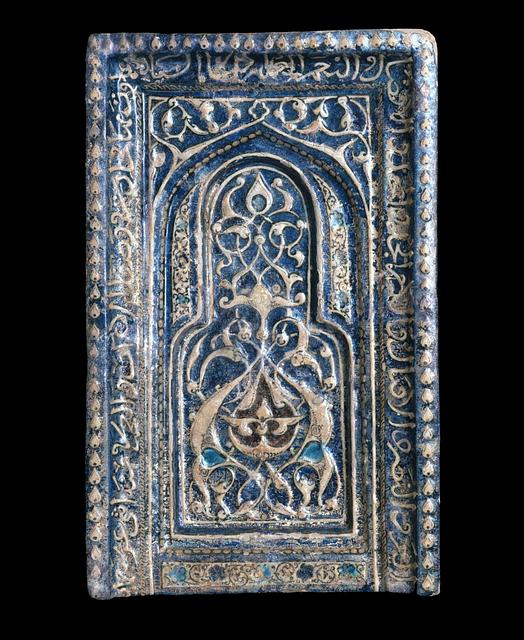
Fritware mihrab tile, molded and painted in a white slip and in blue, black, turquoise, and manganese under a transparent glaze
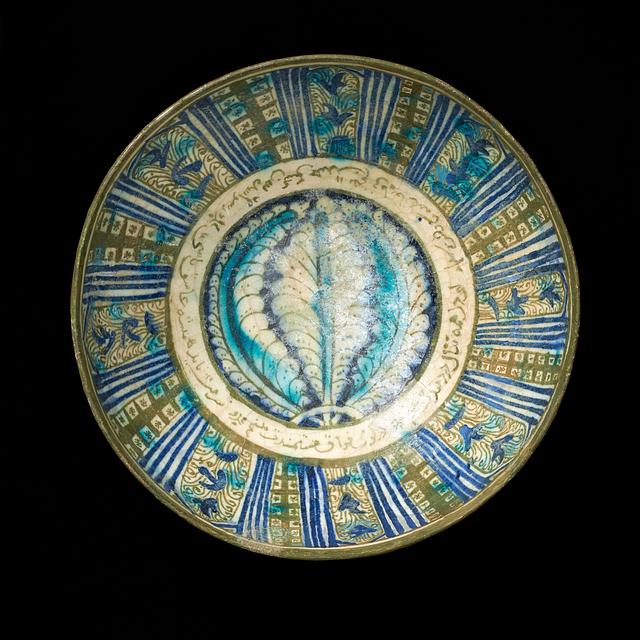
Bowl, reddish fritware painted in blue, turquoise, and olive under a greenish, transparent glaze
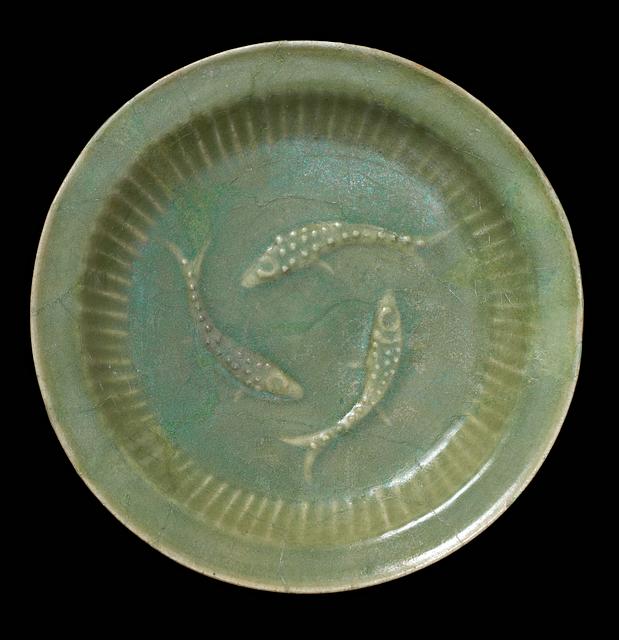
Fritware dish, molded and covered with green glaze. Celadon imitation
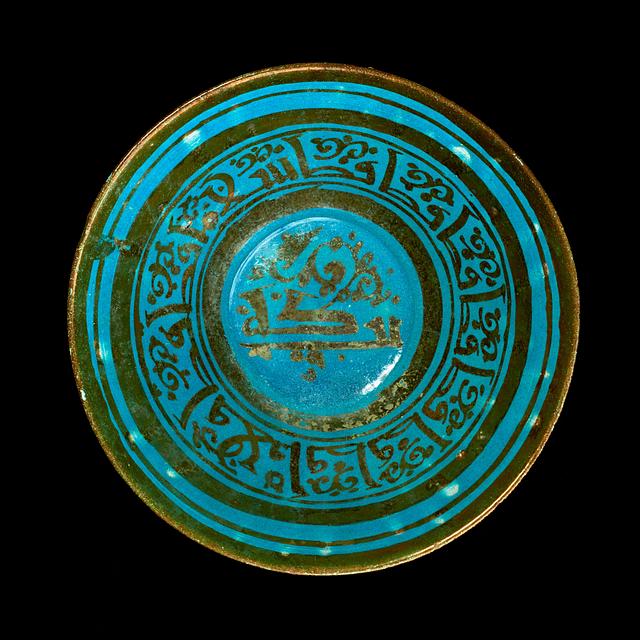
Fritware bowl, painted in lustre over a turquoise, opaque glaze. Tell Minis type