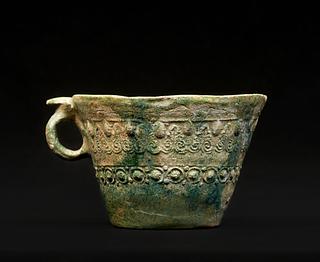
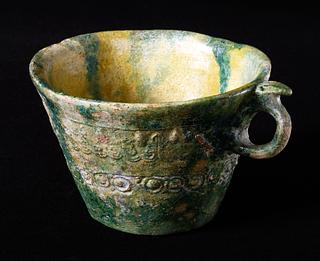
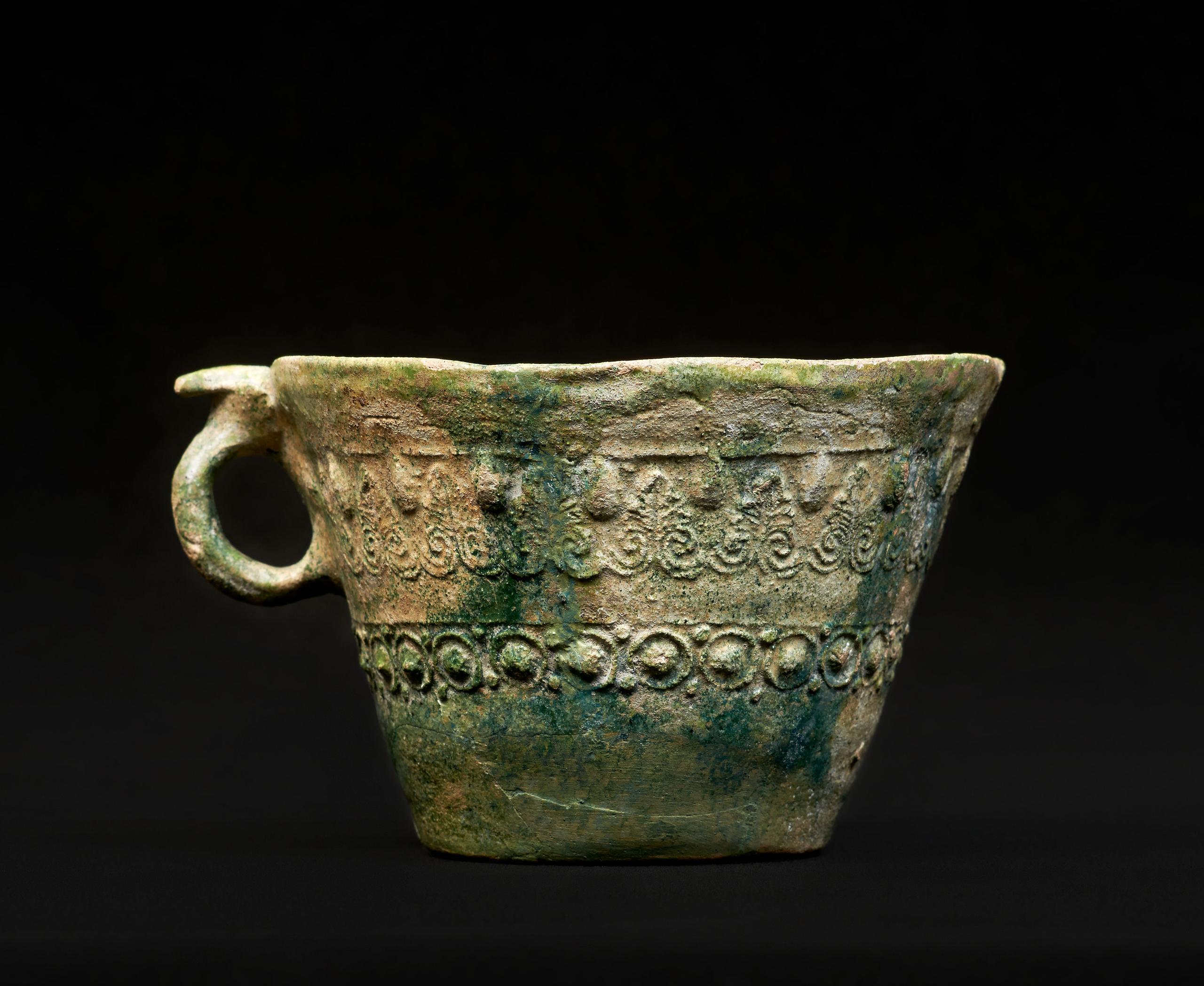
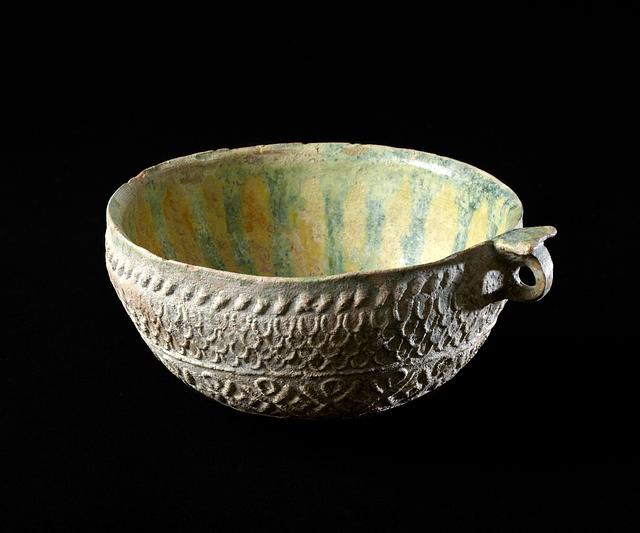
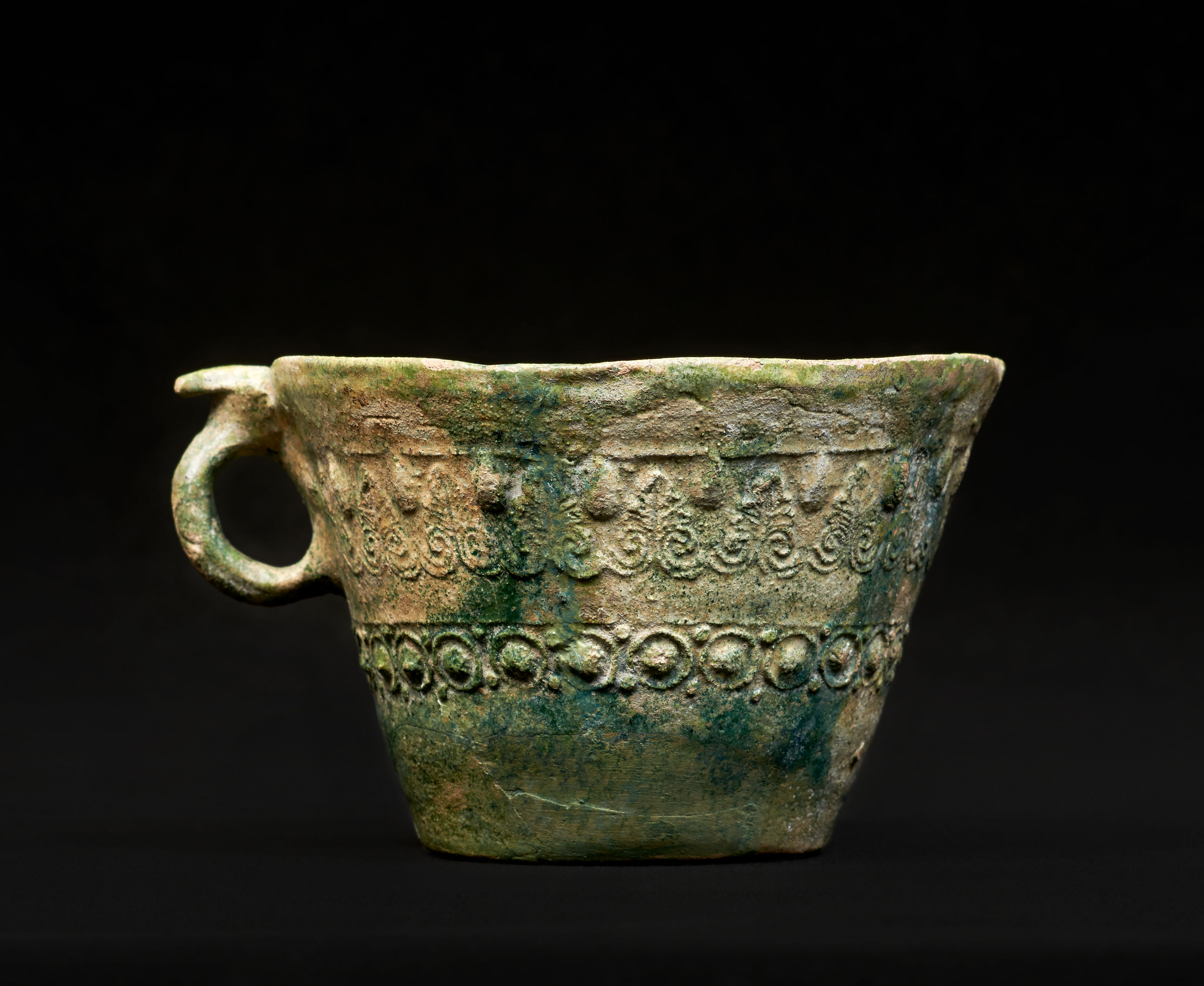
Earthenware cup with molded or stamped decoration and a yellow and green glaze
Iraq or Syria; 8th-9th century
H: 7.8; Diam. at top: 12 cm
Inventory number 26/1995
Both the shape and the decoration of this cup with a handle were undoubtedly derived from models made of silver, and the prototypes could be both Roman and Sasanian. The type of pottery was already found in the Umayyad period, though most often without a glaze, while this cup was probably made slightly later, under the Abbasids.
Decorations like these – with palmettes, bosses, etc. in relief – could be applied to the completed object through the use of one or more stamps of different types or by pressing the clay into a two-part mold that held a negative of the entire decoration.
Decorations like these – with palmettes, bosses, etc. in relief – could be applied to the completed object through the use of one or more stamps of different types or by pressing the clay into a two-part mold that held a negative of the entire decoration.
Published in
Published in
Sotheby’s, London, 22/10-1992, lot 2;
Momtaz Islamic Art: A perspective of unity, London [1995], p. 8;
Kjeld von Folsach: Art from the World of Islam in The David Collection, Copenhagen 2001, cat. 98;
Kjeld von Folsach: Flora islamica: plantemotiver i islamisk kunst, Davids Samling, København 2013, cat. 7;
Momtaz Islamic Art: A perspective of unity, London [1995], p. 8;
Kjeld von Folsach: Art from the World of Islam in The David Collection, Copenhagen 2001, cat. 98;
Kjeld von Folsach: Flora islamica: plantemotiver i islamisk kunst, Davids Samling, København 2013, cat. 7;