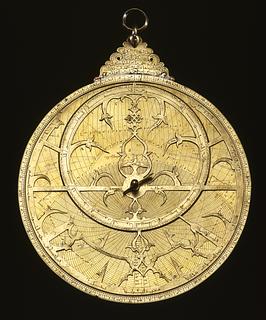
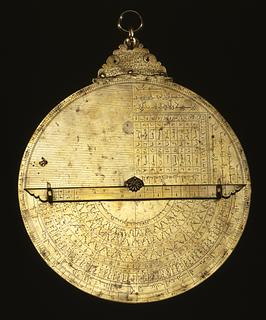
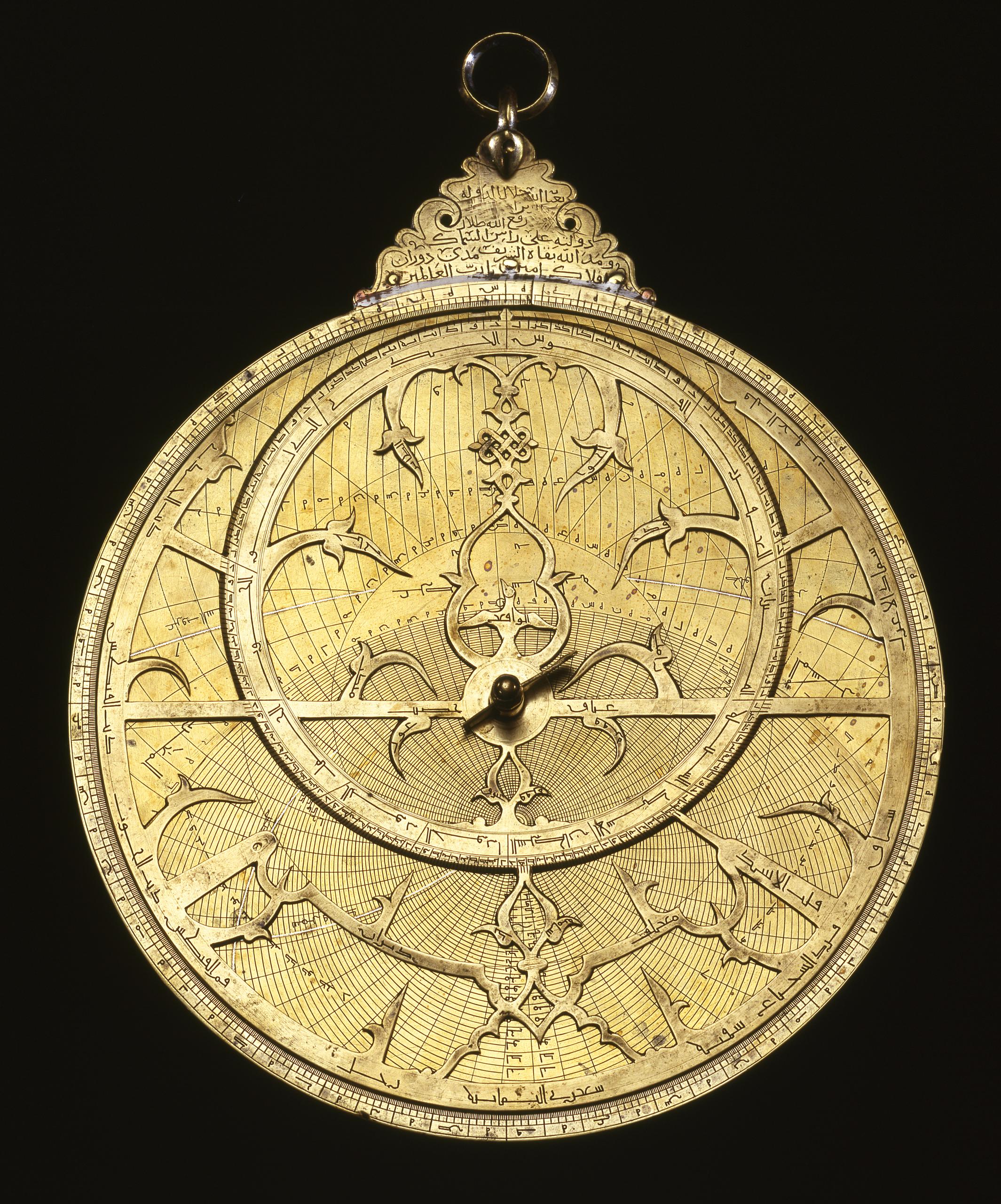
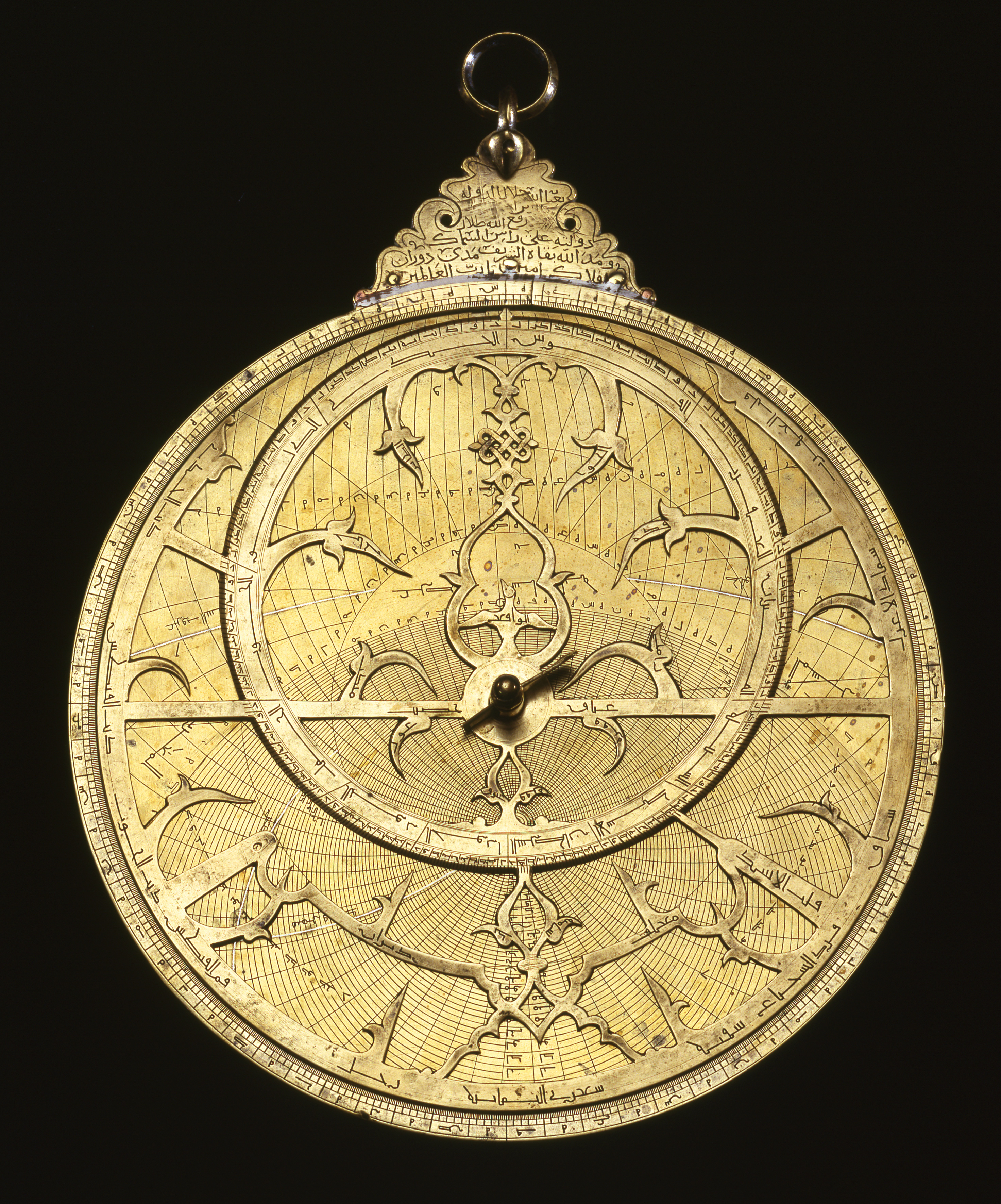
Astrolabe, brass, engraved and inlaid with silver
Iran; 830 H = 1426-1427
H with hanging: 33.5 cm; Diam 25.2 cm
Inventory number D 25/1986
An astrolabe is a kind of ancient computer that simulates the rotation of the heavenly bodies in a plane projection on the instrument. It is used at a given latitude to solve various astronomical and astrological problems and for navigation and surveying. It can also determine time, both day and night, and the date, month, and season. It was a Greek discovery based on Antique science that was later studied and further developed in the Islamic world.
This astrolabe was made by Muhammad ibn Jafar ibn Umar al-Asturlabi, called Jalal, in 830 H, and was with great probability commissioned by the Timurid ruler Shah Rukh (1407-1447).
This astrolabe was made by Muhammad ibn Jafar ibn Umar al-Asturlabi, called Jalal, in 830 H, and was with great probability commissioned by the Timurid ruler Shah Rukh (1407-1447).
Published in
Published in
Kjeld von Folsach: Islamic art. The David Collection, Copenhagen 1990, cat.no. 361;
Kjeld von Folsach, Torben Lundbæk and Peder Mortensen (eds.): Sultan, Shah and Great Mughal: the history and culture of the Islamic world, The National Museum, Copenhagen 1996, cat.no. 79;
Kjeld von Folsach: Art from the World of Islam in The David Collection, Copenhagen 2001, cat.no. 594;
Kerstin Eksell: Andalus: energier i gränsrum, Lund 2010, p. 110 (ill.);
Ole Keller: Middelalderens naturvidenskab: Europa og den arabiske verden, Aarhus 2013, p. 39 and cover;
Kjeld von Folsach, Torben Lundbæk and Peder Mortensen (eds.): Sultan, Shah and Great Mughal: the history and culture of the Islamic world, The National Museum, Copenhagen 1996, cat.no. 79;
Kjeld von Folsach: Art from the World of Islam in The David Collection, Copenhagen 2001, cat.no. 594;
Kerstin Eksell: Andalus: energier i gränsrum, Lund 2010, p. 110 (ill.);
Ole Keller: Middelalderens naturvidenskab: Europa og den arabiske verden, Aarhus 2013, p. 39 and cover;