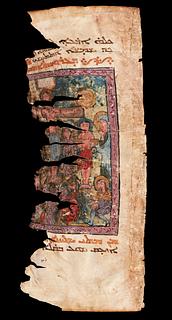
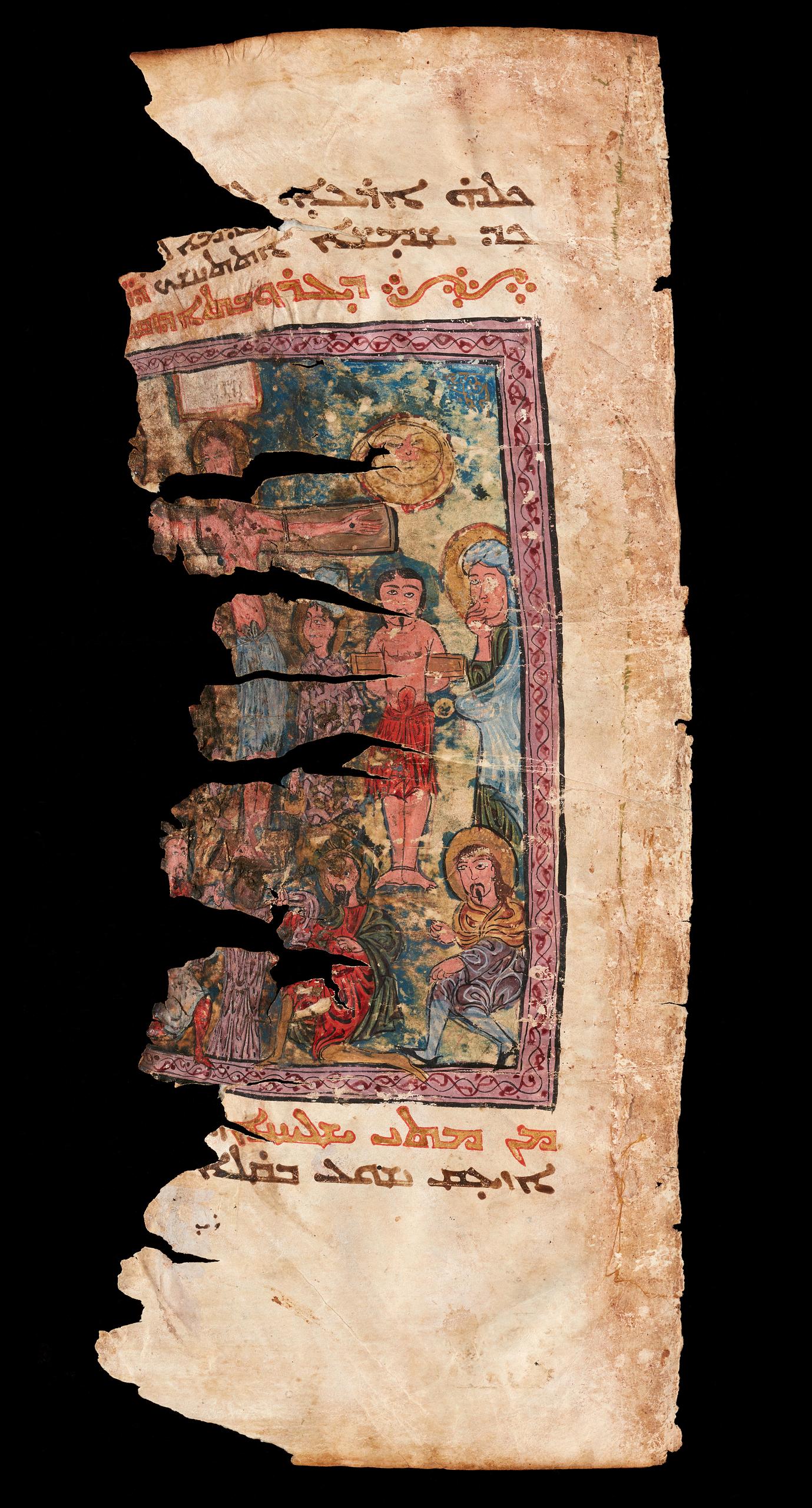
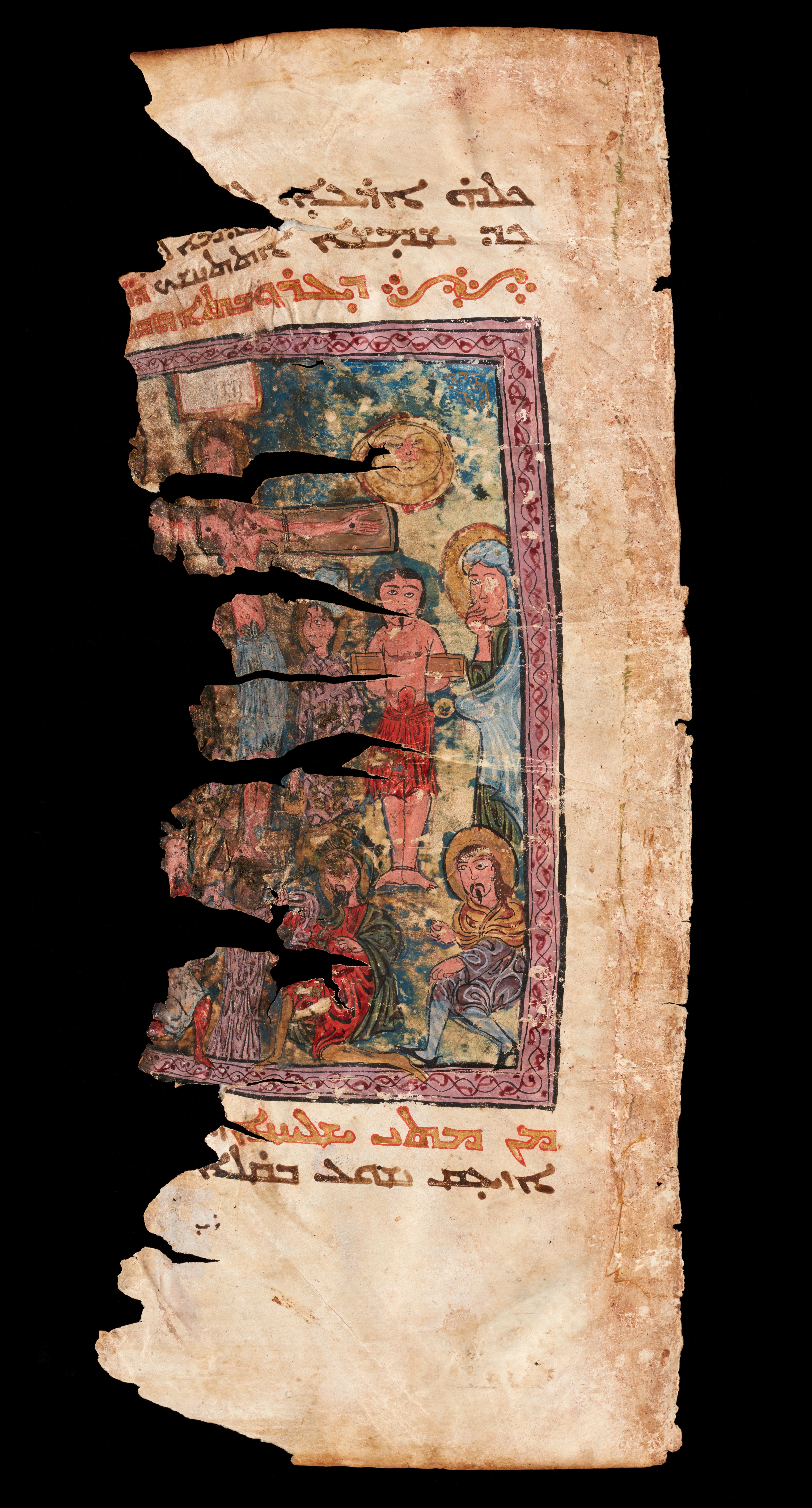
Fragment from an illustrated Syriac Orthodox manuscript, ‘The Crucifixion’
Syria; early 13th century
The leaf: 43.3 x 17.5 cm
Inventory number 19/2019
This manuscript fragment shows the crucifixion of Christ at Calvary. Jesus appears in the left side of the fragment. He is wearing a blue loincloth, a cruciform halo surrounding his head. In the right side of the painting, one of the two robbers is shown on a lower cross, and to his right we see a standing figure wearing a long, blue scarf. The latter is presumably a depiction of the Virgin Mary. At the bottom of the picture are three male figures, of which only one is fully preserved. They are wearing long tunics and coloured leggings, and two of them are holding up a purple robe between them. These are probably three of the soldiers who, according to the New Testament, cast lots for Jesus’s garments.
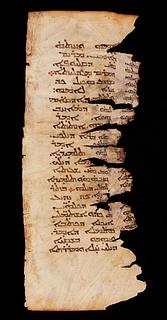
The text on the front and back of the leaf is written in the Semitic language Syriac, a variant of Aramaic. It comprises descriptions of the Crucifixion from The Gospels of Matthew, Luke and John translated from the Greek.
The parchment leaf comes from a liturgical manuscript produced in a now-lost Syriac Orthodox monastery located southeast of the Turkish city of Diyarbakir. Four more leaves from the same manuscript have been preserved, their imagery including depictions of the Last Supper and the Entombment of Christ.1
The style of painting is strongly inspired by Byzantine iconography, as is clearly evident from the figures’ halos, richly folded garments and coloured leggings. The style is not only found in Christian illuminated books but known from countless illustrated manuscripts made in the Middle East in the thirteenth and fourteen centuries, such as an Arabic translation of Dioscorides’s book on medicinal plants (4/1997 and 5/1997) and al-Jazari’s treatise on engineering (20/1988).
The text on the front and back of the leaf is written in the Semitic language Syriac, a variant of Aramaic. It comprises descriptions of the Crucifixion from The Gospels of Matthew, Luke and John translated from the Greek.
The parchment leaf comes from a liturgical manuscript produced in a now-lost Syriac Orthodox monastery located southeast of the Turkish city of Diyarbakir. Four more leaves from the same manuscript have been preserved, their imagery including depictions of the Last Supper and the Entombment of Christ.1
The style of painting is strongly inspired by Byzantine iconography, as is clearly evident from the figures’ halos, richly folded garments and coloured leggings. The style is not only found in Christian illuminated books but known from countless illustrated manuscripts made in the Middle East in the thirteenth and fourteen centuries, such as an Arabic translation of Dioscorides’s book on medicinal plants (4/1997 and 5/1997) and al-Jazari’s treatise on engineering (20/1988).
Published in
Published in
Jules Leroy: Les manuscrits syriaques à peintures conservés dans les bibliothèques d'Europe et d'Orient. Contribution à l'étude de l'iconographie des églises de langue syriaque, Paris 1964, p. 412 and pl. 149:3;
Lucy-Anne Hunt: ”Leaves from an illustrated Syriac lectionary of the Seventh/Thirteenth Century” in David Thomas (ed.): Syrian Christians under Islam : the first thousand years, Leiden 2001, pp. 192 and 194, fig. 7;
Lucy-Anne Hunt: ”Leaves from an illustrated Syriac lectionary of the Seventh/Thirteenth Century” in David Thomas (ed.): Syrian Christians under Islam : the first thousand years, Leiden 2001, pp. 192 and 194, fig. 7;
Footnotes
Footnotes
1.
Lucy-Anne Hunt: ‘Leaves from an Illustrated Syriac Lectionary of the Seventh/Thirteenth Century’ in Thomas David (ed.): Syrian Christians under Islam, the First Thousand Years, Leiden 2001, pp. 185–202.
Miniature Paintings
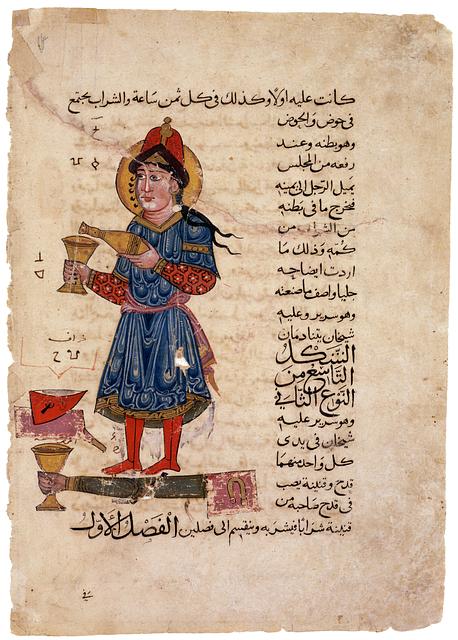
Miniature from a copy of al-Jazari’s Kitab fi marifat al-hiyal al-handasiyya. ‘Machine Pouring Wine’
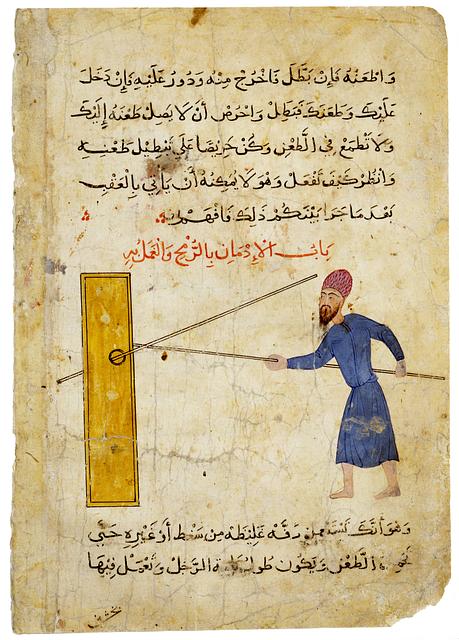
Miniature from a furusiyya manuscript. ‘A Mamluk Training with a Lance’
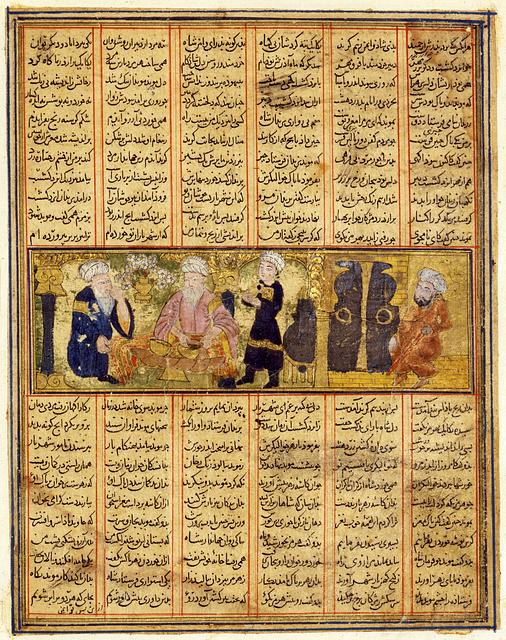
Miniature from a copy of Firdawsi’s Shahnama. ‘Mubad-i Mubadan Brings Food to the Captive Vizier Izad-i Gashasp’
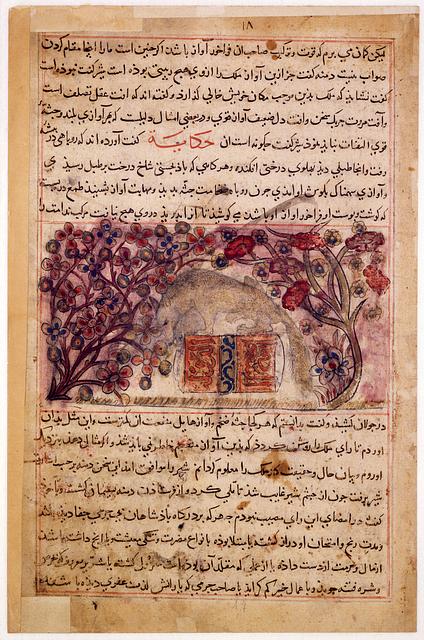
Miniature from a copy of Bidpai’s Kalila wa Dimna. ‘The Fox and the Drum’