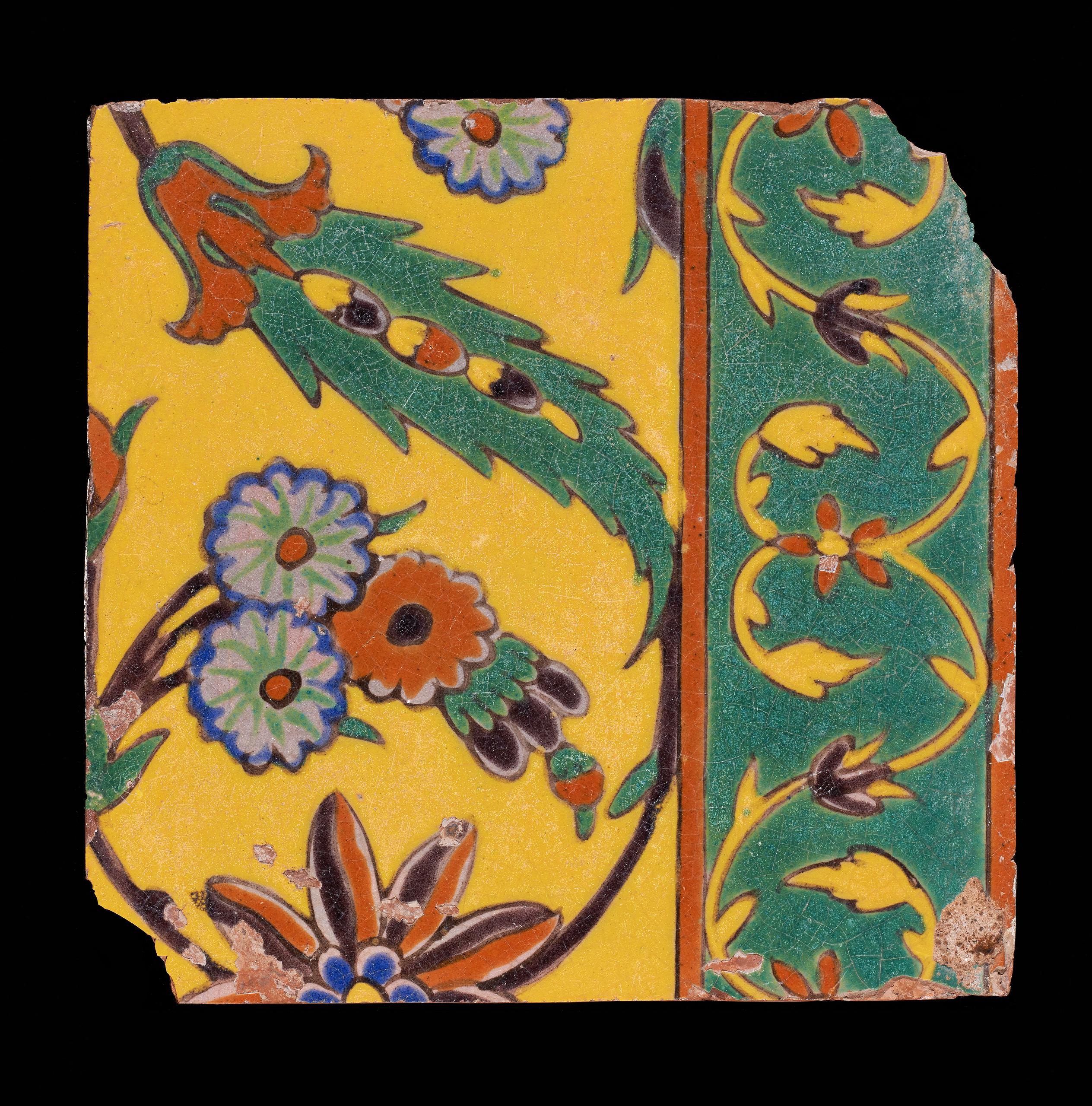
Earthenware tile, decorated in the cuerda seca technique with polychrome glazes
Northern India; 17th century
H: 20.3; W: 19.7; D: 2.5 cm
Inventory number 21/2004
Tiles made during the Mughal period frequently abounded in bold contrasts, with green, yellow, and orange the dominant colors. Among the favorite motifs were the same flowers found on so much other Indian decorative art of the period.
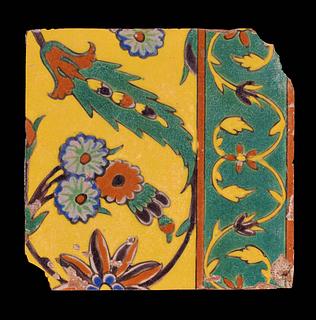
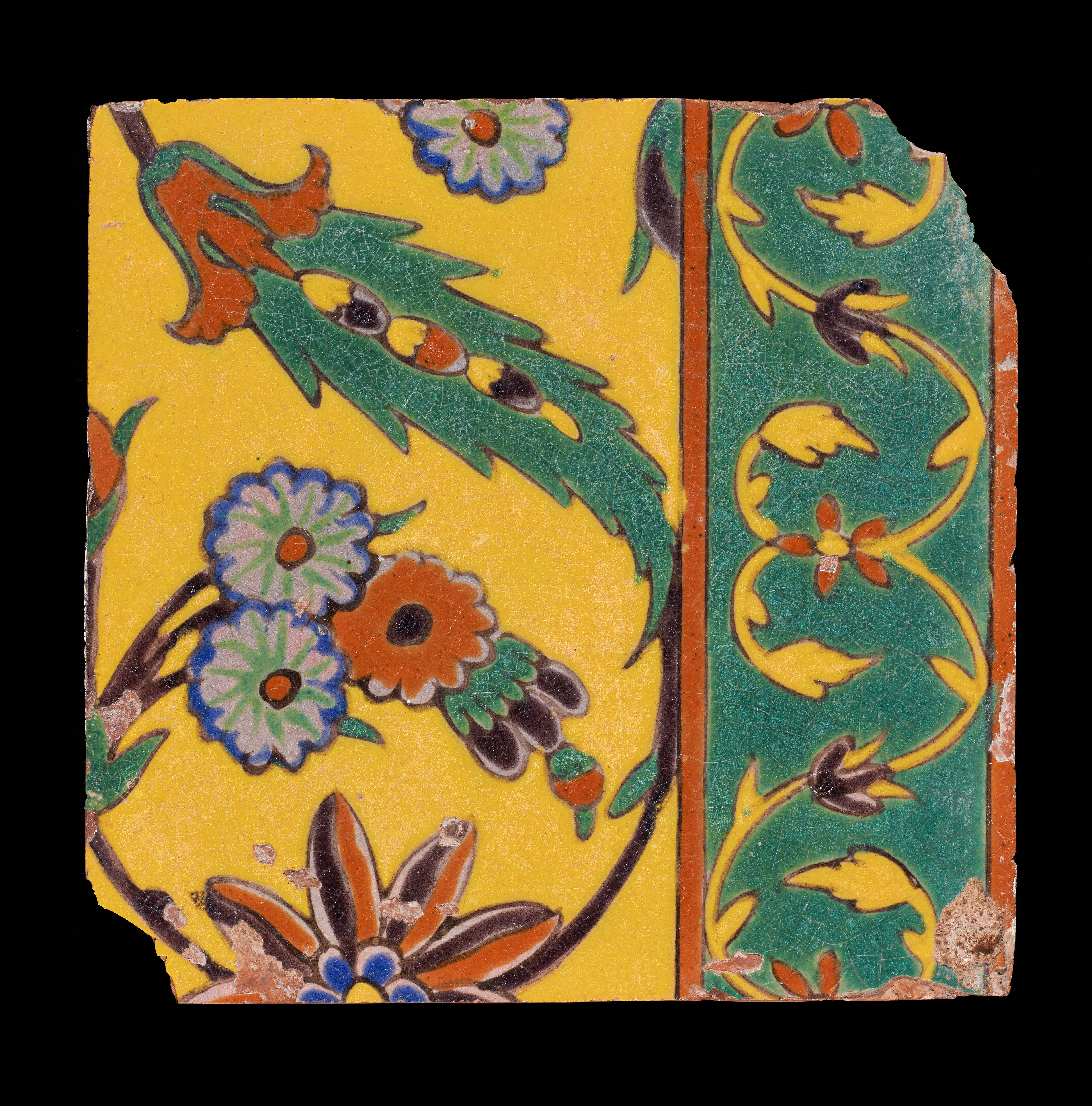
This tile was part of a border around a large panel. Its palette makes the flowers and leaves quite different from those of real-life flora, and especially the long leaf with a polychrome “stamen” seems to have been designed from esthetic criteria.
This leaf, with its serrated, elongated shape, has close parallels to the saz leaves on Ottoman Iznik ware, which might very well have served as a model for the Indian ceramist.
This tile was part of a border around a large panel. Its palette makes the flowers and leaves quite different from those of real-life flora, and especially the long leaf with a polychrome “stamen” seems to have been designed from esthetic criteria.
This leaf, with its serrated, elongated shape, has close parallels to the saz leaves on Ottoman Iznik ware, which might very well have served as a model for the Indian ceramist.
Mughal India
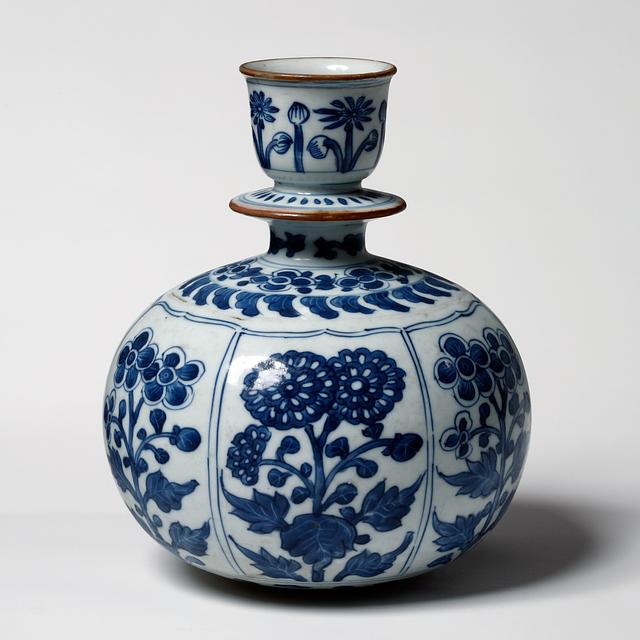
Huqqa (water pipe), porcelain
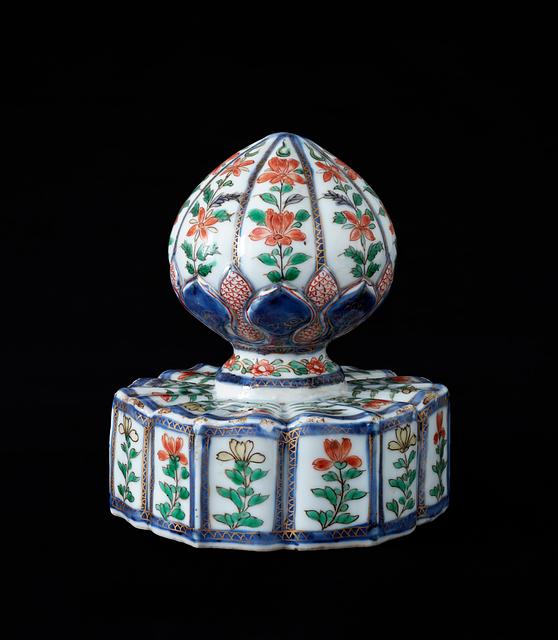
Porcelain carpet weight, painted dark blue under a transparent glaze and covered with famille verte enamels in black, green, red, yellow, and blue as well as with gilding
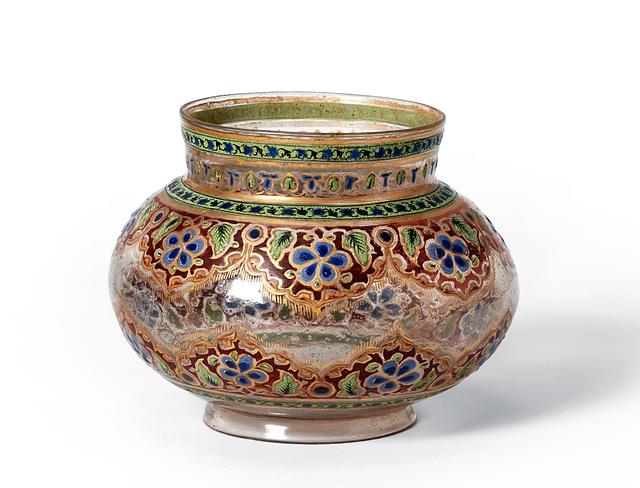
Bowl, colorless glass, decorated with polychrome enamel and gilded
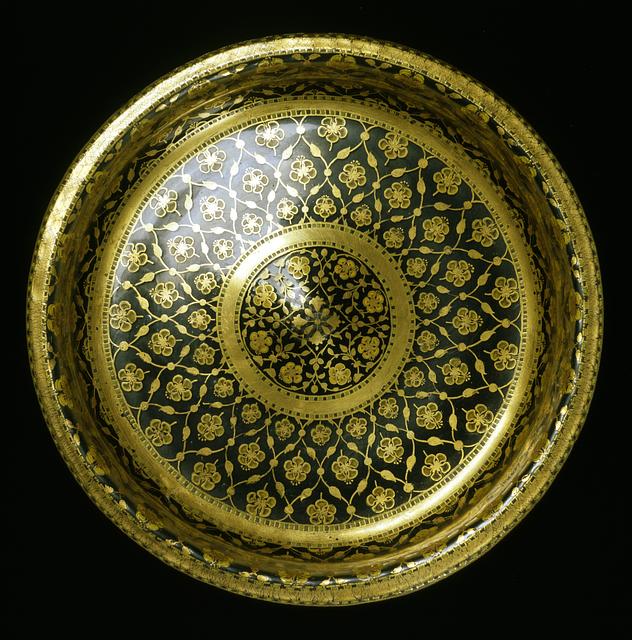
Dish, colorless glass, decorated with enamel and gilded