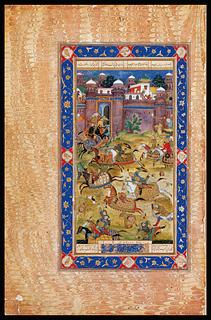
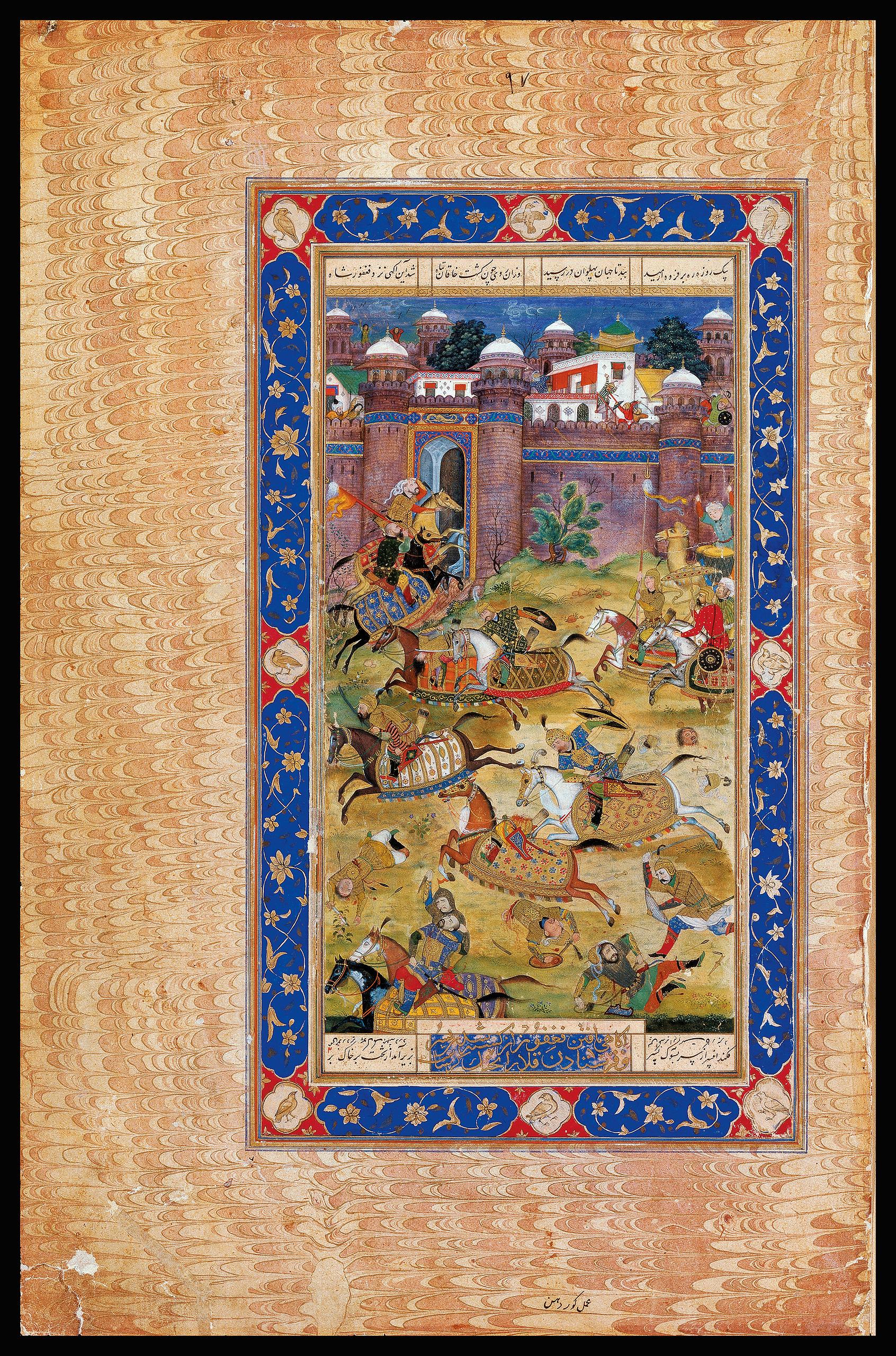
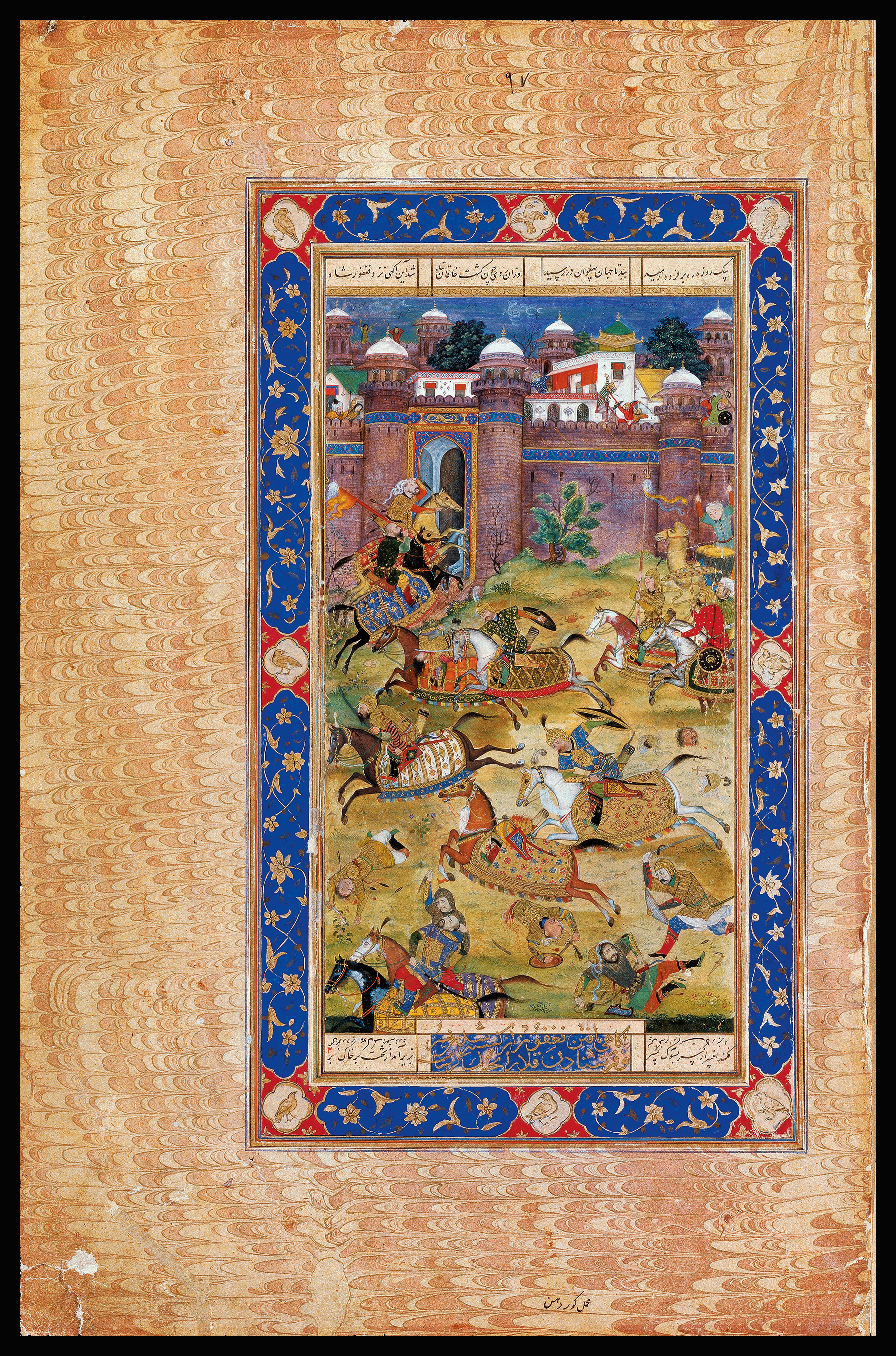
Miniature from a copy of Tusi’s Garshaspnama pasted on an album leaf. ‘Nariman Killing the Son of the Khan of Chin’
India, Mughal; c. 1610
Leaf: 34.6 × 22.3 cm
Inventory number 17/2004
The Garshaspnama of Asadi Tusi (d. 1073) is a kind of appendix to the Shahnama, and Nariman, Garshasp’s son, is the great-grandfather of the Persian hero Rustam.
The specific action is actually a matter of indifference, but Govardhan, to whom it was already attributed in its own day, created a remarkable painting. Govardhan worked both for Akbar and his son Jahangir and was renowned for his psychologically insightful depictions.
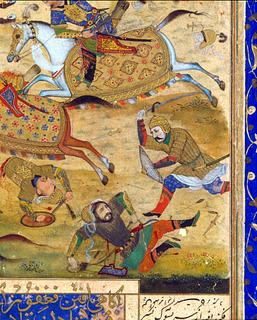
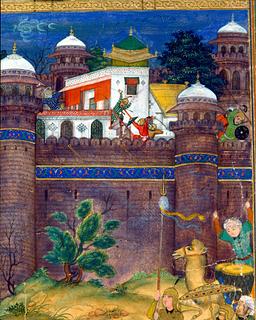
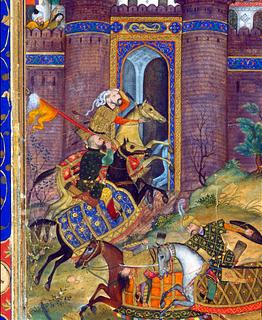
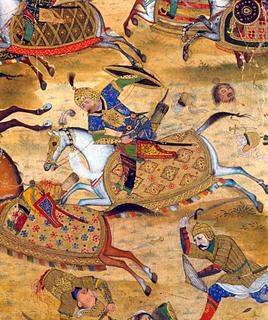
The warriors’ faces, including those on the decapitated heads, were depicted individually and dramatically, and naturalistic details such as armor, caparisons, architectural details, and half-unwound turbans were painstakingly registered. The level of detailing is unusually high.
The specific action is actually a matter of indifference, but Govardhan, to whom it was already attributed in its own day, created a remarkable painting. Govardhan worked both for Akbar and his son Jahangir and was renowned for his psychologically insightful depictions.
The warriors’ faces, including those on the decapitated heads, were depicted individually and dramatically, and naturalistic details such as armor, caparisons, architectural details, and half-unwound turbans were painstakingly registered. The level of detailing is unusually high.
Published in
Published in
Sotheby’s, London, 7/12-1971, lot 188A;
Francesca Galloway: Indian miniatures and works of art: Autumn 2003, Galloway, London 2003, cat.no. 2;
Sotheby’s, London, 28/4-2004, lot 57;
Kjeld von Folsach: For the Privileged Few: Islamic Miniature Painting from The David Collection, Louisiana, Humlebæk 2007, cat.no. 75;
John Seyller: “Govardhan” in Milo C. Beach, Eberhard Fischer, B. N. Goswamy (eds.): Masters of Indian painting, vol. 1, 1100-1650, Zûrich.2011, cat.no. 7, fig. 8;
Kjeld von Folsach, Joachim Meyer and Peter Wandel: Fighting, Hunting, Impressing. Arms and Armour from the Islamic World 1500-1850, The David Collection, Copenhagen 2021, cat.no. 33 and fig. 21, p. 69;
Francesca Galloway: Indian miniatures and works of art: Autumn 2003, Galloway, London 2003, cat.no. 2;
Sotheby’s, London, 28/4-2004, lot 57;
Kjeld von Folsach: For the Privileged Few: Islamic Miniature Painting from The David Collection, Louisiana, Humlebæk 2007, cat.no. 75;
John Seyller: “Govardhan” in Milo C. Beach, Eberhard Fischer, B. N. Goswamy (eds.): Masters of Indian painting, vol. 1, 1100-1650, Zûrich.2011, cat.no. 7, fig. 8;
Kjeld von Folsach, Joachim Meyer and Peter Wandel: Fighting, Hunting, Impressing. Arms and Armour from the Islamic World 1500-1850, The David Collection, Copenhagen 2021, cat.no. 33 and fig. 21, p. 69;