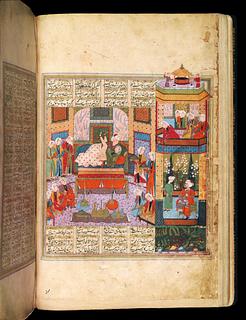
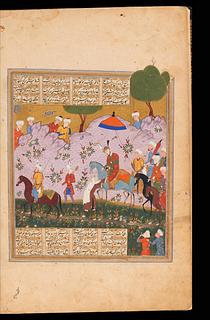
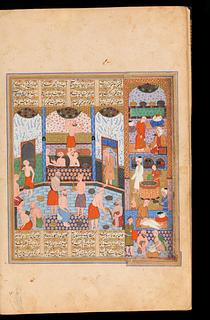
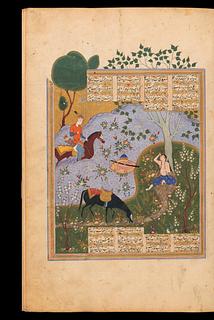
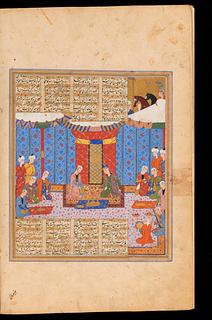
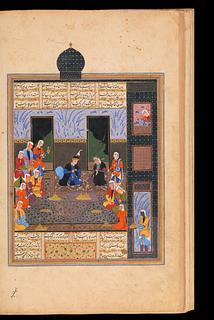
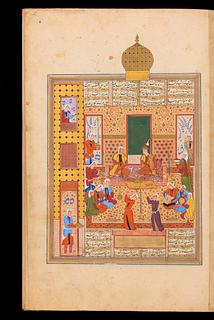
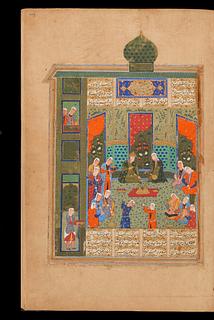
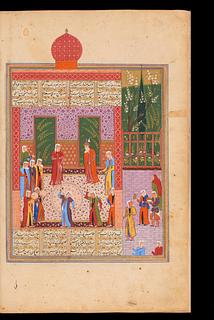
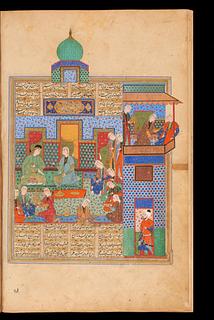
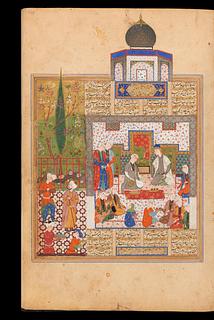
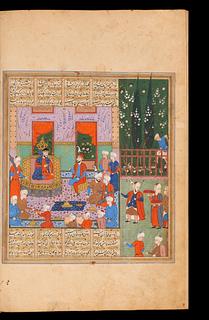
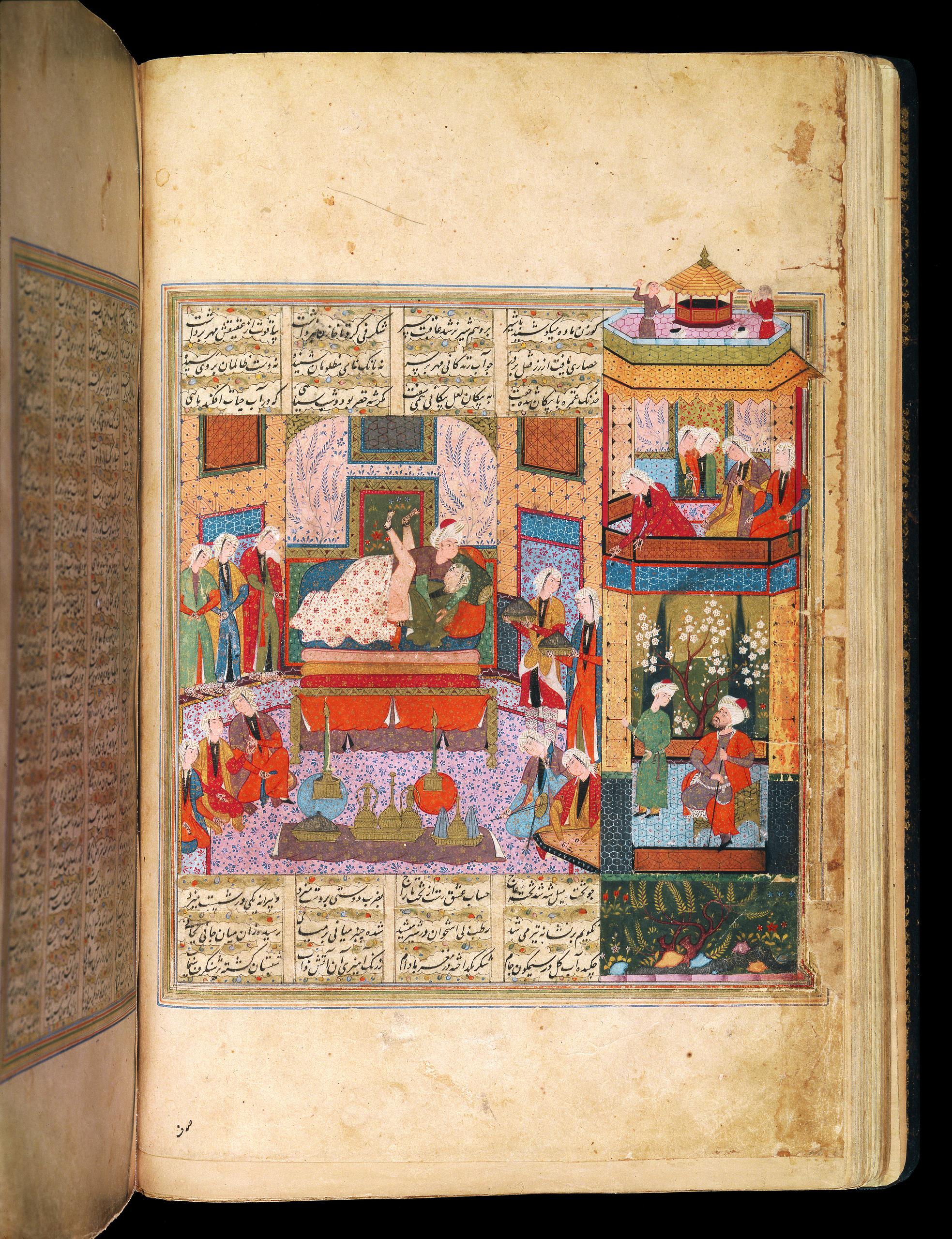
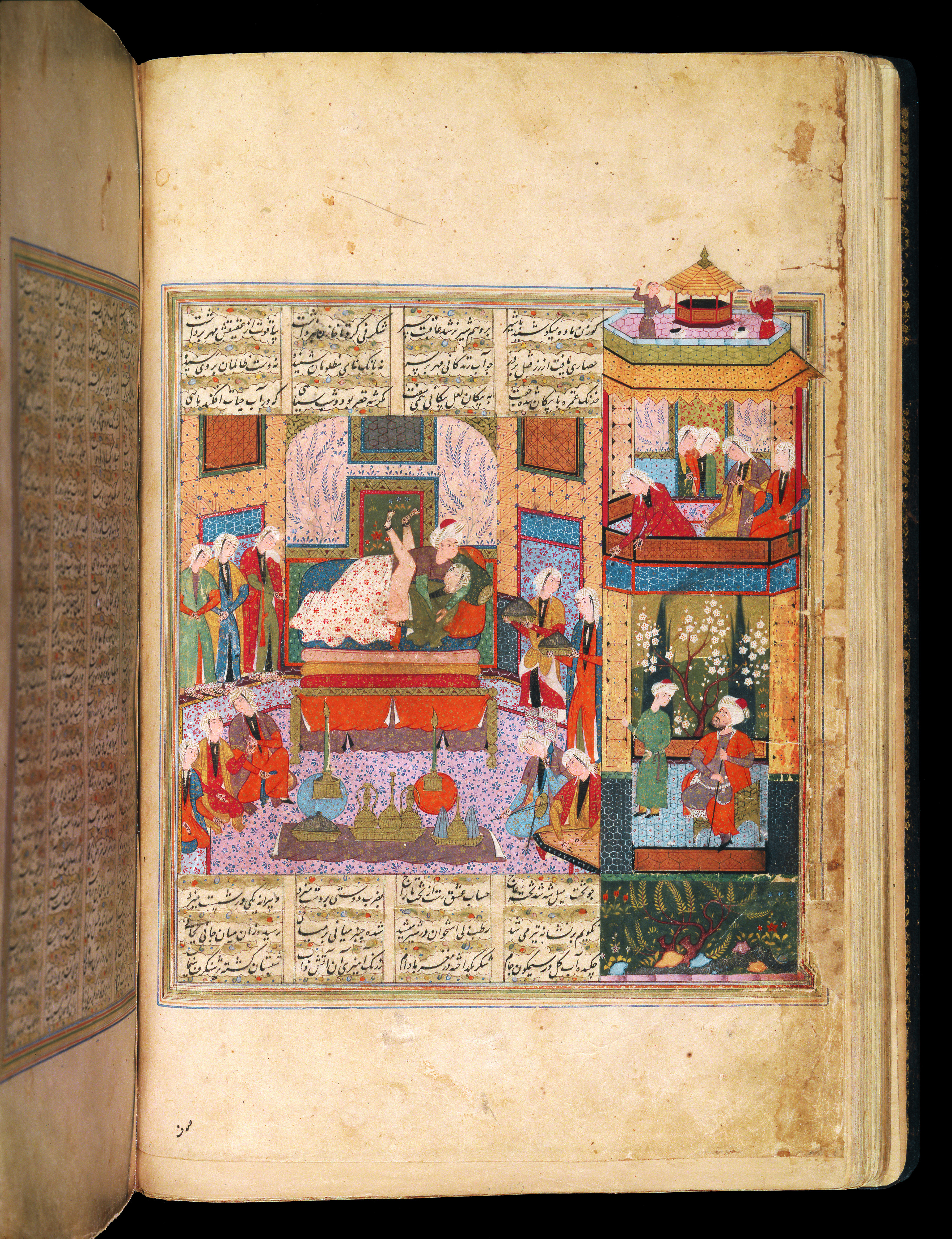
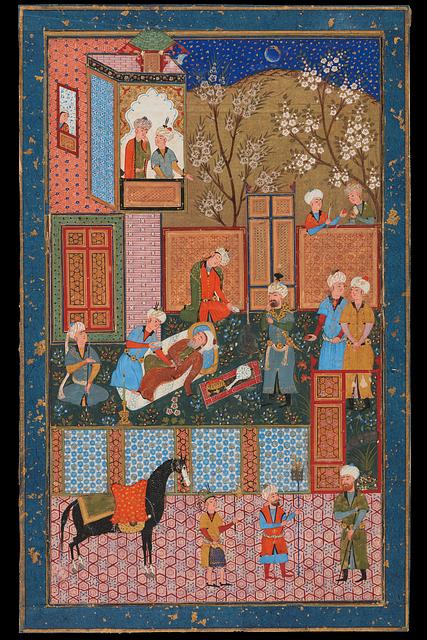
A copy of Nizami’s Khamsa. The first miniature (fol. 107v): ‘The Consummation of the Marriage Between Khusraw and Shirin’
It is the consummation of this long course of events that we witness here, together with all the women of the harem. There is something unintentionally funny about the couple, who are almost fully clothed, their private sphere protected from the outside world by a seated doorman.
There are not many explicit erotic miniatures in ‘serious’ Islamic literature. Although some of the classical romances and also many Sufi poems can be highly sensual, rarely are these motifs elaborated graphically. This is also true to some extent in India.
Published in
Published in
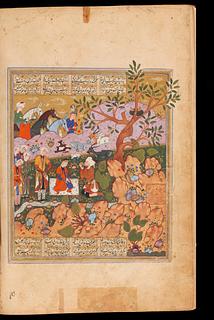
fol. 80v
Ross Lee Bernhaut: “Babur, Akbar, and the Transformation of Gwalior's Rock-Hewn Tirthankaras”, Archives of Asian Art, 73:2, 2023, fig. 20, pp. 122-123;
fol. 107v.
Kjeld von Folsach: For the Privileged Few: Islamic Miniature Painting from The David Collection, Louisiana, Humlebæk 2007, cat.no. 47;
Kjeld von Folsach, Joachim Meyer: The Human Figure in Islamic Art – Holy Men, Princes, and Commoners, The David Collection, Copenhagen 2017, cat.no. 57;
Hanna Boghanim and Agnès Carayon (eds.): Parfums d'Orient, Institut du monde arabe, Paris 2023, cat. 124, pp. 209 and 219;
Rasmus Bech Olsen: ”Desire, Sex and Gender in Book Paintings from the Islamic World” in Rasmus Bech Olsen (ed.): The Art of Desire: An Ottoman Sex Manual and Its Context, The David Collection, Copenhagen 2026, fig. 2, p. 19;