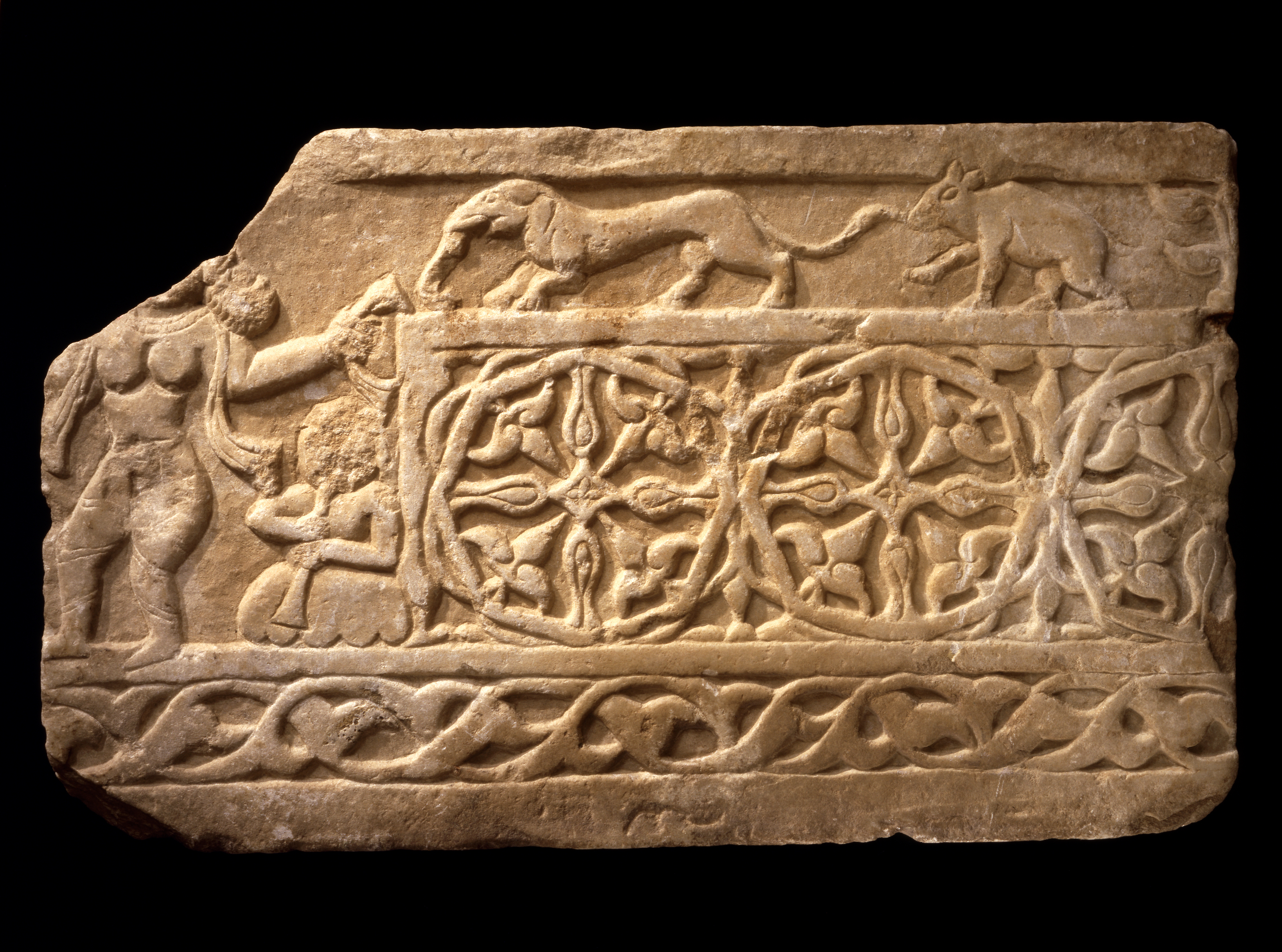
Fragment of a marble frieze
Afghanistan, Ghazna; c. 1100
H: 38; B: 62; D: 6 cm
Inventory number 73/1979
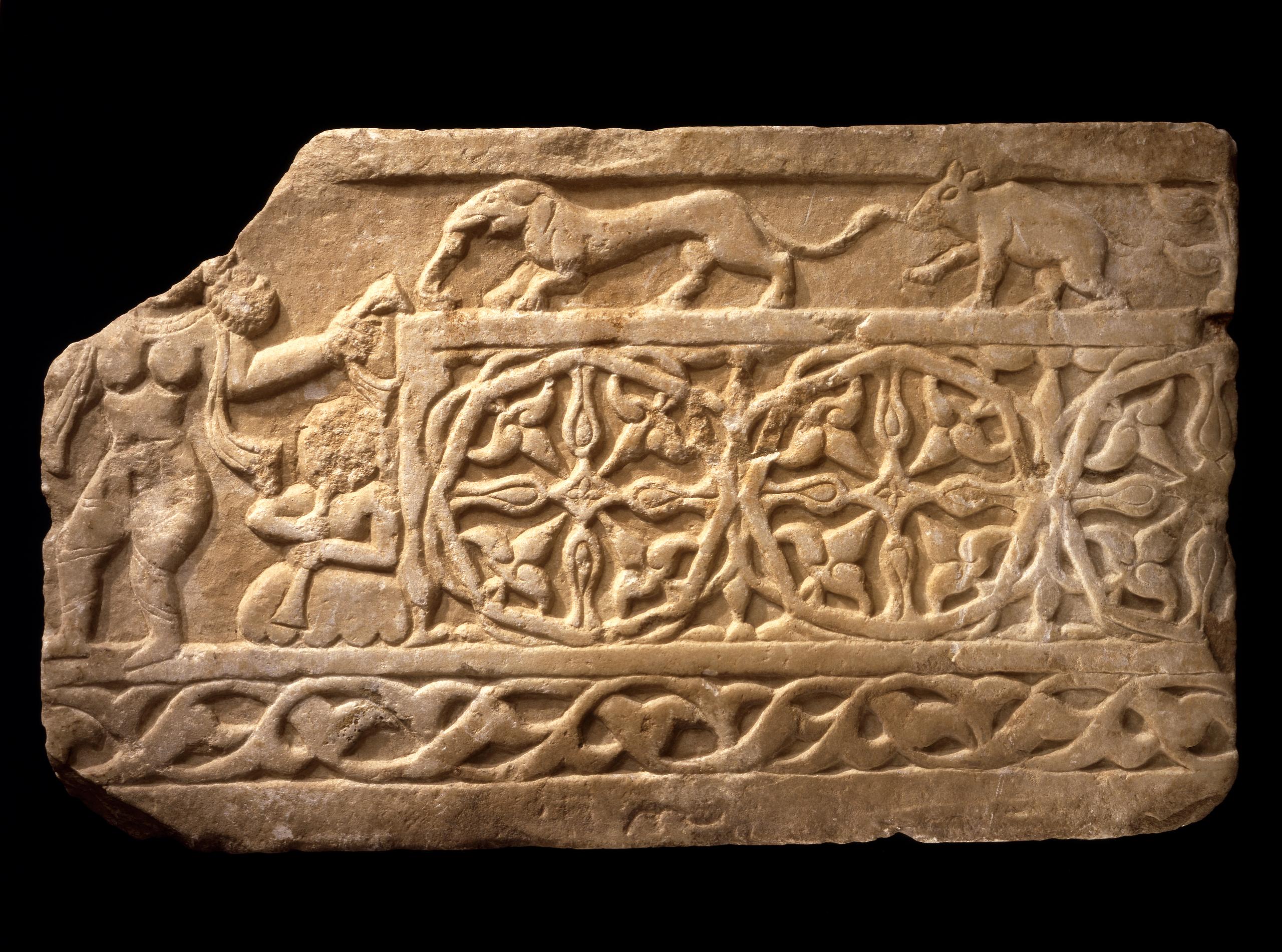
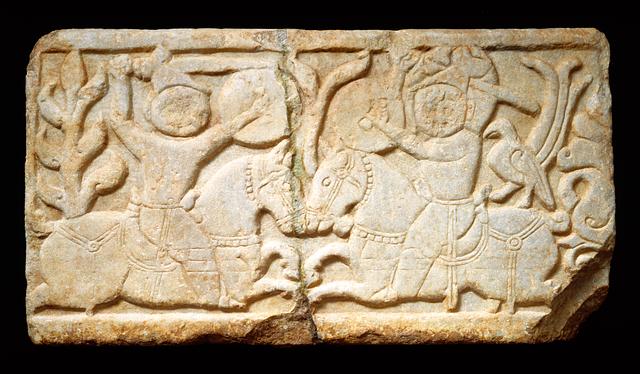
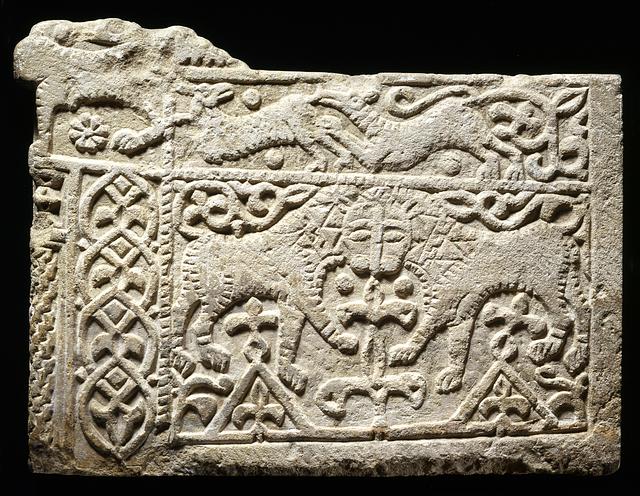
After the fall of the Ghaznavids and the destruction of their palaces, reliefs like this one were reused in later buildings, frequently as raw building material, covering their ornaments. The decoration on this relief is quite atypical in a Muslim context, but it is powerful testimony to the major influence that Indian culture had on that of the Ghaznavids.
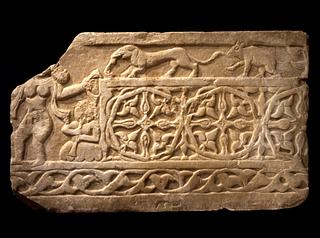
The nude dancer on the left side is a less refined version of the highly erotic figures known from Hindu art. The motif of the “hunting pair of animals” that was very popular in medieval Islamic art is found in a special variant here: an Indian elephant, proportioned like a deer or a hare, is pursued by a bear
The nude dancer on the left side is a less refined version of the highly erotic figures known from Hindu art. The motif of the “hunting pair of animals” that was very popular in medieval Islamic art is found in a special variant here: an Indian elephant, proportioned like a deer or a hare, is pursued by a bear
Published in
Published in
Kjeld von Folsach: Islamic art. The David Collection, Copenhagen 1990, cat.no. 273;
Kjeld von Folsach, Torben Lundbæk and Peder Mortensen (eds.): Sultan, Shah and Great Mughal: the history and culture of the Islamic world, The National Museum, Copenhagen 1996, cat.no. 247;
Kjeld von Folsach: Art from the World of Islam in The David Collection, Copenhagen 2001, cat.no. 394;
Catherine B. Asher: Delhi's Qutb complex : the minar, mosque and Mehrauli, Mumbai 2017, fig. 1.7, p. 18;
Kjeld von Folsach, Torben Lundbæk and Peder Mortensen (eds.): Sultan, Shah and Great Mughal: the history and culture of the Islamic world, The National Museum, Copenhagen 1996, cat.no. 247;
Kjeld von Folsach: Art from the World of Islam in The David Collection, Copenhagen 2001, cat.no. 394;
Catherine B. Asher: Delhi's Qutb complex : the minar, mosque and Mehrauli, Mumbai 2017, fig. 1.7, p. 18;