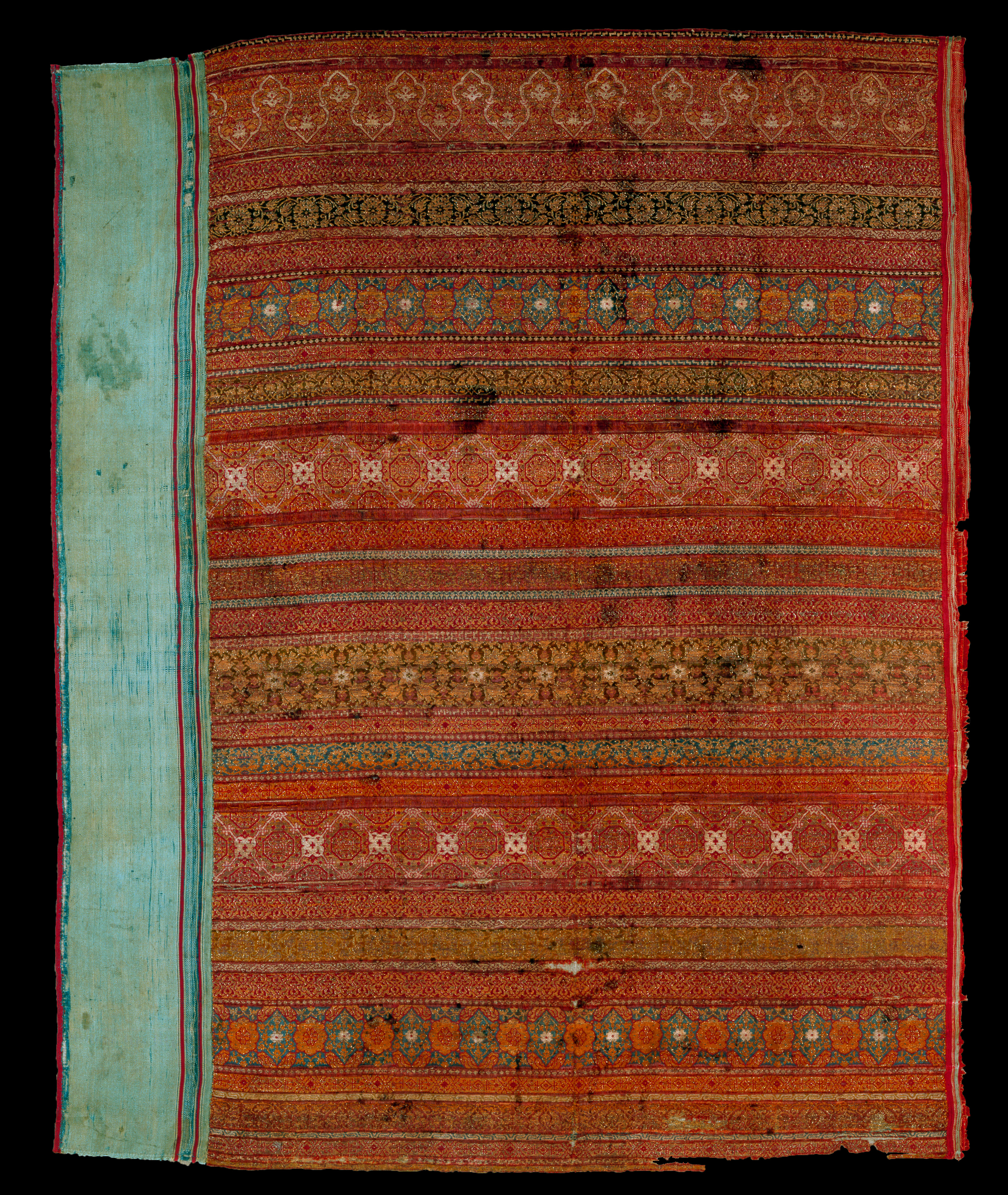
Fragment of a samitum-woven textile, silk and silver lamella spun around a silk core
North Africa or Spain; 15th-16th century
H: 114.5; W: 91.5 cm
Inventory number 21/1988
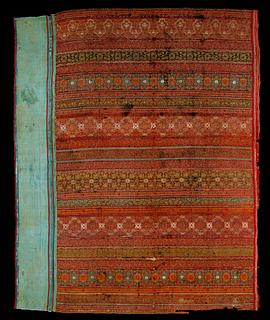
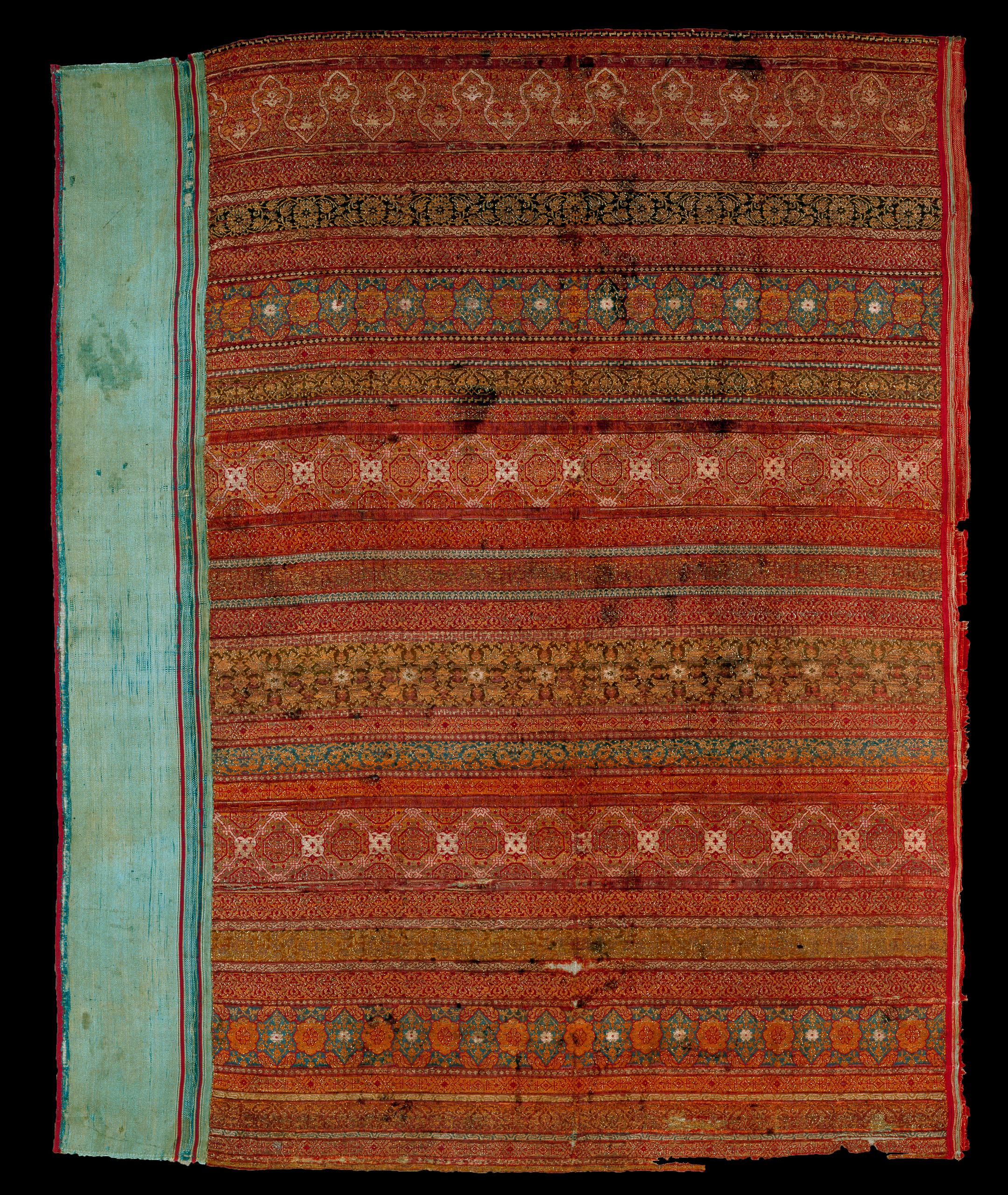
The textile is noteworthy because of the two borders woven into it, each with its own color; very little remains of the one on the right. The borders made it unsuitable for making a garment, so the piece must have been intended for another specific use. Variations of many of the horizontal stripes’ patterns are repeated in different colors in other stripes with the same proportions. This creates a measure of consistency amidst the textile’s wealth of colors and patterns.
The palette and patterns seem to be linked with 15th-century Nasrid art from Granada. This style of decoration survived in North Africa after the fall of the Nasrid dynasty in Spain.
The palette and patterns seem to be linked with 15th-century Nasrid art from Granada. This style of decoration survived in North Africa after the fall of the Nasrid dynasty in Spain.
Published in
Published in
Kjeld von Folsach: Islamic art. The David Collection, Copenhagen 1990, cat.no. 399;
Kjeld von Folsach and Anne-Marie Keblow Bernsted: Woven Treasures: Textiles from the World of Islam, The David Collection, Copenhagen 1993, cat.no. 22;
Kjeld von Folsach: Art from the World of Islam in The David Collection, Copenhagen 2001, cat.no. 643;
Kjeld von Folsach and Anne-Marie Keblow Bernsted: Woven Treasures: Textiles from the World of Islam, The David Collection, Copenhagen 1993, cat.no. 22;
Kjeld von Folsach: Art from the World of Islam in The David Collection, Copenhagen 2001, cat.no. 643;