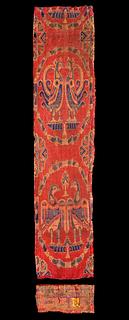
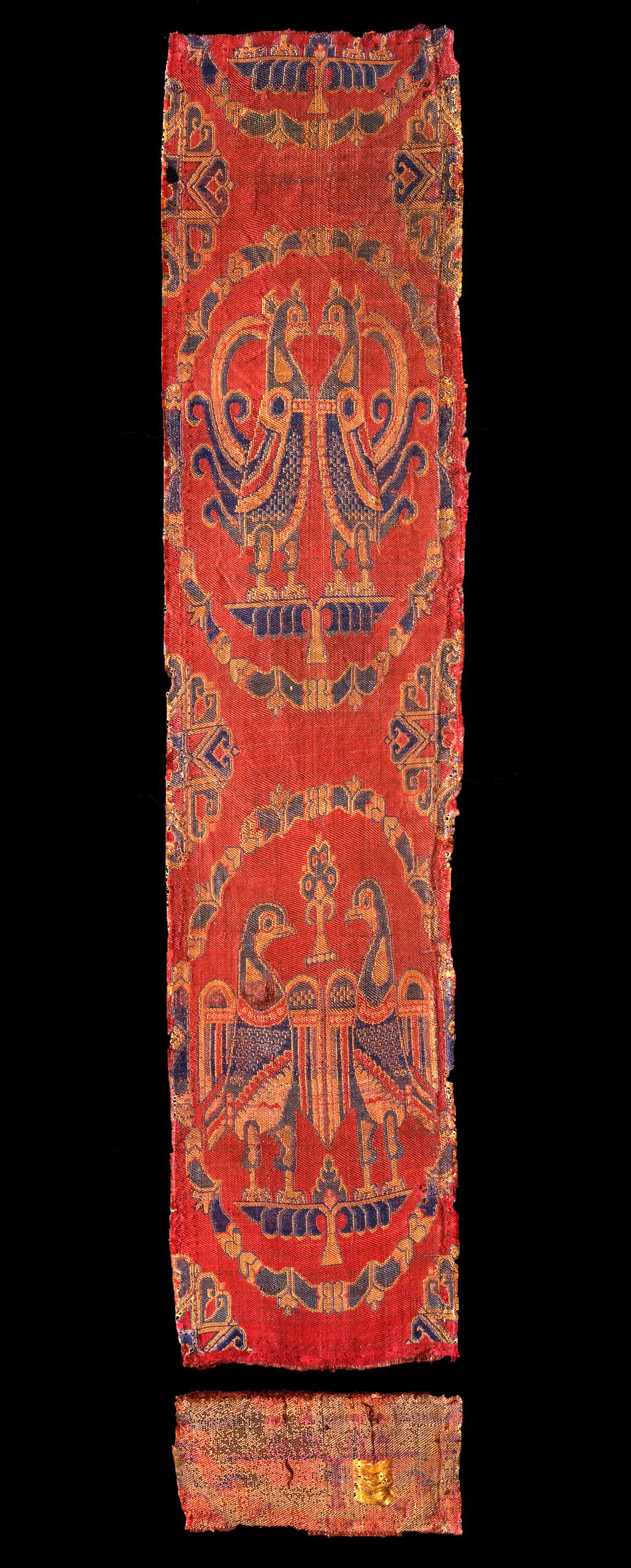
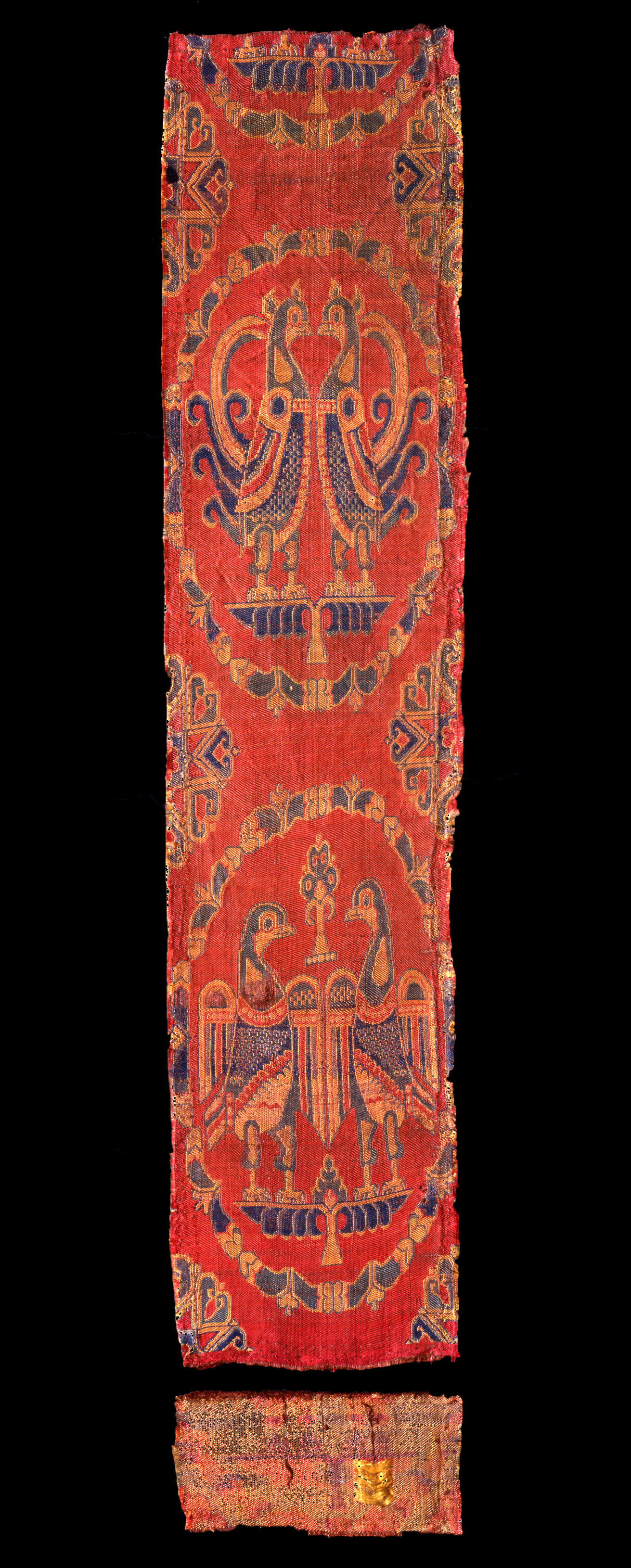
Samitum-woven textile with confronted birds in medallions, silk
Iran or Iraq; c. 650-750
H: 48.5; W: 11 cm
Inventory number 9/1996
With its motif consisting of confronted pheasants or peacocks and eagles standing on winged palmettes in medallions, this textile clearly belongs to a tradition that was found in both the Sasanian and the Byzantine empires.
The manufacture of complex textiles, like this samitum, required great technological insight and was exceedingly costly. While the early Muslims were suspicious of the magnificence that silk textiles represented in their day, such fabrics quickly became indispensable at the Umayyad and later the Abbasid court, whether they were used for clothing or draperies.
The manufacture of complex textiles, like this samitum, required great technological insight and was exceedingly costly. While the early Muslims were suspicious of the magnificence that silk textiles represented in their day, such fabrics quickly became indispensable at the Umayyad and later the Abbasid court, whether they were used for clothing or draperies.
Published in
Published in
Kjeld von Folsach: Art from the World of Islam in The David Collection, Copenhagen 2001, cat.no. 622;
Kjeld von Folsach: Flora islamica: plantemotiver i islamisk kunst, Davids Samling, København 2013, cat.no. 11;
Mentioned in Friedrich Spuhler: Pre-Islamic carpets and textiles from Eastern lands, London 2014, cat.no. 2.16 and note 30, p. 156;
Kjeld von Folsach: Flora islamica: plantemotiver i islamisk kunst, Davids Samling, København 2013, cat.no. 11;
Mentioned in Friedrich Spuhler: Pre-Islamic carpets and textiles from Eastern lands, London 2014, cat.no. 2.16 and note 30, p. 156;