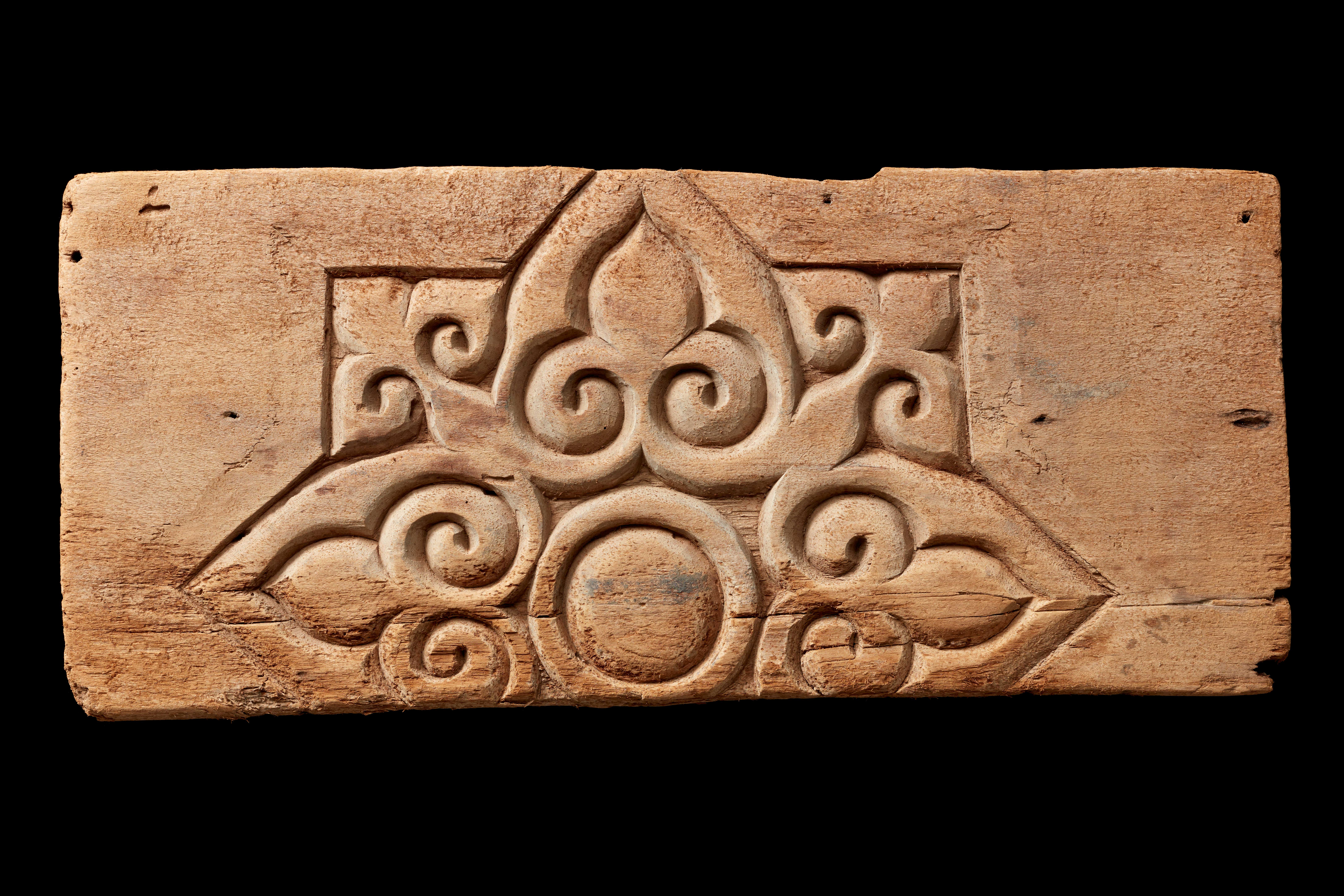
Carved wooden panel
Egypt; 2nd half of 9th century
H: 61; W: 27.5; D: 3 cm
Inventory number 8/2019
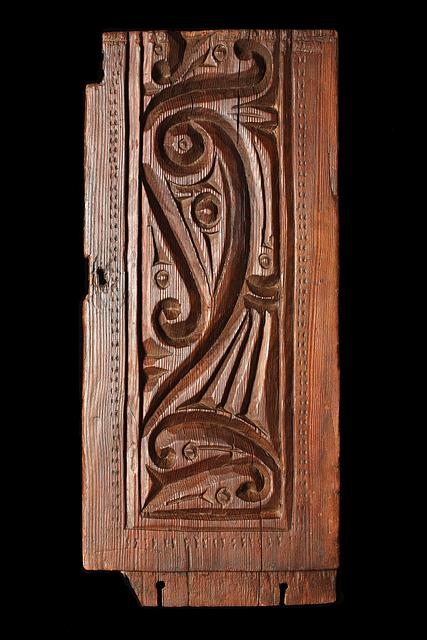
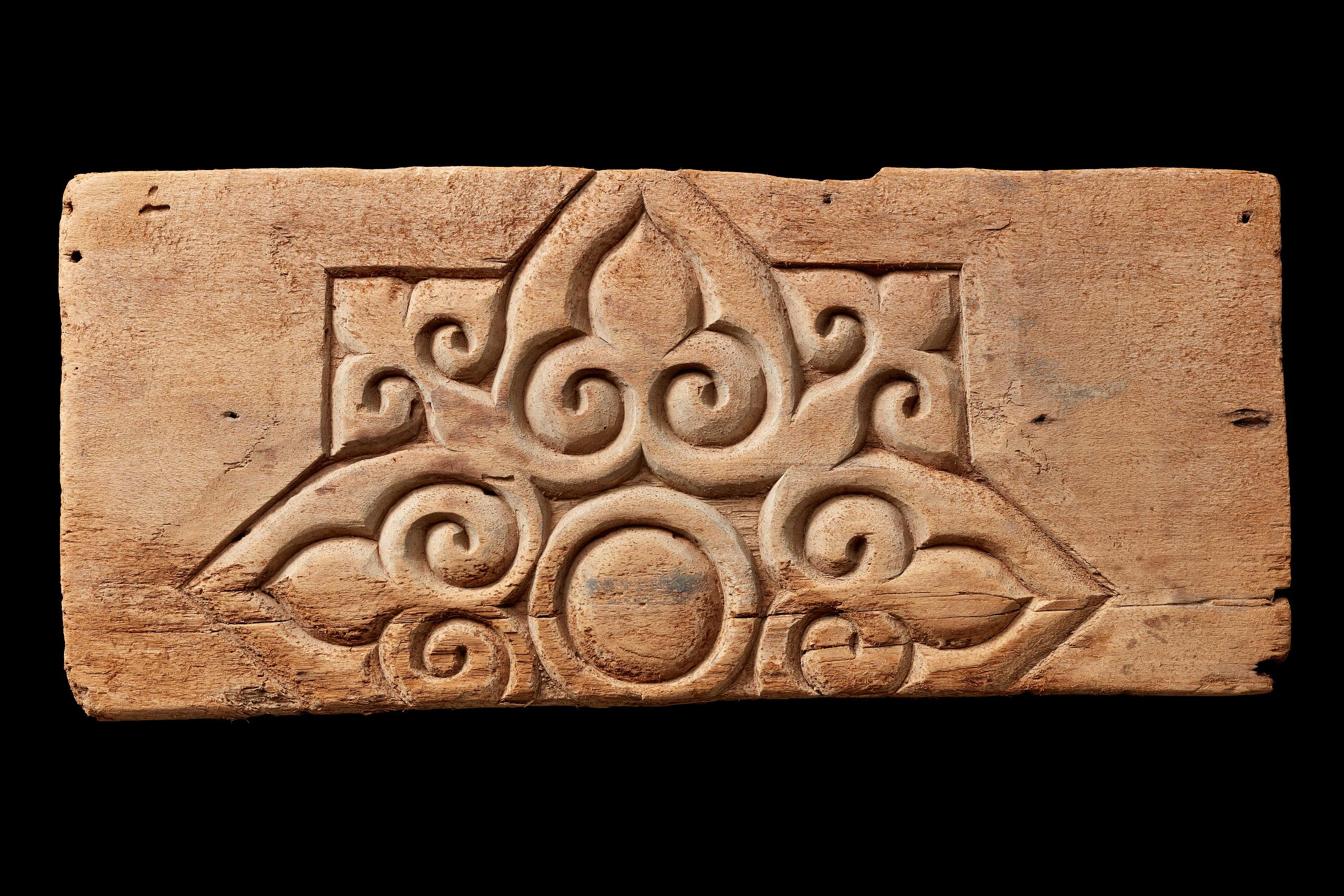
This panel may have come from a larger composite ceiling panel. The pattern is carved in relief and shows part of a cartouche filled with two sizes of leaves shaped like stylized fleurs-de-lis. The leaves are placed around a central, circular boss and the entire decoration was probably shaped like an eight-pointed star.
The decoration was made in what is known as the Samarra style, a term that designates the gradual abstraction of Antiquity’s naturalistic plant patterns that began in 9th-century Iraq and quickly spread to the Abbasid provinces, including Egypt. The process of abstraction is clearly visible in this panel since the leaves do not grow from a stem or a vine. Instead, they are placed symmetrically and their short, bifurcated stems seem to grow together.
The panel belongs to the late phase of the Samarra style, which is also called “the beveled style” because of its distinctive slanted carvings and rounded contours. Similar shapes can be found on other wooden panels and on stucco from the same period (7/2019, 42/1992, and 41/1982). In contrast to the decorations on these other pieces, the pattern on the present panel consists of separate and clearly distinguishable leaves.
One of the earliest extant buildings in Egypt in which the Samarra style was used on a large scale is the Ibn Tulun Mosque in Cairo, from 876. It has been suggested that this carved panel may have come from the ceiling of the Ibn Tulun Mosque, but this has not yet been confirmed.
The decoration was made in what is known as the Samarra style, a term that designates the gradual abstraction of Antiquity’s naturalistic plant patterns that began in 9th-century Iraq and quickly spread to the Abbasid provinces, including Egypt. The process of abstraction is clearly visible in this panel since the leaves do not grow from a stem or a vine. Instead, they are placed symmetrically and their short, bifurcated stems seem to grow together.
The panel belongs to the late phase of the Samarra style, which is also called “the beveled style” because of its distinctive slanted carvings and rounded contours. Similar shapes can be found on other wooden panels and on stucco from the same period (7/2019, 42/1992, and 41/1982). In contrast to the decorations on these other pieces, the pattern on the present panel consists of separate and clearly distinguishable leaves.
One of the earliest extant buildings in Egypt in which the Samarra style was used on a large scale is the Ibn Tulun Mosque in Cairo, from 876. It has been suggested that this carved panel may have come from the ceiling of the Ibn Tulun Mosque, but this has not yet been confirmed.
Ivory, Wood, and Papier-mâché