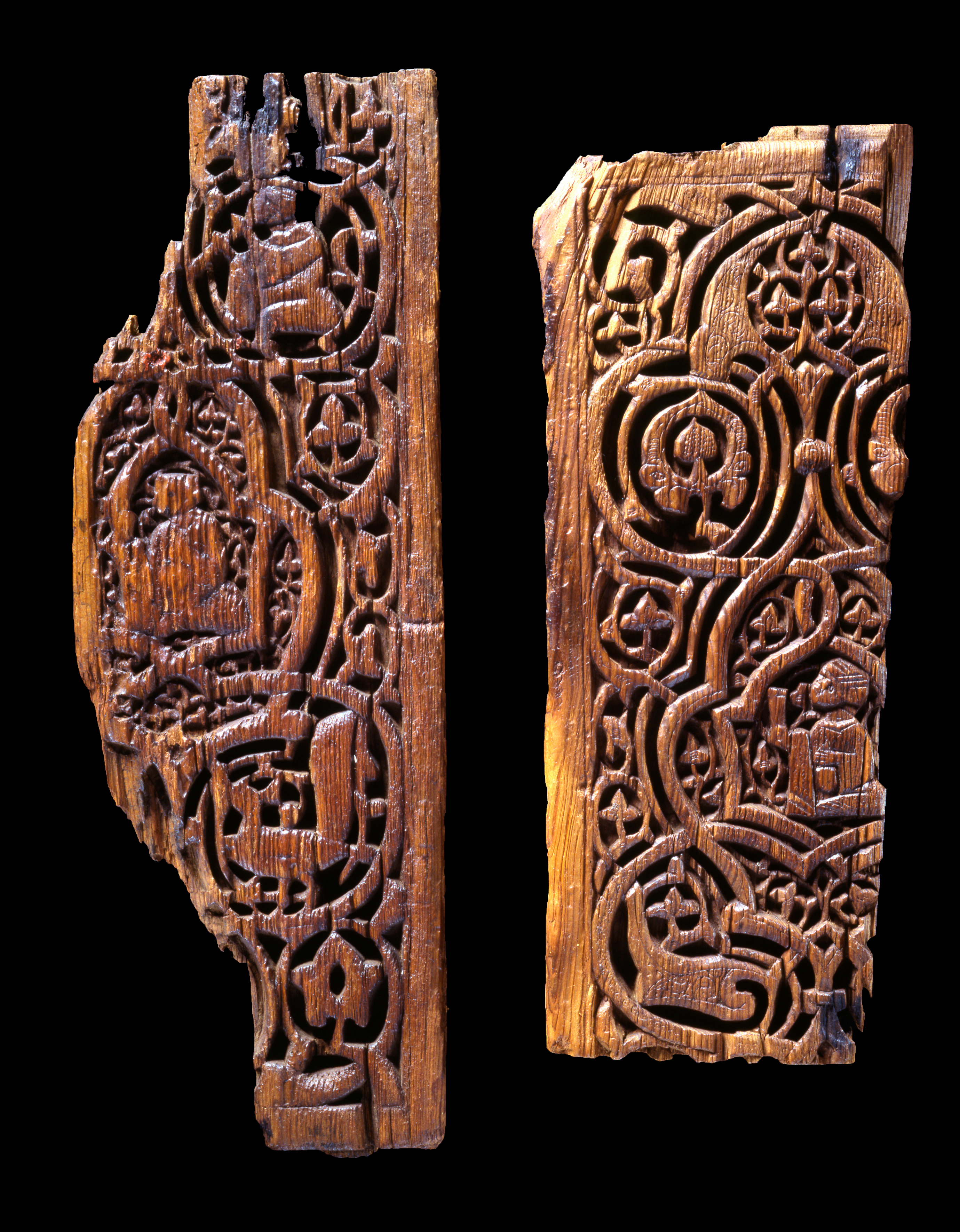
Carved wooden panels, perhaps from doors
Egypt; 11th century
H: 44.2; W: 15.5 cm (5/1992)
H: 38.7; W: 15.8 cm (6a/1992)
H: 38.7; W: 15.8 cm (6a/1992)
Inventory number 5/1992 & 6a/1992
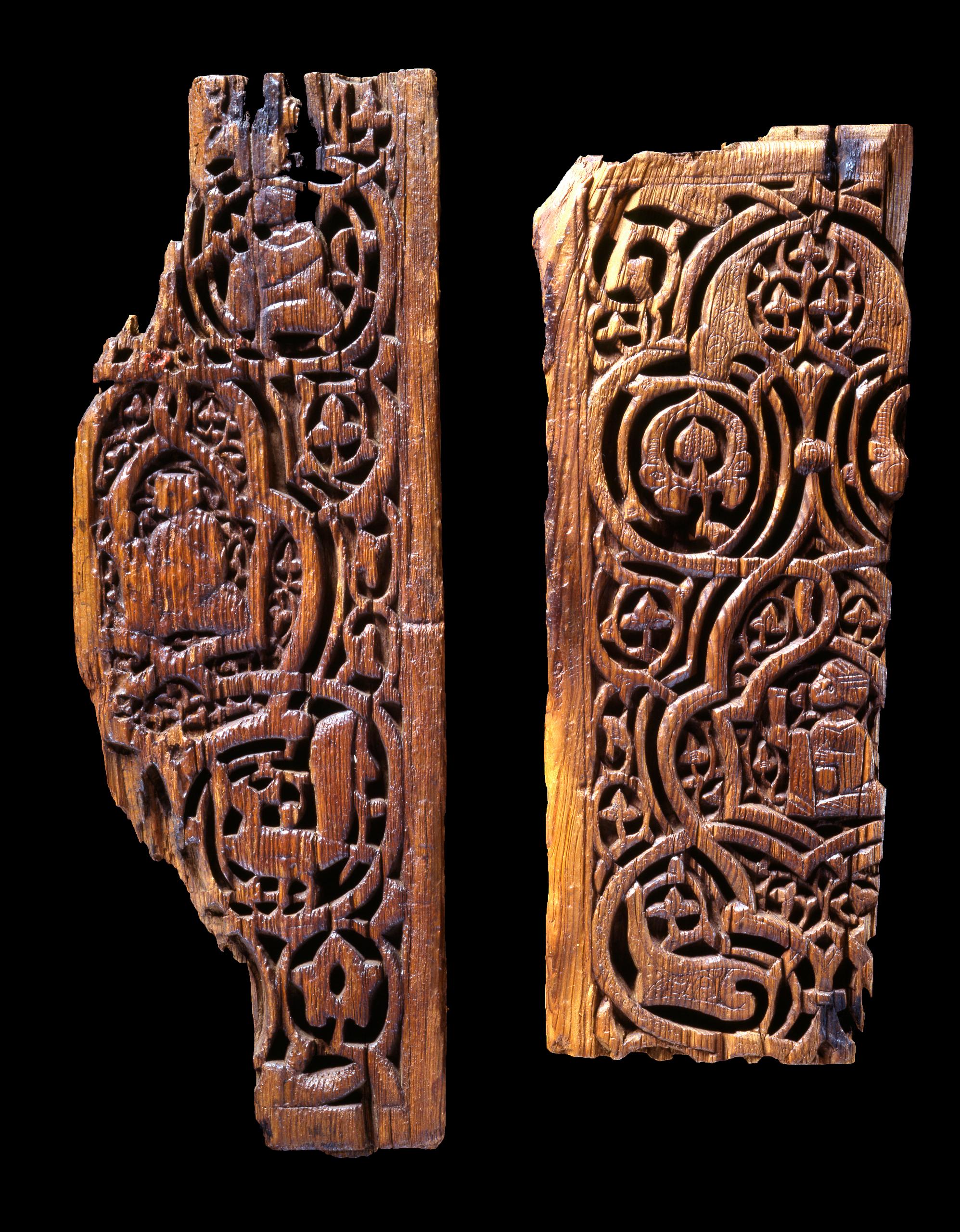
The wooden panels are decorated with tendrils, but also with a man seated with a glass and a decanter, a seated flute-player, and a peacock. Together with dancers and hunting scenes, these are motifs of a type that refers to the princely life and was very popular in the Islamic Middle Ages.
Very little remains today of the decorations that ornamented the Fatimids’ palaces in Cairo. A few wooden panels have survived because this costly material was reused in the architecture of the Mamluk period, when picture friezes – which were controversial in certain Islamic contexts – were turned inward so that they could not be seen.
Very little remains today of the decorations that ornamented the Fatimids’ palaces in Cairo. A few wooden panels have survived because this costly material was reused in the architecture of the Mamluk period, when picture friezes – which were controversial in certain Islamic contexts – were turned inward so that they could not be seen.
Published in
Published in
Kjeld von Folsach, Torben Lundbæk and Peder Mortensen (eds.): Sultan, Shah and Great Mughal: the history and culture of the Islamic world, The National Museum, Copenhagen 1996, cat.no. 122;
Kjeld von Folsach: Art from the World of Islam in The David Collection, Copenhagen 2001, cat.no. 418;
Kjeld von Folsach: Art from the World of Islam in The David Collection, Copenhagen 2001, cat.no. 418;
The Tulunids and the Fatimids