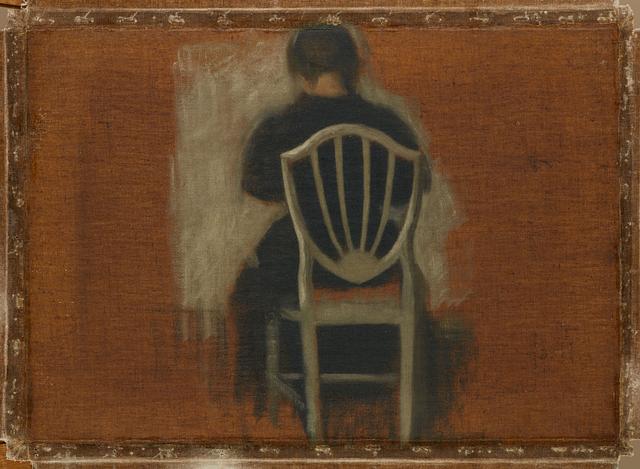
Vilhelm Hammershøi (1864–1916)
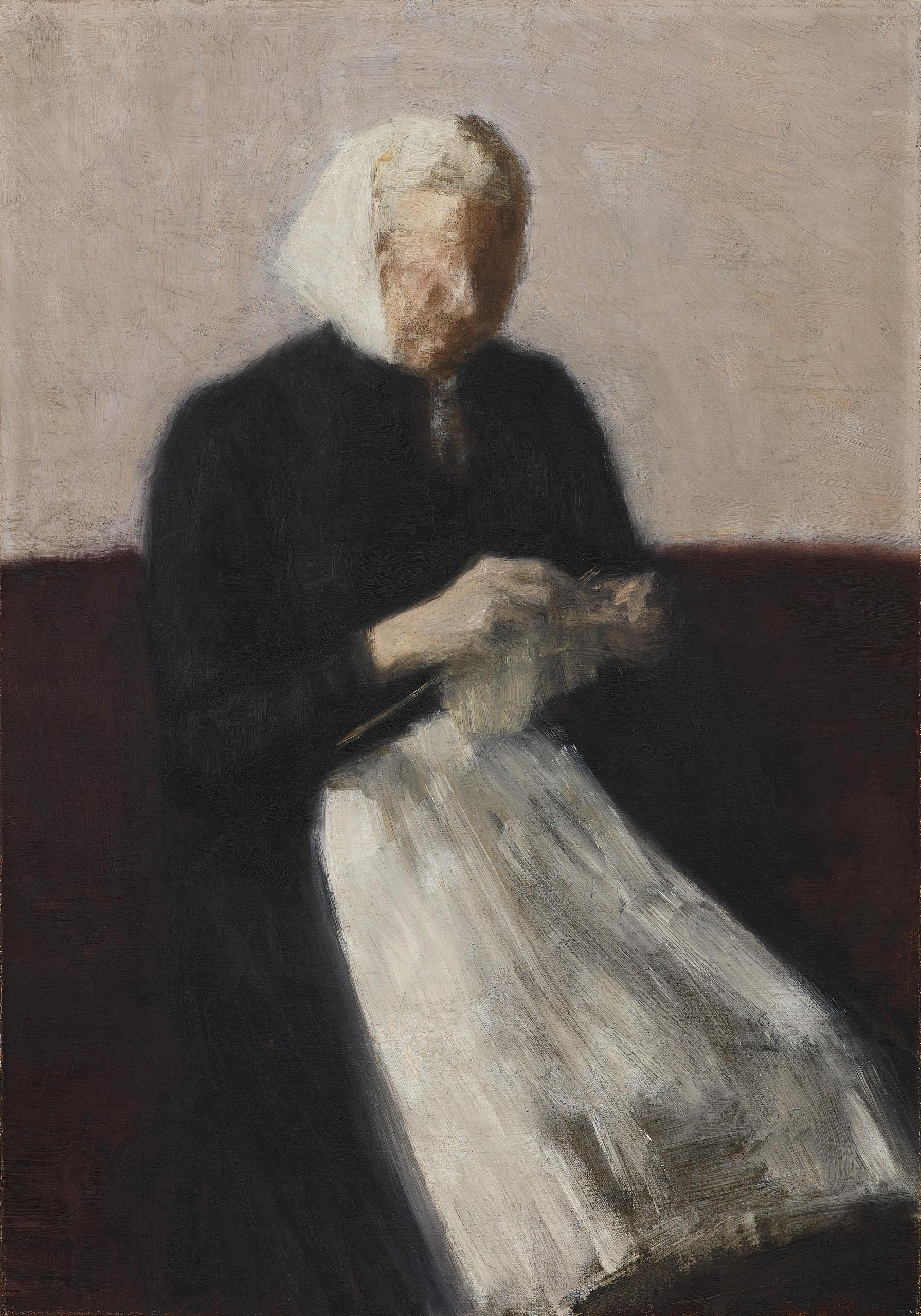
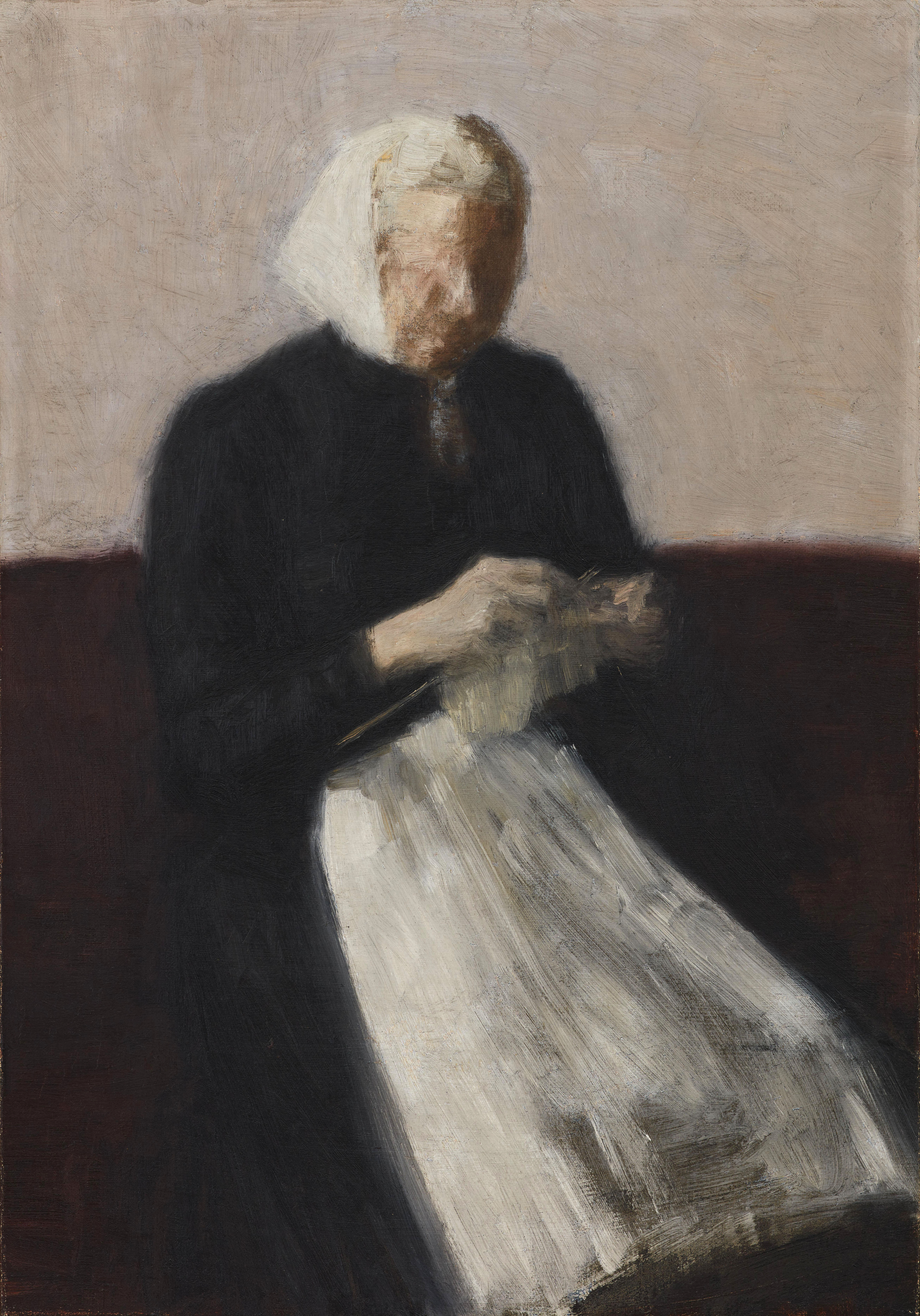
Woman Knitting. The Artist’s Mother, 1889
Oil on canvas
55.5 x 38.7 cm
Inventarnummer B 318
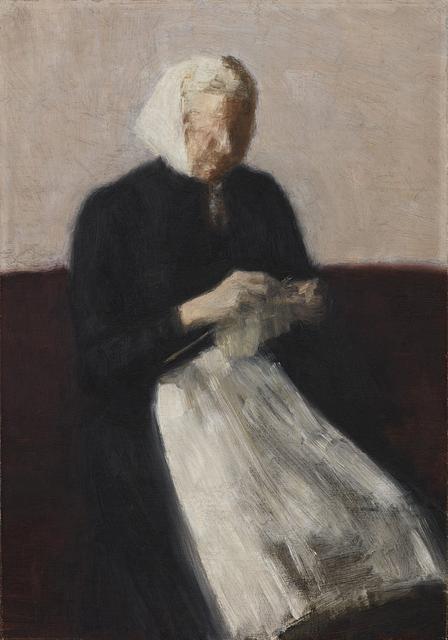
In formal terms, Woman Knitting. The Artist’s Mother is a genre painting, but the narrative content has been toned down; we are told nothing about the woman in the picture. She is frozen in mid-movement, and her specific choice of handicraft is essentially immaterial. The most important aspect is woman’s immersion: she is turned inwards, towards herself, not outwards, towards the world. In this sense, the painting is an excellent example of one of the most important themes in Vilhelm Hammershøi’s art: the loneliness of humanity, portrayed through solitary figures caught up in their own world.
The knitting woman is the artist’s mother, Frederikke Hammershøi (1838–1914), who also appears in one of Hammershøi’s other works in The David Collection (B 314). She was the mainstay of the Hammershøi family, and it was she who encouraged and supported her son’s artistic career right from the outset and throughout her life.1 Alongside the artist’s younger sister Anna Hammershøi (1866–1955) and younger brother Svend Hammershøi (1873–1948), Frederikke Hammershøi was one of Hammershøi’s favourite models in the period before and immediately after he married Ida Ilsted (1869–1949) in 1891. She is often depicted with a piece of needlework or a book, regardless of whether Hammershøi painted or photographed her.
The painting is the earliest dated work by Vilhelm Hammershøi in The David Collection. It is a preliminary study for the painting Interior with the Artist’s Mother.2
The knitting woman is the artist’s mother, Frederikke Hammershøi (1838–1914), who also appears in one of Hammershøi’s other works in The David Collection (B 314). She was the mainstay of the Hammershøi family, and it was she who encouraged and supported her son’s artistic career right from the outset and throughout her life.1 Alongside the artist’s younger sister Anna Hammershøi (1866–1955) and younger brother Svend Hammershøi (1873–1948), Frederikke Hammershøi was one of Hammershøi’s favourite models in the period before and immediately after he married Ida Ilsted (1869–1949) in 1891. She is often depicted with a piece of needlework or a book, regardless of whether Hammershøi painted or photographed her.
The painting is the earliest dated work by Vilhelm Hammershøi in The David Collection. It is a preliminary study for the painting Interior with the Artist’s Mother.2
Publiceret i
Publiceret i
Back
Henrik Wivel: Hammershøi i Davids Samling, København 2017, pp. 56-57;
Eva Pohl: ”Se Hammershøi over skulderen” in Nordisk Tidsskrift, 2018, 1, pp. 11-18;
Front
Sophus Michaëlis and Alfred Bramsen: Vilhelm Hammershøi. Kunstneren og hans værk, København 1918, cat.no. 73, p. 86;
Knud Voss and Verner Aspenström: Vilhelm Hammershøi, Prins Eugens Waldemarsudde, Stockholm 1976, cat.no. 6;
Henrik Wivel: Hammershøi i Davids Samling, København 2017, pp. 54-55;
Eva Pohl: ”Se Hammershøi over skulderen” in Nordisk Tidsskrift, 2018, 1, pp. 11-18;
Henrik Wivel: Hammershøi i Davids Samling, København 2017, pp. 56-57;
Eva Pohl: ”Se Hammershøi over skulderen” in Nordisk Tidsskrift, 2018, 1, pp. 11-18;
Front
Sophus Michaëlis and Alfred Bramsen: Vilhelm Hammershøi. Kunstneren og hans værk, København 1918, cat.no. 73, p. 86;
Knud Voss and Verner Aspenström: Vilhelm Hammershøi, Prins Eugens Waldemarsudde, Stockholm 1976, cat.no. 6;
Henrik Wivel: Hammershøi i Davids Samling, København 2017, pp. 54-55;
Eva Pohl: ”Se Hammershøi over skulderen” in Nordisk Tidsskrift, 2018, 1, pp. 11-18;
Fodnoter
Fodnoter
1.
For example, Frederikke Hammershøi kept meticulously updated scrapbooks in which she collected newspaper articles, mentions, reviews, letter and other materials about Vilhelm Hammershøi. See: Annette Rosenvold Hvidt and Gertrud Oelsner: Vilhelm Hammershøi: På sporet af det åbne billede, Copenhagen 2018, pp. 18–23.
2.
Vilhelm Hammershøi, Interior with the Artist’s Mother, 1889, Nationalmuseum, Stockholm, inv.no. NNM 1789.