Julius Paulsen (1860–1940)
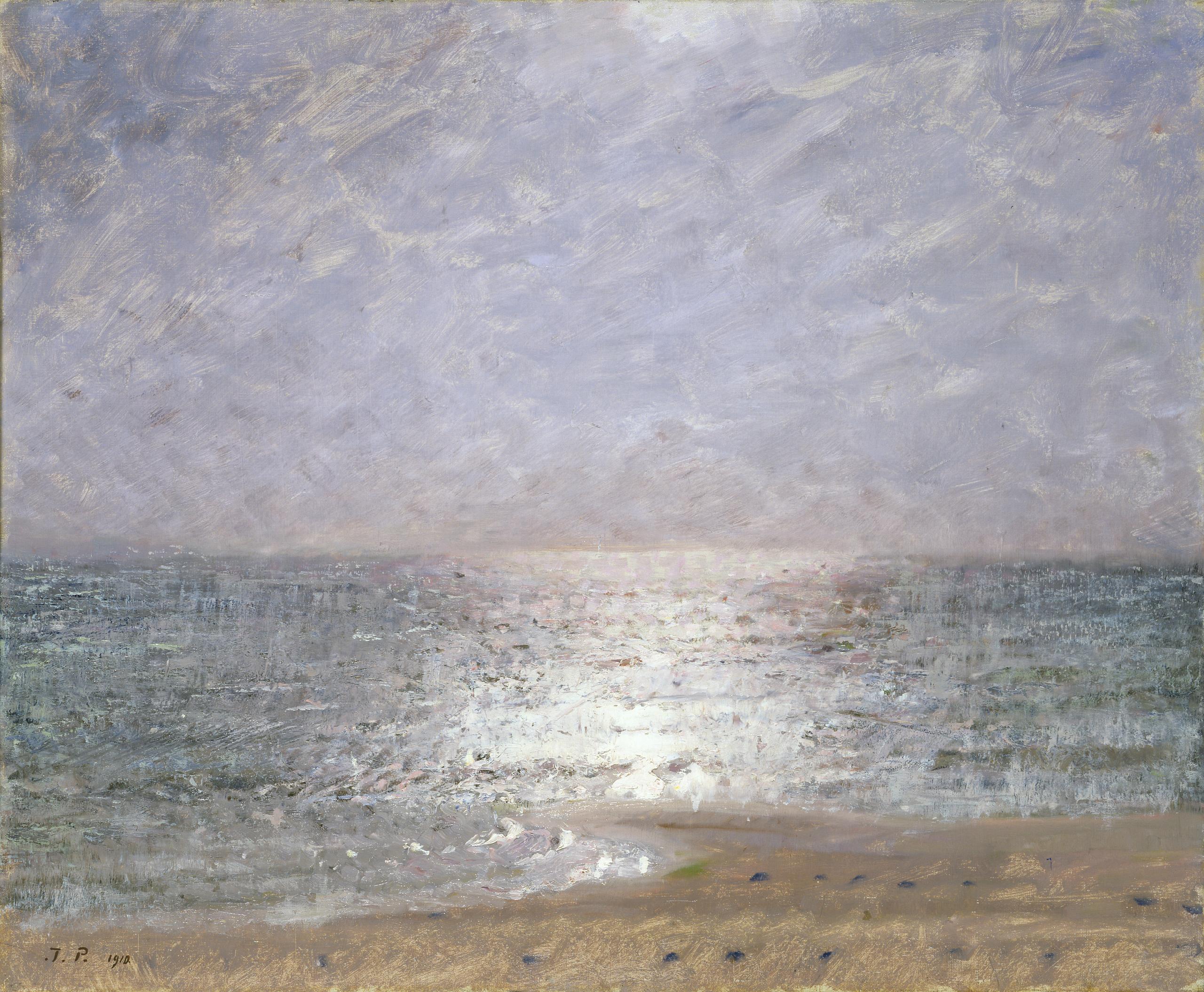
Seascape, 1910
Oil on canvas
60 x 73.5 cm
Inventory number B 392
Julius Paulsen was among the leading Danish portrait painters of his time, and he received several commissions for official portraits. In 1906 he was selected by friend and fellow artist Peder Severin Krøyer (1851–1909) to paint the latter’s portrait, which was to enter the collection at the Museum of National History at Frederiksborg Castle. The task was a great honour for Paulsen who embarked on it in 1907. Approximately two years later, the picture of Krøyer, depicted brandishing his brush and palette on the beach at Skagen, was finished. The following year, Paulsen put the finishing touches to Seascape, which is believed to be an offshoot from the portrait of Krøyer.1
Paulsen has created a unique, evocative depiction of the sky and sea meeting, captured as the sun is beginning to set. Unusually, the sun itself cannot be seen, as it is located above the picture frame. Nevertheless, it sets the mood for the entire painting – especially right where its light meets the surface of the sea, creating a white, dazzling glare. Paulsen’s technique for achieving this effect is notable. He has used thick layers of paint where light meets the sea, creating a sense of depth in the picture. By contrast, Paulsen depicted the blue-violet sky and the narrow beach by means of thin washes of colour, applied with rapid, almost entirely blurred brushstrokes, letting the viewer sense the colour and structure of the canvas. This technique is characteristic of those few works among Paulsen’s oeuvre in which the influence of Impressionism is most evident.2
Paulsen did not share the same close ties to his native island of Funen as his fellow painters from Funen, Peter Hansen and Fritz Syberg, who were almost the same age. He did, however, have a close relationship with several of the Skagen painters, especially in his formative years in the 1880s when he met them in Copenhagen and on trips around Europe, where Impressionism aroused his particular interest. Paulsen made his first visit to Skagen in 1900. Some years later, in 1907, Peder Severin Krøyer painted a portrait of Paulsen for the portrait frieze in Brøndum’s dining room (now part of Skagens Museum).3
Paulsen has created a unique, evocative depiction of the sky and sea meeting, captured as the sun is beginning to set. Unusually, the sun itself cannot be seen, as it is located above the picture frame. Nevertheless, it sets the mood for the entire painting – especially right where its light meets the surface of the sea, creating a white, dazzling glare. Paulsen’s technique for achieving this effect is notable. He has used thick layers of paint where light meets the sea, creating a sense of depth in the picture. By contrast, Paulsen depicted the blue-violet sky and the narrow beach by means of thin washes of colour, applied with rapid, almost entirely blurred brushstrokes, letting the viewer sense the colour and structure of the canvas. This technique is characteristic of those few works among Paulsen’s oeuvre in which the influence of Impressionism is most evident.2
Paulsen did not share the same close ties to his native island of Funen as his fellow painters from Funen, Peter Hansen and Fritz Syberg, who were almost the same age. He did, however, have a close relationship with several of the Skagen painters, especially in his formative years in the 1880s when he met them in Copenhagen and on trips around Europe, where Impressionism aroused his particular interest. Paulsen made his first visit to Skagen in 1900. Some years later, in 1907, Peder Severin Krøyer painted a portrait of Paulsen for the portrait frieze in Brøndum’s dining room (now part of Skagens Museum).3
Published in
Published in
Mikael Wivel in Kjeld von Folsach and Nana Lund (eds.): Dansk kunst i Davids Samling – fra Philipsen til Saxbo, København 1995, cat.no. 45, pp. 118-119;
Anne Cathrine Wolsgaard Iversen (ed.): Julius Paulsen, Ordrupgaard, Charlottenlund 2002, fig. 35, p. 64, cat.no. 23;
Mikael Wivel in Iben From (ed.): Vandskel = Watershed, KunstCentret Silkeborg Bad, Silkeborg 2002, pp. 72, 74;
Tine Nielsen Fabienke (ed.): I skyggernes blå. Maleren Holger H. Hansen (1890-1919), Storstrøms Kunstmuseum, Maribo 2006, fig. 15, pp. 30, 37;
Anne Cathrine Wolsgaard Iversen (ed.): Julius Paulsen, Ordrupgaard, Charlottenlund 2002, fig. 35, p. 64, cat.no. 23;
Mikael Wivel in Iben From (ed.): Vandskel = Watershed, KunstCentret Silkeborg Bad, Silkeborg 2002, pp. 72, 74;
Tine Nielsen Fabienke (ed.): I skyggernes blå. Maleren Holger H. Hansen (1890-1919), Storstrøms Kunstmuseum, Maribo 2006, fig. 15, pp. 30, 37;
Footnotes
Footnotes
1.
Mikael Wivel in Kjeld von Folsach and Nana Lund (eds.): Dansk kunst i Davids Samling – fra Philipsen til Saxbo, Copenhagen 1995, p. 118.
2.
Anne Cathrine Wolsgaard Iversen (ed.): Julius Paulsen, Ordrupgaard, Charlottenlund 2002, p. 15.
3.
Peder Severin Krøyer: Julius Paulsen, 1906. Art Museums of Skagen, inv.no. 634.
Paintings and drawings
Theodor Philipsen (1840–1920)
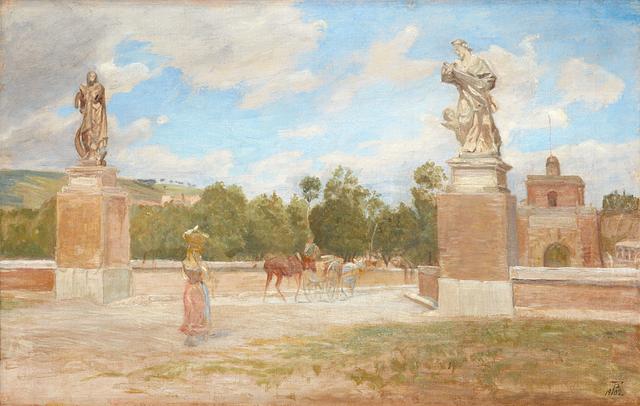
The Milvian Bridge, 1902
Oil on canvas
The Milvian Bridge, 1902
Oil on canvas
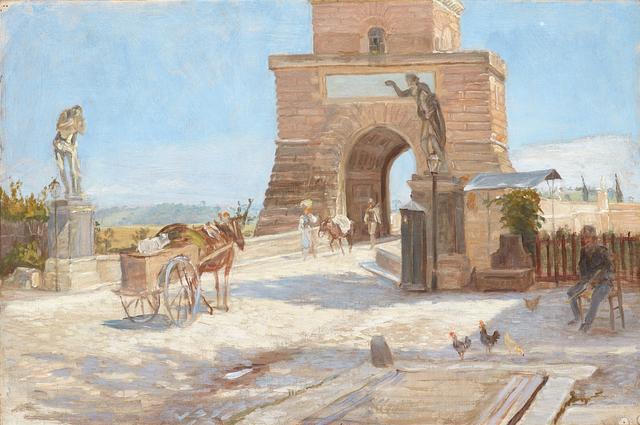
Theodor Philipsen (1840–1920)
At the Milvian Bridge outside Rome, 1902
Oil on canvas
At the Milvian Bridge outside Rome, 1902
Oil on canvas
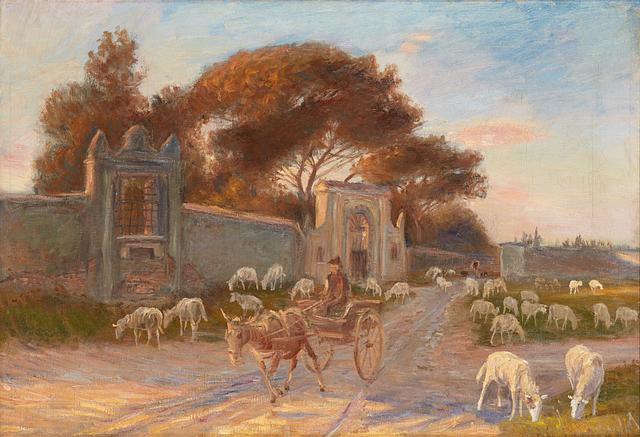
Theodor Philipsen (1840–1920)
The Road “Inter muros” Behind Villa Borghese, 1902
Oil on canvas
The Road “Inter muros” Behind Villa Borghese, 1902
Oil on canvas
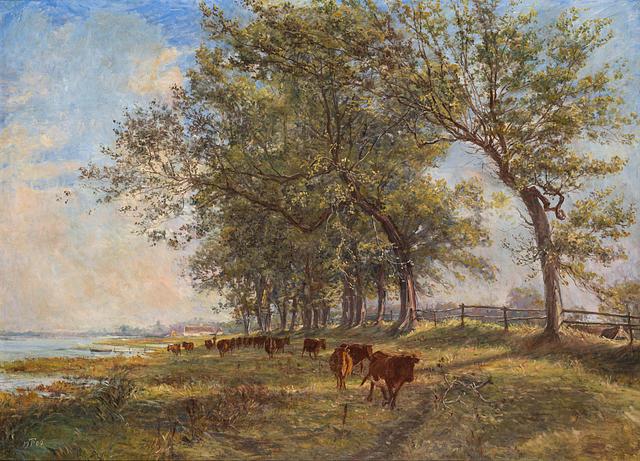
Theodor Philipsen (1840–1920)
Driving Home the Cows along the Maglemer Fields, 1905
Oil on canvas
Driving Home the Cows along the Maglemer Fields, 1905
Oil on canvas