Fritz Syberg (1862–1939)
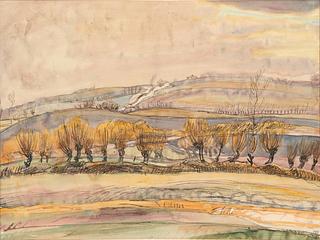
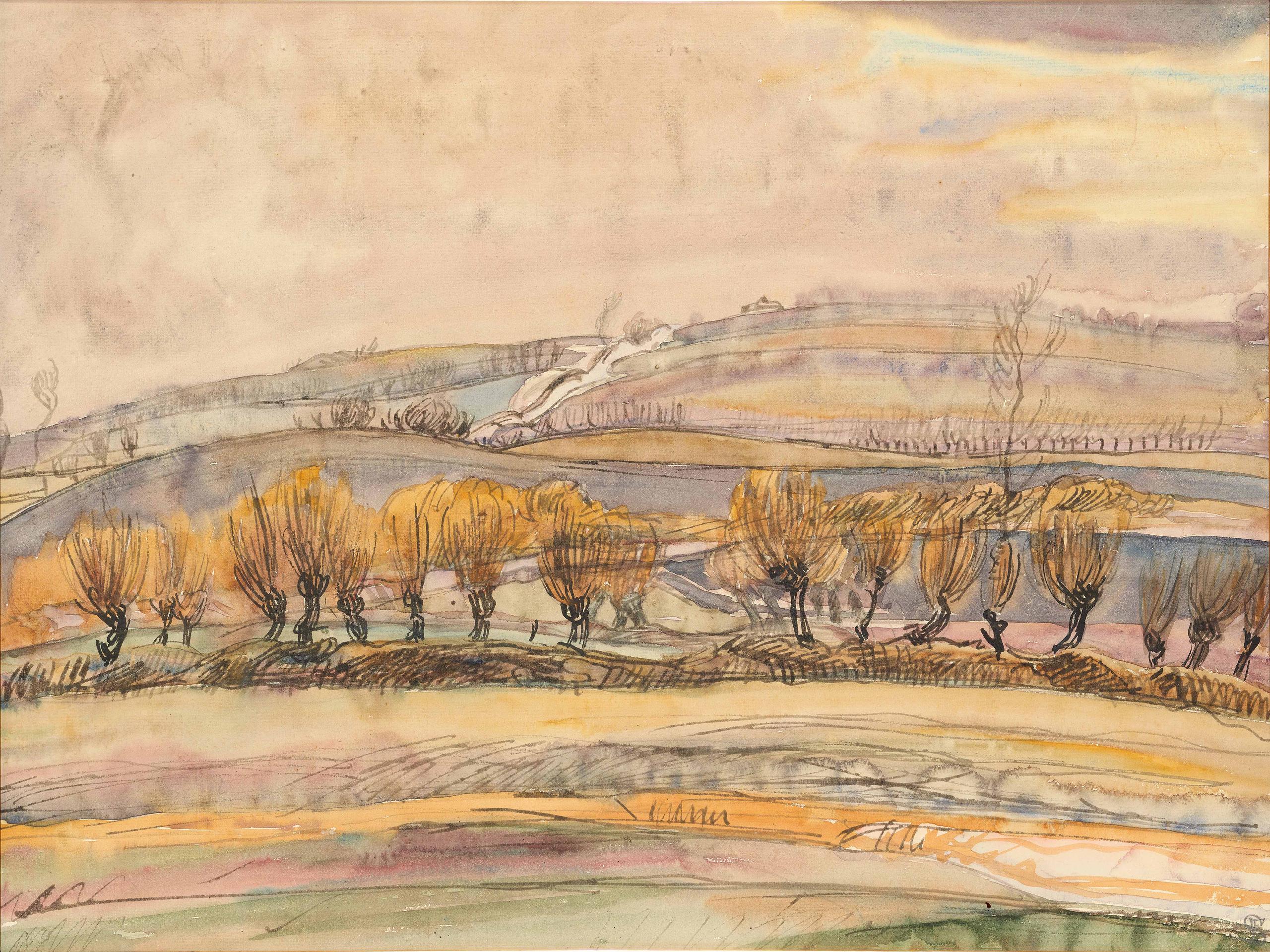
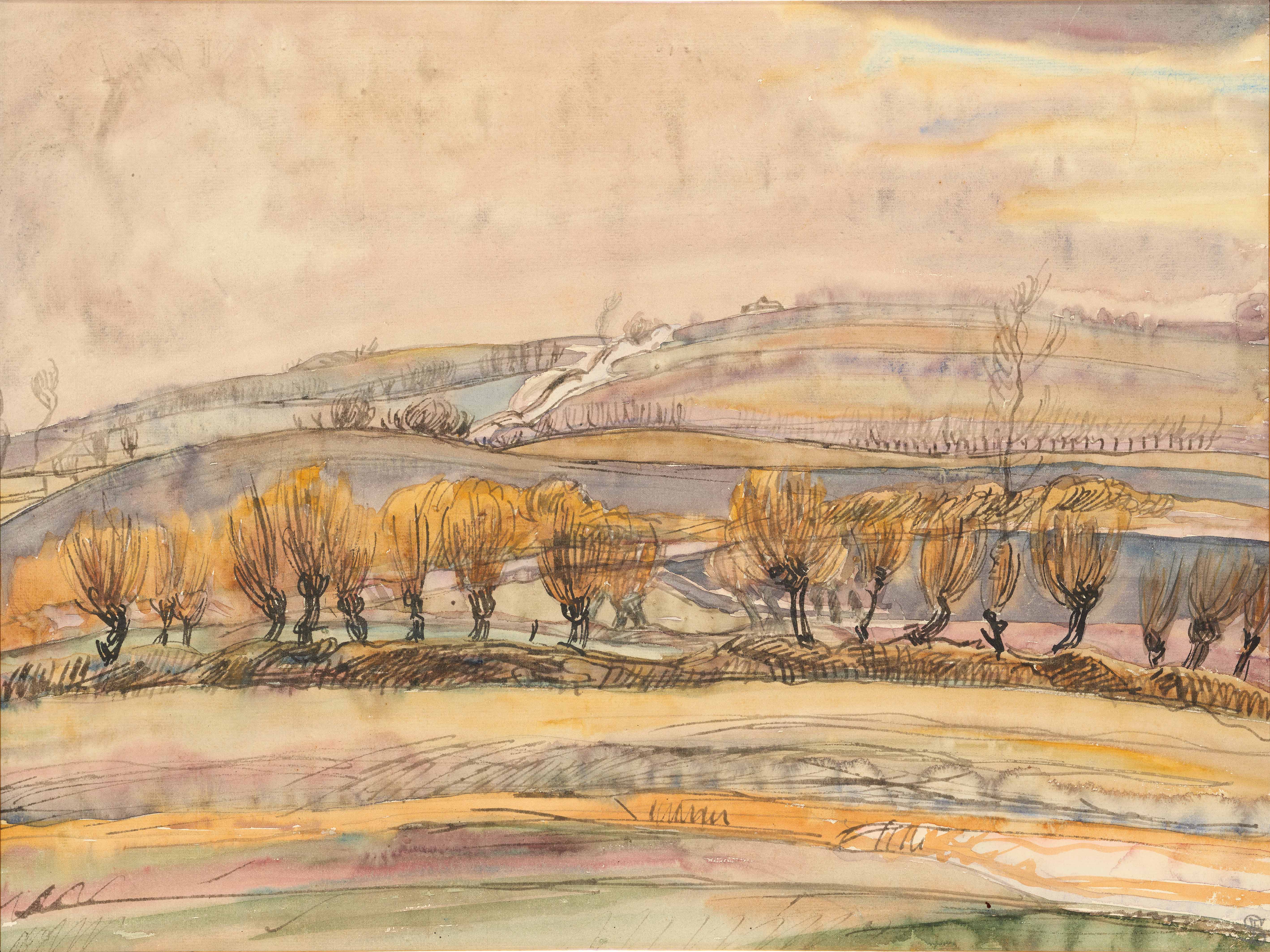
Winter Landscape, c. 1919
Watercolour, reed pen, pen on paper
46.6 x 61.7 cm
Inventory number B 236
Alongside fellow painters Johannes Larsen and Peter Hansen, Fritz Syberg was part of the artist group known as the Funen Painters. Born in Faaborg, Syberg studied art at The Artists’ Independent Study Schools in Copenhagen and lived on North Funen most of his adult years. Throughout his life, Syberg drew inspiration and subject matter from his immediate surroundings, such as his family life and the various landscapes of Funen.
Syberg found the scene depicted in Winter Landscape at his own home, Pilegården, located a little outside Kerteminde. It commanded views of ‘Syberg Country’, which the authors Otto Gelsted and Johannes V. Jensen named the surrounding landscape with its extensive fields, the sea, poplars lining the fields and roads and the hilly terrain, all of which remained an inexhaustible source of inspiration for Syberg for decades. In Winter Landscape, the view of the expansive countryside is interrupted only by the row of pollarded poplars. The effect of their distinctive shape in the landscape clearly fascinated him as he repeatedly returned to this subject.
Up until approximately 1919, Syberg worked mainly with watercolours. Taking an increasingly free approach to form and using very thinly applied layers of watercolour, often accentuated by Indian ink, he veered towards a gradual abstraction of the landscape.1 The sketch-like and pared-back qualities persisted when he abandoned watercolour altogether in the early 1920s. Hereafter he devoted himself to oils, with which he continued to work diligently until his death in 1939.
Syberg found the scene depicted in Winter Landscape at his own home, Pilegården, located a little outside Kerteminde. It commanded views of ‘Syberg Country’, which the authors Otto Gelsted and Johannes V. Jensen named the surrounding landscape with its extensive fields, the sea, poplars lining the fields and roads and the hilly terrain, all of which remained an inexhaustible source of inspiration for Syberg for decades. In Winter Landscape, the view of the expansive countryside is interrupted only by the row of pollarded poplars. The effect of their distinctive shape in the landscape clearly fascinated him as he repeatedly returned to this subject.
Up until approximately 1919, Syberg worked mainly with watercolours. Taking an increasingly free approach to form and using very thinly applied layers of watercolour, often accentuated by Indian ink, he veered towards a gradual abstraction of the landscape.1 The sketch-like and pared-back qualities persisted when he abandoned watercolour altogether in the early 1920s. Hereafter he devoted himself to oils, with which he continued to work diligently until his death in 1939.
Published in
Published in
Susanne Thestrup Truelsen in Kjeld von Folsach and Nana Lund (eds.): Dansk kunst i Davids Samling – fra Philipsen til Saxbo, Davids Samling, København 1995, cat.no. 50, pp. 128-129;
Footnotes
Footnotes
1.
Erland Porsmose: Fritz Syberg. Kunsten, naturen, kærligheden, Copenhagen 2010, p. 268.
Paintings and drawings
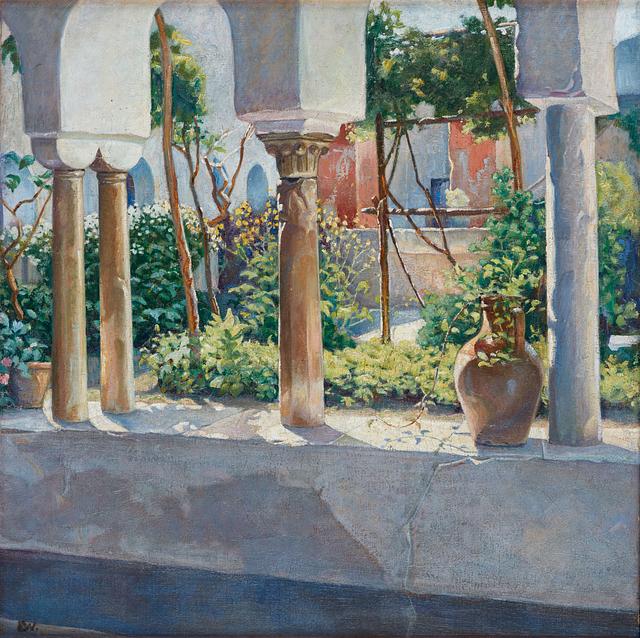
Edvard Weie (1879–1943)
Cloister, 1907
Oil on canvas
Cloister, 1907
Oil on canvas
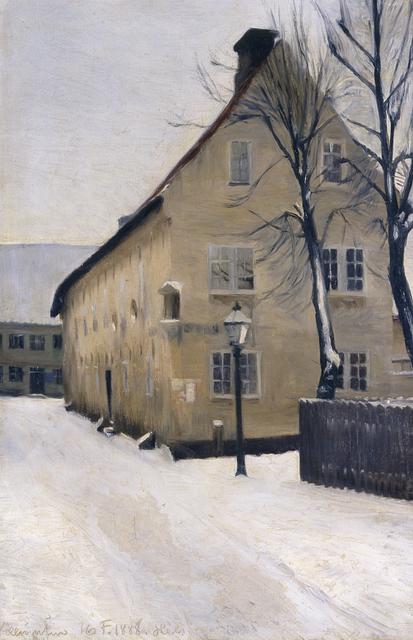
Jens Ferdinand Willumsen (1863-1958)
The Old Poorhouse in Hestemøllestræde, 1888
Oil on canvas
The Old Poorhouse in Hestemøllestræde, 1888
Oil on canvas
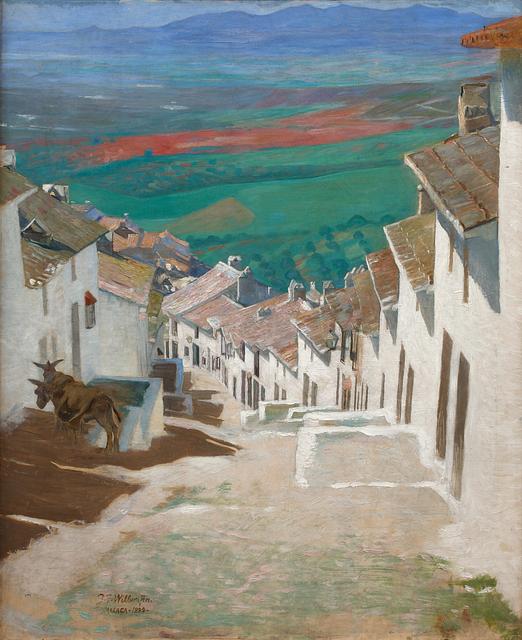
Jens Ferdinand Willumsen (1863–1958)
Descending street in Alora, 1889
Oil on canvas
Descending street in Alora, 1889
Oil on canvas
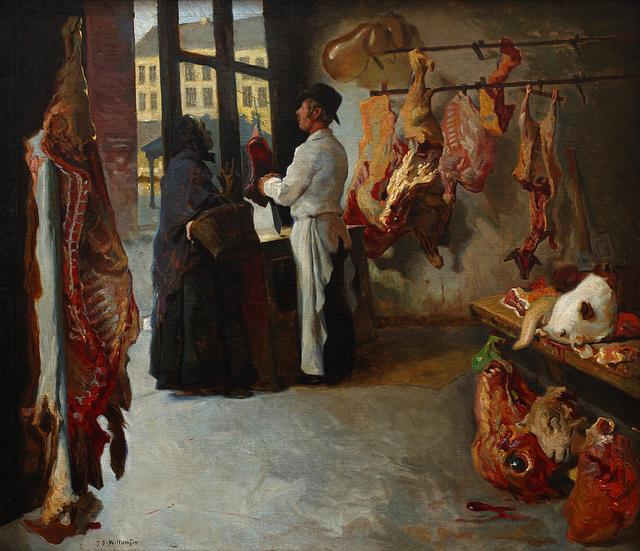
Jens Ferdinand Willumsen (1863–1958)
Butcher’s Shop near Nikolaj Tower, 1890
Oil on canvas
Butcher’s Shop near Nikolaj Tower, 1890
Oil on canvas