Theodor Philipsen (1840–1920)
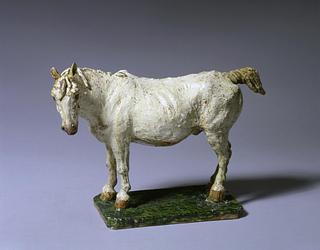
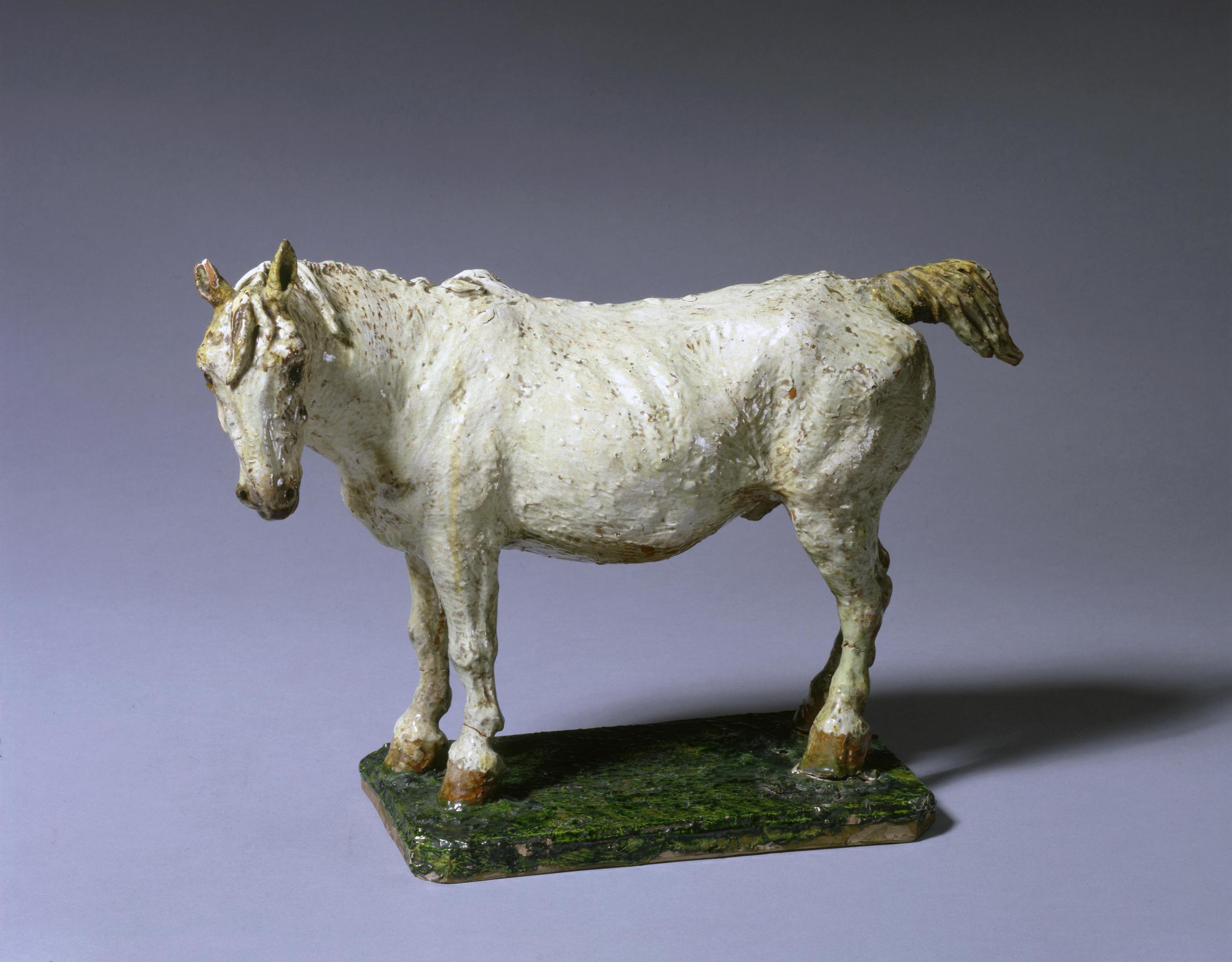
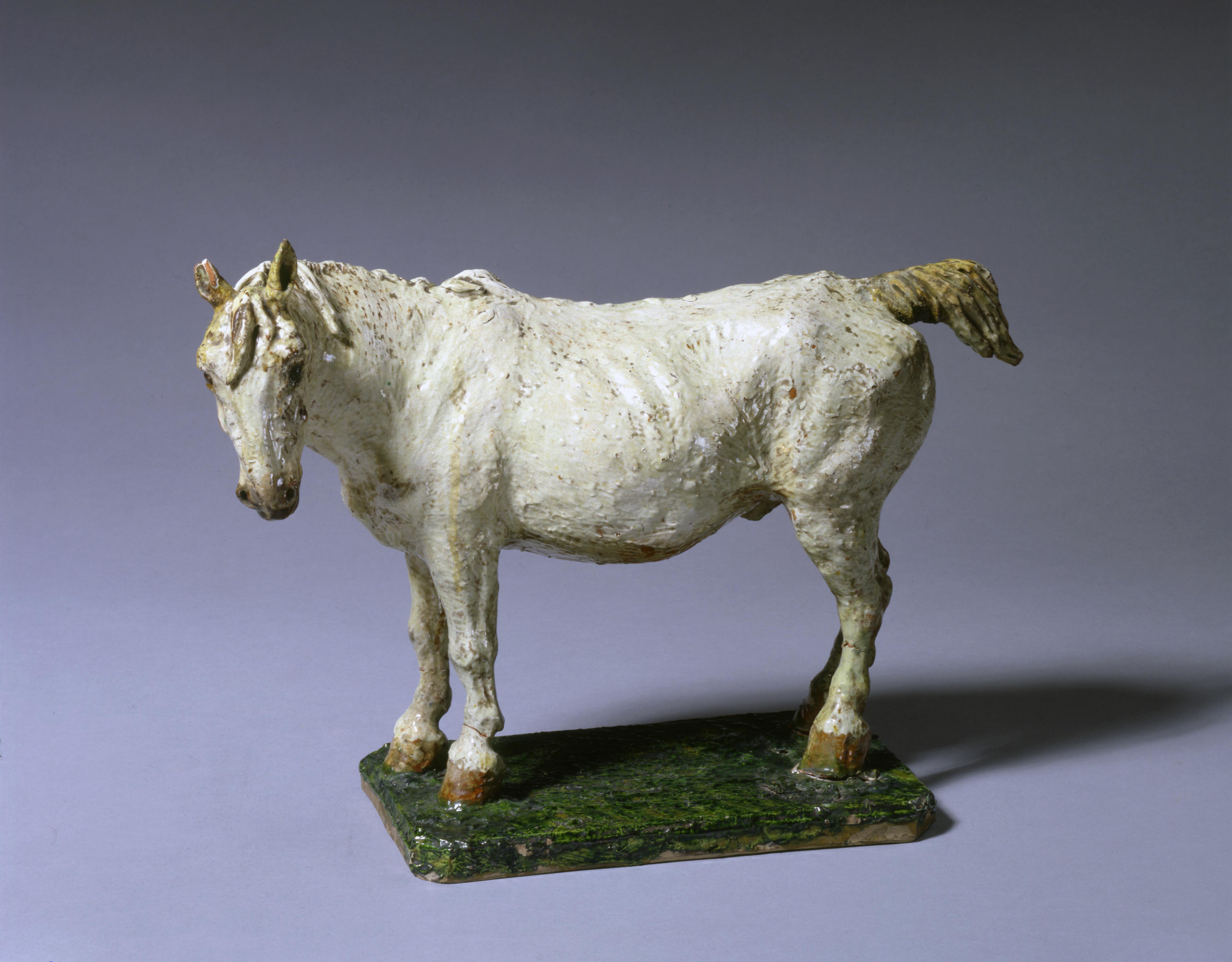
Standing Horse, c. 1905
Glazed earthenware
H: 37 cm
Inventory number B 2
Theodor Philipsen took an interest in the sculptural form at an early stage in life, and when he applied for admission to the Royal Danish Academy of Fine Arts in the early 1860s, he did so with a desire to put his profession as a farmer behind him and train as a sculptor. Philipsen’s debut at the juried Charlottenborg Salon in 1865 was a sculptural piece, done in wax. A few years later, he devoted himself to painting, which would become his main occupation for many decades. In the mid-1880s he resumed his sculptural work, working concurrently with both media.
A significant portion of Philipsen’s sculptures is made of clay, including this standing horse, which was presumably created around 1905. Like B 35, this is a naturalistic representation; partly in terms of the horse’s physique with its distinct muscles and bones, partly in terms of the surface and colouring. Philipsen has striven to create a vibrant, lifelike impression through the use of glaze, with remarkable and successful results. Like the other aspects of the work, the glaze reflects the artist’s desire to depict his chosen subject with realistic verisimilitude.
All in all, Philipsen’s ceramic sculptures form a homogeneous group within his artistic oeuvre. His choice of animal motifs, overall mode of expression and the artistic devices used remain largely the same over time, which is why several works can be difficult to date today. Scholars have pointed out that for Philipsen, these sculptures were not about experimenting with ceramic expressions and gestures, but rather about focusing on the animal and achieving a naturalistic result.1
A significant portion of Philipsen’s sculptures is made of clay, including this standing horse, which was presumably created around 1905. Like B 35, this is a naturalistic representation; partly in terms of the horse’s physique with its distinct muscles and bones, partly in terms of the surface and colouring. Philipsen has striven to create a vibrant, lifelike impression through the use of glaze, with remarkable and successful results. Like the other aspects of the work, the glaze reflects the artist’s desire to depict his chosen subject with realistic verisimilitude.
All in all, Philipsen’s ceramic sculptures form a homogeneous group within his artistic oeuvre. His choice of animal motifs, overall mode of expression and the artistic devices used remain largely the same over time, which is why several works can be difficult to date today. Scholars have pointed out that for Philipsen, these sculptures were not about experimenting with ceramic expressions and gestures, but rather about focusing on the animal and achieving a naturalistic result.1
Published in
Published in
Finn Terman Frederiksen in Kjeld von Folsach and Nana Lund (eds.): Dansk kunst i Davids Samling – fra Philipsen til Saxbo, København 1995, cat.no. 2, pp. 56-57;
Finn Terman Frederiksen: Theodor Philipsen. En traditionsbevidst nyskaber, Randers Kunstmuseum, Randers 2016, BFL 1713, p. 517;
Finn Terman Frederiksen: Theodor Philipsen. En traditionsbevidst nyskaber, Randers Kunstmuseum, Randers 2016, BFL 1713, p. 517;
Footnotes
Footnotes
1.
Finn Terman Frederiksen: Theodor Philipsen. En traditionsbevidst nyskaber, Randers Kunstmuseum, Randers 2016, s. 237.