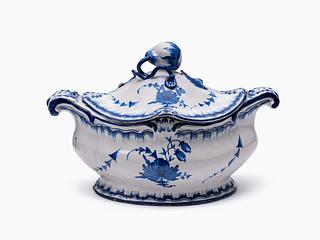
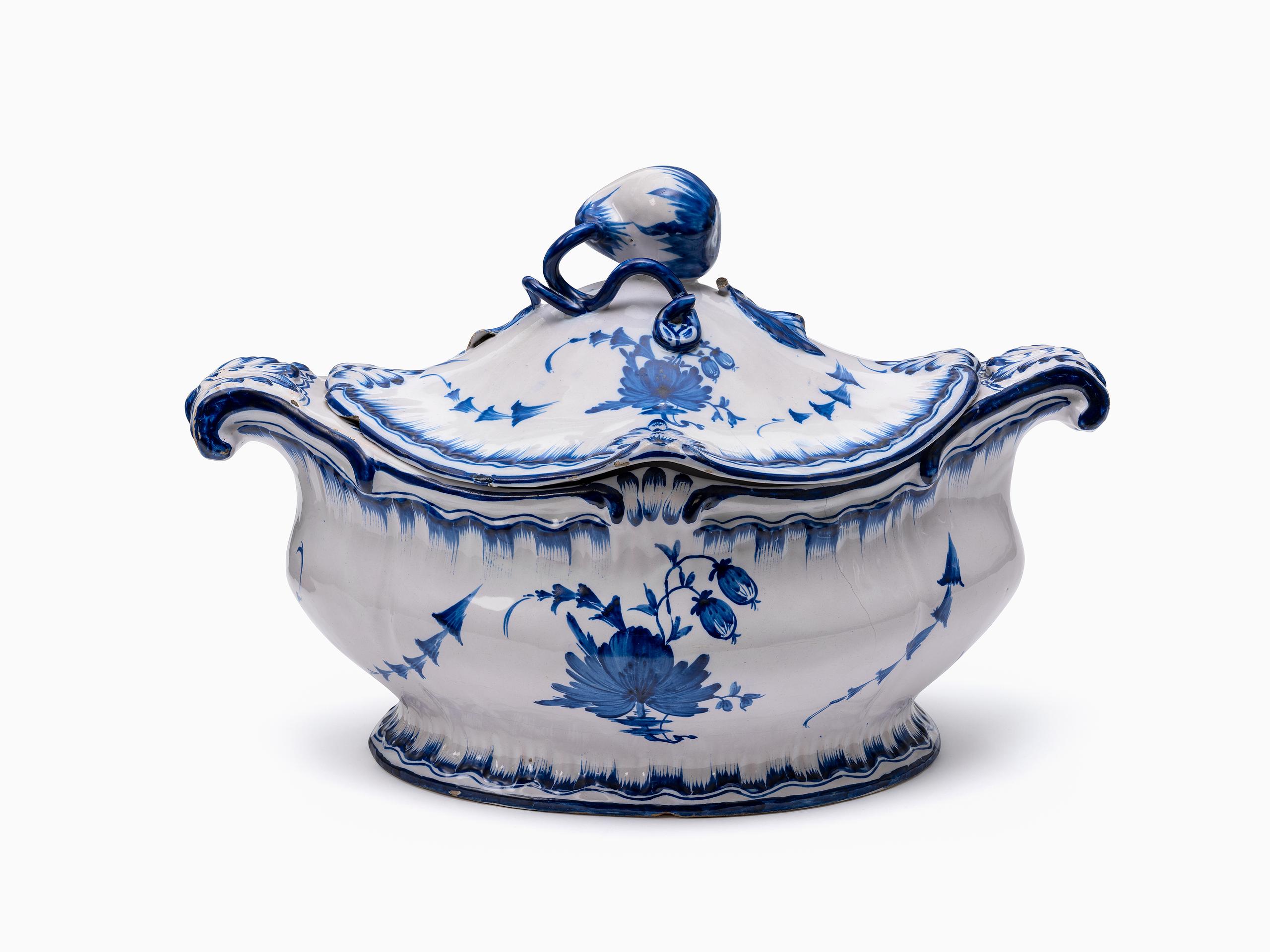
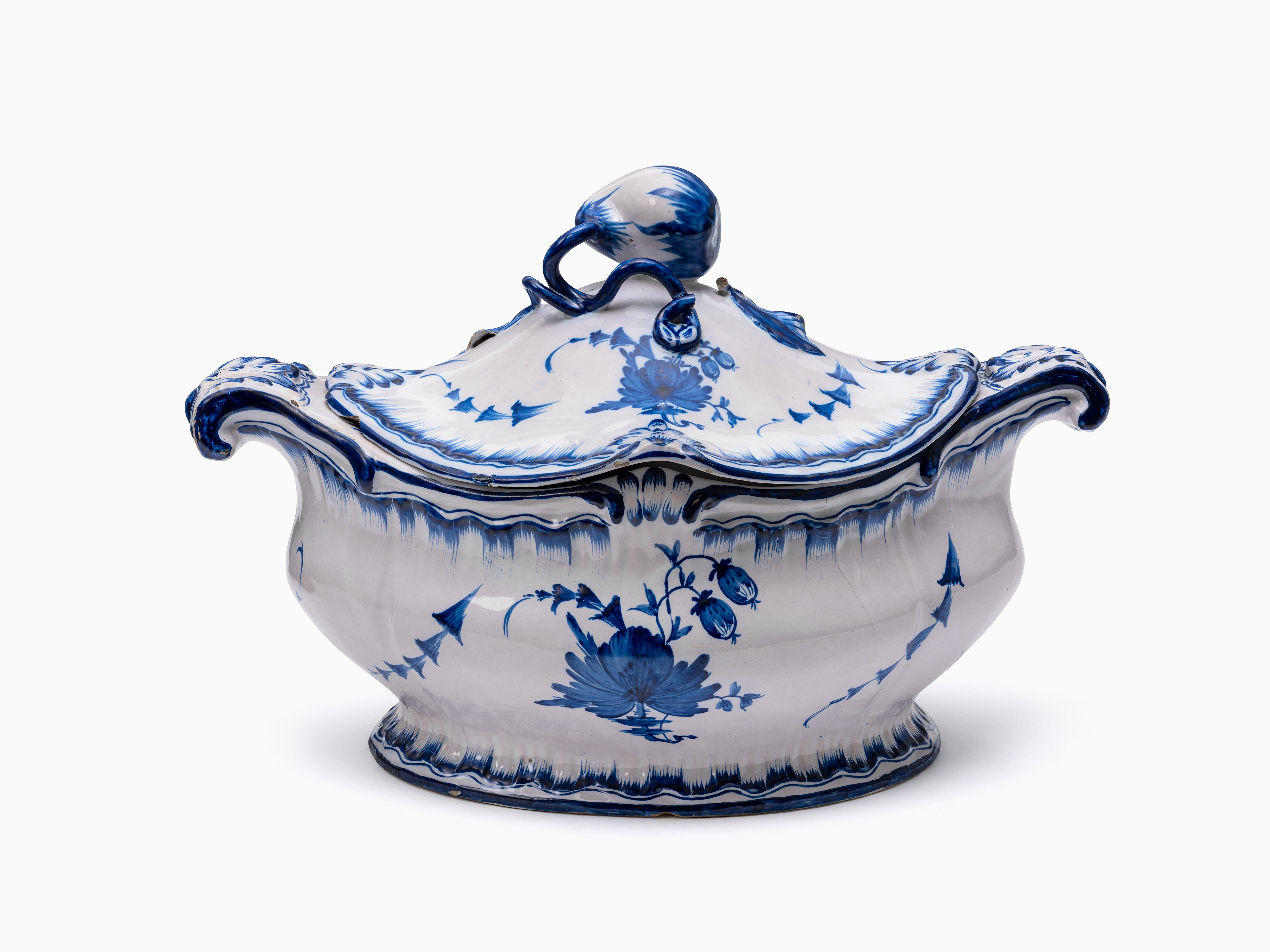
Tureen; faience
Stralsund Manufactory, after 1767
H: 24 cm
Inventory number NF 21
Founded in 1755, the faience manufactory in Stralsund was, alongside the manufactory in Schleswig, one of the first in the duchies.1 It was also one of the largest. The factory produced simple and beautifully decorated faience with a rococo feel, and its production maintained a high level of artistic achievement right from the outset. The range included tureens, potpourri jars, openwork baskets and plates, all of which could be decorated in polychrome as well as monochrome designs.
The oval tureen in The David Collection has a highly organic feel, which is particularly emphasised by its profiled edge adorned by rocailles and the curved upper edge terminating in two slightly curved handles. The short vertical fluting along the edges is another distinctive feature. The vaulted lid is topped by a finial in the shape of a pear, surrounded by sculpted foliage and branches. The tureen is decorated in blue with flowers and vines, possibly meant to represent hops. The details are also in blue.
At the factory in Stralsund, the various designs were grouped on the basis of shared traits in terms of form and decoration. The shape of this tureen is based on a Swedish model, and so it falls under the factory’s type designation ‘Schwedisch Modell’.2 The Swedish influence was due partly to the fact that a new director arrived in 1767: the German-born potter Johann Eberhard Ludwig Ehrenreich (1723–1803). He had previously been associated with the Swedish faience factory Marieberg, and he brought with him a crew that would have a tremendous influence on the Stralsund factory’s production in the years ahead.3
The David Collection owns a total of four items from the faience manufactory in Stralsund.
The oval tureen in The David Collection has a highly organic feel, which is particularly emphasised by its profiled edge adorned by rocailles and the curved upper edge terminating in two slightly curved handles. The short vertical fluting along the edges is another distinctive feature. The vaulted lid is topped by a finial in the shape of a pear, surrounded by sculpted foliage and branches. The tureen is decorated in blue with flowers and vines, possibly meant to represent hops. The details are also in blue.
At the factory in Stralsund, the various designs were grouped on the basis of shared traits in terms of form and decoration. The shape of this tureen is based on a Swedish model, and so it falls under the factory’s type designation ‘Schwedisch Modell’.2 The Swedish influence was due partly to the fact that a new director arrived in 1767: the German-born potter Johann Eberhard Ludwig Ehrenreich (1723–1803). He had previously been associated with the Swedish faience factory Marieberg, and he brought with him a crew that would have a tremendous influence on the Stralsund factory’s production in the years ahead.3
The David Collection owns a total of four items from the faience manufactory in Stralsund.
Footnotes
Footnotes
1.
The factory is regarded as Swedish because Stralsund was under Swedish rule until 1814.
2.
Gesine Schulz-Berlekamp: Stralsunder Fayencen 1755-1792, Kunstgewerbemuseum, Staatliche Museen zu Berlin, Berlin 1991, pp. 32–33.
3.
Ulla Houkjær: Fajancer fra Holland, Frankrig og Tyskland 1600-1800, Designmuseum Danmark, Copenhagen 2016, pp. 99–100.
Danish Ceramics
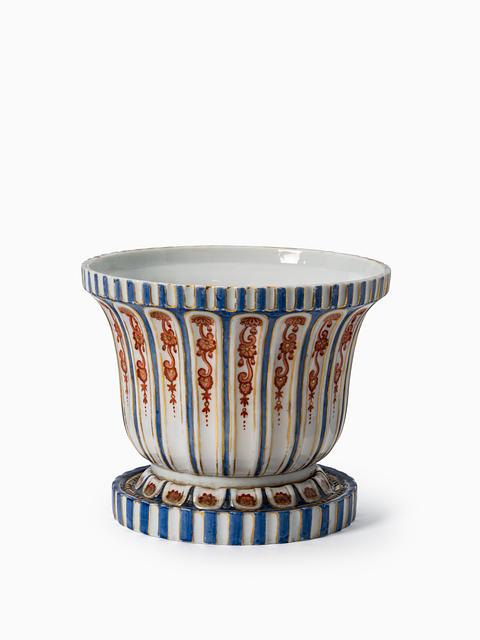
Flowerpot with stand; porcelain
Royal Copenhagen Porcelain Manufactory, 1776–1779
Royal Copenhagen Porcelain Manufactory, 1776–1779
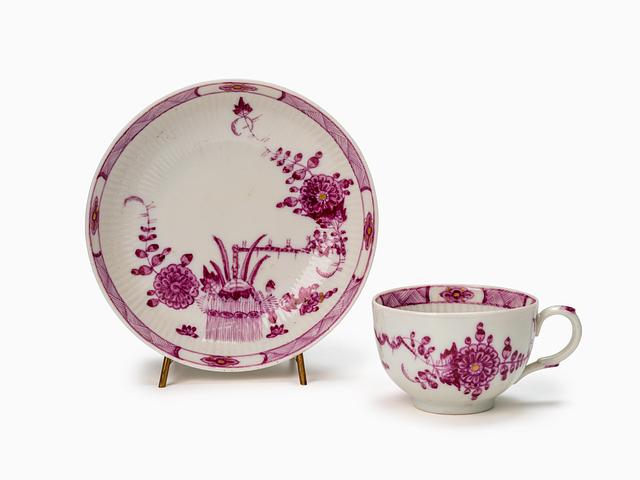
Cup and saucer; porcelain
Royal Copenhagen Porcelain Manufactory, 1776–1779
Royal Copenhagen Porcelain Manufactory, 1776–1779
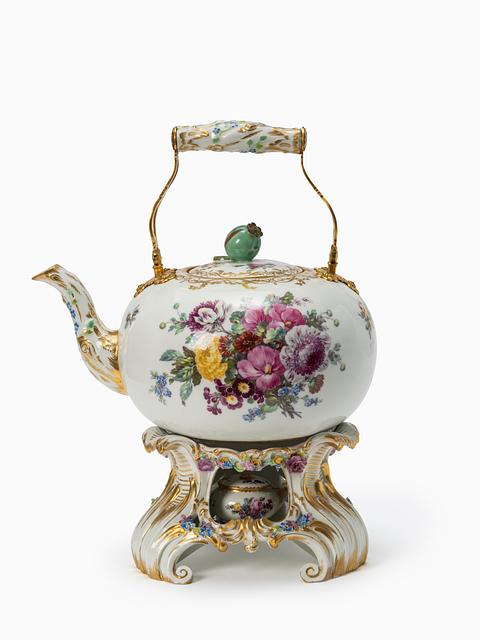
Teapot with stand and spirit lamp; porcelain, bronze
Royal Copenhagen Porcelain Manufactory, c. 1779
Royal Copenhagen Porcelain Manufactory, c. 1779
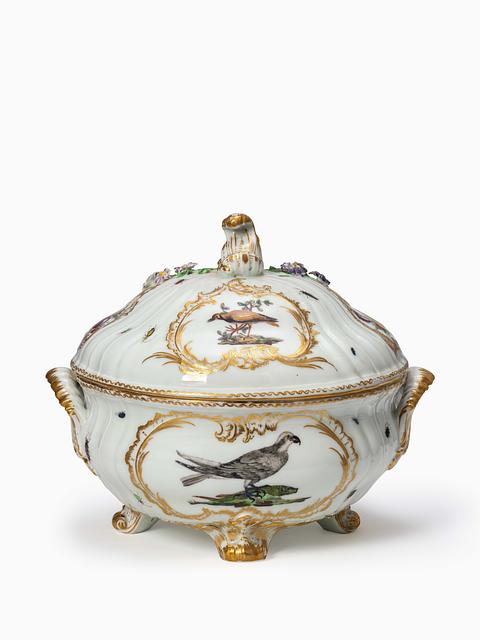
Tureen; porcelain. ‘The Bird service’
Royal Copenhagen Porcelain Manufactory, c. 1780
Royal Copenhagen Porcelain Manufactory, c. 1780