C.W. Eckersberg (1783–1853)
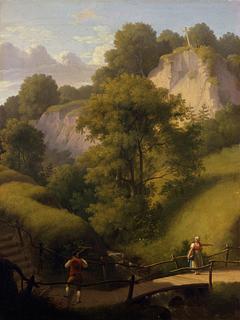
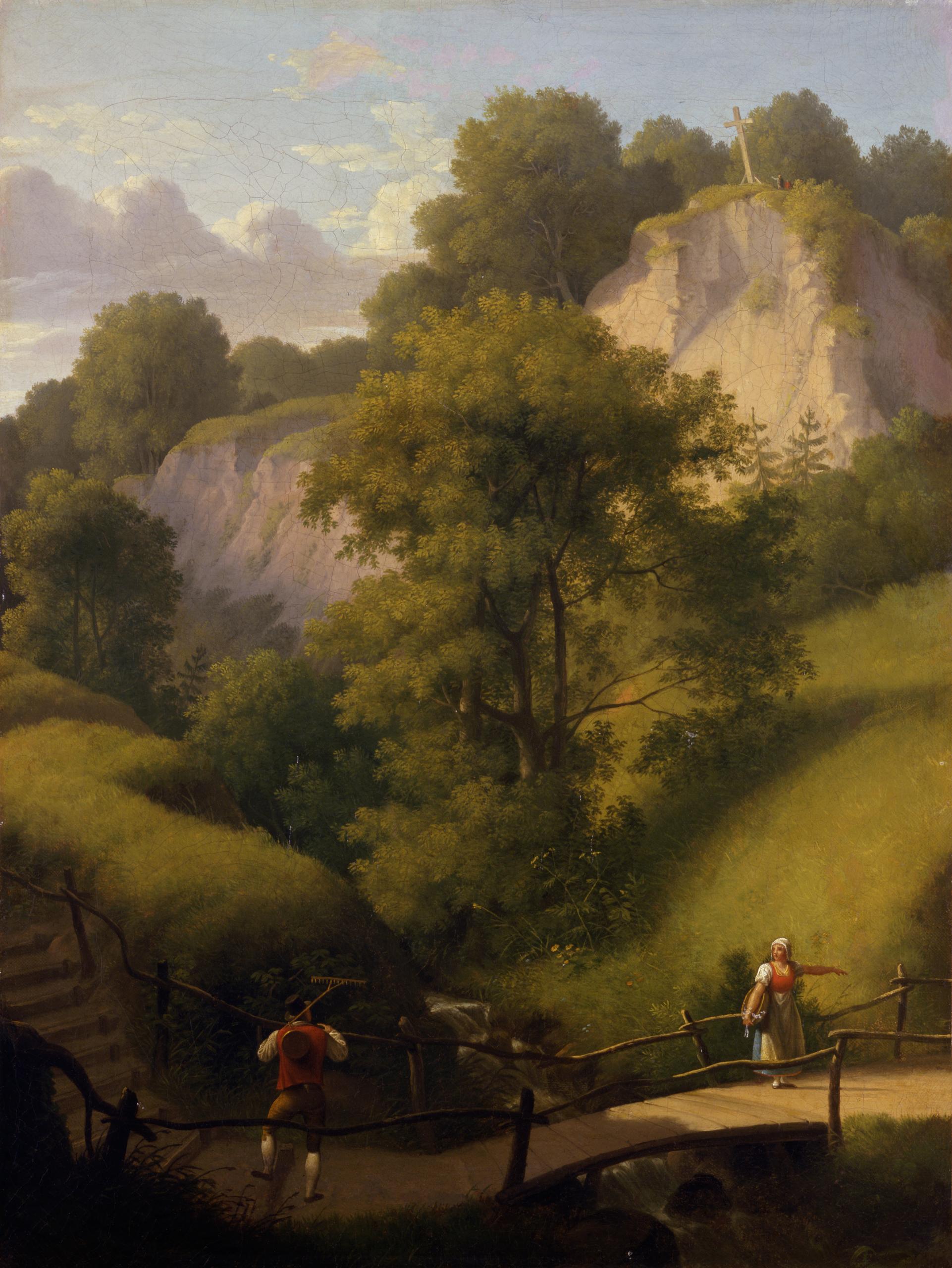
Korsklinten at Liselund, Møn, 1809
Oil on canvas
55 x 41 cm
Gift from Ny Carlsbergfondet
Gift from Ny Carlsbergfondet
Inventory number 28/1970
At the beginning of the eighteenth century, the island of Møn, south of Zealand, was a favourite destination for those who wanted to experience a natural setting of unusual grandeur and distinction for Denmark, particularly the landscape at Møns Klint. Later, in the 1780s, the white limestone and chalk cliffs began to be regarded as a national landmark. It was around this time that the local county governor, Antoine de la Calmette (1752–1803), bought the estate Sømarkegaard, which he renamed Liselund. Here, he and his his wife created an atmospheric, romantic garden after the English model.
In the summer of 1809, the at the time relatively inexperienced C.W. Eckersberg set out for Møn. He had been invited to stay at the Nordfeld Manor, which was then owned by the Bülow family. During his stay, he was to execute a number of works commissioned by chamberlain Christopher Bülow (1770–1830). Eckersberg found suitable views from Nordfeld and the surrounding area but he also depicted Møns Klint and Liselund. In the beginning he did a large quantity of drawings and watercolours en plein air. Later, these would form the basis for twelve oil paintings created in the autumn of 1809 and the winter of 1810, including Korsklinten at Liselund, Møn.1
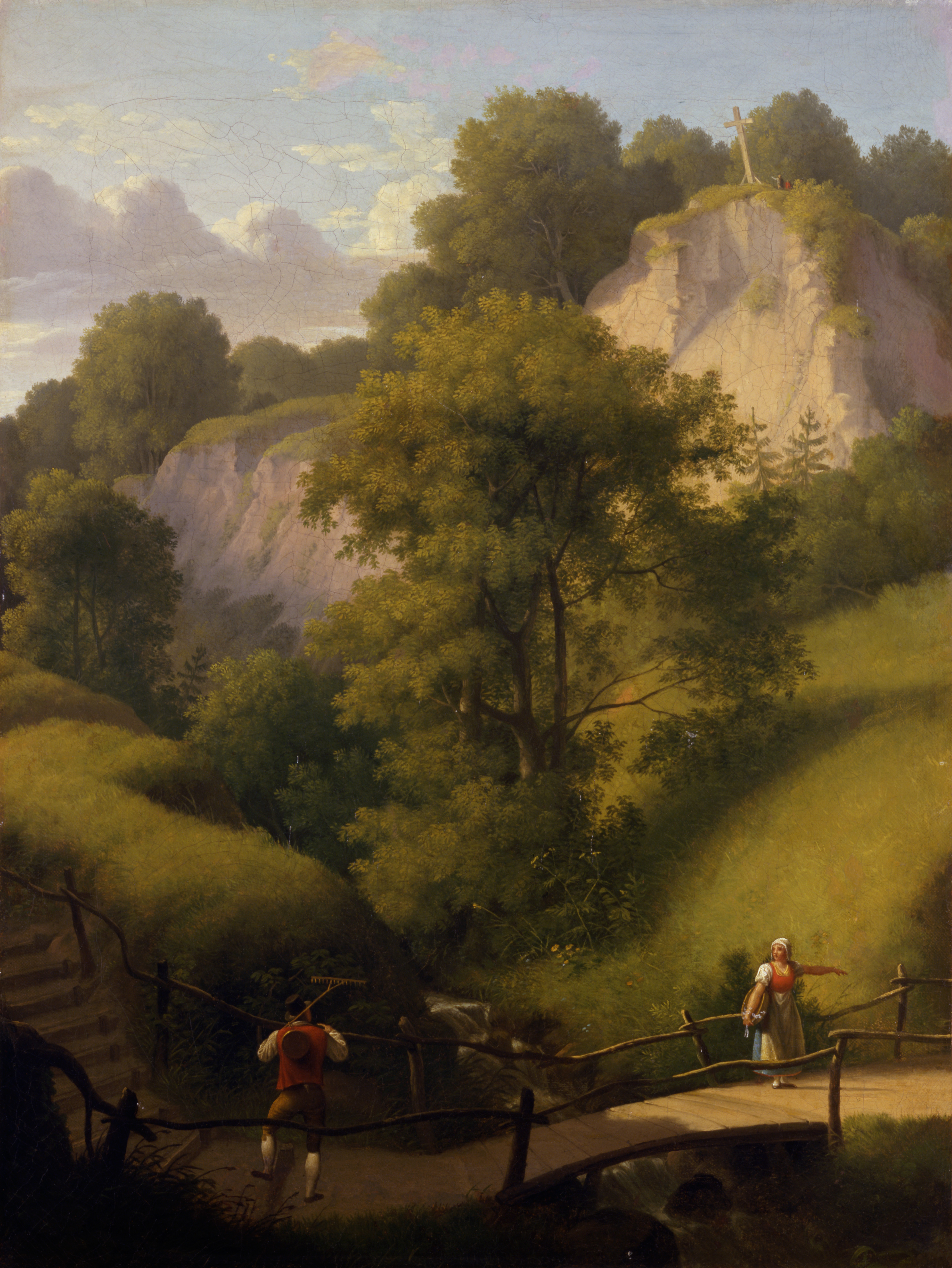
Eckersberg would have taken up position in the garden at Liselund, enabling him to capture the hilly terrain, the lush countryside, the stream and the steep, white rock section topped by a cross. He further added a small scene at the bottom of his painting: a man and woman in peasant clothes, converse after having passed each other on the footbridge. In the upper right corner is the so-called Cliff Cross – ‘Klintekorset’ – erected in the garden in memory of a forest officer at Liselund who died in the snows in the winter of 1788–1789.2 The entire composition is pulled together by the impressive landscape, and a special atmosphere pervades the picture as a whole.
Eckersberg was the first of the Danish Golden Age painters to visit Møn to capture the distinctive scenery. Many followed in his footsteps, including the painter J.C. Dahl (1788–1857), who was also interested in the Cliff Cross as artistic subject matter: In the years 1814 and 1815, he painted two works modelled on Eckersberg’s scene.3 Later, the cliffs of Møn became a much-loved subject among the National Romantic artists who strove to capture the grander aspects of the Danish countryside.
In addition to this painting, The David Collection owns two other paintings by Eckersberg depicting scenes from Møn.
In the summer of 1809, the at the time relatively inexperienced C.W. Eckersberg set out for Møn. He had been invited to stay at the Nordfeld Manor, which was then owned by the Bülow family. During his stay, he was to execute a number of works commissioned by chamberlain Christopher Bülow (1770–1830). Eckersberg found suitable views from Nordfeld and the surrounding area but he also depicted Møns Klint and Liselund. In the beginning he did a large quantity of drawings and watercolours en plein air. Later, these would form the basis for twelve oil paintings created in the autumn of 1809 and the winter of 1810, including Korsklinten at Liselund, Møn.1
Eckersberg would have taken up position in the garden at Liselund, enabling him to capture the hilly terrain, the lush countryside, the stream and the steep, white rock section topped by a cross. He further added a small scene at the bottom of his painting: a man and woman in peasant clothes, converse after having passed each other on the footbridge. In the upper right corner is the so-called Cliff Cross – ‘Klintekorset’ – erected in the garden in memory of a forest officer at Liselund who died in the snows in the winter of 1788–1789.2 The entire composition is pulled together by the impressive landscape, and a special atmosphere pervades the picture as a whole.
Eckersberg was the first of the Danish Golden Age painters to visit Møn to capture the distinctive scenery. Many followed in his footsteps, including the painter J.C. Dahl (1788–1857), who was also interested in the Cliff Cross as artistic subject matter: In the years 1814 and 1815, he painted two works modelled on Eckersberg’s scene.3 Later, the cliffs of Møn became a much-loved subject among the National Romantic artists who strove to capture the grander aspects of the Danish countryside.
In addition to this painting, The David Collection owns two other paintings by Eckersberg depicting scenes from Møn.
Published in
Published in
Fortegnelse over de ved det Kongl. Maler- Billedhugger- og Bygnings Academie udstillede Konst-Arbeider, Kiöbenhavn 1810, cat. 13;
Philip Weilbach: Maleren Eckersbergs Levned og Værker, København 1872, pp. 20 and 207-208;
Udstillingen af C.W. Eckersberg’s Malerier i Kunstforeningen, Oktober-November 1895, København 1895, cat. 42;
Emil Hannover: Maleren C.W. Eckersberg: En Studie i dansk Kunsthistorie, Kunstforeningen, København 1898, cat. 62;
Dansk kunst og kunsthåndværk, Davids Samling, København 1972, p. 10;
Verner Jul Andersen: Dansk kunst og kunsthåndværk, Davids Samling, 2. ed., København 1983, cat. 410, p. 167;
Claus M. Smidt (ed.): Møen i dansk kunst: naturromantik i guldalderen, Nivaagaards Malerisamling, Nivå 1994, cat. 11;
Gertrud Oelsner (ed.): Udsigt til guldalderen, Storstrøms Kunstmuseum og Skovgaard Museet, Maribo 2005, cat. 15 and plate 2, pp. 242-243;
Footnotes
Footnotes
1.
J.C. Dahl, Klintekorset ved Møens klint, 1815. Ny Carlsberg Glyptotek, acc. no. MIN 3573 and Klintekorset i Liselunds Have på Møn, 1814, Fuglsang Kunstmuseum.
2.
Charlotte Christensen: Guldalderens billedverden, Copenhagen 2019, p. 106. The Cliff Cross was swallowed up by the sea in 1905.
3.
The starting point for the painting is an ink drawing dated 14 July 1809.
Danish Paintings and Drawings
C.W. Eckersberg (1783–1853)
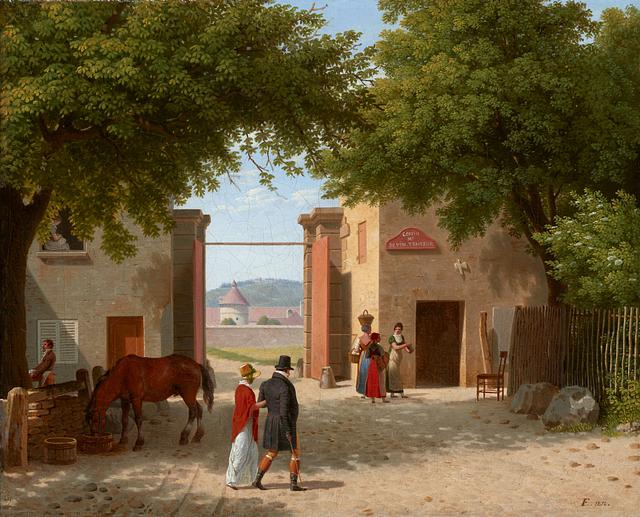
The Longchamp Gate in the Bois-de-Boulogne, 1812
Oil on canvas
The Longchamp Gate in the Bois-de-Boulogne, 1812
Oil on canvas
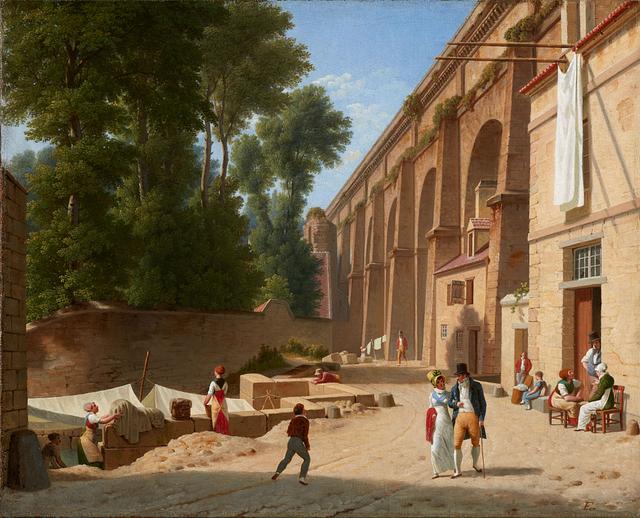
C.W. Eckersberg (1783–1853)
The Aqueduct at Arcueil, 1812
Oil on canvas
The Aqueduct at Arcueil, 1812
Oil on canvas
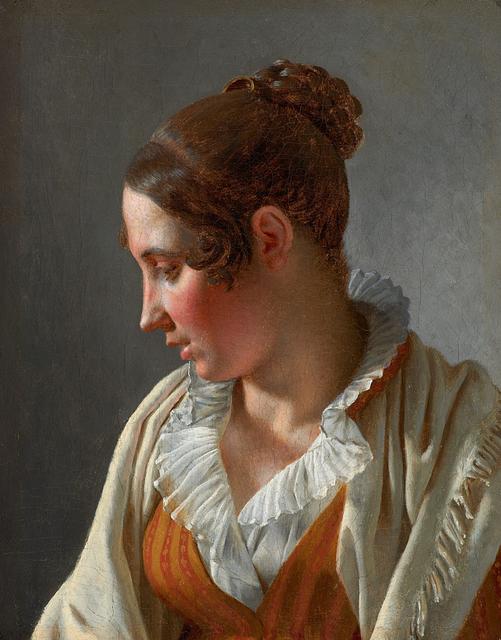
C.W. Eckersberg (1783–1853)
The model Emilie, 1813
Oil on canvas
The model Emilie, 1813
Oil on canvas
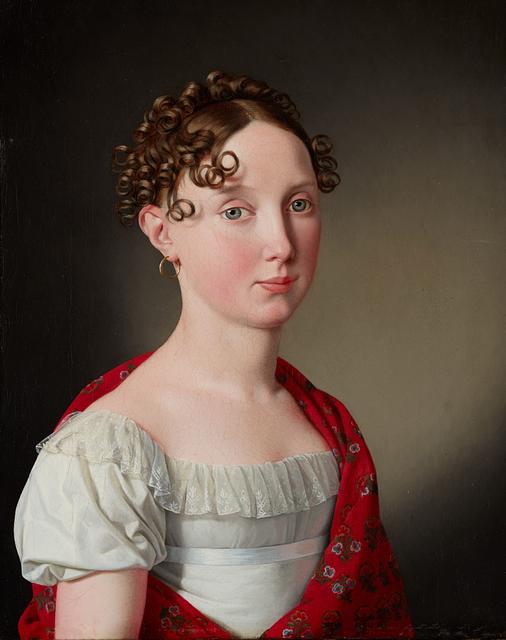
C.W. Eckersberg (1783–1853)
Elisabeth Ida Mariane Brockenhuus, 1817
Oil on canvas
Elisabeth Ida Mariane Brockenhuus, 1817
Oil on canvas