Peder Als (1726–1776)
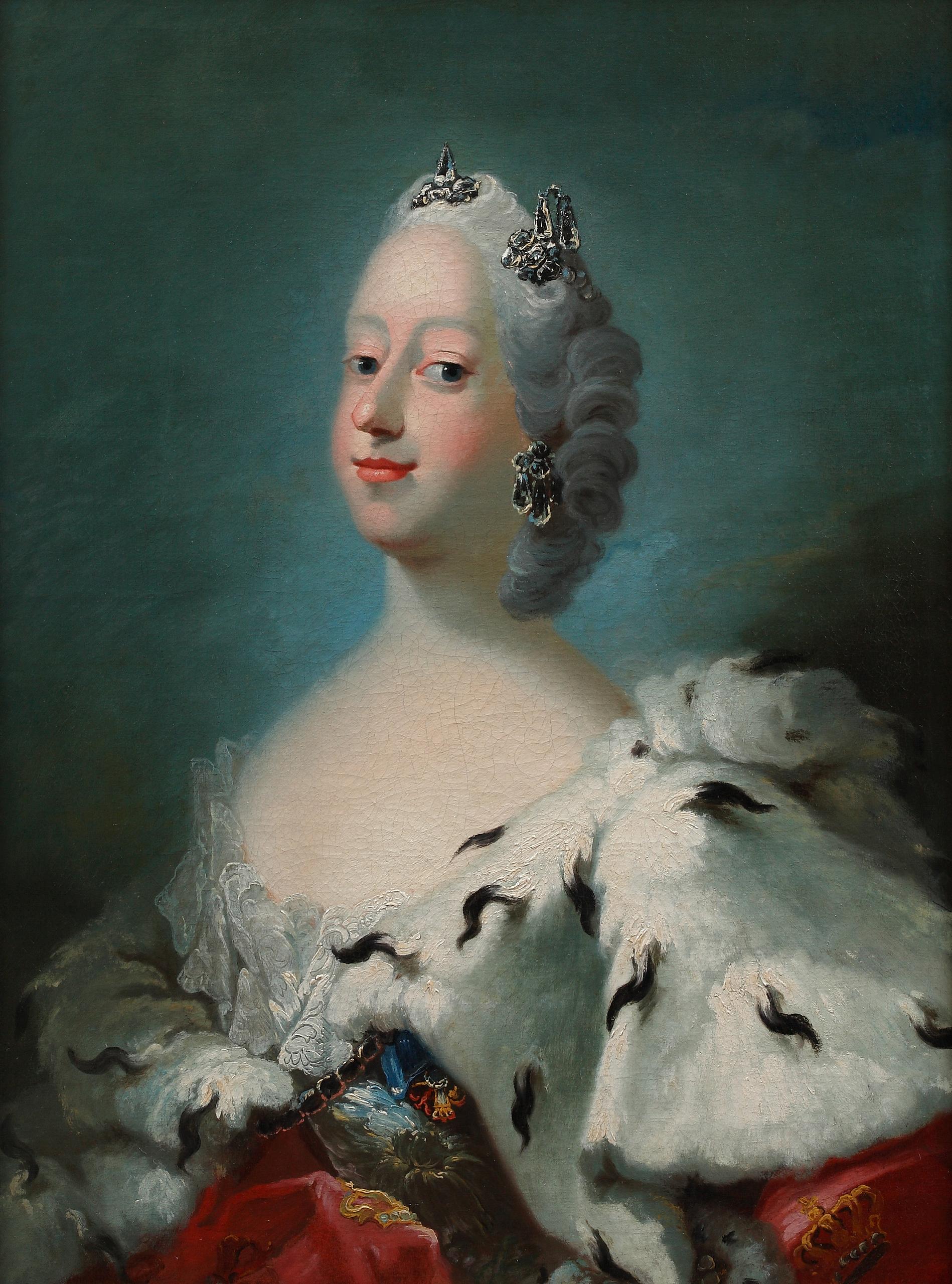
Queen Louise, Consort of Frederik V, 1750s
Oil on canvas
77 x 63 cm
Inventory number B 271
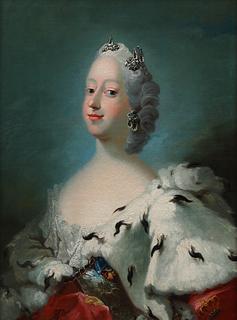
In 1743, the British princess Louise (1724–1751) was married to the Danish heir to the throne, Frederik of Denmark and Norway, who would later become King Frederik V (1723–1766). Louise became queen of Denmark in 1746 at the age of 21 and bore several children for Frederik V, including a son and heir, the later Christian VII (1749–1808). In her own day, Queen Louise was very popular among the Danish people, and although she died young after only five years on the Danish throne, she is one of the most portrayed queens in Denmark.
The most prominent portrayer of Queen Louise was the Swedish-born painter Carl Gustaf Pilo (1711–1793), who had been appointed royal court painter the year after Frederik V’s accession to the throne. In this capacity, Pilo set the standard for how the young queen should be represented, and other painters used his works as a reference when creating their own portraits of the queen. This portrait of Queen Louise, done by Peder Als, is one example: it is a copy after Pilo.1
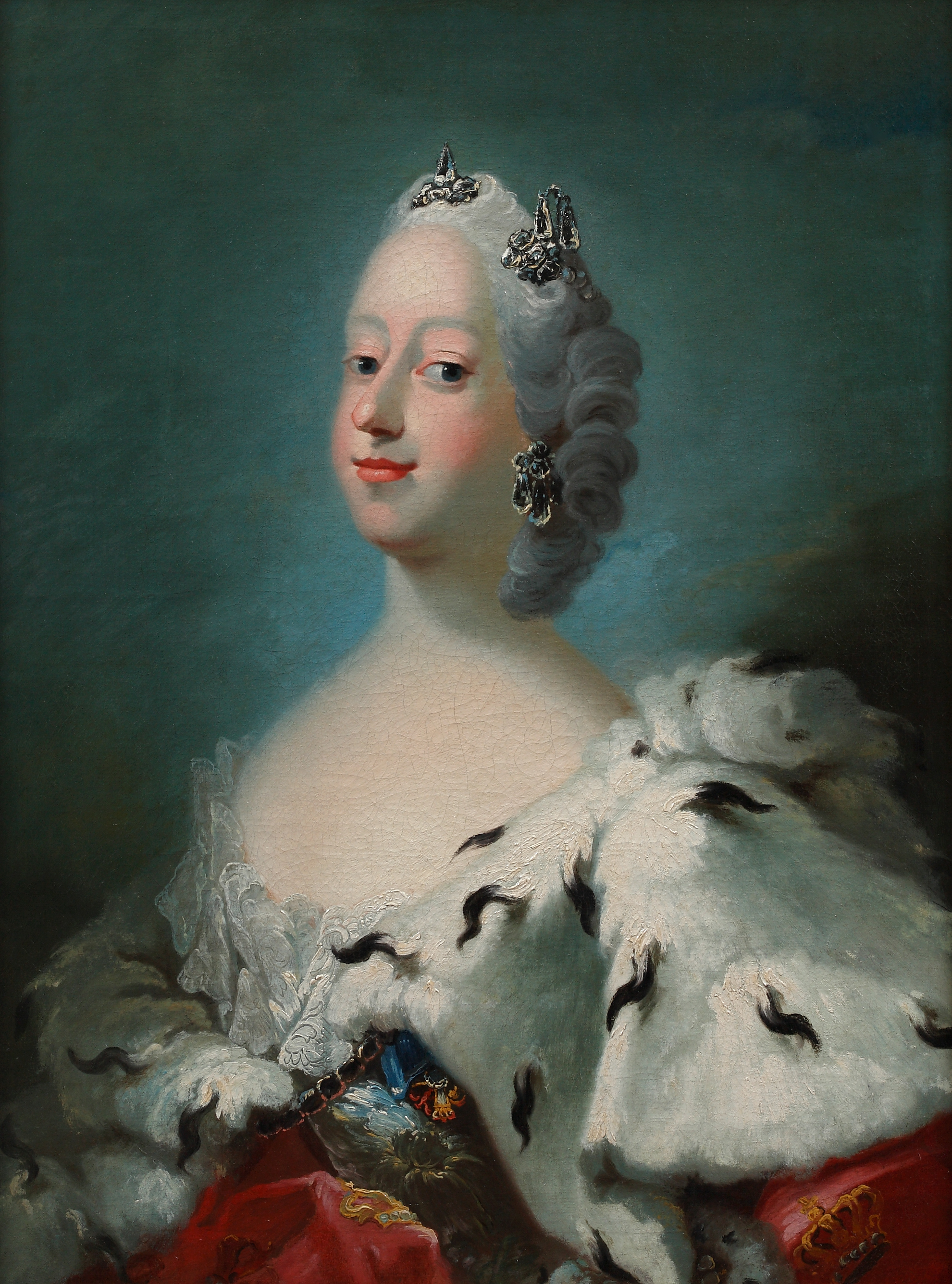
Queen Louise is depicted wearing a dress with a deep neckline and lace trim. Over this she wears a red cloak decorated with gold crowns and lined with ermine. The cloak is held together by a string of gemstones across her chest, and she also wears the order known as ‘de l'Union Parfaite’ – the first Danish order that could be worn by both men and women. Queen Louise has a powdered, slicked-back hairstyle where the hair ornaments match the earrings. Turning to the left, she directs her gaze to the right.
Peder Als made this portrait of Queen Louise at an early stage in his career, at which point he also painted several signed and dated portraits of members of the royal house and prominent aristocratic families. All these portraits share one common trait. They have a close kinship with Pilo’s compositions, and Als has adhered to Pilo’s approach and technique. Indeed, several of his works can hardly be distinguished from Pilo’s, and several scholars believe this to confirm that Als must have been an assistant in Pilo’s studio – presumably a few years before 1750 and staying on for a prolonged period of time.2
The most prominent portrayer of Queen Louise was the Swedish-born painter Carl Gustaf Pilo (1711–1793), who had been appointed royal court painter the year after Frederik V’s accession to the throne. In this capacity, Pilo set the standard for how the young queen should be represented, and other painters used his works as a reference when creating their own portraits of the queen. This portrait of Queen Louise, done by Peder Als, is one example: it is a copy after Pilo.1
Queen Louise is depicted wearing a dress with a deep neckline and lace trim. Over this she wears a red cloak decorated with gold crowns and lined with ermine. The cloak is held together by a string of gemstones across her chest, and she also wears the order known as ‘de l'Union Parfaite’ – the first Danish order that could be worn by both men and women. Queen Louise has a powdered, slicked-back hairstyle where the hair ornaments match the earrings. Turning to the left, she directs her gaze to the right.
Peder Als made this portrait of Queen Louise at an early stage in his career, at which point he also painted several signed and dated portraits of members of the royal house and prominent aristocratic families. All these portraits share one common trait. They have a close kinship with Pilo’s compositions, and Als has adhered to Pilo’s approach and technique. Indeed, several of his works can hardly be distinguished from Pilo’s, and several scholars believe this to confirm that Als must have been an assistant in Pilo’s studio – presumably a few years before 1750 and staying on for a prolonged period of time.2
Published in
Published in
Erik Zahle: ”Malerisamlingens vækst” in C.L. Davids Samling, Tredje del, København 1958, pp. 123-124 and 142-143;
Vagn Poulsen, Erik Lassen and Jan Danielsen (eds.): Dansk kunsthistorie: billedkunst og skulptur. Vol. 3: Akademiet og guldalderen: 1750-1850, København 1972, p. 78;
Verner Jul Andersen: Dansk kunst og kunsthåndværk, Davids Samling, København 1983, cat.no. 397;
Stefan Pajung: Dansk-engelsk portrætkunst, Hillerød 2022, p. 188 and fig. 106, p. 187 (Studier fra Det Nationalhistoriske Museum på Frederiksborg; 5);
Vagn Poulsen, Erik Lassen and Jan Danielsen (eds.): Dansk kunsthistorie: billedkunst og skulptur. Vol. 3: Akademiet og guldalderen: 1750-1850, København 1972, p. 78;
Verner Jul Andersen: Dansk kunst og kunsthåndværk, Davids Samling, København 1983, cat.no. 397;
Stefan Pajung: Dansk-engelsk portrætkunst, Hillerød 2022, p. 188 and fig. 106, p. 187 (Studier fra Det Nationalhistoriske Museum på Frederiksborg; 5);
Footnotes
Footnotes
1.
Vagn Poulsen, Erik Lassen and Jan Danielsen (eds.): Dansk kunsthistorie: billedkunst og skulptur. Vol. 3: Akademiet og guldalderen: 1750-1850, Copenhagen 1972, p. 78.
2.
Peder Als’s portrait of Queen Louise is related to several portraits from C.G. Pilo’s hand, including full-length paintings as well as bust-length paintings. One example is the portrait Queen Louise, The Museum of National History at Frederiksborg. See Stefan Pajung: Dansk-engelsk portrætkunst, Hillerød 2022, pp. 182–188 (Studier fra Det Nationalhistoriske Museum på Frederiksborg; 5.)
Danish Paintings and Drawings
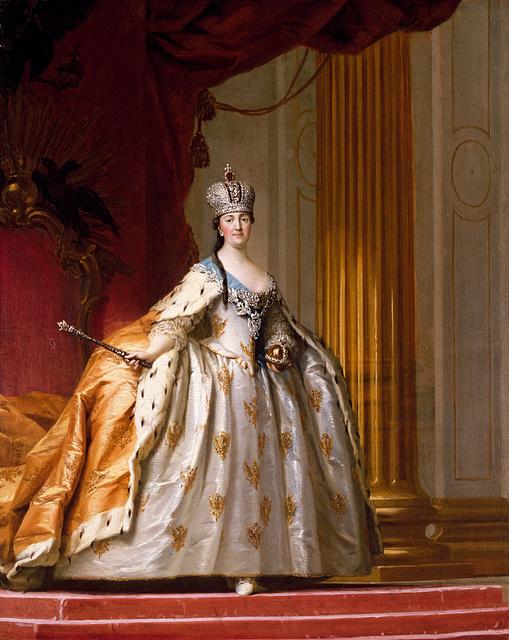
Vigilius Eriksen (1722–1782)
Catherine the Great in Her Coronation Robe, 1778–79
Oil on canvas
Catherine the Great in Her Coronation Robe, 1778–79
Oil on canvas
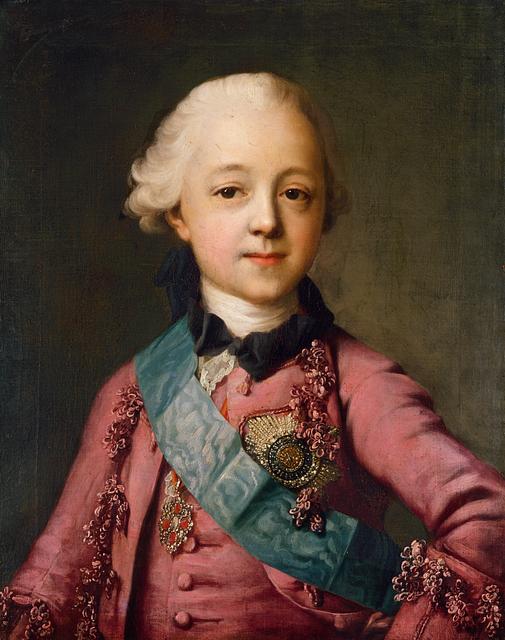
Vigilius Eriksen (1722–1782)
Grand Duke Paul (later the Emperor Paul I), 1764
Oil on canvas
Grand Duke Paul (later the Emperor Paul I), 1764
Oil on canvas
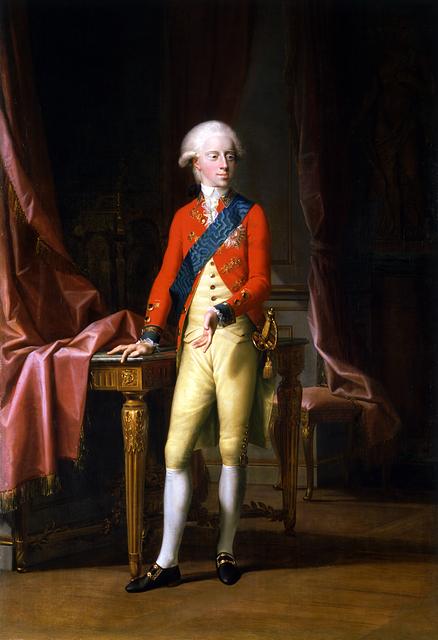
Jens Juel (1745–1801)
Frederik VI as Crown Prince Regent, 1787
Oil on canvas
Frederik VI as Crown Prince Regent, 1787
Oil on canvas
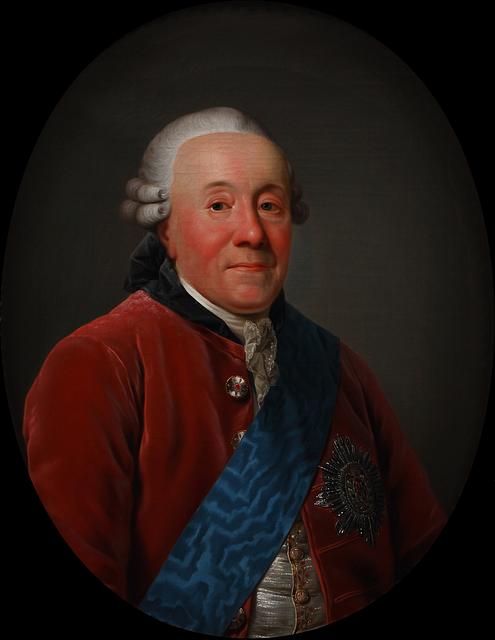
Jens Juel (1745–1802)
Count Jørgen Scheel, 1781
Oil on canvas
Count Jørgen Scheel, 1781
Oil on canvas