Nicolai Abildgaard (1743–1809)
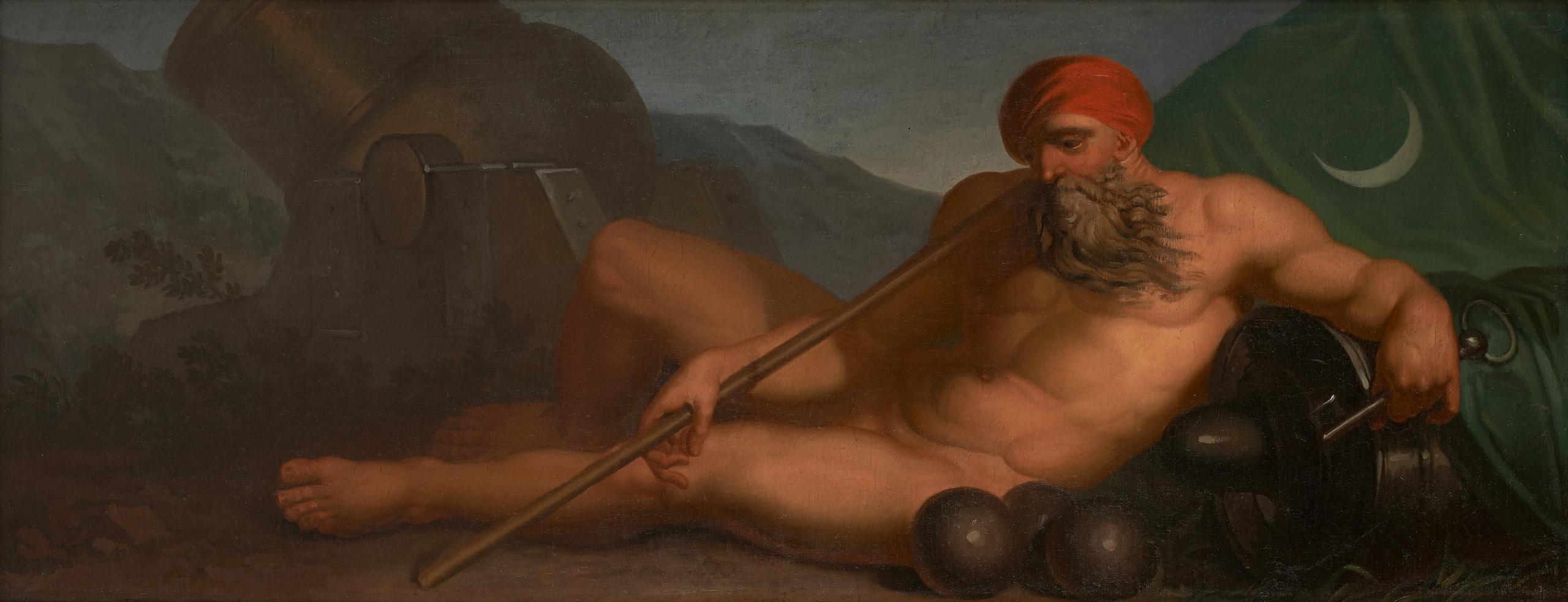
Bosporus, c. 1800
Oil on canvas
57 x 144 cm
Inventory number 4/1988
When Nicolai Abildgaard returned home to Denmark in 1777 after a long sojourn abroad, he was appointed professor at the Royal Danish Academy of Fine Arts in Copenhagen. At the same time, he was also commissioned to carry out the decorations at Christiansborg Palace, which served as the king’s residence at that time. In the years that followed and all the way up until his death, Abildgaard increasingly devoted himself to interior design, restoration projects, architecture, and furniture design.1
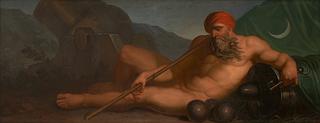
Bosporus is an overdoor painting, meaning that it was as originally meant to be fitted above an entryway. The subject is an allegorical representation of the Bosphorus Strait, personified as a reclining river god with a large beard and a red turban. In his right hand and supported over one shoulder, the deity holds a green banner with the Turkish crescent moon. In his left hand he has a key, and he rests up against the rear end of a cannon surrounded by cannonballs. On the left side of the picture is a mortar aimed at the background.
Abildgaard presumably painted Bosporus in the late eighteenth century for Hvedholm Castle on the island of Funen, for which he also created three other overdoor paintings.2 He created several overdoors for other settings, too, usually with allegorical subjects or scenes from antiquity. Some of the best known are four large overdoors featuring scenes from the history of Europe at Christiansborg Palace which unfortunately perished along with the rest of the palace in the fire of 1794. Abildgaard oversaw the decoration of Levetzau’s Palace (now Christian VIII’s Palace) at Amalienborg Palace, where overdoors were also created, including scenes associated with the four continents.
Bosporus was acquired in 1988 and it is the only work by Abildgaard in The David Collection. However, it is not the only overdoor painting as the collection also includes François Boucher’s The Gallant Chinese (B 275).
Bosporus is an overdoor painting, meaning that it was as originally meant to be fitted above an entryway. The subject is an allegorical representation of the Bosphorus Strait, personified as a reclining river god with a large beard and a red turban. In his right hand and supported over one shoulder, the deity holds a green banner with the Turkish crescent moon. In his left hand he has a key, and he rests up against the rear end of a cannon surrounded by cannonballs. On the left side of the picture is a mortar aimed at the background.
Abildgaard presumably painted Bosporus in the late eighteenth century for Hvedholm Castle on the island of Funen, for which he also created three other overdoor paintings.2 He created several overdoors for other settings, too, usually with allegorical subjects or scenes from antiquity. Some of the best known are four large overdoors featuring scenes from the history of Europe at Christiansborg Palace which unfortunately perished along with the rest of the palace in the fire of 1794. Abildgaard oversaw the decoration of Levetzau’s Palace (now Christian VIII’s Palace) at Amalienborg Palace, where overdoors were also created, including scenes associated with the four continents.
Bosporus was acquired in 1988 and it is the only work by Abildgaard in The David Collection. However, it is not the only overdoor painting as the collection also includes François Boucher’s The Gallant Chinese (B 275).
Published in
Published in
Fortegnelse over N.A. Abildgaards arbejder, Kunstforeningen marts, København 1916, cat. 39;
Birgitte von Folsach: By the light of the crescent moon: images of the Near East in Danish art and literature1800-1875, Davids Samling, Copenhagen 1996, fig. 12, pp. 18-19 and cat. 12, p. 102-103;
Anna Rebecca Kledal: Kunstmaleren og prinsessen. Elisabeth Jerichau Baumanns møde med prinsesse Nazili, Aarhus 2021, p. 76;
Birgitte von Folsach: By the light of the crescent moon: images of the Near East in Danish art and literature1800-1875, Davids Samling, Copenhagen 1996, fig. 12, pp. 18-19 and cat. 12, p. 102-103;
Anna Rebecca Kledal: Kunstmaleren og prinsessen. Elisabeth Jerichau Baumanns møde med prinsesse Nazili, Aarhus 2021, p. 76;
Footnotes
Footnotes
1.
Bente Skovgaard: ‘Fire tegninger af Abildgaard’, Meddelelser fra Thorvaldsens Museum, 1989, pp. 72–79.
2.
For more information, see Line Bregnhøi and Hanne Raabymagle: Abildgaard som arkitekt, Copenhagen 2019.
Danish Paintings and Drawings
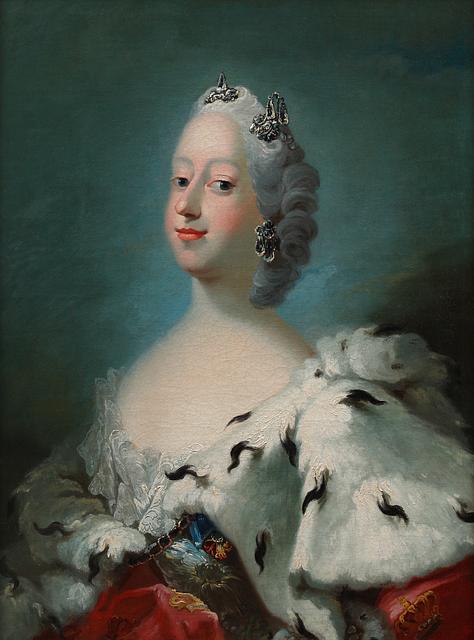
Peder Als (1726–1776)
Queen Louise, Consort of Frederik V, 1750s
Oil on canvas
Queen Louise, Consort of Frederik V, 1750s
Oil on canvas
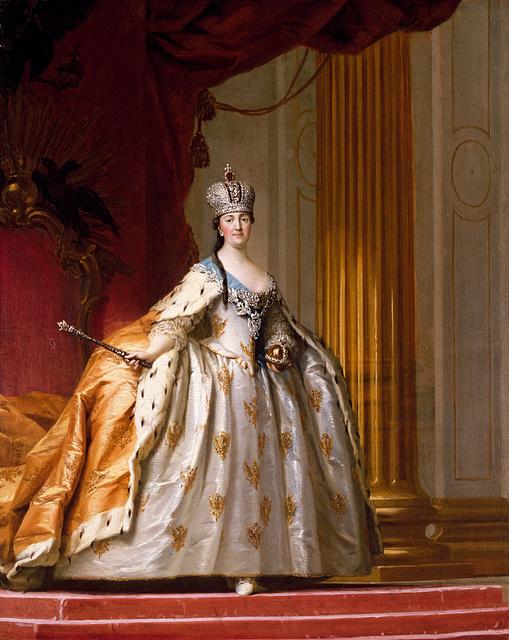
Vigilius Eriksen (1722–1782)
Catherine the Great in Her Coronation Robe, 1778–79
Oil on canvas
Catherine the Great in Her Coronation Robe, 1778–79
Oil on canvas
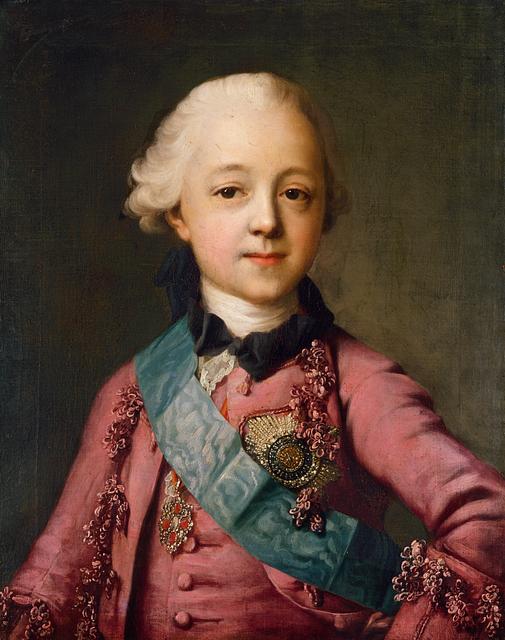
Vigilius Eriksen (1722–1782)
Grand Duke Paul (later the Emperor Paul I), 1764
Oil on canvas
Grand Duke Paul (later the Emperor Paul I), 1764
Oil on canvas
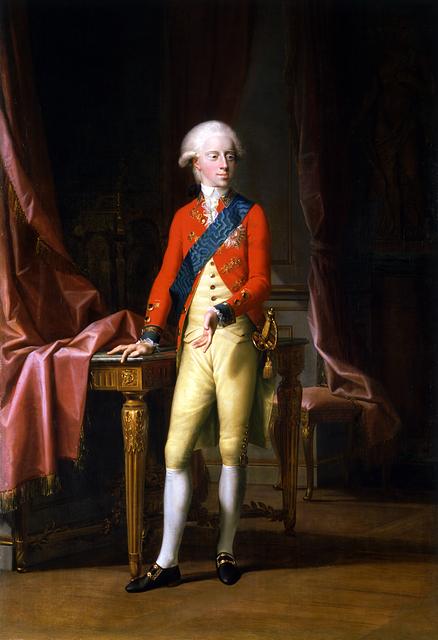
Jens Juel (1745–1801)
Frederik VI as Crown Prince Regent, 1787
Oil on canvas
Frederik VI as Crown Prince Regent, 1787
Oil on canvas