P.C. Skovgaard (1817–1875)
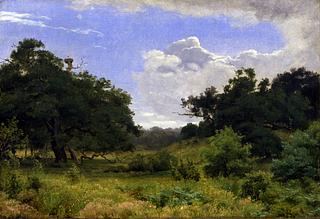
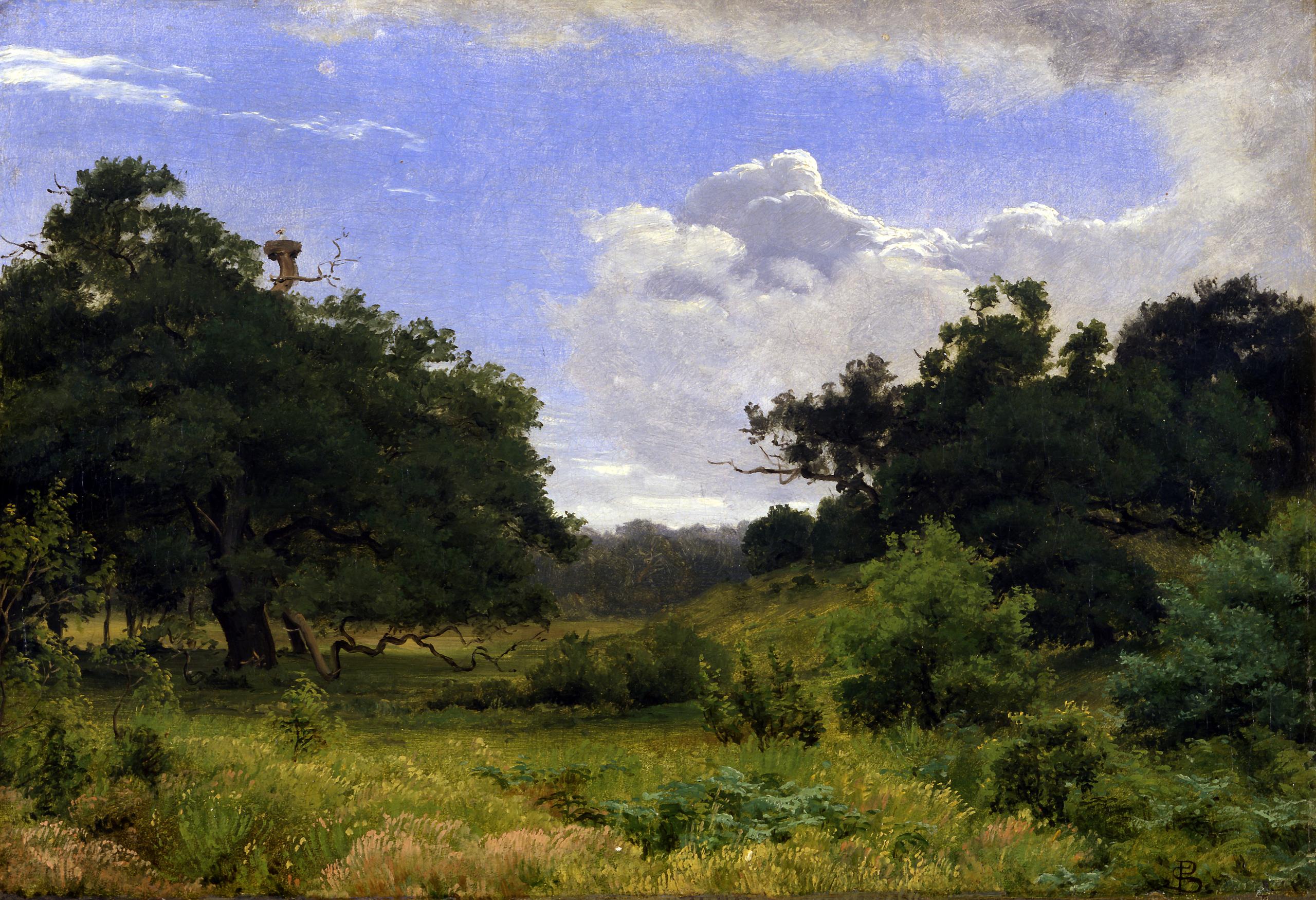
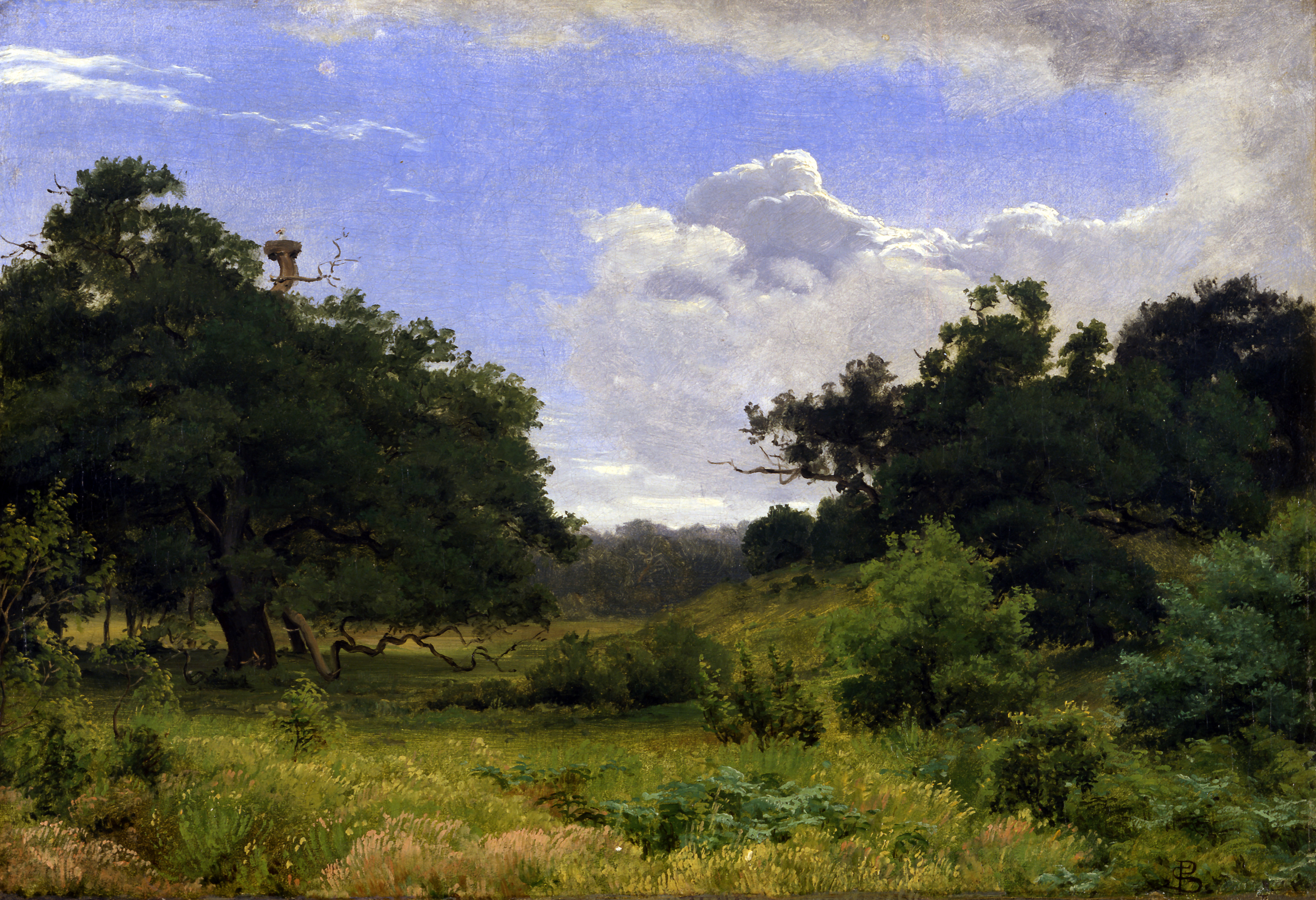
The North Woods at Jægerspris, 1842–1843
Oil on canvas
33 x 48 cm
Inventory number 21/1969
Peaceful, Danish forest landscapes were a particularly frequent recurring motif in P.C. Skovgaard’s large compositions, which often took on monumental formats. Skovgaard based his large canvases on studies of nature, some of which constitute works of art in their own right. Among them we find The North Woods at Jægerspris, which is a preliminary study for Oak Trees in Nordskoven near Jægerspris, Zealand – a painting that was greatly admired in the artist’s own day.1
Skovgaard has chosen to depict a landscape of great calm and serenity, seemingly untouched by human hand. There is a clearing in the landscape with an ancient, sprawling oak tree on the left side of the picture. This is not just any oak: More than 700 years old at the time it was painted, the tree is known as The Stork Oak. A pair of storks have built a nest at the top of the tree, and close inspection hints at a stork chick in the nest. Unsurprisingly, Skovgaard’s work has been interpreted by many as a symbol of the creation of the nation state.2
Skovgaard found his subject in June 1842, when he visited the Nordskoven near the town Jægerspris with his good friend, the painter J.Th. Lundbye (1818–1848). In summer, Lundbye and Skovgaard regularly went on excursions together in the North Zealand countryside in order to gather inspiration and reference material for the large compositions created in their painting studio during wintertime.3 In the summer of 1842, they both drew The Stork Oak. Lundbye describes the proceedings in his diary: ‘After our meagre midday meal, Skovgaard drew one of the mighty old oaks while I drew the stork nest at the top of it as well as a poor young stork that the strange parents had thrown out of the nest’.4
The composition served a clear purpose for Skovgaard as he had been trying to win the Neuhausen Prize since the early 1840s. He finally won in 1843 with Oak Trees in Nordskoven near Jægerspris, Zealand. That year, the prize focused on landscapes, specifying the following theme for the competition: ‘A view of a forest in which oak trees are predominant’. Skovgaard was an obvious winner, and the painting was subsequently acquired by the Royal Collection of Paintings (now SMK – The National Gallery of Denmark).
Skovgaard has chosen to depict a landscape of great calm and serenity, seemingly untouched by human hand. There is a clearing in the landscape with an ancient, sprawling oak tree on the left side of the picture. This is not just any oak: More than 700 years old at the time it was painted, the tree is known as The Stork Oak. A pair of storks have built a nest at the top of the tree, and close inspection hints at a stork chick in the nest. Unsurprisingly, Skovgaard’s work has been interpreted by many as a symbol of the creation of the nation state.2
Skovgaard found his subject in June 1842, when he visited the Nordskoven near the town Jægerspris with his good friend, the painter J.Th. Lundbye (1818–1848). In summer, Lundbye and Skovgaard regularly went on excursions together in the North Zealand countryside in order to gather inspiration and reference material for the large compositions created in their painting studio during wintertime.3 In the summer of 1842, they both drew The Stork Oak. Lundbye describes the proceedings in his diary: ‘After our meagre midday meal, Skovgaard drew one of the mighty old oaks while I drew the stork nest at the top of it as well as a poor young stork that the strange parents had thrown out of the nest’.4
The composition served a clear purpose for Skovgaard as he had been trying to win the Neuhausen Prize since the early 1840s. He finally won in 1843 with Oak Trees in Nordskoven near Jægerspris, Zealand. That year, the prize focused on landscapes, specifying the following theme for the competition: ‘A view of a forest in which oak trees are predominant’. Skovgaard was an obvious winner, and the painting was subsequently acquired by the Royal Collection of Paintings (now SMK – The National Gallery of Denmark).
Published in
Published in
Kunstforeningens Udstilling af P.C. Skovgaards Arbejder i 100 Aaret for hans Fødsel, Udstillingsbygningen ved Charlottenborg, Februar 1917, København 1917, cat. 56. (with the title: Nordskoven i Jægerspris med Storkereden i den gamle Eg);
Henrik Bramsen: Malerier af P.C. Skovgaard, København 1938, p. 22 and fig. 19;
V. Winkel & Magnussen (ed.): Kunst i privat eje, vol. 1, København 1944, fig. 40, pp. 153-154;
Vagn Poulsen: ”Guldalderbilleder” in C.L. Davids Samling. Fjerde del, Jubilæumsskrift 1945-1970, København 1970, p. 25 and fig. 6, p. 31;
Dansk kunst og kunsthåndværk, Davids Samling, København 1972, p. 11;
Verner Jul Andersen: Dansk kunst og kunsthåndværk, Davids Samling, 2. ed., København 1983, cat. 426;
Lene Bøgh Rønberg, Kasper Monrad and Ragni Linnet: I lyset af Holland. Mesterværker fra hollandsk og dansk guldalder, Statens Museum for Kunst og Rijksmuseum, København 2001, cat. 24, pp. 49-50;
Henrik Bramsen: Malerier af P.C. Skovgaard, København 1938, p. 22 and fig. 19;
V. Winkel & Magnussen (ed.): Kunst i privat eje, vol. 1, København 1944, fig. 40, pp. 153-154;
Vagn Poulsen: ”Guldalderbilleder” in C.L. Davids Samling. Fjerde del, Jubilæumsskrift 1945-1970, København 1970, p. 25 and fig. 6, p. 31;
Dansk kunst og kunsthåndværk, Davids Samling, København 1972, p. 11;
Verner Jul Andersen: Dansk kunst og kunsthåndværk, Davids Samling, 2. ed., København 1983, cat. 426;
Lene Bøgh Rønberg, Kasper Monrad and Ragni Linnet: I lyset af Holland. Mesterværker fra hollandsk og dansk guldalder, Statens Museum for Kunst og Rijksmuseum, København 2001, cat. 24, pp. 49-50;
Footnotes
Footnotes
1.
J. Th. Lundbye: Et Aar af mit Liv, introduction and note by Mogens Lebech, Copenhagen 1967, p. 79.
2.
Kasper Monrad: Dansk guldalder. Lyset, landskabet og hverdagslivet, Copenhagen 2013, p. 326.
3.
Gertrud Oelsner: ‘Skovens demokratiske rum’, in Karina Lykke Grand and Gertrud Oelsner (eds.): P.C. Skovgaard. Dansk guldalder revurderet, Aarhus 2010, p. 80
4.
PC Skovgaard: Oak Trees in Nordskoven near Jægerspris, Zealand, 1843, SMK, KMS413.
Danish Paintings and Drawings
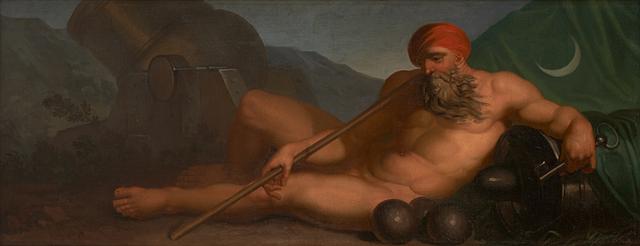
Nicolai Abildgaard (1743–1809)
Bosporus, c. 1800
Oil on canvas
Bosporus, c. 1800
Oil on canvas
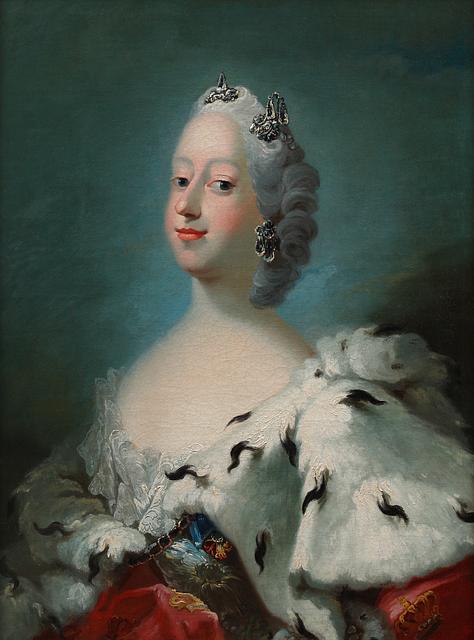
Peder Als (1726–1776)
Queen Louise, Consort of Frederik V, 1750s
Oil on canvas
Queen Louise, Consort of Frederik V, 1750s
Oil on canvas
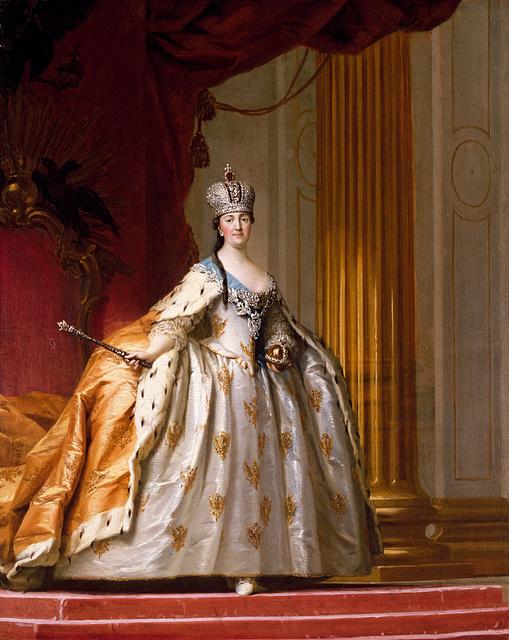
Vigilius Eriksen (1722–1782)
Catherine the Great in Her Coronation Robe, 1778–79
Oil on canvas
Catherine the Great in Her Coronation Robe, 1778–79
Oil on canvas
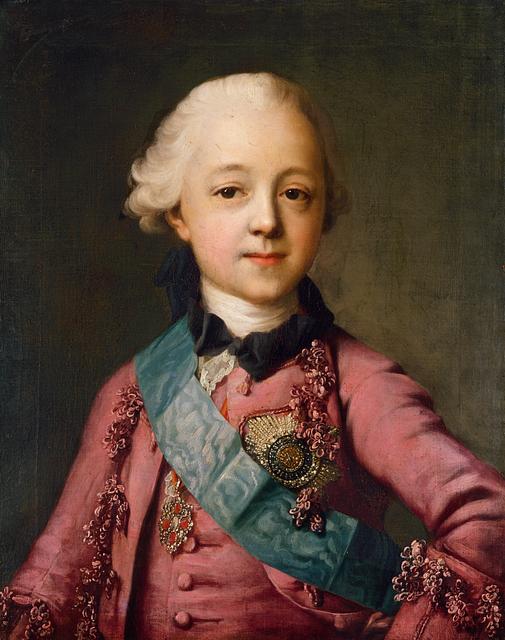
Vigilius Eriksen (1722–1782)
Grand Duke Paul (later the Emperor Paul I), 1764
Oil on canvas
Grand Duke Paul (later the Emperor Paul I), 1764
Oil on canvas