Vilhelm Hammershøi (1864–1916)
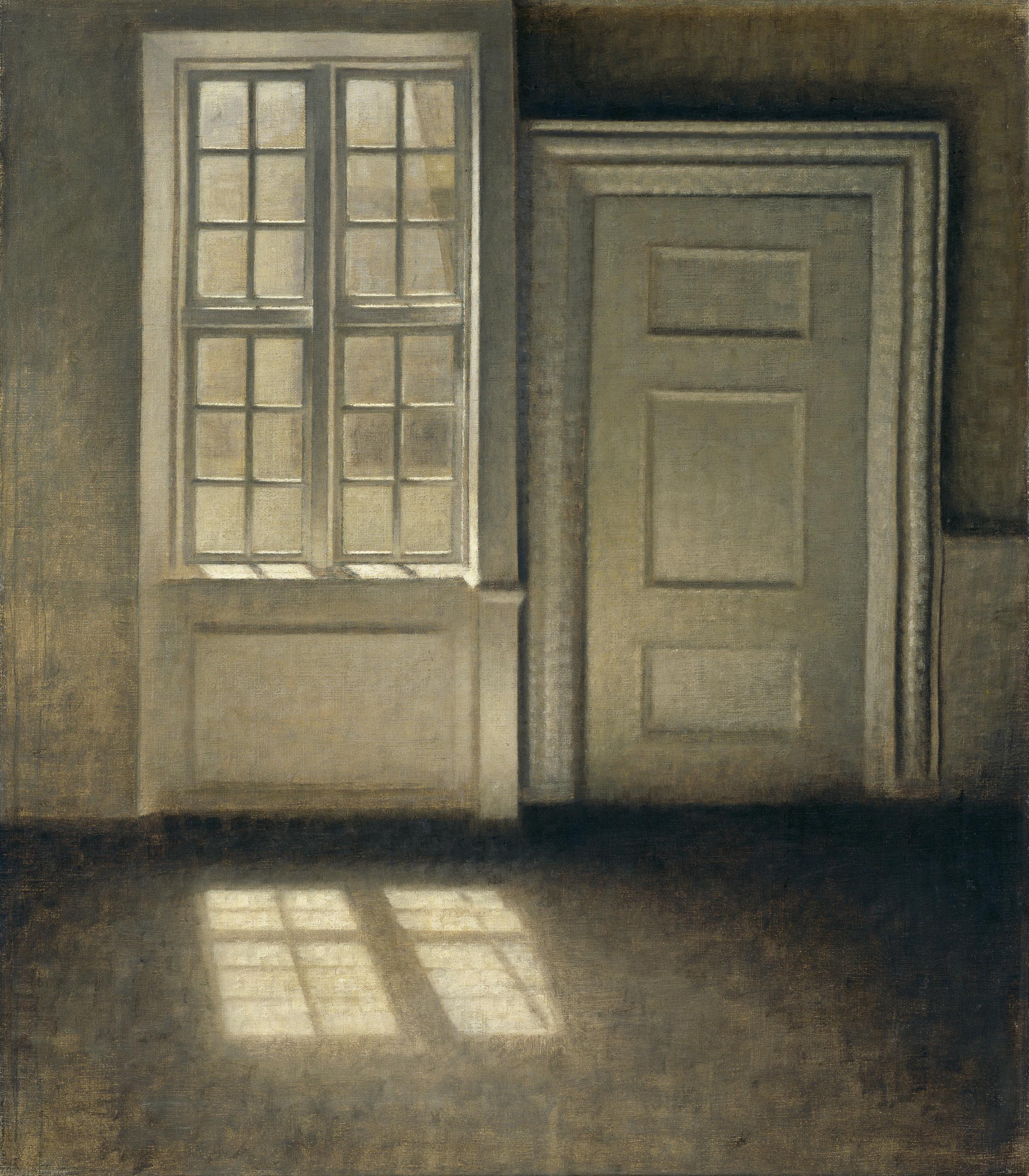
Sitting Room. Study in Sunlight, 1906
Oil on canvas
55 x 47 cm
Inventory number B 312
The Copenhagen district of Christianshavn proved to be of great importance for Vilhelm Hammershøi’s artistic development: it was here that interior scenes became the central motif in his art, and here he created some of his most enduringly famous works.
Hammershøi got to live at two different addresses in Christianshavn: at Strandgade 30 from 1898 to 1908 and at Strandgade 25 in the years 1913 to 1916. The David Collection contains exclusively works depicting views from Strandgade 30 - this work as well as B 307 and B 309.
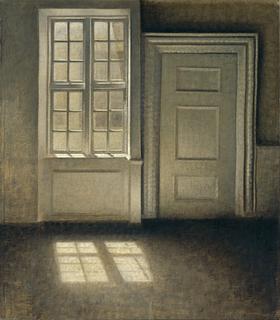
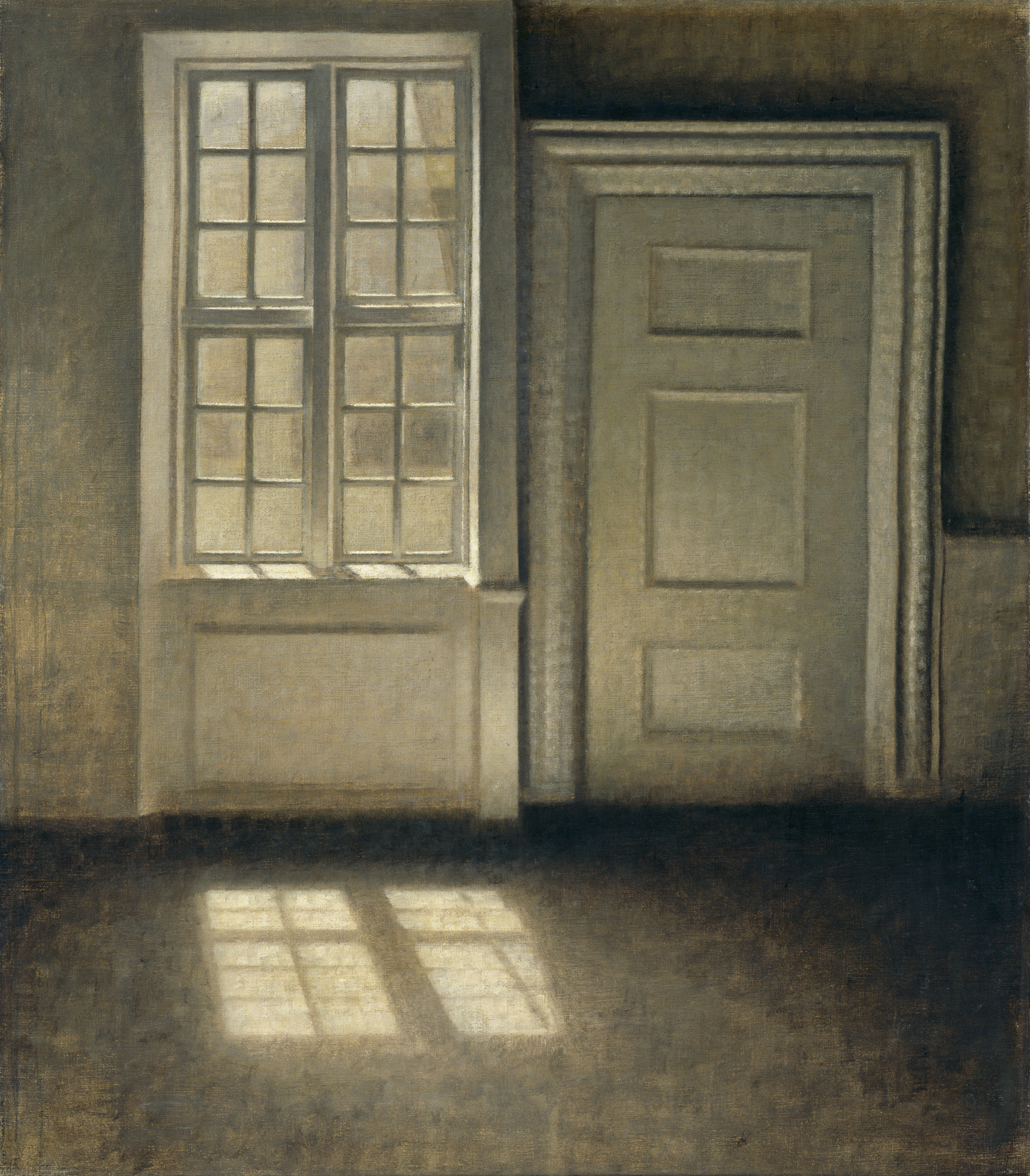
Sitting Room. Study in Sunlight was painted in one of the smaller living rooms in the northeast wing of Hammershøi’s flat. The tall, narrow window faces the courtyard beyond, and the closed door leads out to the exterior gallery that connected the two wings of the house. Hammershøi has carefully staged his chosen subject, emptying the room of furniture and objects and of any human presence. Everything has been pared away, leaving the room in its clearest, purest form and allowing the artist to direct his attention to what interests him: the light falling in through the window, creating oscillating optic effects on the floor, walls, panelling and door.
The window is a recurring motif in nineteenth-century Northern European art, acting as a metaphor for, among other things, a yearning to see other places and for thresholds between outside and inside, the near and the faraway. In Sitting Room. Study in Sunlight, the window is shut, and it seems impossible to open, as Hammershøi has omitted to paint in any fittings. The window also does not offer any clear view of a world outside; everything is blurred and indefinable.
Lent to the exhibition
Hammershøi. The Eye that Listens
Museo Nacional Thyssen-Bornemisza, Madrid, Spain
17 February - 31 May 2026
Hammershøi got to live at two different addresses in Christianshavn: at Strandgade 30 from 1898 to 1908 and at Strandgade 25 in the years 1913 to 1916. The David Collection contains exclusively works depicting views from Strandgade 30 - this work as well as B 307 and B 309.
Sitting Room. Study in Sunlight was painted in one of the smaller living rooms in the northeast wing of Hammershøi’s flat. The tall, narrow window faces the courtyard beyond, and the closed door leads out to the exterior gallery that connected the two wings of the house. Hammershøi has carefully staged his chosen subject, emptying the room of furniture and objects and of any human presence. Everything has been pared away, leaving the room in its clearest, purest form and allowing the artist to direct his attention to what interests him: the light falling in through the window, creating oscillating optic effects on the floor, walls, panelling and door.
The window is a recurring motif in nineteenth-century Northern European art, acting as a metaphor for, among other things, a yearning to see other places and for thresholds between outside and inside, the near and the faraway. In Sitting Room. Study in Sunlight, the window is shut, and it seems impossible to open, as Hammershøi has omitted to paint in any fittings. The window also does not offer any clear view of a world outside; everything is blurred and indefinable.
Lent to the exhibition
Hammershøi. The Eye that Listens
Museo Nacional Thyssen-Bornemisza, Madrid, Spain
17 February - 31 May 2026
Kunsthaus Zürich, Zürich, Switzerland
3 July - 25 October 2026
3 July - 25 October 2026
Published in
Published in
Fortegnelse over arbejder af Vilhelm Hammershøi, booklet 2, Kunstforeningen, Copenhagen 1916, p. 7, cat. 62;
Sophus Michaëlis and Alfred Bramsen: Vilhelm Hammershøi. Kunstneren og hans Værk, København 1918, pp. 63, 105, cat. 283;
Alfred Bramsen: Udvalg af Vilh. Hammershøis arbejder, Copenhagen 1930, p. 9, cat. 27;
Erik Zahle: “Billedkunst,” in C.L. Davids Samling. Vol. 1, Nogle Studier, Copenhagen 1948, p. 207;
Det besjälade rummet, Malmö Museum, Malmø 1975, p. 24;
Knud Voss and Verner Aspenström: Vilhelm Hammershøi, Prins Eugens Waldemarsudde, Stockholm 1976, cat. 30;
Hanne Finsen and Inge Vibeke Raaschou-Nielsen: Vilhelm Hammershøi. En retrospektiv udstilling, Ordrupgaard, Charlottenlund 1981, p. 137, cat. 112;
Kirk Varnedoe: Northern Light. Realism and Symbolism in Scandinavian Painting, 1980-1910, Brooklyn Museum, New York 1982, p. 131, cat. 33;
Poul Vad: “Vilhelm Hammershøi,” in Kjeld von Folsach and Nana Lund (ed.): Dansk kunst i Davids Samling. Fra Philipsen til Saxbo, København 1995, pp. 106-107, cat. 38;
Anne-Birgitte Fonsmark et al.: Vilhelm Hammershøi, 1864-1916. Danish Painter of Solitude and Light, Ordrupgaard, Musée d’Orsay, Solomon R. Guggenheim Museum, New York 1998, p. 111, cat. 45;
Felix Krämer, Ulrich Luckhardt and Barbara Ludwig: Vilhelm Hammershøi, Hamburger Kunsthalle, Hamburg 2003, pp. 75, 154-155, cat 41;
Bente Scavenius and Jens Lindhe: Hammershøis København, Gammel Strand, Copenhagen 2003, p. 68;
Tone Sinding Steinsvik, Ida Lorentzen and Bente Scavenius: Den forunderlige stillheten. Ida Lorentzen (f.1951), Vilhelm Hammershøi (1864-1916), Stiftelsen Modums Blaafarveværk, Modum 2005, p. 89, cat. 56;
Felix Krämer, Naoki Sato and Anne-Birgitte Fonsmark: Hammershøi, Royal Academy of Arts, London 2008, pp. 48, 106, 153, cat. 48;
Anne-Birgitte Fonsmark and Jacob Bach Riis (ed.): Hjemme hos Hammershøi, Ordrupgaard, Charlottenlund 2016, p. 35, cat. 68;
Bridget Alsdorf: ”Hammershøi’s Either/Or,” Critical Inquiry, 42:2, 2016, p. 283 and fig. 9, p. 286;
Henrik Wivel: Hammershøi in The David Collection, Copenhagen 2017, pp. 80-81;
Annette Rosenvold Hvidt and Gertrud Oelsner: Vilhelm Hammershøi. På sporet af det åbne billede, Copenhagen 2018, p. 220;
Derek Pigrum: The Wall Beside the Work. The Place of the Charged Image in Transitional Artistic Practices, Cham 2021, p. 18;
Henrik Wivel: Vilhelm Hammershøi. Maleri som poesi, Copenhagen 2026, pp. 156-157 and fig. 70, p. 161;
Sophus Michaëlis and Alfred Bramsen: Vilhelm Hammershøi. Kunstneren og hans Værk, København 1918, pp. 63, 105, cat. 283;
Alfred Bramsen: Udvalg af Vilh. Hammershøis arbejder, Copenhagen 1930, p. 9, cat. 27;
Erik Zahle: “Billedkunst,” in C.L. Davids Samling. Vol. 1, Nogle Studier, Copenhagen 1948, p. 207;
Det besjälade rummet, Malmö Museum, Malmø 1975, p. 24;
Knud Voss and Verner Aspenström: Vilhelm Hammershøi, Prins Eugens Waldemarsudde, Stockholm 1976, cat. 30;
Hanne Finsen and Inge Vibeke Raaschou-Nielsen: Vilhelm Hammershøi. En retrospektiv udstilling, Ordrupgaard, Charlottenlund 1981, p. 137, cat. 112;
Kirk Varnedoe: Northern Light. Realism and Symbolism in Scandinavian Painting, 1980-1910, Brooklyn Museum, New York 1982, p. 131, cat. 33;
Poul Vad: “Vilhelm Hammershøi,” in Kjeld von Folsach and Nana Lund (ed.): Dansk kunst i Davids Samling. Fra Philipsen til Saxbo, København 1995, pp. 106-107, cat. 38;
Anne-Birgitte Fonsmark et al.: Vilhelm Hammershøi, 1864-1916. Danish Painter of Solitude and Light, Ordrupgaard, Musée d’Orsay, Solomon R. Guggenheim Museum, New York 1998, p. 111, cat. 45;
Felix Krämer, Ulrich Luckhardt and Barbara Ludwig: Vilhelm Hammershøi, Hamburger Kunsthalle, Hamburg 2003, pp. 75, 154-155, cat 41;
Bente Scavenius and Jens Lindhe: Hammershøis København, Gammel Strand, Copenhagen 2003, p. 68;
Tone Sinding Steinsvik, Ida Lorentzen and Bente Scavenius: Den forunderlige stillheten. Ida Lorentzen (f.1951), Vilhelm Hammershøi (1864-1916), Stiftelsen Modums Blaafarveværk, Modum 2005, p. 89, cat. 56;
Felix Krämer, Naoki Sato and Anne-Birgitte Fonsmark: Hammershøi, Royal Academy of Arts, London 2008, pp. 48, 106, 153, cat. 48;
Anne-Birgitte Fonsmark and Jacob Bach Riis (ed.): Hjemme hos Hammershøi, Ordrupgaard, Charlottenlund 2016, p. 35, cat. 68;
Bridget Alsdorf: ”Hammershøi’s Either/Or,” Critical Inquiry, 42:2, 2016, p. 283 and fig. 9, p. 286;
Henrik Wivel: Hammershøi in The David Collection, Copenhagen 2017, pp. 80-81;
Annette Rosenvold Hvidt and Gertrud Oelsner: Vilhelm Hammershøi. På sporet af det åbne billede, Copenhagen 2018, p. 220;
Derek Pigrum: The Wall Beside the Work. The Place of the Charged Image in Transitional Artistic Practices, Cham 2021, p. 18;
Henrik Wivel: Vilhelm Hammershøi. Maleri som poesi, Copenhagen 2026, pp. 156-157 and fig. 70, p. 161;