Christen Købke
‘Night’ (after Bertel Thorvaldsen’s relief), 1834–1835
Oil on canvas
Diameter: 76.5 cm
Inventory number B 359
In 1815, the painter C.W. Eckersberg (1783–1853) witnessed how two of the best-known reliefs by the Danish sculptor Bertel Thorvaldsen's (1770–1844) came to be. He was well positioned to do so as both artists lived in the same house in Rome at the time.
According to Eckersberg, Thorvaldsen had long pondered how to treat a particular subject rooted in ancient mythology; a symbolic depiction of Night (Nyx) and her two children, the twins Sleep (Hypnos) and Death (Thanatos). However, he struggled to clarify his ideas. One night, however, the motif suddenly sprang into his head, and he immediately got out of bed and quickly modelled the relief. When Eckersberg came by his room in the morning the following day, the relief was almost finished, and a plasterer was sent for. Before he arrived, Thorvaldsen had also executed the relief's counterpart, Day.1 Some twenty years after the creation of the two reliefs, Christen Købke copied them – not in plaster, however, but as grisaille paintings.
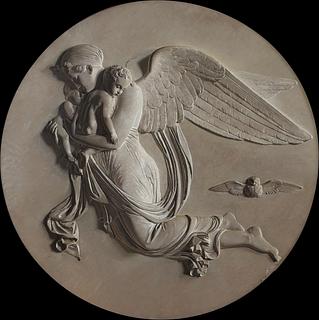
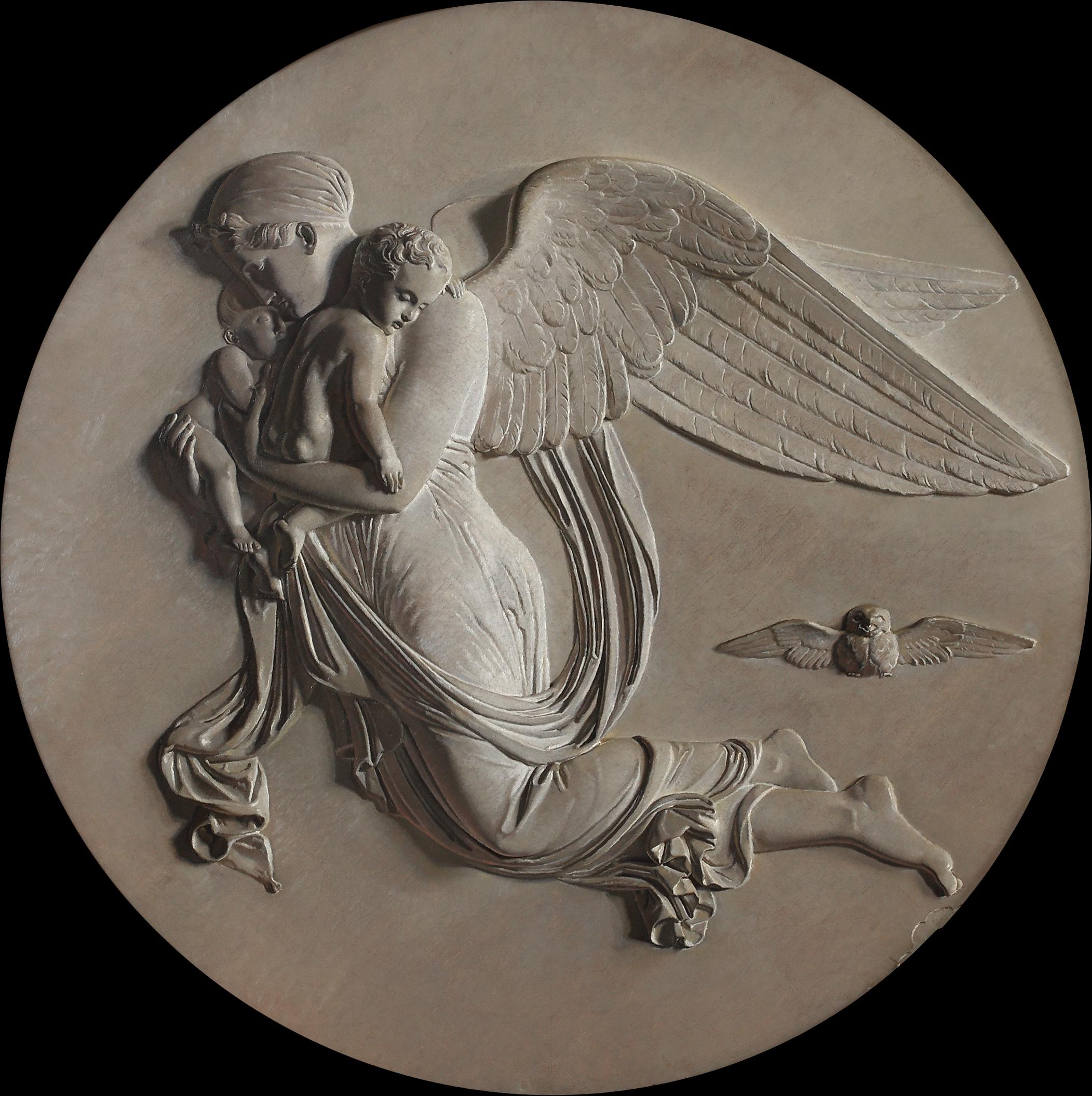
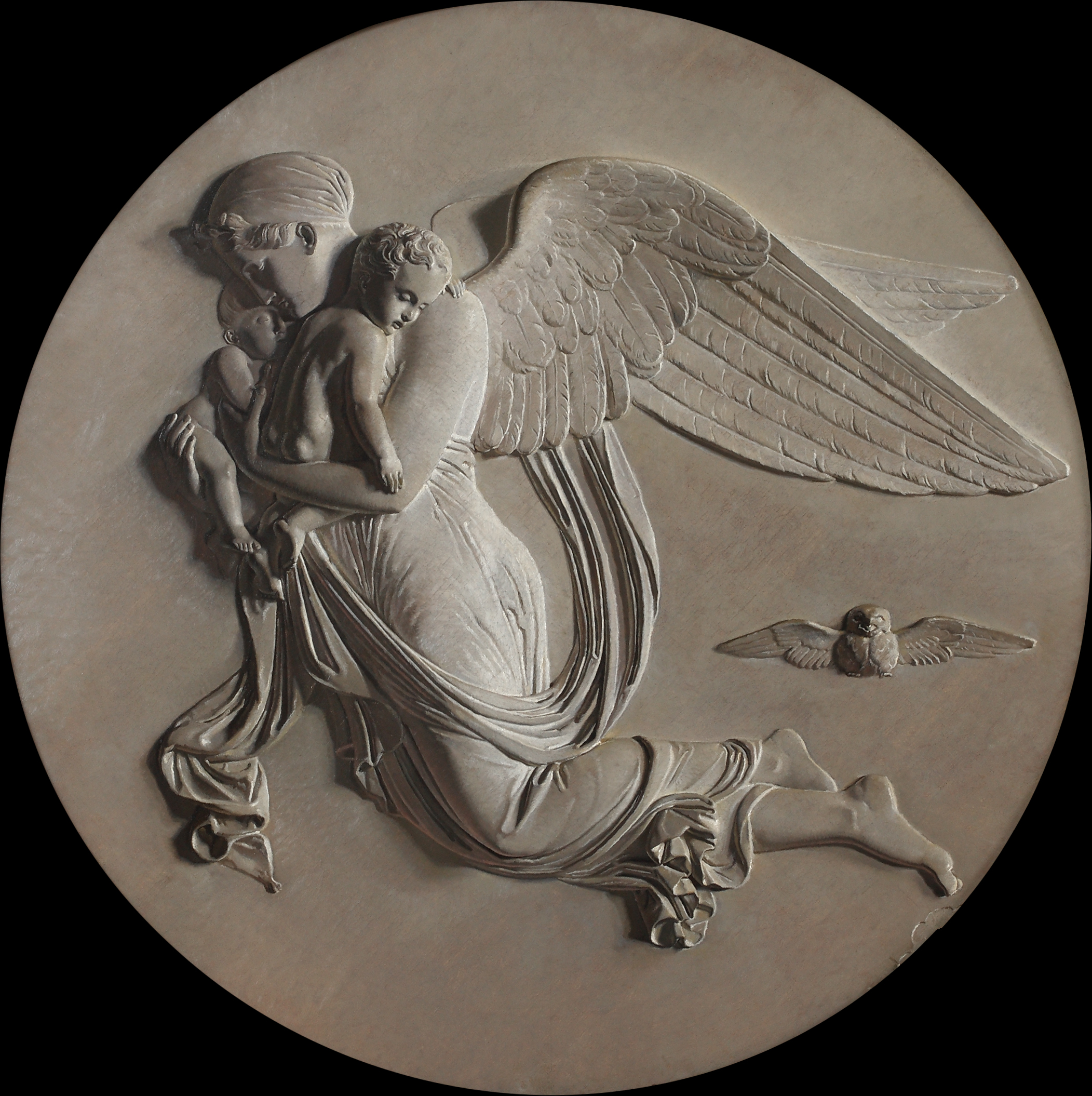
Here is one of the two paintings, Night, showing the goddess Nyx flying across the sky with closed eyes, cradling her two sleeping children in her arms. Her hair wreath is braided with poppies, one of her attributes and a symbol of sleep and death. Another of Nyx’s attributes is the owl seen from the front under her wings. The owl is a nocturnal bird, and here it is a symbol of silence.
When Thorvaldsen created his reliefs in 1815, they soon became popular as decorative embellishments in interiors as well as exteriors, for example inside gateways. Købke executed his two paintings for a similar purpose: alongside two landscapes (20/1969) (31/2014), they would decorate his parents’ dining room in their home in Blegdammen in Copenhagen.2
Købke’s painting Day, the counterpart to Night, can also be seen in The David Collection (B 358).
According to Eckersberg, Thorvaldsen had long pondered how to treat a particular subject rooted in ancient mythology; a symbolic depiction of Night (Nyx) and her two children, the twins Sleep (Hypnos) and Death (Thanatos). However, he struggled to clarify his ideas. One night, however, the motif suddenly sprang into his head, and he immediately got out of bed and quickly modelled the relief. When Eckersberg came by his room in the morning the following day, the relief was almost finished, and a plasterer was sent for. Before he arrived, Thorvaldsen had also executed the relief's counterpart, Day.1 Some twenty years after the creation of the two reliefs, Christen Købke copied them – not in plaster, however, but as grisaille paintings.
Here is one of the two paintings, Night, showing the goddess Nyx flying across the sky with closed eyes, cradling her two sleeping children in her arms. Her hair wreath is braided with poppies, one of her attributes and a symbol of sleep and death. Another of Nyx’s attributes is the owl seen from the front under her wings. The owl is a nocturnal bird, and here it is a symbol of silence.
When Thorvaldsen created his reliefs in 1815, they soon became popular as decorative embellishments in interiors as well as exteriors, for example inside gateways. Købke executed his two paintings for a similar purpose: alongside two landscapes (20/1969) (31/2014), they would decorate his parents’ dining room in their home in Blegdammen in Copenhagen.2
Købke’s painting Day, the counterpart to Night, can also be seen in The David Collection (B 358).
Published in
Published in
Emil Hannover: Maleren Christen Købke: En Studie i dansk Kunsthistorie, København 1893, cat. 76, p. 140 (the note).
Fortegnelse over Christen Købkes Malerier: Kunstforeningen Marts-April 1912, København 1912, cat. 88;
Karl Madsen: "Christen Købke og hans Billeder paa Galleriet", i Kunstmuseets Aarsskrift, 1, 1914, p. 39;
Mario Krohn: Maleren Christen Købkes Arbejder, København 1915, no. 90;
Jørn Rubow: ”Christen Købke” i Danmark, year 1, 1940-41, p. 243;
Dansk Kunsthåndværk gennem 400 Aar. Kunstindustrimuseets Jubilæumsudstilling Maj-Juni 1946 , København 1946, cat. 151, p. 54;
Erik Zahle: ”Billedkunst” in C.L. Davids Samling. Nogle Studier, [1], København 1948, pp. 203-205, 238-239;
Christen Købke: udstilling 31. januar – 28. februar 1953, Kunstforeningen, København 1953, cat. 54;
Erik Zahle (ed.): Danmarks Malerkunst. Fra middelalder til nutid, 4. ed. København 1956, p. 141;
C.L. David: C.L. Davids Samling: Kronprinsessegade 30, København 1960, p. 9;
Dansk guldålder: Målningar, teckningar, skulpturer, Nationalmuseum, Stockholm 1964, cat. 171. p. 47 and planche 11;
Vagn Poulsen: ”Guldalderbilleder” in C.L. Davids Samling. Fjerde del, Jubilæumsskrift 1945-1970, København 1970, p. 24;
Vagn Poulsen, Erik Lassen and Jan Danielsen (eds.): Dansk kunsthistorie: billedkunst og skulptur. Vol. 3, Akademiet og guldalderen, 1750-1850, København 1972, p. 343;
Dansk kunst og kunsthåndværk, Davids Samling, København 1972, p. 11;
Kasper Monrad and Erik Fischer: Købke på Blegdammen og ved Sortedamssøen, Statens Museum for Kunst, København 1981, p. 21 and cat. 72, p. 37;
Hans Edvard Nørregaard-Nielsen: Dansk kunst. Vol. 1. København 1983, p. 200;
Verner Jul Andersen: Dansk kunst og kunsthåndværk, Davids Samling, 2. ed., København 1983, cat. 423;
Kasper Monrad in L’âge d’or de la peinture danoise 1800-1850, Grand Palais, Paris 1984, pp. 219-220 ;
Kasper Monrad: Hverdagsbilleder: dansk guldalder – kunstnerne og deres vilkår, København 1989, pp. 36 and 235;
Sanford Schwartz: Christen Købke, New York 1992, pp. 40-42 and pl. 41;
Hans Edvard Nørregård-Nielsen: The golden age of Danish art: drawings from the Royal Museum of Fine Arts, Copenhagen, The Frick Collection, New York, The Frick Art Museum, Pittsburgh og Crocker Art Museum, Sacramento, Alexandria 1996, p. 66;
Hans Edvard Nørregård-Nielsen and Kasper Monrad (eds.): Christen Købke, 1810-1848, Statens Museum for Kunst, København 1996, pp. 71, 204, fig. 129, p. 200 and cat. 90;
Ejner Johansson: ”At tegne gips efter Thorvaldsen”, Meddelelser fra Thorvaldsens Museum, 2001, pp. 145-146, fig. 5;
David Jackson og Kasper Monrad: Christen Købke: Danish master of light, National Gallery, London og National Gallery Complex, Edinburgh 2010, pp. 77-79, fig. 55;
Cecilie Høgsbro Østergaard (ed.): Dansk Guldalder: verdenskunst mellem to katastrofer, Statens Museum for Kunst, København 2019, fig. 68, pp. 89, 322;
Fortegnelse over Christen Købkes Malerier: Kunstforeningen Marts-April 1912, København 1912, cat. 88;
Karl Madsen: "Christen Købke og hans Billeder paa Galleriet", i Kunstmuseets Aarsskrift, 1, 1914, p. 39;
Mario Krohn: Maleren Christen Købkes Arbejder, København 1915, no. 90;
Jørn Rubow: ”Christen Købke” i Danmark, year 1, 1940-41, p. 243;
Dansk Kunsthåndværk gennem 400 Aar. Kunstindustrimuseets Jubilæumsudstilling Maj-Juni 1946 , København 1946, cat. 151, p. 54;
Erik Zahle: ”Billedkunst” in C.L. Davids Samling. Nogle Studier, [1], København 1948, pp. 203-205, 238-239;
Christen Købke: udstilling 31. januar – 28. februar 1953, Kunstforeningen, København 1953, cat. 54;
Erik Zahle (ed.): Danmarks Malerkunst. Fra middelalder til nutid, 4. ed. København 1956, p. 141;
C.L. David: C.L. Davids Samling: Kronprinsessegade 30, København 1960, p. 9;
Dansk guldålder: Målningar, teckningar, skulpturer, Nationalmuseum, Stockholm 1964, cat. 171. p. 47 and planche 11;
Vagn Poulsen: ”Guldalderbilleder” in C.L. Davids Samling. Fjerde del, Jubilæumsskrift 1945-1970, København 1970, p. 24;
Vagn Poulsen, Erik Lassen and Jan Danielsen (eds.): Dansk kunsthistorie: billedkunst og skulptur. Vol. 3, Akademiet og guldalderen, 1750-1850, København 1972, p. 343;
Dansk kunst og kunsthåndværk, Davids Samling, København 1972, p. 11;
Kasper Monrad and Erik Fischer: Købke på Blegdammen og ved Sortedamssøen, Statens Museum for Kunst, København 1981, p. 21 and cat. 72, p. 37;
Hans Edvard Nørregaard-Nielsen: Dansk kunst. Vol. 1. København 1983, p. 200;
Verner Jul Andersen: Dansk kunst og kunsthåndværk, Davids Samling, 2. ed., København 1983, cat. 423;
Kasper Monrad in L’âge d’or de la peinture danoise 1800-1850, Grand Palais, Paris 1984, pp. 219-220 ;
Kasper Monrad: Hverdagsbilleder: dansk guldalder – kunstnerne og deres vilkår, København 1989, pp. 36 and 235;
Sanford Schwartz: Christen Købke, New York 1992, pp. 40-42 and pl. 41;
Hans Edvard Nørregård-Nielsen: The golden age of Danish art: drawings from the Royal Museum of Fine Arts, Copenhagen, The Frick Collection, New York, The Frick Art Museum, Pittsburgh og Crocker Art Museum, Sacramento, Alexandria 1996, p. 66;
Hans Edvard Nørregård-Nielsen and Kasper Monrad (eds.): Christen Købke, 1810-1848, Statens Museum for Kunst, København 1996, pp. 71, 204, fig. 129, p. 200 and cat. 90;
Ejner Johansson: ”At tegne gips efter Thorvaldsen”, Meddelelser fra Thorvaldsens Museum, 2001, pp. 145-146, fig. 5;
David Jackson og Kasper Monrad: Christen Købke: Danish master of light, National Gallery, London og National Gallery Complex, Edinburgh 2010, pp. 77-79, fig. 55;
Cecilie Høgsbro Østergaard (ed.): Dansk Guldalder: verdenskunst mellem to katastrofer, Statens Museum for Kunst, København 2019, fig. 68, pp. 89, 322;
Footnotes
Footnotes
1.
For more information about the Købke family’s home in Blegdammen, see Hans Edvard Nørgaard-Nielsen and Kasper Monrad (ed.): Christen Købke 1810–1848, Statens Museum for Kunst, Copenhagen 1996, pp. 200–206.
2.
Kasper Monrad: Hverdagsbilleder. Dansk Guldalder – kunstnerne og deres vilkår, Copenhagen 1989, p. 36.