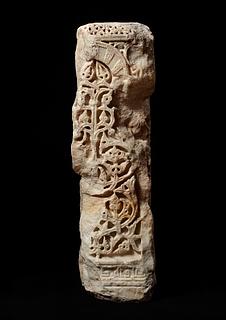
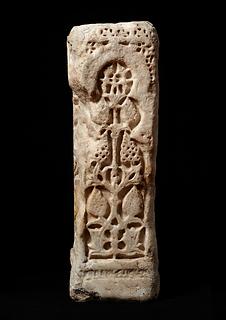
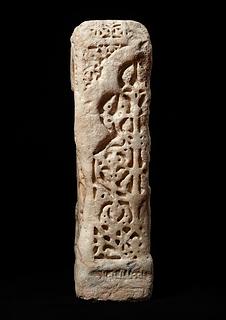
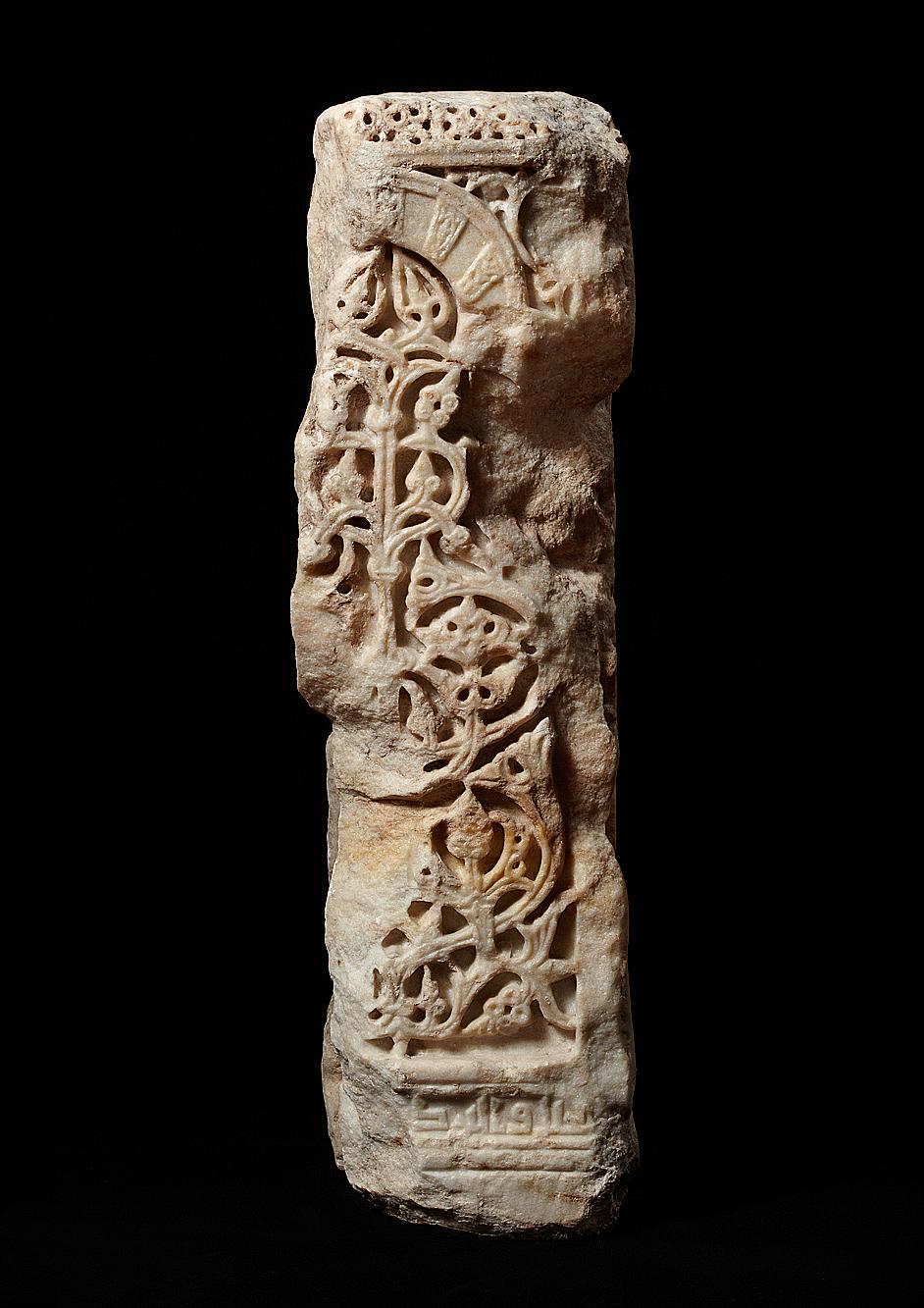
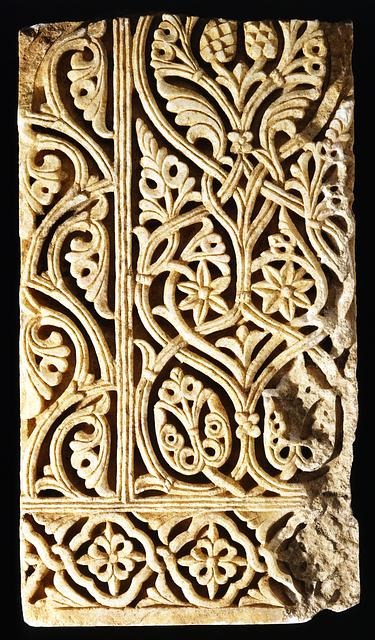
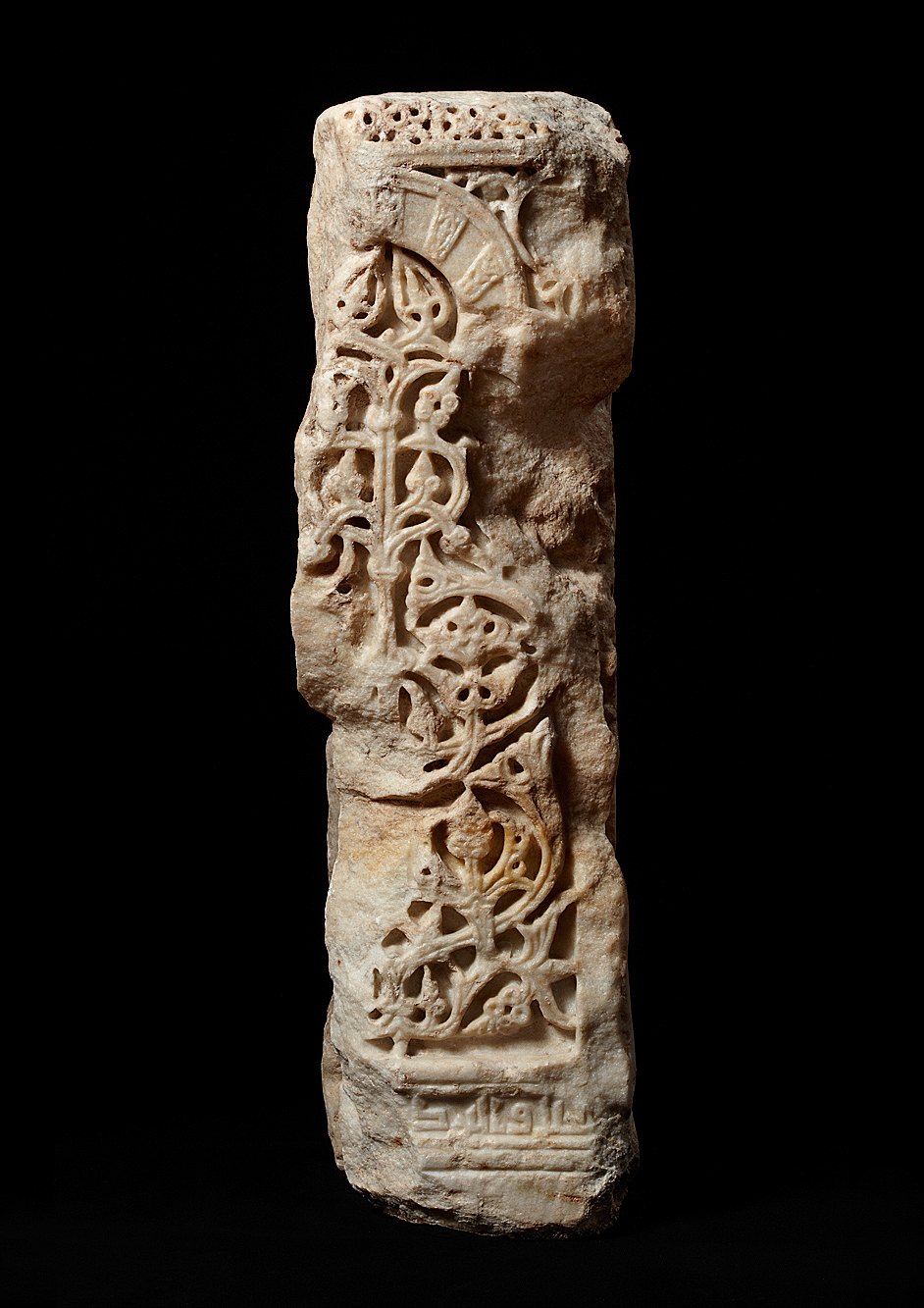
Marble architectural element with carved decoration and inscriptions on three sides
Spain, Cordoba; 3rd quarter of 10th century
H: 75 cm
Inventory number 25/2009
“Jafar al-hajib” is part of the inscription on the bottom of this pilaster-like architectural element. Jafar was the hajib, or vizier, of the Umayyad caliph al-Hakam II (961-976) and resided in an area in the palace in Madinat al-Zahra adjacent to the caliph’s quarters.
The decoration is typical of the finest part of this palace city. The front features an entire “tree of life,” while each of the two sides shows half a tree, but more richly conceived. All three are placed in trefoil arches typical of the period.
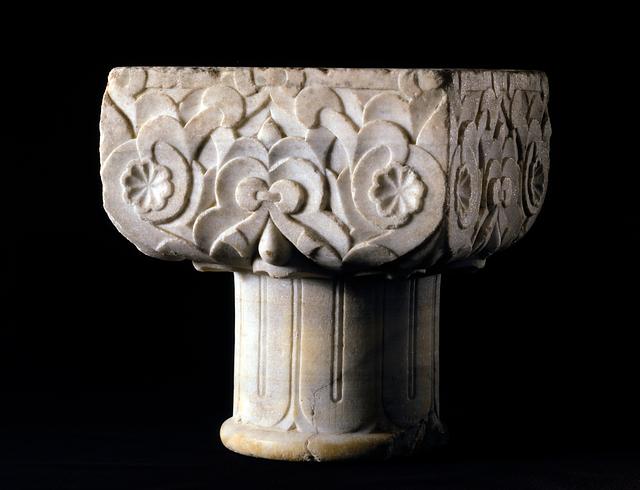
Exquisite architectural elements from Madinat al-Zahra were already being reused throughout Spain shortly after the year 1000. According to undocumented information, this one, which might have come from a doorframe, later served as a plinth for a baptismal font.
The decoration is typical of the finest part of this palace city. The front features an entire “tree of life,” while each of the two sides shows half a tree, but more richly conceived. All three are placed in trefoil arches typical of the period.
Exquisite architectural elements from Madinat al-Zahra were already being reused throughout Spain shortly after the year 1000. According to undocumented information, this one, which might have come from a doorframe, later served as a plinth for a baptismal font.
Published in
Published in
Mariam Rosser-Owen: Articulating the hijâba: cultural patronage and political legitimacy in al-Andalus: the ʿÂmirid regency c. 970-1010 AD, Leiden 2022, figs. 104-107, pp. 256-257;