Miniature. ’A Mounted Prince Hunting with a Falcon’
India, Deccan, Aurangabad?; c. 1700
The leaf: 29.9 x 19.8 cm
Inventory number 13/2015
In 1687–88, the Mughal emperor Aurangzeb conquered the last two Deccan sultanates, Golconda and Bijapur, and set up his new city of Aurangabad as the centre of power in the region. Many painters from the defeated sultanates now flocked there and came to work side by side with colleagues trained at the Mughal court in Delhi. The result was a new style that combined the exoticism and intense colours of Deccan painting with the sober naturalism of the Mughals.
This sumptuous painting exemplifies the fusion of the two traditions. The depiction of a princely rider surrounded by servants is clearly inspired by the formal portraits of rulers found in Mughal art, but the rich and contrasting palette seen in the lavish textiles reveals the influence of the Deccan tradition. The ceremonial sombreness that often infuses Mughal paintings is further disrupted here by the orange-clad page’s surprising eye contact with the viewer.
Furthermore, there is an exotic quality to the landscape through which the procession steadily glides. The foreground is dotted with brightly coloured flowers, while the strange rock formations in the middle ground contain several ‘hidden’ images of animals, including a lion and an ox spewing water to the far right. In the distant background behind a diminutive city marches an army with fluttering flags, standards, trumpets and timpani, a vision almost reminiscent of a mirage. The army, flanked by two angels, is undoubtedly the prince’s main force, which he has temporarily left with his hunting party.
Recent research suggests that the rider represents Muhammad Bidar Bakht (1670–1707), who was the Mughal governor in Aurangabad around 1700. Furthermore, the artist behind the portrait has been identified as Afzan Ali Khan, a Mughal painter affiliated with the court in Aurangabad, who painted several portraits of Muhammad Bidar Bakht up through the 1680s.1
Muhammad Bidar Bakht was the son of Prince Azam Shah (4/1980), who in turn was son of the Mughal emperor Aurangzeb and heir to the throne. Bidar Bakht and his father were both killed during the succession dispute following Aurangzeb’s death in 1707, and power then passed to Azam Shah’s half-brother Bahadur Shah (12/2015).
This sumptuous painting exemplifies the fusion of the two traditions. The depiction of a princely rider surrounded by servants is clearly inspired by the formal portraits of rulers found in Mughal art, but the rich and contrasting palette seen in the lavish textiles reveals the influence of the Deccan tradition. The ceremonial sombreness that often infuses Mughal paintings is further disrupted here by the orange-clad page’s surprising eye contact with the viewer.
Furthermore, there is an exotic quality to the landscape through which the procession steadily glides. The foreground is dotted with brightly coloured flowers, while the strange rock formations in the middle ground contain several ‘hidden’ images of animals, including a lion and an ox spewing water to the far right. In the distant background behind a diminutive city marches an army with fluttering flags, standards, trumpets and timpani, a vision almost reminiscent of a mirage. The army, flanked by two angels, is undoubtedly the prince’s main force, which he has temporarily left with his hunting party.
Recent research suggests that the rider represents Muhammad Bidar Bakht (1670–1707), who was the Mughal governor in Aurangabad around 1700. Furthermore, the artist behind the portrait has been identified as Afzan Ali Khan, a Mughal painter affiliated with the court in Aurangabad, who painted several portraits of Muhammad Bidar Bakht up through the 1680s.1
Muhammad Bidar Bakht was the son of Prince Azam Shah (4/1980), who in turn was son of the Mughal emperor Aurangzeb and heir to the throne. Bidar Bakht and his father were both killed during the succession dispute following Aurangzeb’s death in 1707, and power then passed to Azam Shah’s half-brother Bahadur Shah (12/2015).
Published in
Published in
George Michell, Catherine Lampert and Tristram Holland (eds.): In the image of man: the Indian perception of the Universe through 2000 years of painting and sculpture, Hayward Gallery, London 1982, pp. 78 and 155, cat.no. 214;
Mark Zebrowski: Deccani painting, London 1983, pp. 212-214, fig. 183, p. 229, tav. xxi;
Mark Zebrowski: “Painting” in George Michell (ed.): Islamic heritage of the Deccan, Bombay 1986, p. 106, pl. 16;
George Michell and Mark Zebrowski: Architecture and art of the Deccan Sultanates, Cambridge 1999, pp. 213-216, pl. 9;
Sotheby’s, London, 6/10-2015, lot 46;
Salam Kaoukji: Precious Indian weapons and other princely accoutrements, London 2017, p. 477;
Prahlad Bubbar (ed.): Immaculate conception: desire and the creative impulse 300BC-1930, 5th October - 22th November 2017, Prahlad Bubbar, London 2017, p. 50;
Kjeld von Folsach, Joachim Meyer: The Human Figure in Islamic Art – Holy Men, Princes, and Commoners, The David Collection, Copenhagen 2017, cat.no. 46;
John Seyller, Jagdish Mittal: Deccani paintings, drawings, and manuscripts in the Jagdish and Kamla Mittal Museum of Indian Art, Hyderabad 2018, fig. 18, pp. 163-164;
Kjeld von Folsach, Joachim Meyer and Peter Wandel: Fighting, Hunting, Impressing. Arms and Armour from the Islamic World 1500-1850, The David Collection, Copenhagen 2021, cat.no. 138;
Mark Zebrowski: Deccani painting, London 1983, pp. 212-214, fig. 183, p. 229, tav. xxi;
Mark Zebrowski: “Painting” in George Michell (ed.): Islamic heritage of the Deccan, Bombay 1986, p. 106, pl. 16;
George Michell and Mark Zebrowski: Architecture and art of the Deccan Sultanates, Cambridge 1999, pp. 213-216, pl. 9;
Sotheby’s, London, 6/10-2015, lot 46;
Salam Kaoukji: Precious Indian weapons and other princely accoutrements, London 2017, p. 477;
Prahlad Bubbar (ed.): Immaculate conception: desire and the creative impulse 300BC-1930, 5th October - 22th November 2017, Prahlad Bubbar, London 2017, p. 50;
Kjeld von Folsach, Joachim Meyer: The Human Figure in Islamic Art – Holy Men, Princes, and Commoners, The David Collection, Copenhagen 2017, cat.no. 46;
John Seyller, Jagdish Mittal: Deccani paintings, drawings, and manuscripts in the Jagdish and Kamla Mittal Museum of Indian Art, Hyderabad 2018, fig. 18, pp. 163-164;
Kjeld von Folsach, Joachim Meyer and Peter Wandel: Fighting, Hunting, Impressing. Arms and Armour from the Islamic World 1500-1850, The David Collection, Copenhagen 2021, cat.no. 138;
Footnotes
Footnotes
1.
John Seyller and Jagdish Mittal: Deccani Paintings, Drawings and Manuscripts in the Jagdish and Kamla Mittal Museum of Indian Art, Hydarabad 2018, cat. 40, pp. 161–165.


The Indian Sultanates
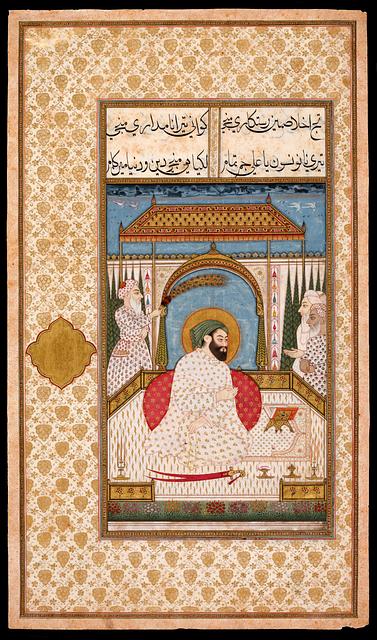
Miniature from Nusrati’s Gulshan-i Ishq. ‘Sultan Ali Adil Shah II of Bijapur’
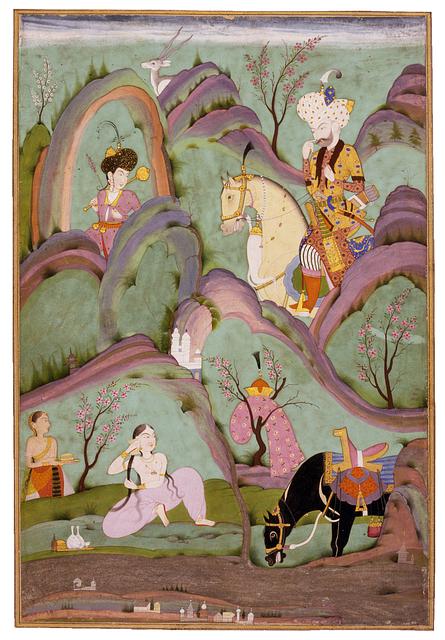
Miniature. ‘Khusraw Beholding Shirin Bathing’
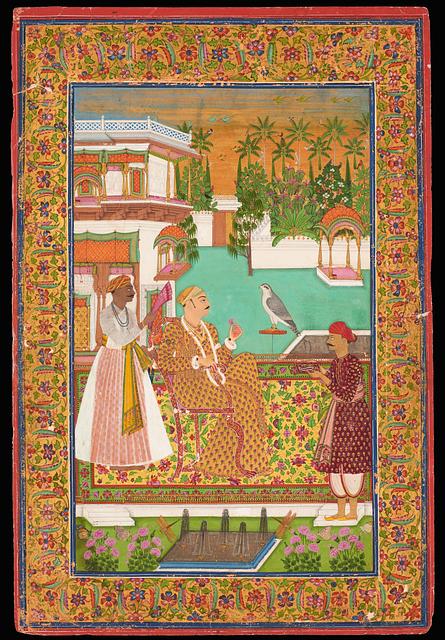
Miniature pasted on an album leaf. ‘Ma’ali Mian Saif al-Mulk Being Shown Some Jewels.’ Attributed to Venkatchellam
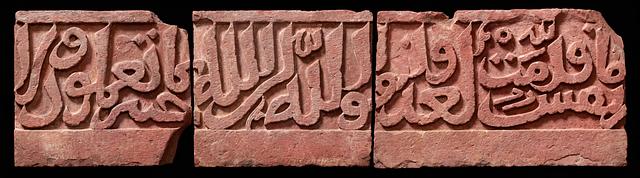
Three fragments of a frieze, red sandstone carved with an inscription in Naskh