The Artuqid Rulers of Mardin, 502-812 H/1108-1409 AD
Legend & Design
Legend & Design
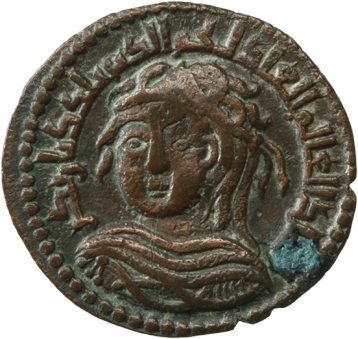
Obverse
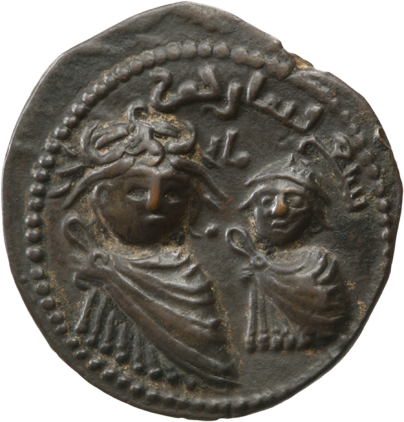
Diademed, long-haired male head to right
with title najm al-din “Star of the Faith” on the figure’s neck
Reverse
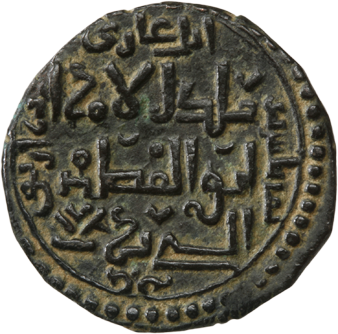
Field
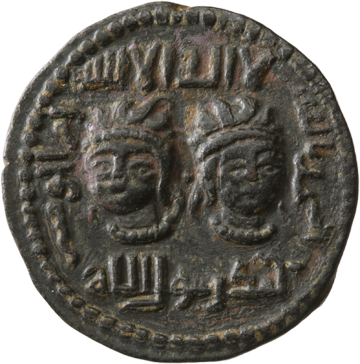
malik al-umara / abu’l-muzaffar / alpi ibn, at 3:00: timurtash ibn, at 12:00 il-ghazi, at 9:00: ibn artuq
“King of the Princes, Father of Victory, Alpi ibn Timurtash ibn Il-Ghazi ibn Artuq
Historical Note
Historical Note
The founder of the Artuqid branch in Mardin was the second son of the Amir Artuq, Najm al-Din Il- Ghazi, who fled Jerusalem in 489 H (1096 AD) with his brother Mu‘in al-Din Sukman I. He served under the Great Saljuqs, and by 502 (1108-1109) came into possession of the important city of Mardin. When the governor of Aleppo died he received that city as well, but handed it over to his son Husam al-Din Timurtash.
The Saljuq ruler of Iraq, Abu’l-Qasim Mahmud, then awarded Il-Ghazi the city of Mayyafariqin in the Jazira, which the Artuqids of Mardin held until it was lost to the Ayyubids in 580 (1184-1185). On Il-Ghazi’s death in 516 (1122) his kingdom was divided among three heirs, with Timurtash retaining Mardin. He was succeeded by his only son Najm al-Din Alpi in 547 (1152), and the Artuqid kingdom of Mardin became the largest and most enduring, lasting until 812 (1409), when it was seized by Timur (Tamerlane) and later controlled by the Qara Qoyunlu (“Black Sheep”) Turkmen.
At the beginning of his reign Alpi retained the well known obverse used by Timurtash, but added a one-line legend bearing his laqab, Najm al-Din, usually, as with this piece, on the neck of the bust.
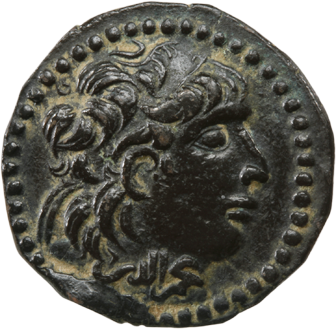
The reverse bore the titles, names and pedigree of Alpi through four generations. The inspiration for the male head facing right appears to have come from a Seleucid coin of King Antiochus VII Sidetes (138-129 BC). Whether or not the choice of this head has any hidden meaning is not known.