The Artuqid Rulers of Khartpert, (581-631 H/1185-1234 AD)
Legend & Design
Legend & Design
Obverse
Field
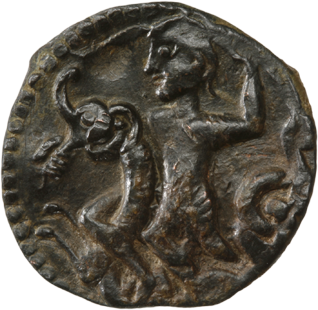
A male figure straddling a dragon to left; the figure’s right arm is wrapped around the dragon’s throat and the left arm holds the dragon’s tail with his right leg around its chest; the dragon’s mouth is wide open and its tail is knotted and coiled upwards within the right margin (partly off flan in this specimen)
Reverse
Field
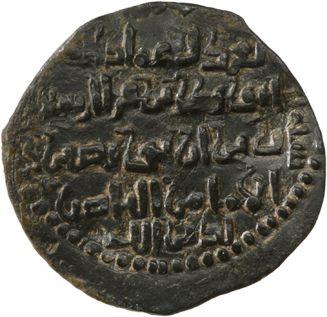
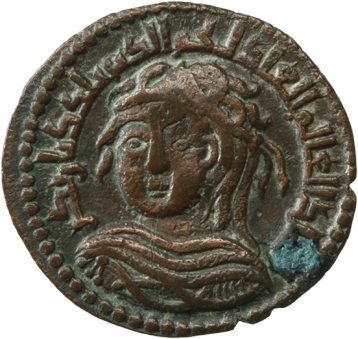
(malik al-umara’ muhiyy) al-‘adl ‘imad al-din / abu bakr ibn qara arsla / n ibn artuq nasir / al-imam al-nasir li-din allah
“(King of the Princes, Reviver of Equity), Pillar of the Faith Abu Bakr ibn Qara Arslan ibn Artuq, Defender of the Imam, Nasir li-Din Allah”
to right upwards: ithnatayn (wa thamanin) and to left downwards: (wa khamsmi’a)
“two (and eight and five hundred)"
Historical Note
Historical Note
When Nur al-din Muhammad ibn Qara Arslan, ruler of Hisnkayfa and Amid, died in 581 H (1185 AD), his lands were divided between his son Qutb al-Din Sukman II, who retained Hisn Kayfa, and his uncle ‘Imad al-Din Abu Bakr, who received the fortress city of Khartpert, now known as Harput near Elazig in eastern Turkey.
Abu Bakr, his son Nizam al-din Ibrahim, his grandson Ahmad al-Khizr and his greatgrandson Nur al-Din Artuq Shah held Khartpert for the next fifty years until it fell to the Rum Saljuq ruler ‘Ala al-Din Kaykubadh I in 631 (1234).
Only three issues of coinage, all quite rare, are known from this line, all of which were struck by Abu Bakr. Perhaps such a small state did not see any need to strike its own coins when its requirements were met by the abundant coinages issued by its larger neighbours.
Abu Bakr’s first issue, this piece, is one of the most remarkable of the pictorial coinages of the period, and carries on the astrological motifs often seen on Artuqid coins. It shows Ophiuchus (Serpentarius), a figure that features prominently in Greek mythology, as the “snake holder” of the constellation Serpens which entwines itself around the North Star. Perhaps this figure was chosen because Khartpert was the northernmost territory held by the Artuqids in Anatolia.
The reverse carries Abu Bakr’s regal title malik al-umara, Ruler of Princes, as well as muhiyy al-‘adil (Reviver of Equity) and his laqab, ‘Imad al-Din (Pillar of the Faith). Abu Bakr also shows his support for the Abbasid caliph al-Nasir li-Din Allah as nasir al-imam (Defender of the Imam).