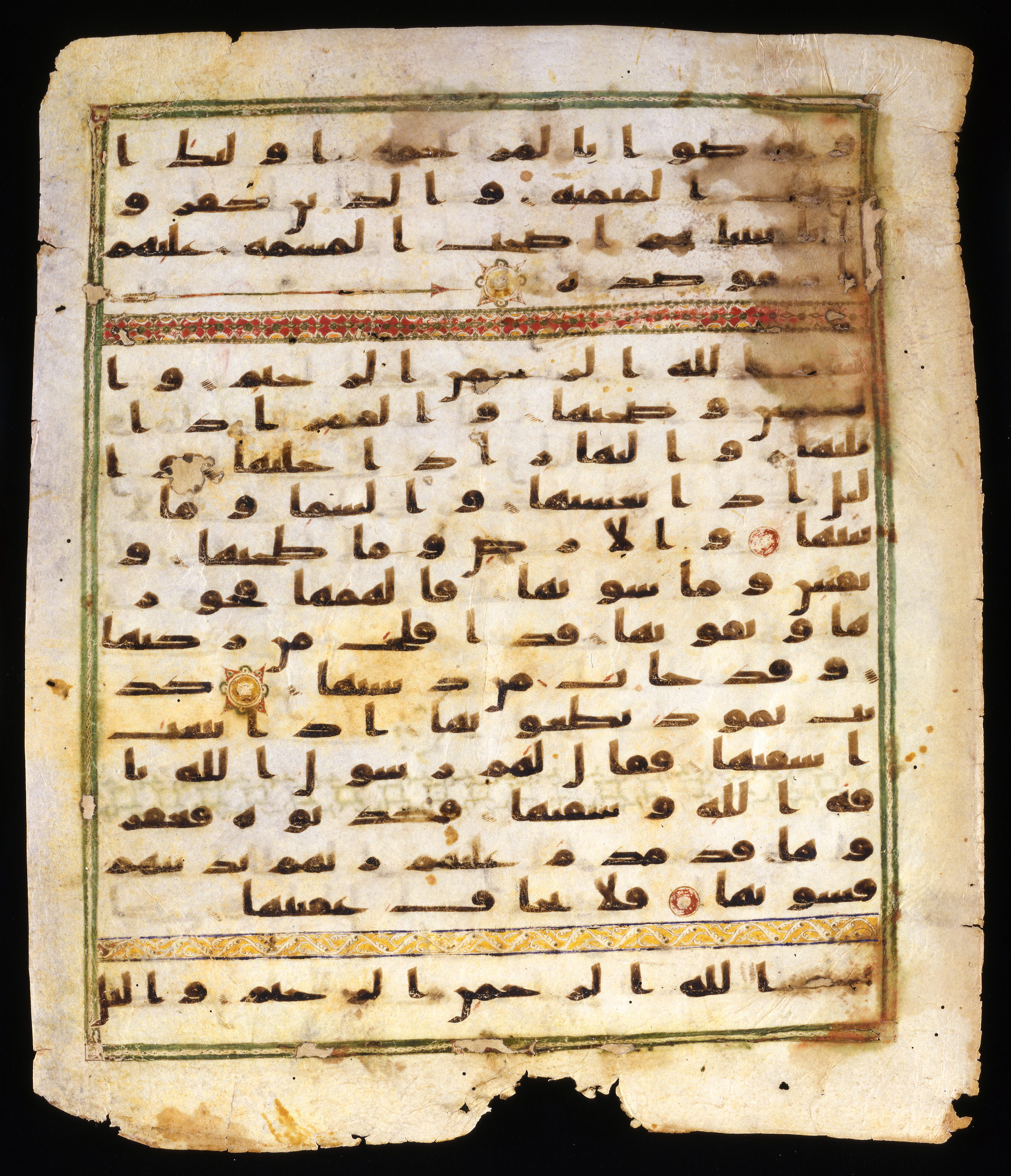
Parchment leaf from a Koran written in early Kufi
Syria; 1st half of 8th century
46.5 × 39.9 cm
Inventory number 26/2003
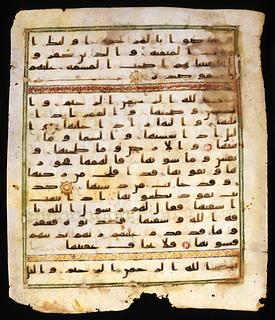
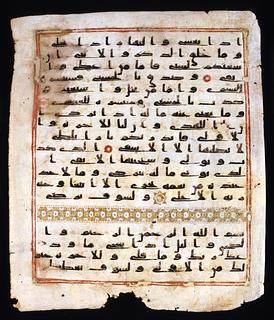
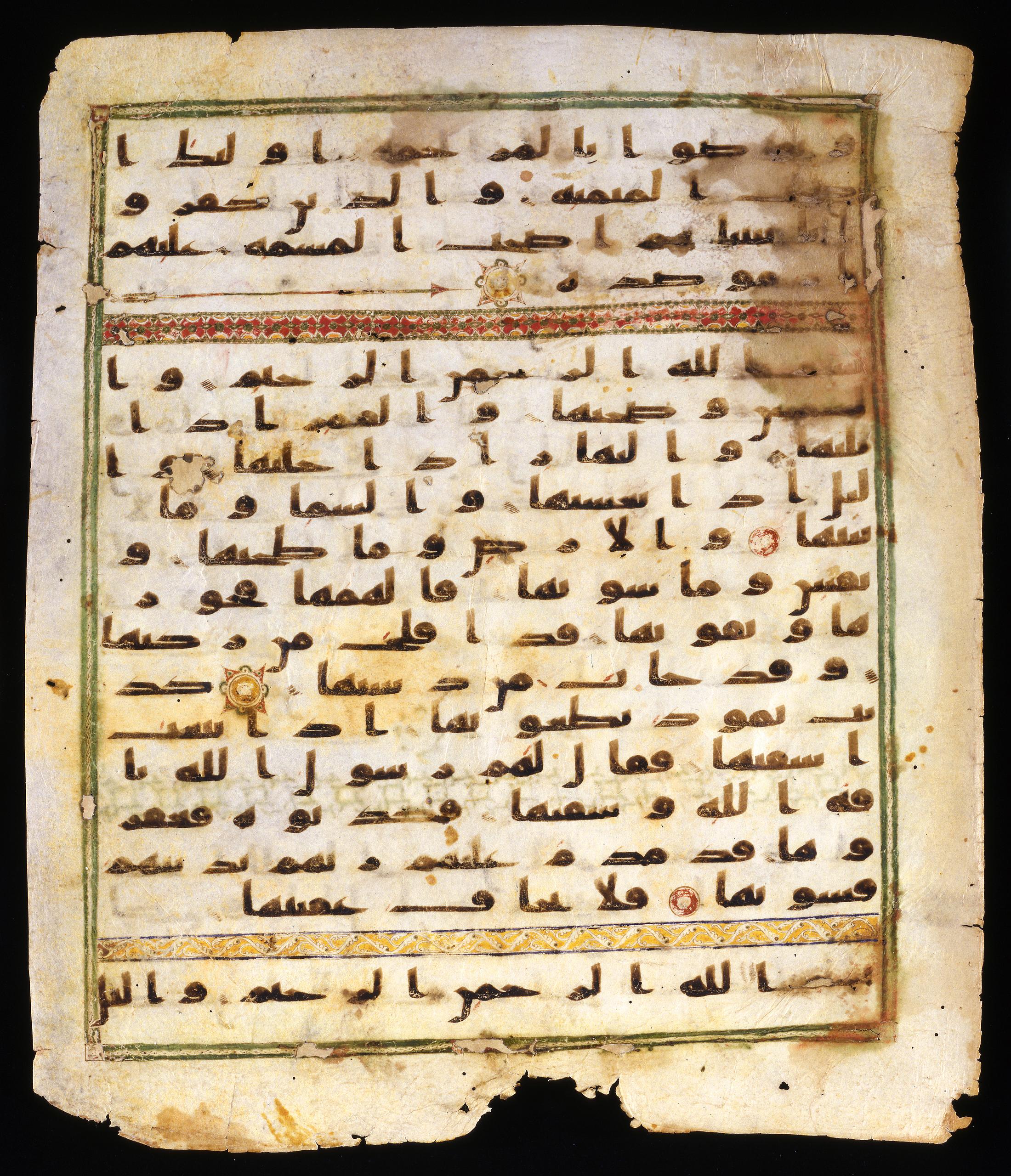
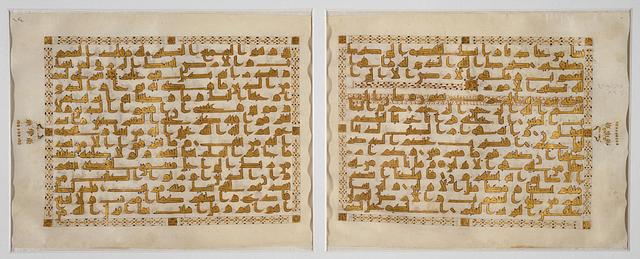
The script on this leaf from an early Koran with a vertical format is a precursor of Kufi calligraphy, which was to be the dominant type used for Korans in the 9th century. Almost none of the diacritical marks are found here that were later commonly used to distinguish among consonants and to denote vowels.
The leaf (both sides) contains the verses from the end of sura 90 to the beginning of sura 93, and the individual chapters are separated by ornamented, colored bars extending from margin to margin. Different kinds of markers were inserted between each fifth and each tenth verse.
The leaf (both sides) contains the verses from the end of sura 90 to the beginning of sura 93, and the individual chapters are separated by ornamented, colored bars extending from margin to margin. Different kinds of markers were inserted between each fifth and each tenth verse.
Published in
Published in
Sheila S. Blair and Jonathan M. Bloom (eds.): Cosmophilia. Islamic Art from the David Collection, Copenhagen, McMullen Museum of Art, Boston College, Boston 2006, cat.no. 33;
Marie Rehakova: Koran: vyvoj umelecke tradice, Plzen 2013, fig. 8, p. 43;
Francois Déroche: Qur'ans of the Umayyads: a first overview, Leiden 2014, fig. 40;
Sheila Blair and Jonathan Bloom (eds.): By the pen and what they write: writing in Islamic art and architecture, New Haven 2017, fig. 15, p. 18;
Manar Hammad: L’instauration de la monnaie épigraphique par les Omeyyades, Paris 2018, fig. 21, p. 21;
Marie Rehakova: Koran: vyvoj umelecke tradice, Plzen 2013, fig. 8, p. 43;
Francois Déroche: Qur'ans of the Umayyads: a first overview, Leiden 2014, fig. 40;
Sheila Blair and Jonathan Bloom (eds.): By the pen and what they write: writing in Islamic art and architecture, New Haven 2017, fig. 15, p. 18;
Manar Hammad: L’instauration de la monnaie épigraphique par les Omeyyades, Paris 2018, fig. 21, p. 21;