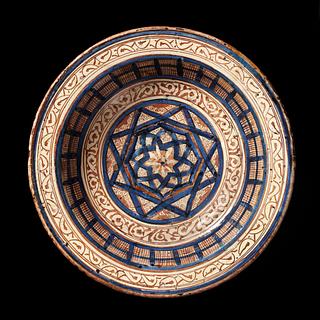
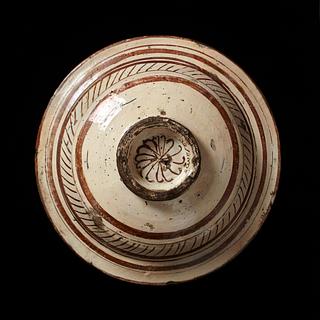
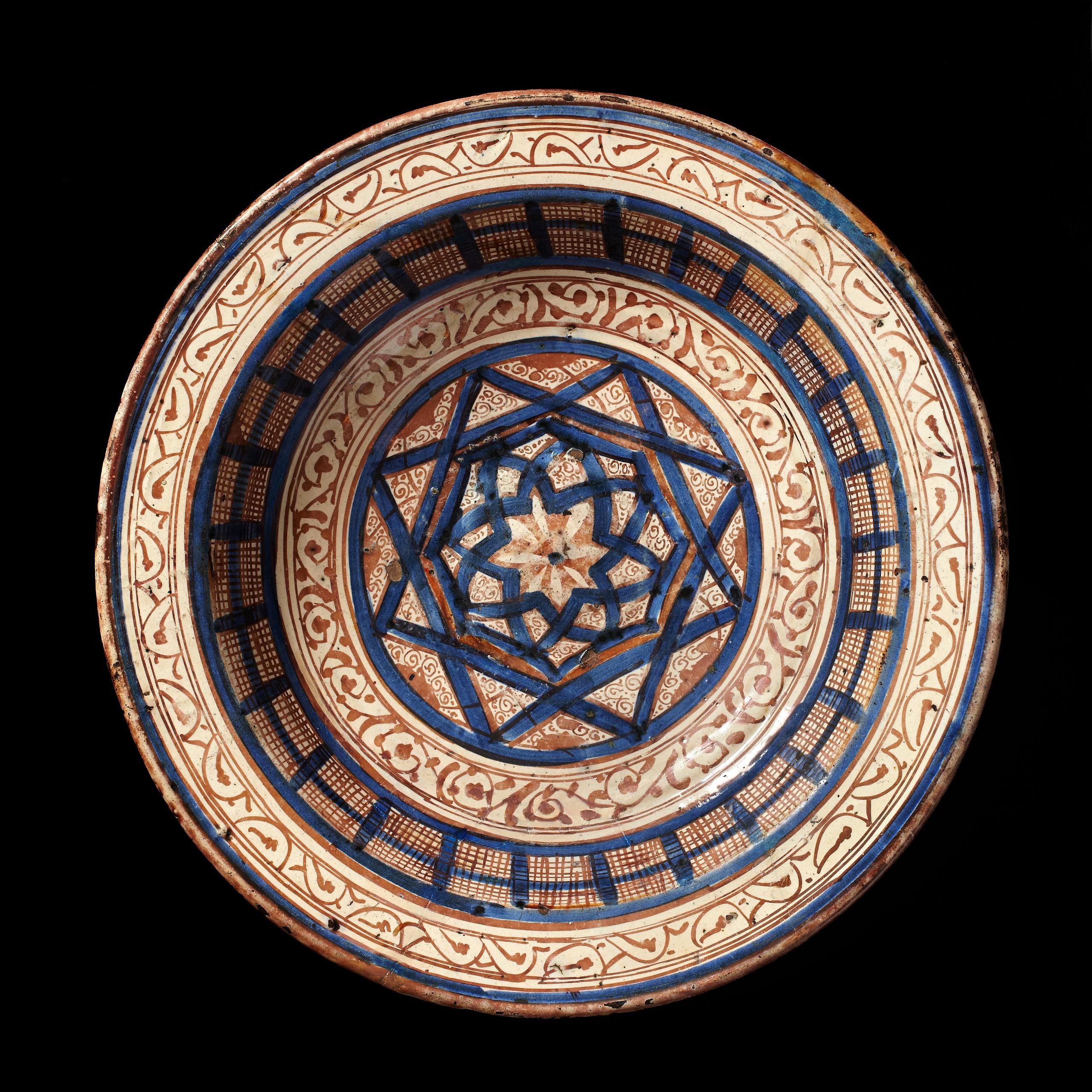
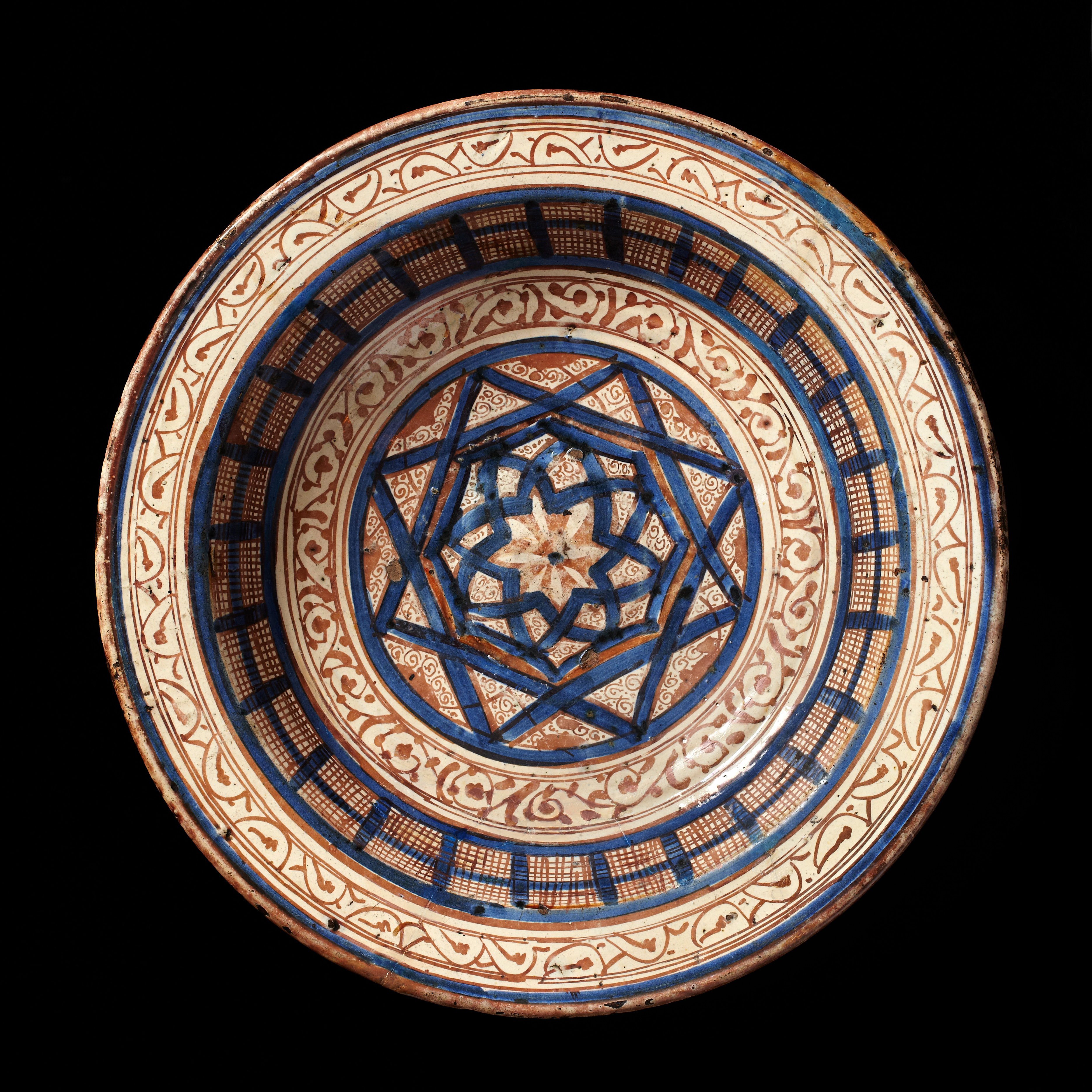
Earthenware dish, painted with lustre over, and in blue in, an opaque, white glaze
Spain, Valencia (Manises); 1st half of 15th century
H: 8; Diam: 35 cm
Bequest of Gørrild and Frits Anker Pedersen
Bequest of Gørrild and Frits Anker Pedersen
Inventory number 32/2005
With its combination of blue and lustre, this dish is a typical early example of the pottery that is customarily termed Manises – the most important ceramics center near Valencia. Large-scale ceramics output was concentrated here after the area came under Christian rule in 1232 and after a local noble family systematized production.
The potters were Muslims or their convert descendants, and they continued to work in the Spanish-Muslim ceramics tradition. They especially made lustreware, and pieces with coats of arms made to order for European nobility became an international success.
The potters were Muslims or their convert descendants, and they continued to work in the Spanish-Muslim ceramics tradition. They especially made lustreware, and pieces with coats of arms made to order for European nobility became an international success.
Ceramics
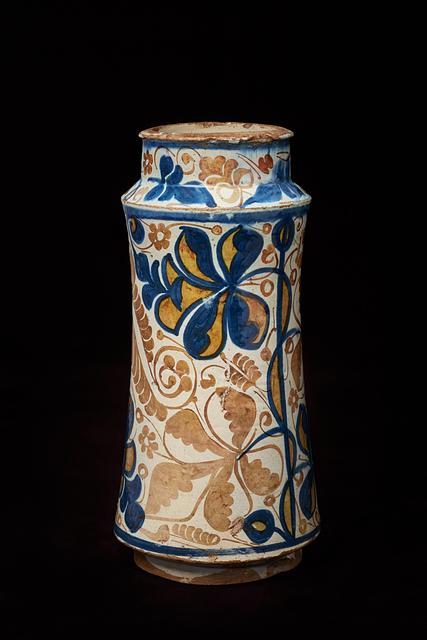
Earthenware albarello, painted in blue in, and with two tones of lustre over, an opaque, white glaze
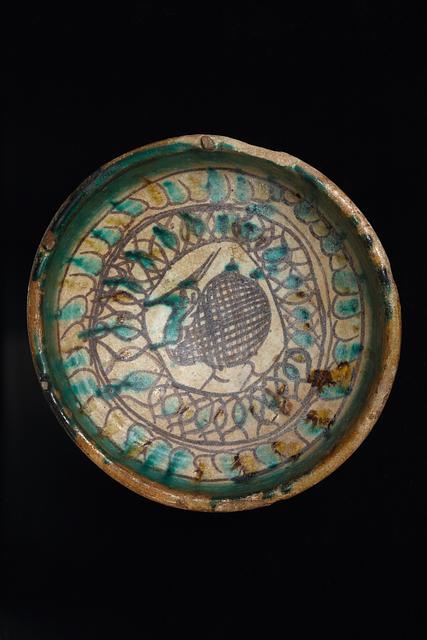
Earthenware bowl, covered with a white slip and painted in manganese, yellow, and green under and in a transparent glaze
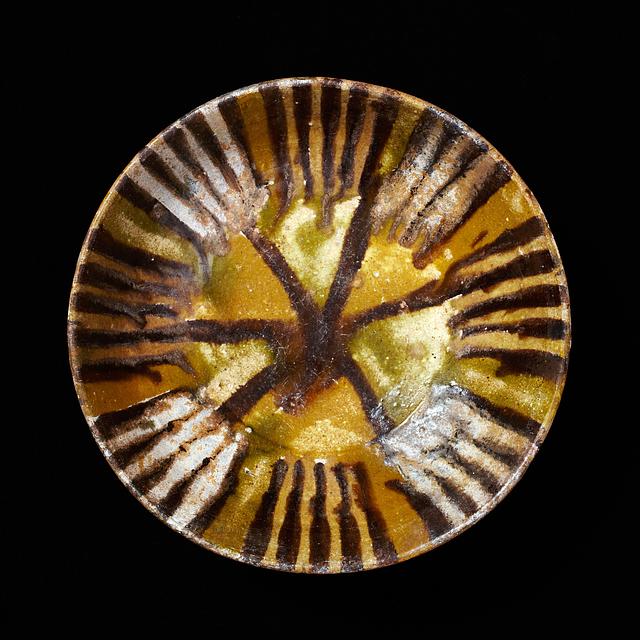
Earthenware bowl, covered with a thin, white slip and painted in yellow, green, and manganese under a transparent glaze. Fayyum type
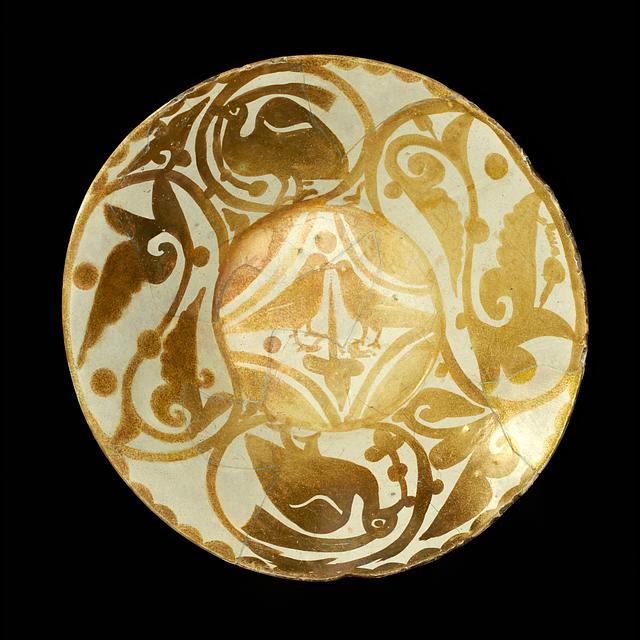
Fragmentary earthenware bowl, painted in lustre over an opaque, white glaze