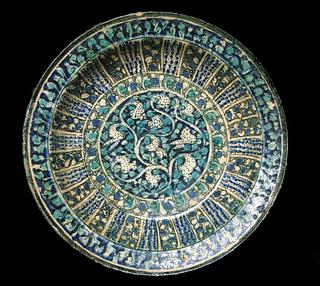
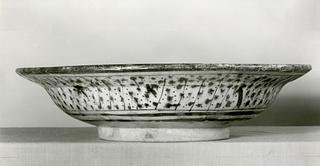
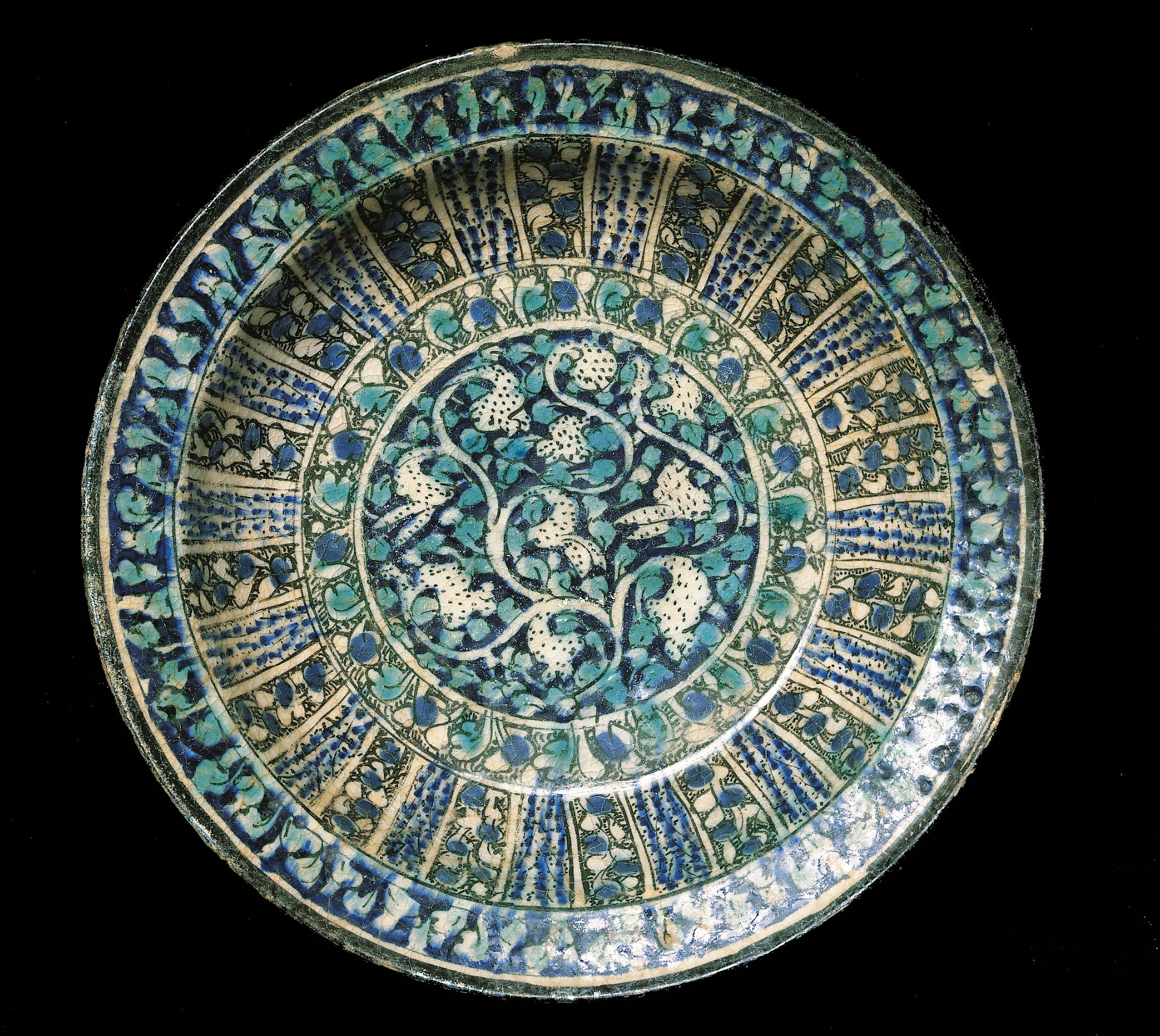
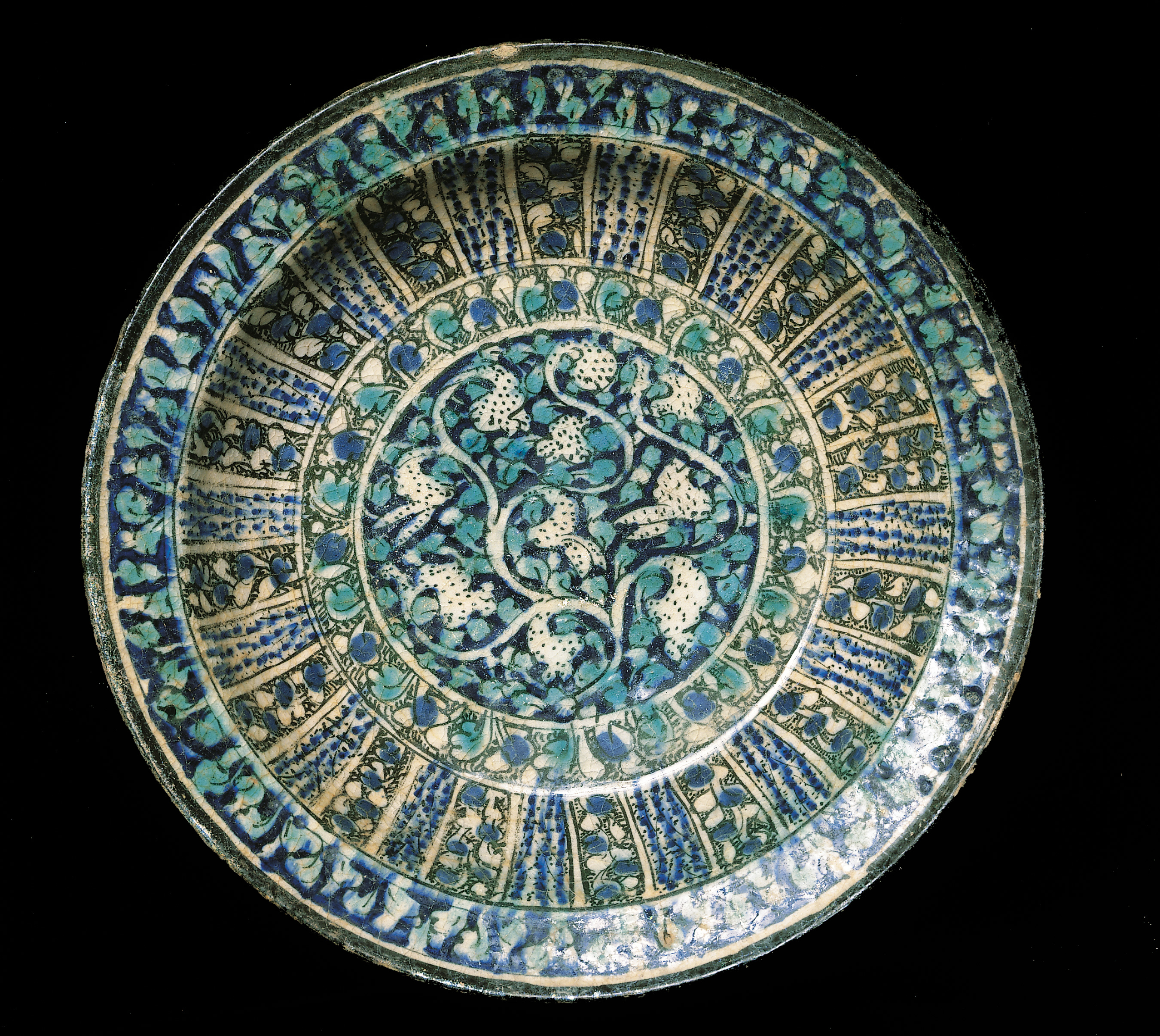
Fritware dish, painted in turquoise, blue, and black under a transparent glaze. Sultanabad type
Iran; beginning of 14th century
H: 8.5 cm; Diam: 34 cm
Inventory number Isl 36
Chinese motifs were very common on Sultanabad ware, which was made under the Il-Khanids. The Islamic tradition, however, is obvious in this large dish. Its central motif is an arabesque-like plant that on closer inspection shows that its tendrils end in the heads of animals, such as hares and leopards.
Zoomorphic and anthropomorphic plants of this kind are not unusual in Islamic culture. The legend of Iskander (the story of Alexander the Great) tells of the talking “Waq-Waq tree” whose ripe fruits, in the form of little humanoids, cry “waq-waq” when they fall to the ground.
Zoomorphic and anthropomorphic plants of this kind are not unusual in Islamic culture. The legend of Iskander (the story of Alexander the Great) tells of the talking “Waq-Waq tree” whose ripe fruits, in the form of little humanoids, cry “waq-waq” when they fall to the ground.
Published in
Published in
Kjeld von Folsach: Islamic art. The David Collection, Copenhagen 1990, cat.no. 152;
Kjeld von Folsach: Fabelvæsner fra Islams Verden, Davids Samling, København 1991, cat.no. 77;
Kjeld von Folsach: Art from the World of Islam in The David Collection, Copenhagen 2001, cat.no. 219;
Kjeld von Folsach: Fabelvæsner fra Islams Verden, Davids Samling, København 1991, cat.no. 77;
Kjeld von Folsach: Art from the World of Islam in The David Collection, Copenhagen 2001, cat.no. 219;
Ceramics
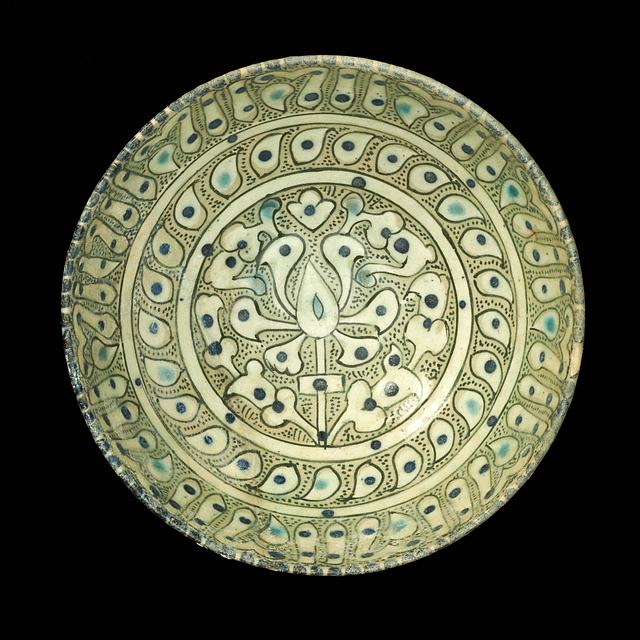
Fritware bowl, painted with a gray and white slip and in black, blue, and turquoise under a transparent glaze
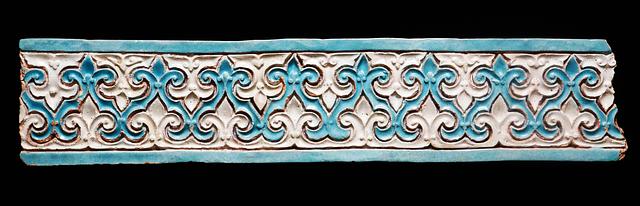
Earthenware frieze, with carved ornamentation painted in white, turquoise, and a manganese glaze
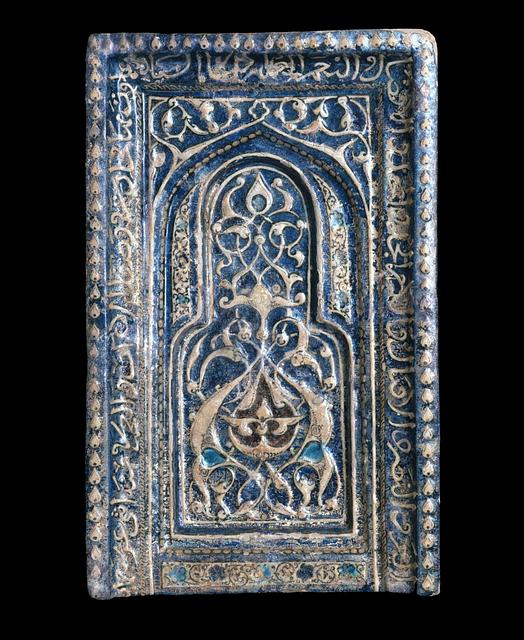
Fritware mihrab tile, molded and painted in a white slip and in blue, black, turquoise, and manganese under a transparent glaze
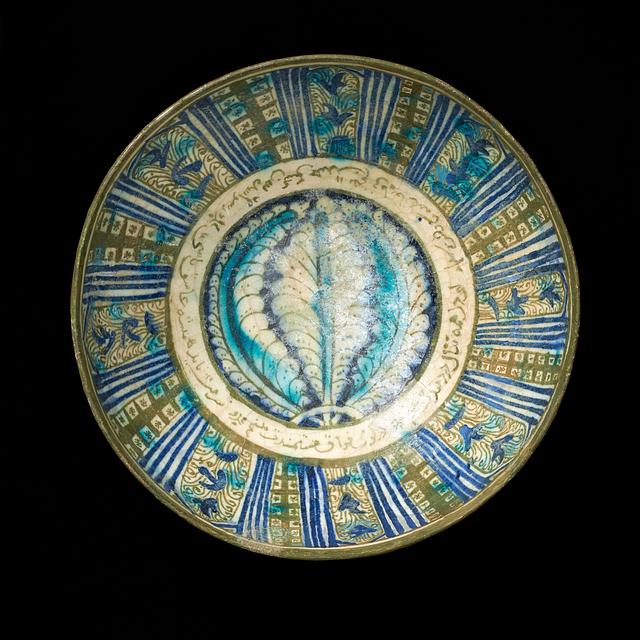
Bowl, reddish fritware painted in blue, turquoise, and olive under a greenish, transparent glaze