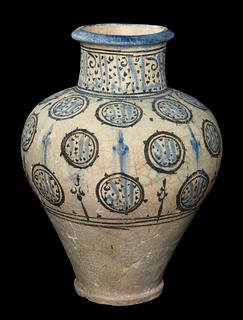
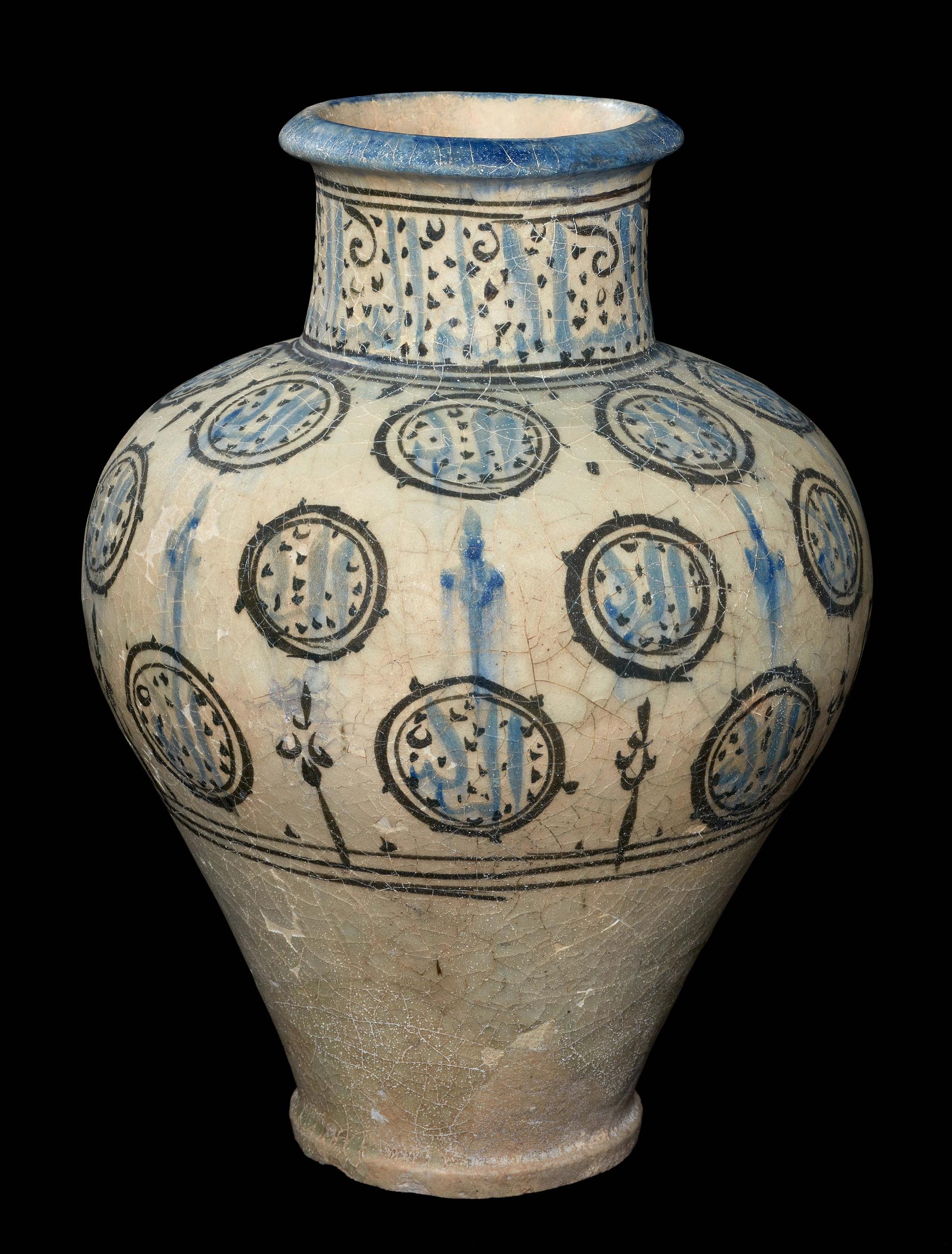
Fritware jar painted in black and blue under a transparent glaze
Syria; Raqqa; beginning of 13th century
H: 31.5 cm
Inventory number D 73/1986
This storage jar has the inverted pear shape that is characteristic of the Ayyubid and then the Mamluk period.
The body of the jar is decorated with the Arabic word for blessing, baraka, in large circles. There is an inscription with various good wishes around the neck. The lower part of the jar is plain, making the upper, decorated part seem even wider.
The painted decoration is quite coarse. The glaze is crackled and unevenly applied at the base – familiar features of some ceramics produced at Raqqa.
Another shape typical of the period is the albarello, which has a concave body that makes it easy to grasp (see e.g. 6/2006).
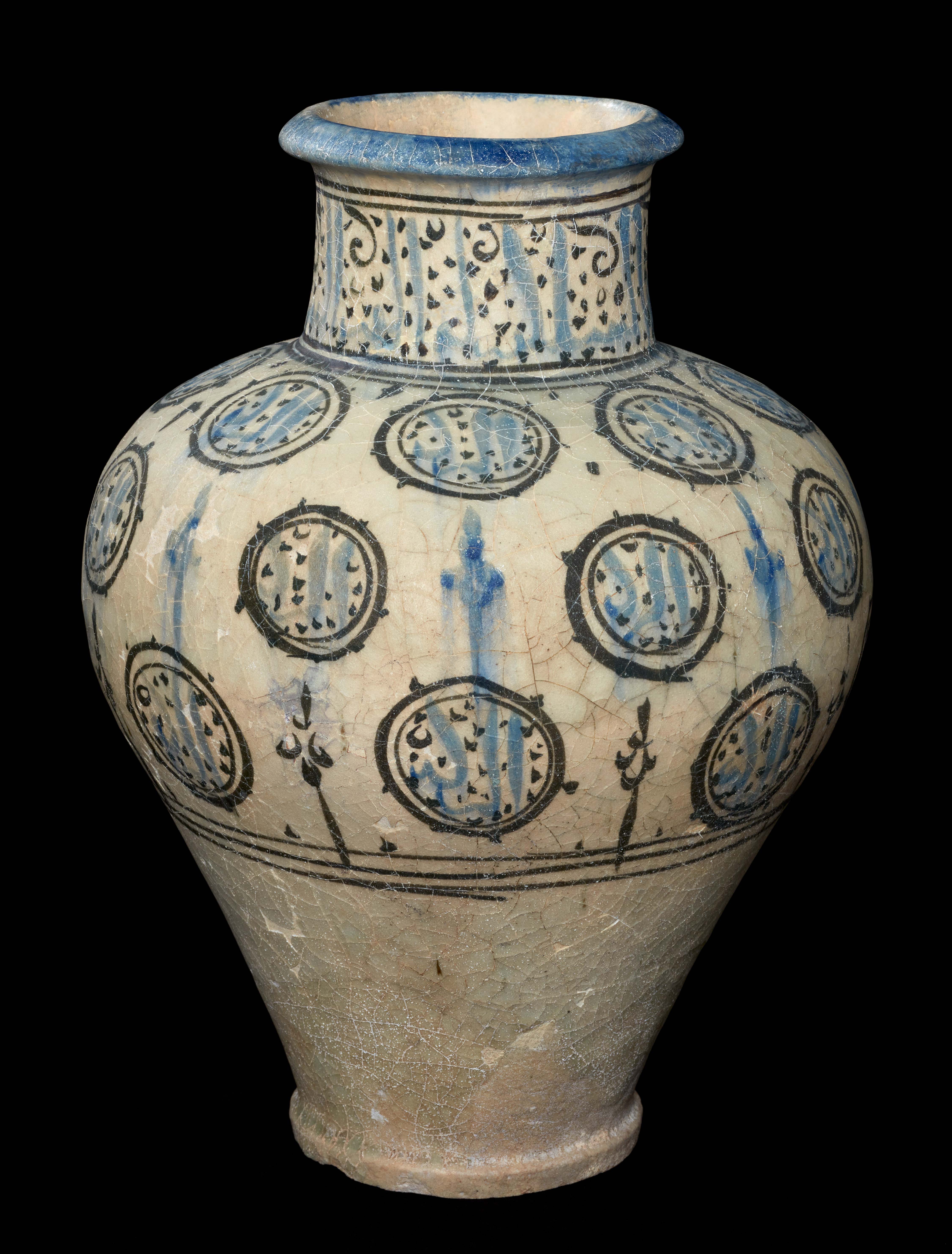
The body of the jar is decorated with the Arabic word for blessing, baraka, in large circles. There is an inscription with various good wishes around the neck. The lower part of the jar is plain, making the upper, decorated part seem even wider.
The painted decoration is quite coarse. The glaze is crackled and unevenly applied at the base – familiar features of some ceramics produced at Raqqa.
Another shape typical of the period is the albarello, which has a concave body that makes it easy to grasp (see e.g. 6/2006).
Published in
Published in
Kjeld von Folsach: Islamic art. The David Collection, Copenhagen 1990, cat.no.138;
Kjeld von Folsach: Art from the World of Islam in The David Collection, Copenhagen 2001, cat.no. 197;
Eric Delpont (ed.): L'Orient de Saladin: l'art des Ayyoubides: exposition présentée à l'Institut du monde arabe, Paris du 23 octobre 2001 au 10 mars 2002, Institut du monde arabe, Paris 2001, cat.no. 152, p. 163;
Kjeld von Folsach: Art from the World of Islam in The David Collection, Copenhagen 2001, cat.no. 197;
Eric Delpont (ed.): L'Orient de Saladin: l'art des Ayyoubides: exposition présentée à l'Institut du monde arabe, Paris du 23 octobre 2001 au 10 mars 2002, Institut du monde arabe, Paris 2001, cat.no. 152, p. 163;
Ceramics
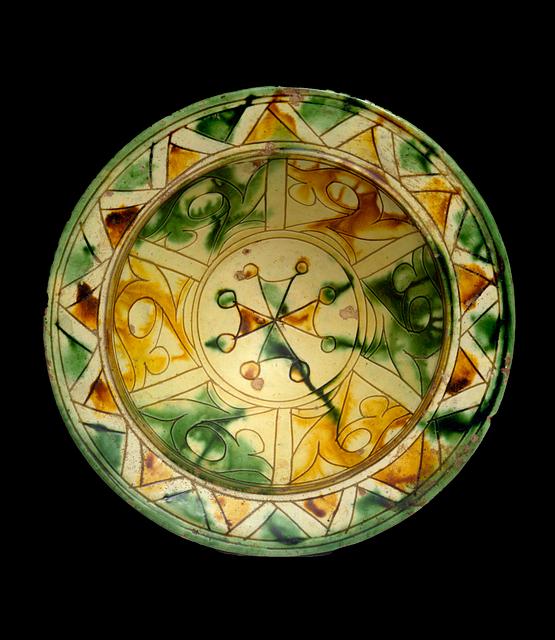
Earthenware bowl, covered with a white slip, incised, and painted in yellowish brown and green in a transparent glaze. Sgraffito type
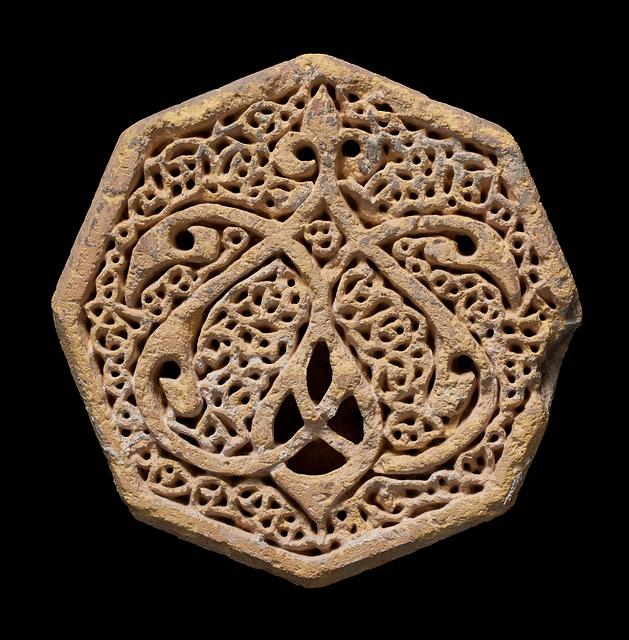
Earthenware tile, carved and unglazed
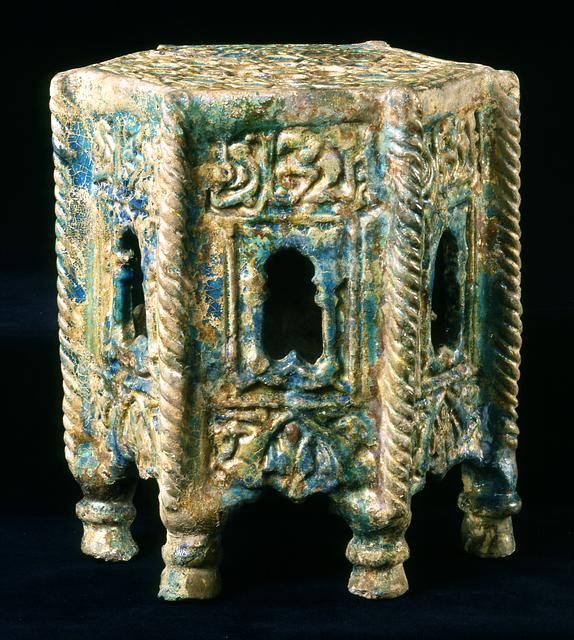
Fritware table, molded and covered with an opaque, turquoise glaze
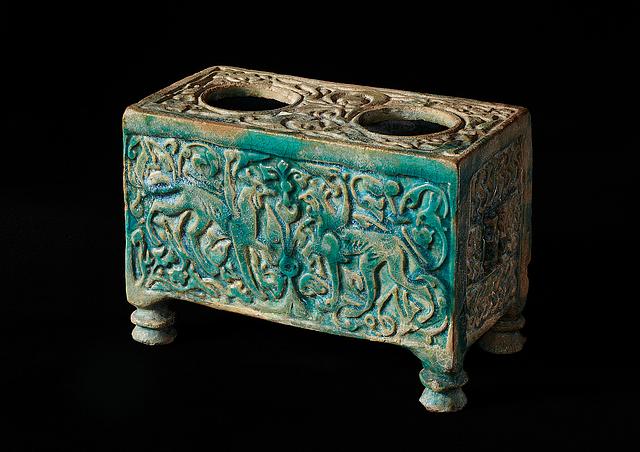
Stand, fritware, molded and painted in a transparent, turquoise glaze